Showing posts with label Canada Geese. Show all posts

Monday, April 15, 2013

More Phenology 2013: Tiny Peepers and Other Little Ditties


Today (April 15th) marked the first time I've heard Spring Peepers (Pseudacris crucifer) this year.  Much like their congener the Chorus Frog (Pseudacris triseriata), Peepers are one of the earlier frogs to call in our region.

The species name "crucifer" is in reference to the X-shaped mark (or cross) on their backs.
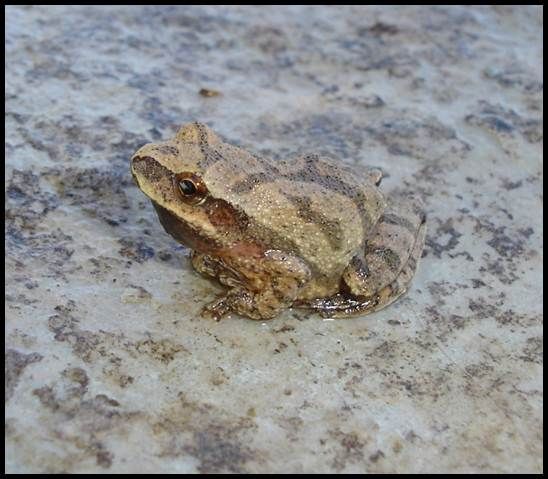
Like most amphibians, the Peeper must lay its eggs in water, which is the reason why the males call around wetlands this time of year (i.e., to attract females for reproduction).  Although many larger frog species around here lay their eggs in large gelatinous "masses", the Peeper is alittle different.  They lay their eggs singly, or in small clumps, attached to vegetation in the water.
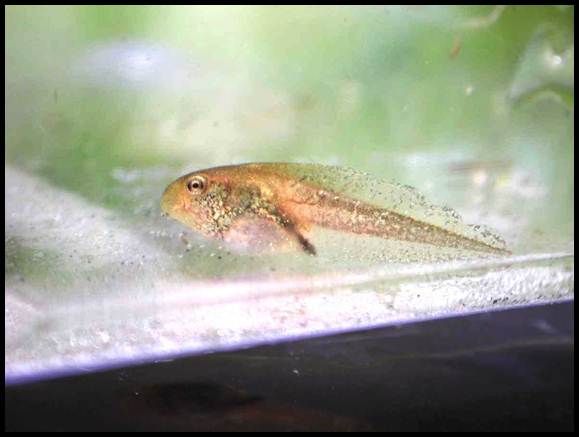
The tadpoles are also small and mostly non-descript to the unfamiliar eye.  In general, tadpoles of frogs in the "Treefrog" group (Family Hylidae), which includes the Gray Treefrog, Cope's Gray Treefrog, Chorus Frog and Spring Peeper in our fine state, have a deep tail.  Peeper tadpoles don't get as large as the Treefrog tads....but are similar in size to the Chorus Frog tads....which makes them hard to ID as tadpoles.

Otherwise, it's been for the birds.....

A Pair O' Canada Geese (Branta canadensis)

Goosey, Goosey Gander laying down the law.....

....and Fido turning the tables on Goosey......

Also, a confused Sandhill Crane....


Some other firsts for the year:
April 3: Yellow-bellied Sapsucker (yard)
April 7: Eastern bluebird (prairie on campus)
April 7: Goldfinch (yard)
April 15: Tree Swallow (prairie on campus)

I should also point out that recently I attended the National Council of Undergraduate Research to support some of my students that were presenting data from our research projects (where I also saw Alyssa doing a very nice job of presenting some of her research).  This conference is the reason why I took a week off of the blog.  There were about 11 total ecology students from my institution attending the conference and as a group we took a small field trip to a neighboring marsh (~2 hr hike).  While there, we saw a variety of birds, despite the short time frame.

Here's a hasty species list, based on what I can recall:

The aquatic birds were particularly obvious:
American Coot
Pied-Billed Grebe
Great Blue Heron
Scaup (couldn't tell if it was Lesser or Greater)
Ringneck Duck
Blue-Winged Teal
Bufflehead
Mallard
American Black Duck
American Wood Duck
Northern Shoveler

There were a few Raptors
American Kestrel
Bald Eagle (Juvenile)

A few odds 'n' ends, and I'm sure we heard more that I couldn't identify (my bird call ID is rusty!)....
Red-bellied Woodpecker
Downy Woodpecker
Belted Kingfisher

Then there were the common ones....the Red-winged Blackbirds, the Common Grackles, the European Starlings, the North American Robins, and such.....

Overall, it was a good experience for the students and an enjoyable for me to watch them mature as professionals.

Wednesday, June 15, 2011

The Otter Latrine Redux

The Otter latrine site continues to be monitored.  Since I last posted any of my findings from this camera trap set on April 10th, 2011 (see Back to the Otter Latrine), alot has has happened. 

Of course, as I've shown you before, Otters aren't the only critters that like this spot.

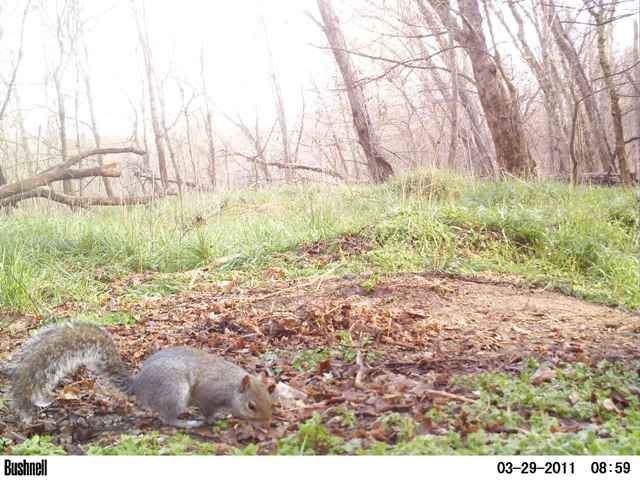
There are eastern gray squirrels (Sciurus carolinensis)....


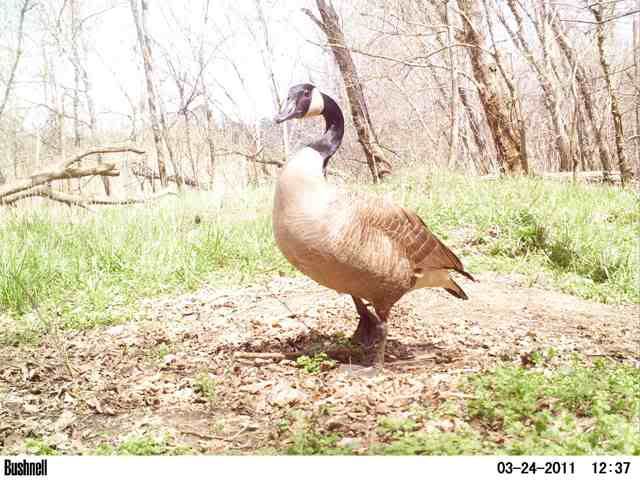
Once, and only once, some Canada Geese (Branta canadensis) waddled by.....


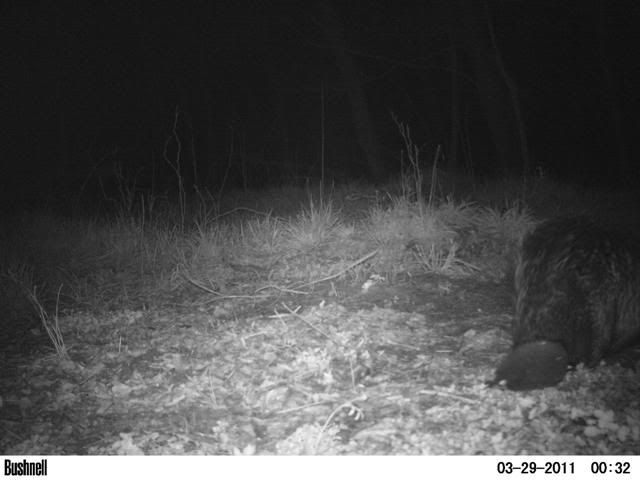
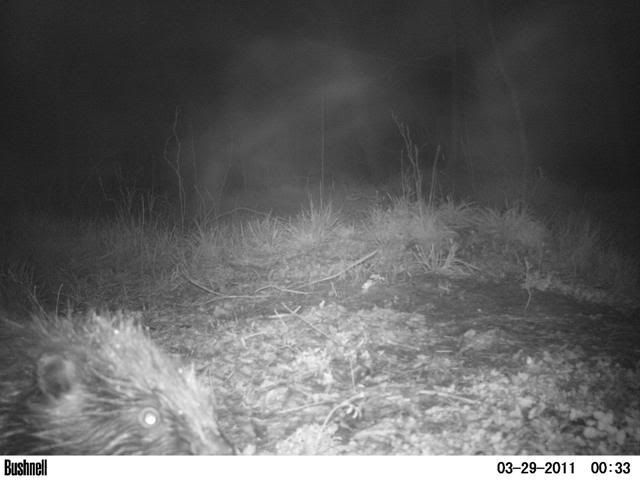
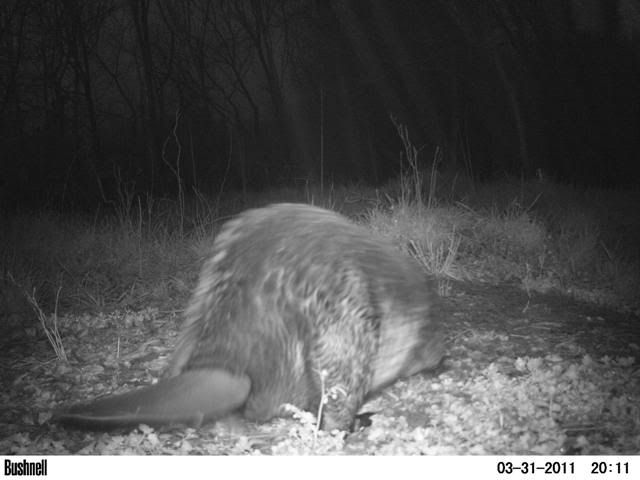
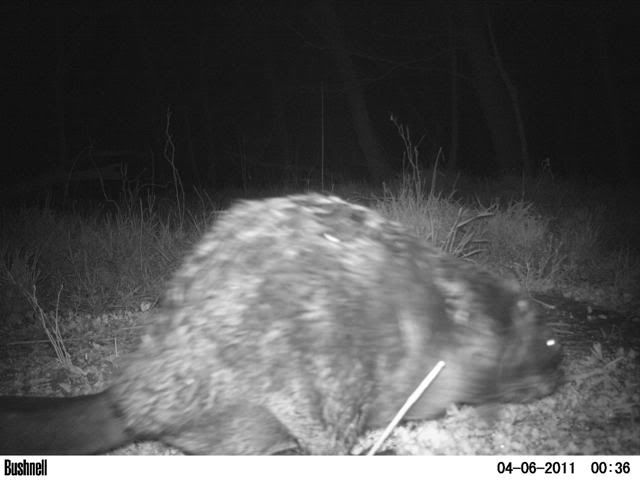
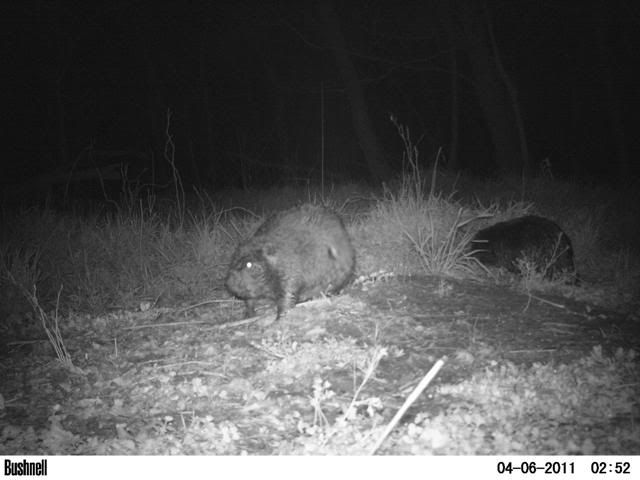
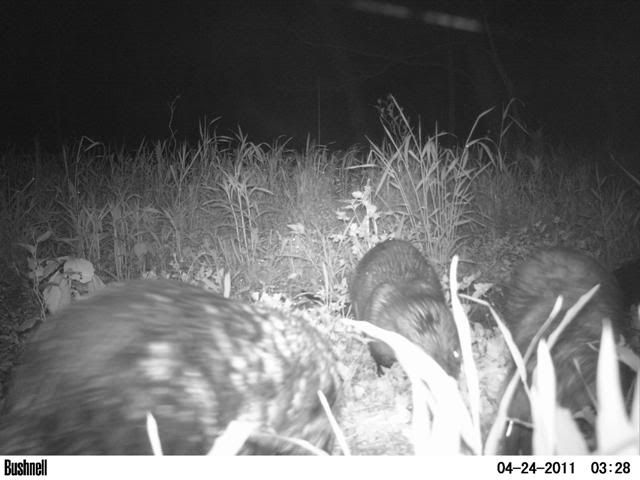
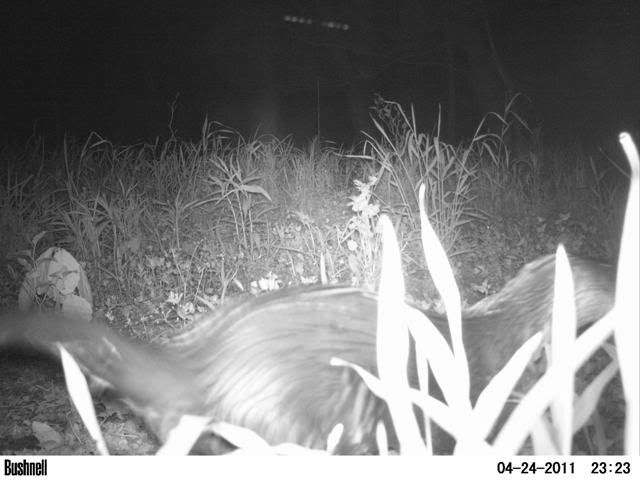
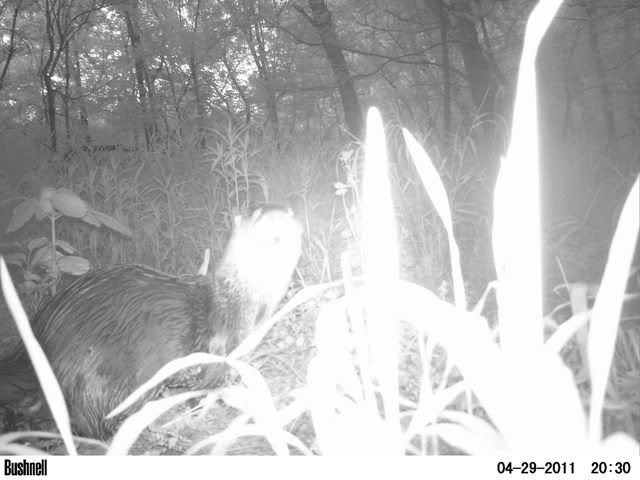
Also, for a few weeks....Beavers abound!  A pair of flat-tails (Castor canadensis) work the area pretty heavily....this is not far from two other locations where I've camera trapped them at roughly the same time (see Busy Little Beasts posted on March 28, 2011).  They haven't been back since.  Because I like Beavers, I can't help but post one picture from every time they passed.


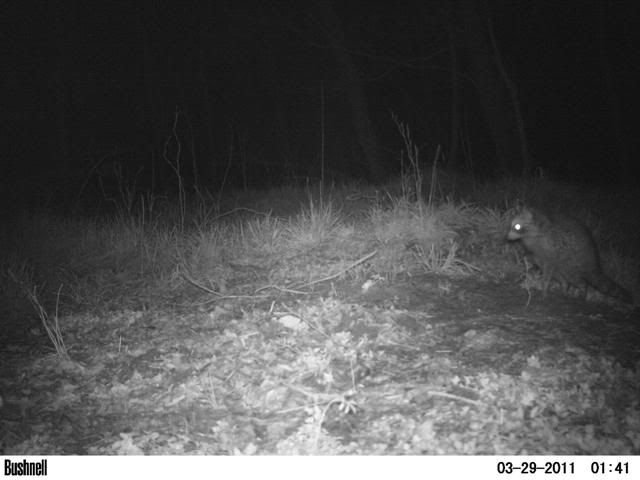
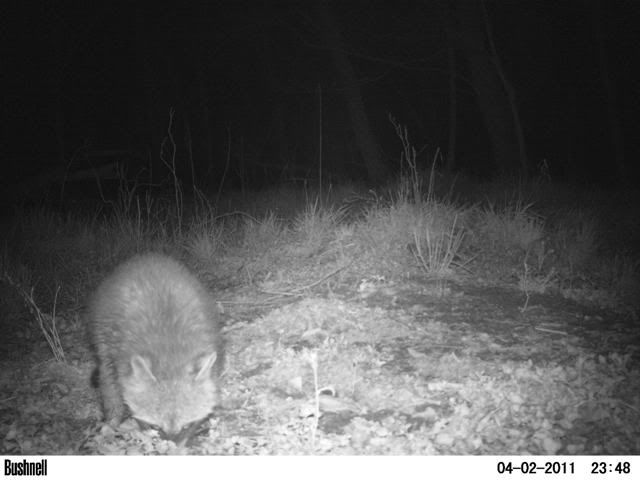
But, really...Raccoon is the word!  I have hundreds of pictures of these guys from this set.

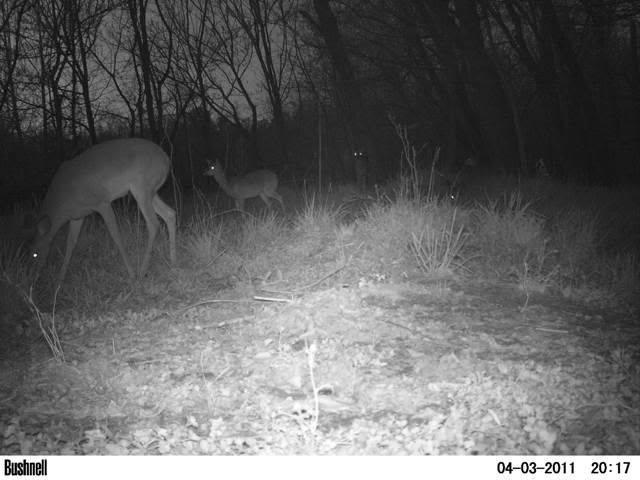
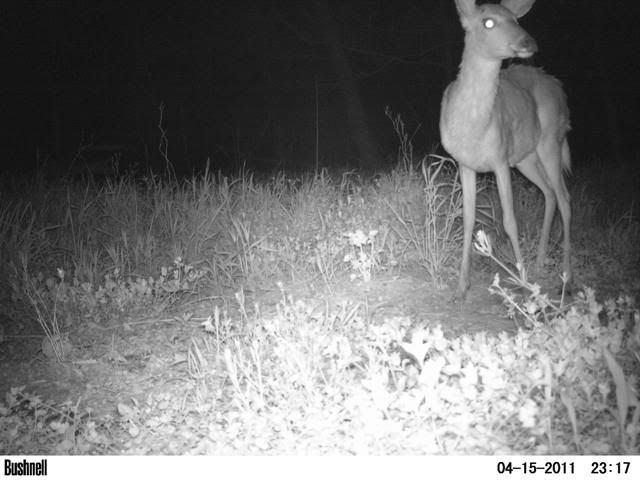
If Raccoon is the word, then deer is the punctuation....ever present and in no short supply.

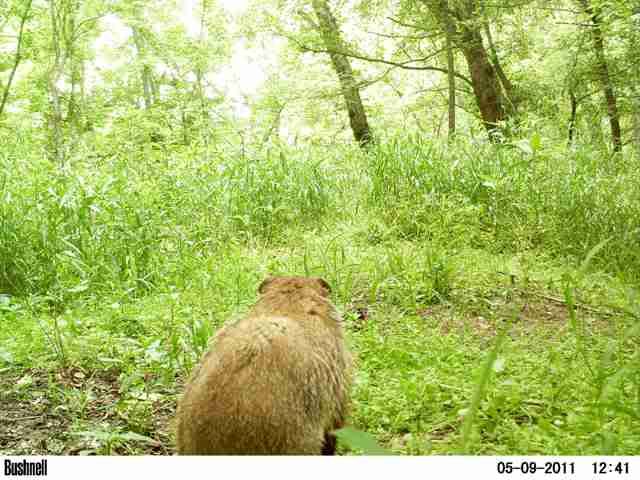
Even the Whistlepig (Marmota monax) wants in on the action....his camera set is not far away from here either.

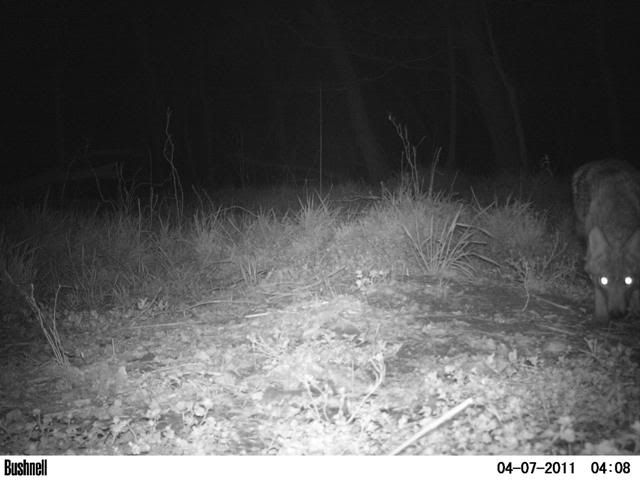
Of course, a batch of pictures from this set wouldn't be complete without one of my favorites....Canis latrans.  I really like this picture.
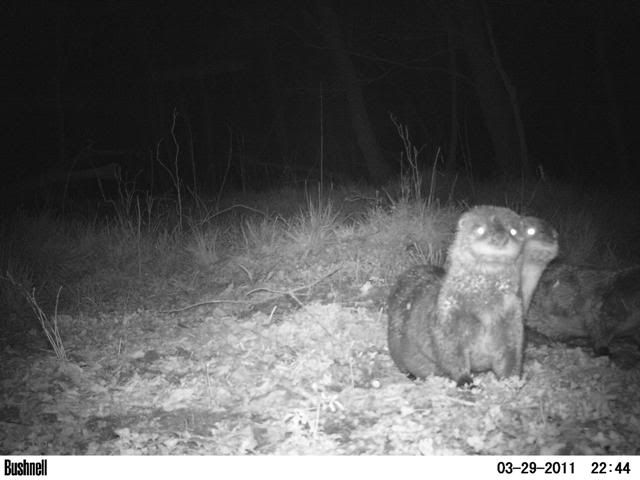
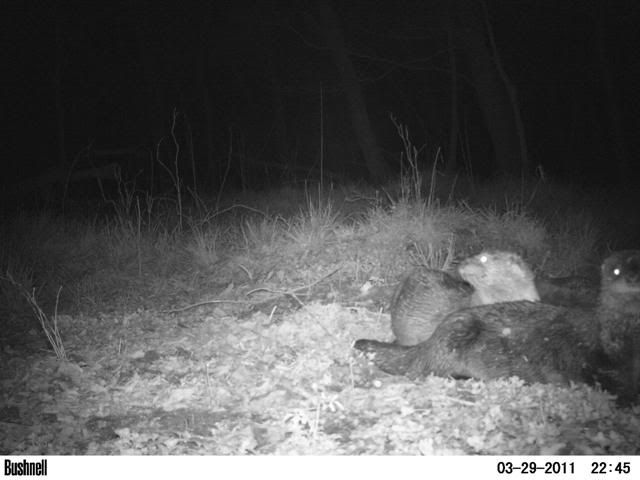
But the critter of the hour is our buddy the Otter (Lontra canadensis).

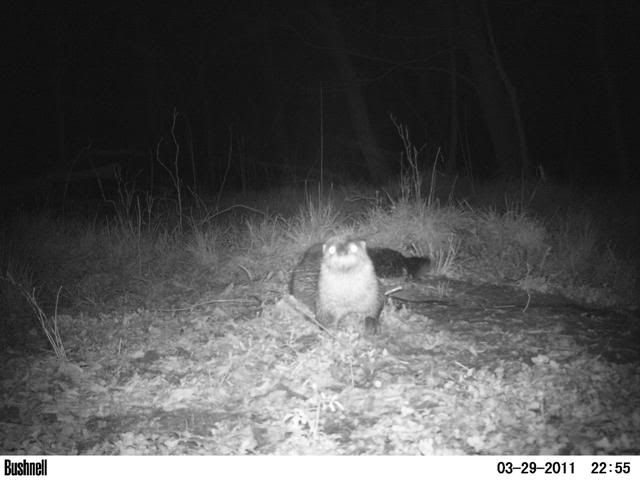
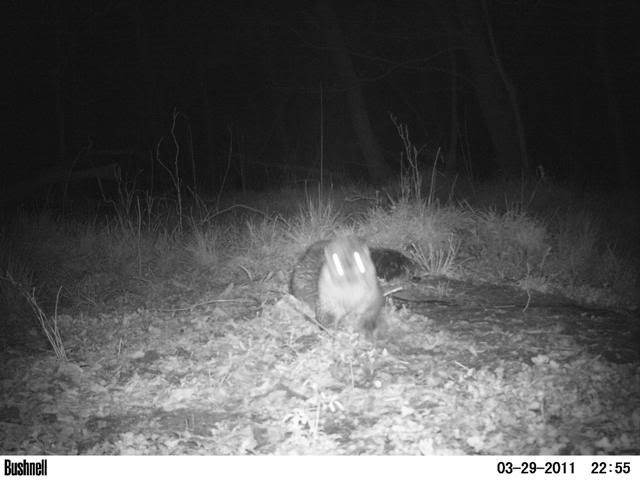
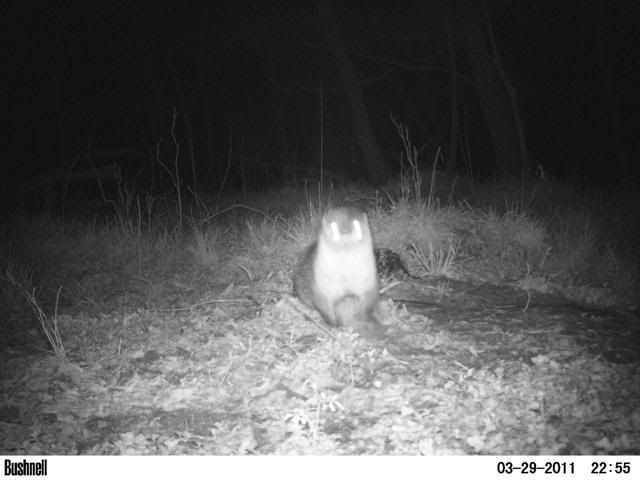
Below is a great series of three pictures that shows an otter scraping together a mound of debris to deposit scent on....


...a few hours later....someone stops by to inspect the scent mound....

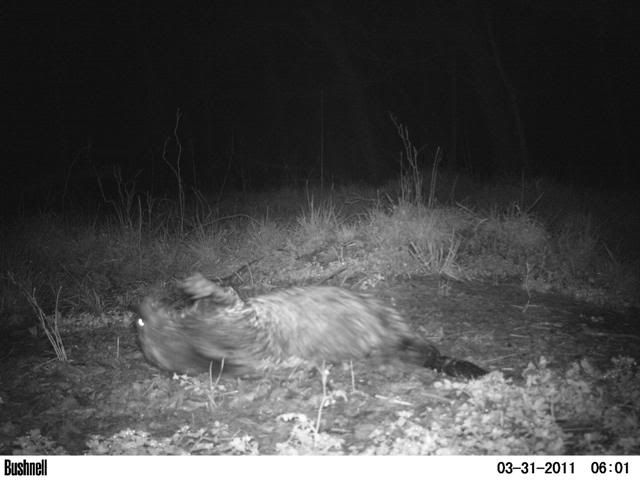
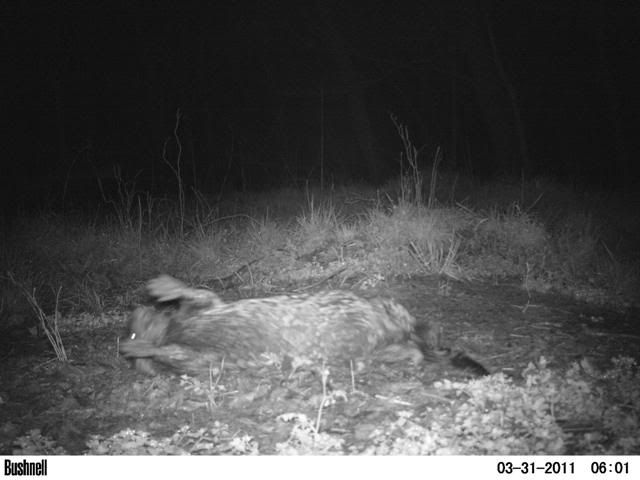
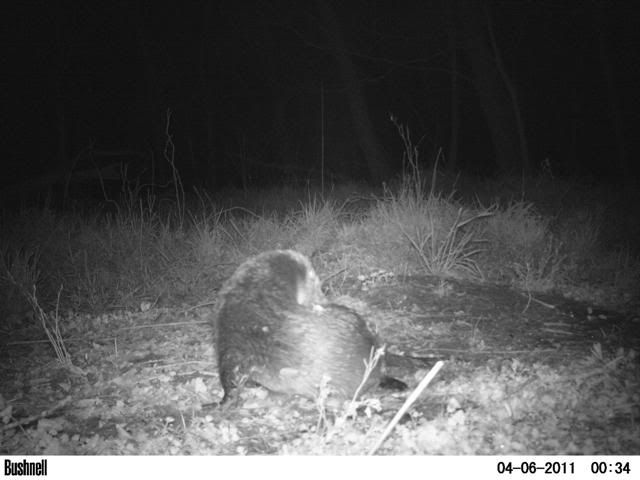
...and the next day something very interesting happens....an otter "scent rolls" in the leavings!  See other posts regarding animals doing a scent-roll in smelly stuff in Gray Fox at the Stink Pole (posted on March 4, 2011).

...then no Otters for a week...until....

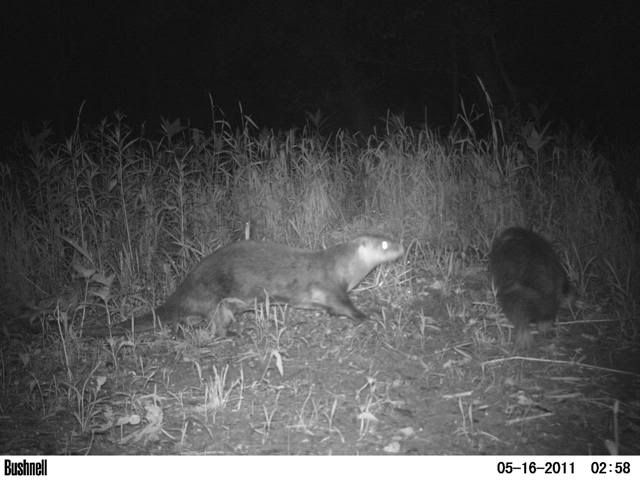
Another long period between visits.  This time the family group is back.

...a solo otter laying down alittle scent about a day later....

Another solo Otter swings by.....

...then again....nothing for weeks.  But these critters will not give up on their favorite dumping spot!

It has now been almost a month since any otters have visited this latrine spot.
___________________________________________________________________________
Upon arriving at the latrine site in early May, I noticed a real lack of fresh scat.  This puzzled me, as it would have been the first time this spring that the otters hadn't used this latrine site in between my visits. 

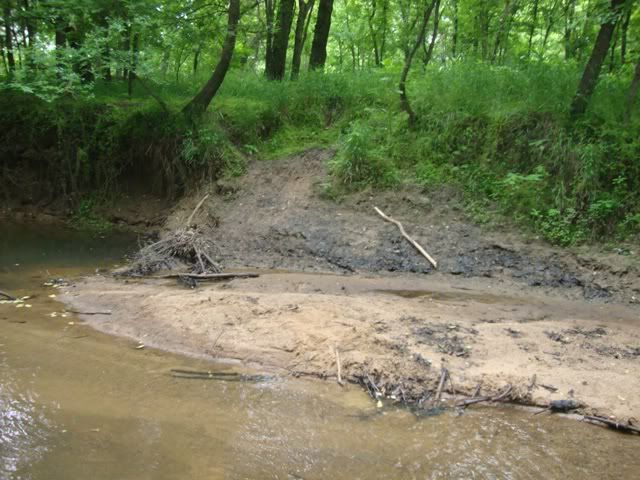
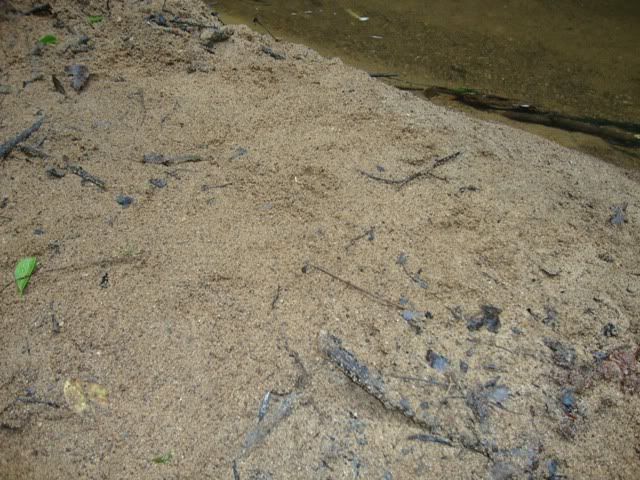
As I was preparing to leave, I happened to glance down the sloping bank towards the stream.  The water was fairly low at that time (and still is today) and an exposed sand bar, as well as several large flat rocks in the streambed, were near the base of the "slide" associated with the latrine I have the camera over.  Even from high up on the bank, where I have the camera, I could clearly see otter scat and tracks on one of the sand bars below.  The otters had abandoned the bank latrine for one in the sand bar/rocks in the streambed.

Above: a photo of the otter slide and sandbar latrine from across the stream.  Note the normal latrine site that the camera is monitoring is up on the bank at roughly the top of the slide in this picture.  This picture and the picture below were taken during the "low-water" period within the last month.


Above: For this picture, I stood parallel to the latrine, pointing the camera down-stream.  That way you can see the relationship the latrine site has to the larger river.  You can also see the exposed flat rock and muddy/sandy bars in the water.

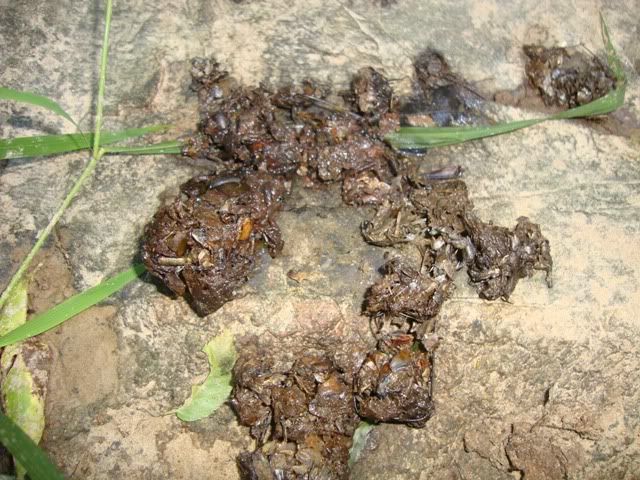
And what post about an otter latrine would be complete without more scat pictures!!
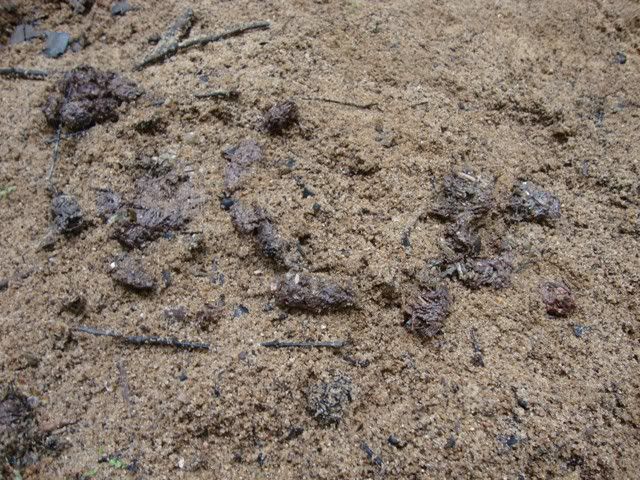
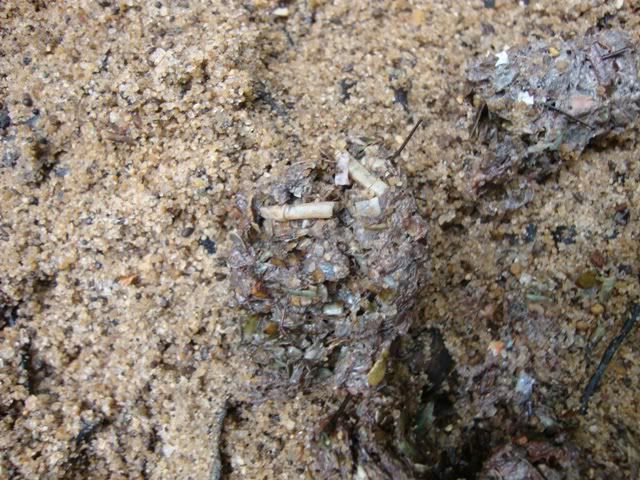
Above three pictures: Example scats deposited on the sandbar below the bank from the normal latrine site (5/12/2011).

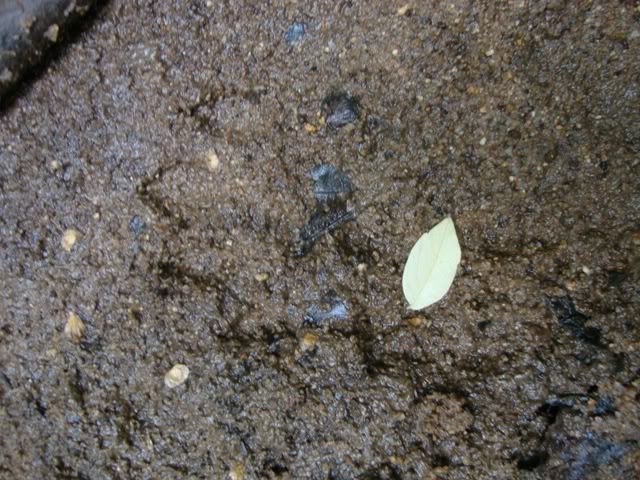
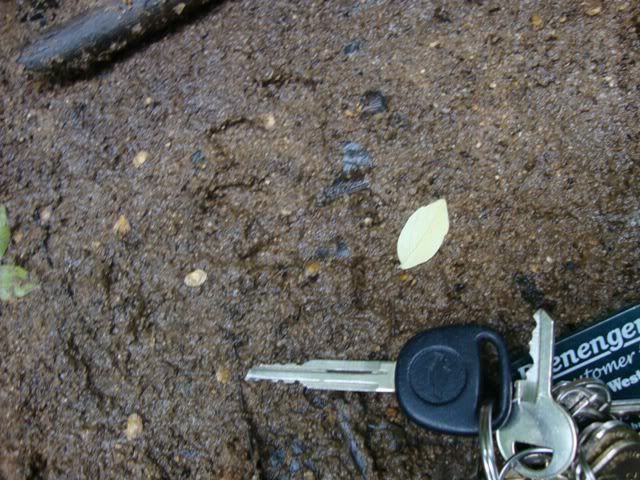
Above: tracks around the sandbar where the "temporary" latrine site had been set up (5/12/2011).
Above Two Pictures: Close ups of the otter tracks (5/12/2011).  Not great pictures.  I had to turn the flash off, as it was washing the tracks out completely in that sand...but any camera shake and the pic ends up blurry without the flash. 

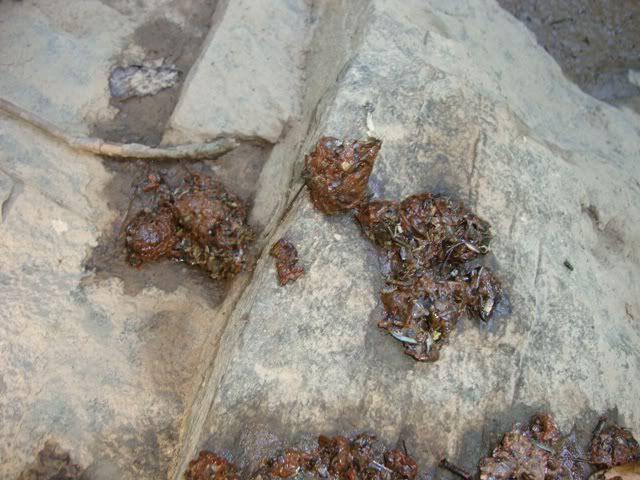
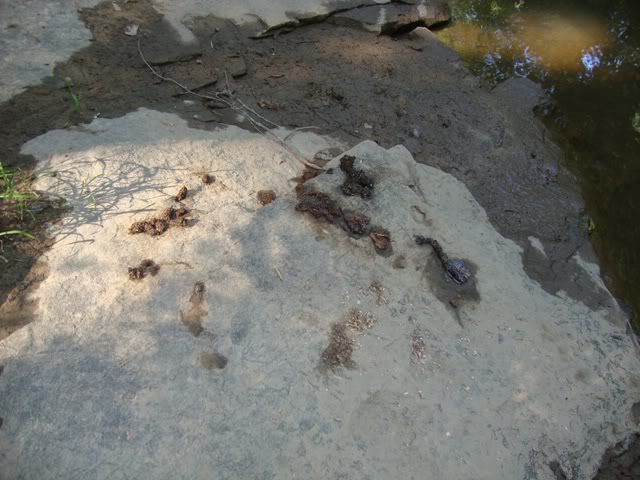
Above Two Pictures: Otter latrine located on flat rocks in the stream just below the camera set on 6/14/2011.  This was very near the latrine location found on 5/12/2011.


Above Two Pictures: Close-ups of the scat on the latrine found on 6/14/2011.  As usual, full of crayfish.

__________________________________________________________________________

So...what does this minute altitudinal shift in an otter's latrine mean?  All I can think of is that the water's lower....it's more work to climb up the side of the bank than it's worth because the water's so low and so they simply leave their message in the most accessible spot near their normal latrine.

Might be time to move a camera next week!