Showing posts with label Sandhills. Show all posts

Thursday, June 30, 2011

Herpin' In the Sandhills Part VI: Whip-cracking!


There are a few snake species found here in the Southeastern US that I desperately wanted to see after moving here a coupla years ago.  I've been lucky enough to see a few of them already, several during the previous posts about our trip to the sandhills (see past posts on Cottonmouths, Scarlet Kingsnakes, a variety of amphibians,  some awesome constrictors, and a few cool odds-n-ends).

The reason I saved my account of finding this species for last is because I think it's my favorite.  I don't really know why.....but aside from the Eastern Kingsnake (Lampropeltis getula), the Eastern Diamondback Rattler (Crotalus adamanteus) and the Coral Snake (Micrurus fulvius), I've wanted to see a Coachwhip (Masticophis = Coluber flagellum) very badly!

I'd found one of my four most-saught after species early in the season last year.  Two of the species in that list have eluded me (as they are rare in our state), but I finally was able to find the fourth snake on that list during our trip to the sandhills in April.
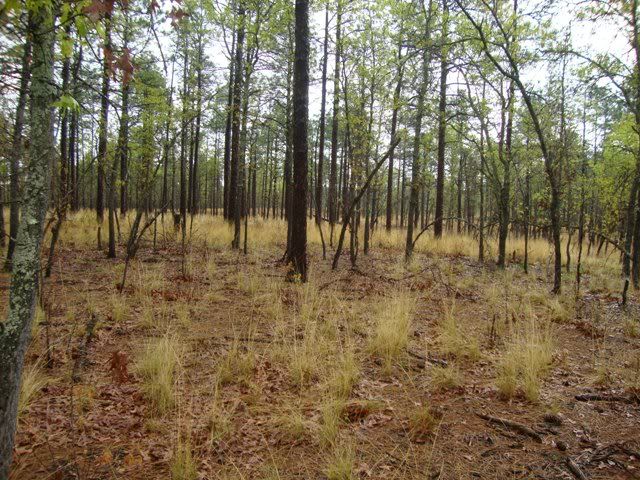
Above: the habitat where the first Coachwhip was found.

There's just something about the common name for this species that always sounded cool to me.  It's different than many common names applied to species of wildlife, which are often just the most obvious and basic description of their appearance.

Five-lined Skink.

Bluebird

Short-tailed Shrew

Red-winged Blackbird

Two-lined Salamander

White-footed Mouse

BORING!

How about this:  COACHWHIP! 

Sort of descriptive...because the animal does, in fact, look like a bullwhip...or some kind of whip that carriage drivers would have carried.  But it is so much cooler than some basic descrptive name that could have been applied to this species like Brown-Tailed Black Snake....or something equally as lame.

The name even sounds tough....like it could beat you up and steal your lunch money:  COACHWHIP!  (and, yes, it does help when it's written in all caps).
__________________________________________________________________________

We found two Coachwhips during our trip.  The first was a juvenile individual that the students in the herp class we were tagging along with found.  A very cool little specimen (and my first wild Coachwhip).  But, as I mentioned regarding the Cottonmouths....it's neat when someone finds them and you see them...but it's cooler still when you find them yourself.
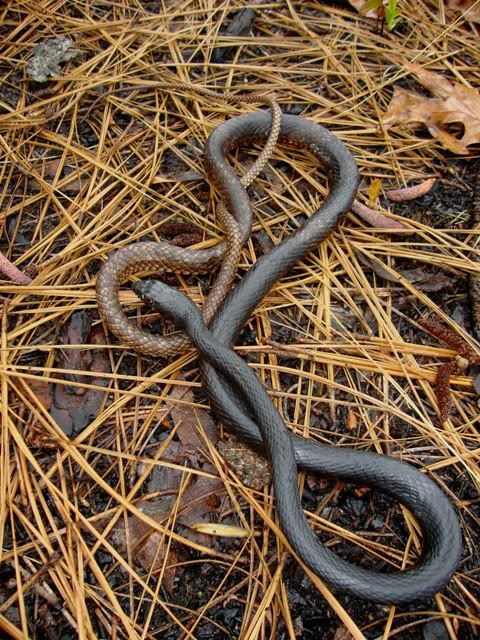

How fortunate we were that Jeff knew the Sandhills area so well.  We visited a spot that he knew about where peices of tin had been scattered around, and started flipping.  Normally a sure-fire way to catch snakes.  However, it had been cool and alittle rainy during our trip and we were alittle nervous stuff wouldn't show. 

Luckily, our worries were unwarranted!

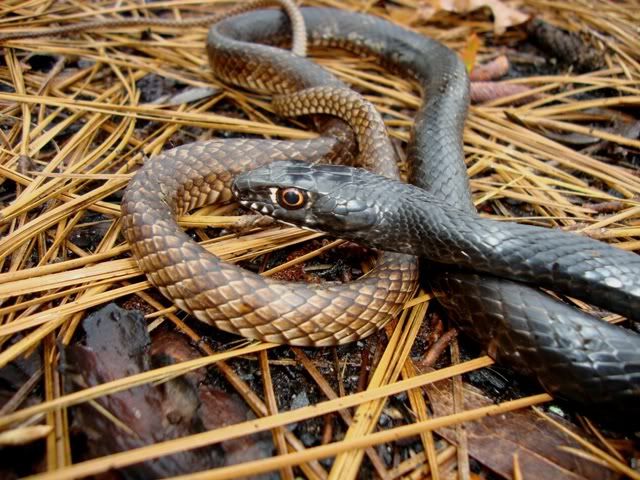
After the second or third piece of tin....success!  A huge adult Coachwhip.  And a very beautiful one, at that.  Check out that jet-black head and those nice rings leading to the beautifully patterned tail (see the close-up shot of the tail pattern in the pictures below).
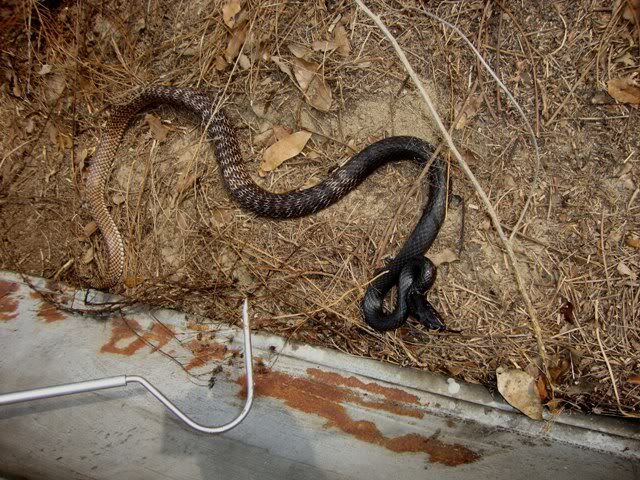

Check out how big this guy was!  Almost six foot tip to tip. 
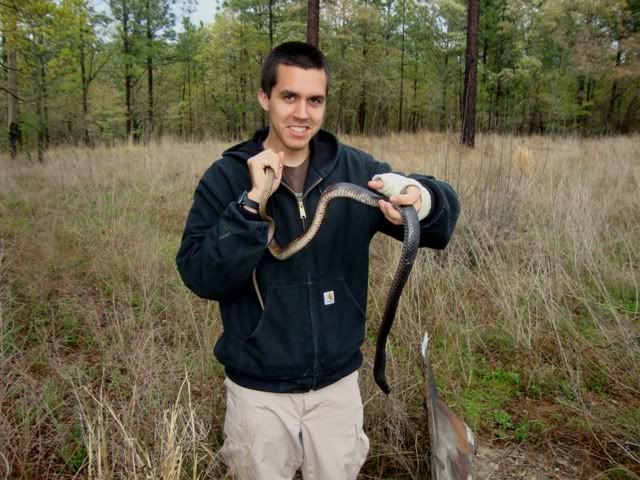
Look at the incredible scale/color pattern on the tail (below).  Stunning! 

You can also get a feeling for how long the tail is in this picture.  The "vent" (or area where the snakes goes to the bathroom out of, near my right pinky) is visible in this picture.  Basically a snake's tail starts at the vent.....
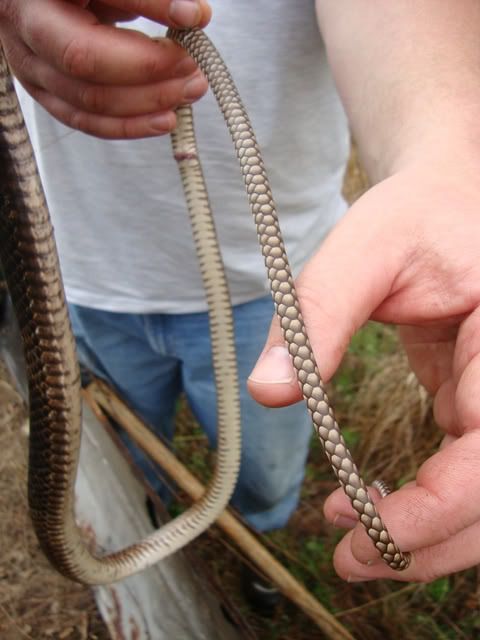


He was also pretty easy to handle due to the cool weather, which I'm told is not typical for this snake.  Jeff and Ed recounted stories of folks they know getting tagged by Coachwhips....apparently they have an penchant for nailing over-enthusiastic Herp-nuts in the face!

The cool weather also worked in our favor for picture taking.  This is normally a pretty jittery species.  Although previously placed within the Genus Masticophis, it is currently in the Genus Coluber....which also includes a species we encounter around our study areas alot:  the quick-moving Racer (Coluber constrictor).  Coachwhips are definately fast.  They've been clocked at maximum speed of 3.73 miles/hr (6.01 km/hr) by Mosauer (1935)!!  Not bad for a critter with no arms and legs. 

A snake moving that fast through scrub and brush is basically gone before the person trying to catch them even realizes what they've seen.  So for us to be able to catch and photograph them was incredible.

So, much like Racers, Coachwhips are sleek and fleet predators that use their speed to actively forage and chase down food.  I like to think of them as a "run-n-gun" type forager :).  In addition to that maximum speed of nearly 4 mph that I mentioned before, they have been clocked to prowl normally at a speed of roughly 0.3 mph (Mosauer 1935). While hunting, they are known to crawl with their head and neck off of the ground (Cooper et al, 1990), but will lower their heads and barrel forward when prey is detected. 

They eat just about anything, including many of the lightning fast little lizard species found in their habitats: racerunners (Cnemidophorus sp.), fence lizards (Sceloperus sp.) and skinks (Plestiodon sp.).  Mammals, birds and other snakes are also consumed.  Work by Hamilton and Pollock (1956) found reported the following food items in the stomachs of 45 Coachwhips analyzed: Lizards (68.9%), mammals (17.8%), snakes (8.9%), insects (8.9%), birds (2.2%); and turtles (2.2%).

According to Ernst and Ernst (2003) there is an interesting folk tale associated with Coachwhips.  This states that if pestered by a human, a Coachwhip will quickly grab the leg of the hapless homonid with the front part of its body and lash them with the long, thin ends of their tails. 

Believe it or not (and I was shocked by this), such claims are completely untrue!  ;)

__________________________________________________________________________

And with that, I finally conclude my series of posts about our herpin' trip to the Sandhills in spring of 2011.  It was a great trip and I've got to thank Jeff and Ed for taking time out of their weekends to show us around, not for any real scientific purpose...but just to have some fun.

We all need to have alittle fun now and then, don't we?

Thanks for a great trip, guys!!


Literature Cited:

Cooper, W.E., Jr., D.G. Buth and L.J. Vitt. 1990. Prey odor discrimination by ingestively naive coachwhip snakes (Masticophis flagellum). Chemoecology 1:86-91.

Ernst, C.H., and E.M. Ernst. 2003.  Snakes of the United States and Canada.  Smithonian Press.

Hamilton, W.J., Jr., and J.A. Pollock. 1956. The food of some colubrid snakes from Fort Benning, Georgia. Ecology 37:519-526.

Mosauer, W. 1935. How fast can snakes travel?  Copeia 1935:6-9.

Tuesday, June 21, 2011

Herpin' In the Sandhills Part V: Filling in the Gaps

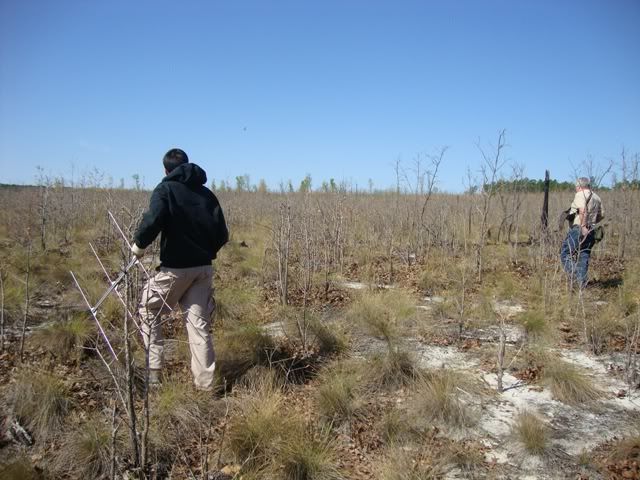
Above: habitat typical of the southern Hognose snake (Heterodon simus).  Jeff allowed us to help him track an individual that he had tagged with a radio transmitter (see Dave above with the antennae).  Unfortunately, the individual was underground and we didn't get to see it.  Cool habitat, though!

____________________________________________________________________________

I'm going to take you both back to the Sandhills and back in time (to April of 2011).  I'm nearing the end of my series about our trip to the sandhills, which has already covered the Cottonmouth, the Scarlet Kingsnake, some cool amphibians, and the Cornsnake and Bullsnake.

Before I end with possibly my favorite encounter of the trip  -I must really stress the word possibly in this sentence- , I'm going to fill in the gaps with a few more reptile encounters that aren't really long enough to justify their own post at this point.  This is especially true considering that this trip is already going to result in SIX blog posts!
___________________________________________________________________________

The Banded Watersnake (Nerodia fasciata).  Up in our neck of the woods we have the Northern Watersnake (Nerodia sipedon), which I've posted about before.  In the Sandhills, for some reason, the Northern Watersnake is replaced with the Banded Watersnake.  Both have similar ecological needs (habitat, food, etc.).  Why one likes the Sandhills and one likes the Piedmont...who knows?  Maybe the Banded Watersnake can better handle the drier conditions in the Sandhills?  The two species are found sympatrically (together) in the areas where the Piedmont and the Sandhills meet, and will apparently hybridize (reviewed by Gibbons and Dorcas in their 2004 book: North American Watersnakes: a natural history, University of Oklahoma Press). 

Regardlesss, this species was fairly common around the hatchery.  I saw more than one dive into the water from the rip-rap along the banks before I could hope to get a hand on them (and I have to admit being more hesitant here, because I knew there were Cottonmouths around). 

I've found very similar scenarios in the upper Midwest with fish hatcheries and watersnakes (although up there we only have the Northern Watersnake).  These hatcheries attract amphibians, which are a primary food source for most watersnake species.  In fact, I recall catching a few Northern Watersnakes in Wisconsin at a hatchery, only to have one vomit up three freshly eaten Bullfrog tadpoles.

The biggest issue with watersnakes is that they are stinky!  If you grab one be prepared to get musked with some of the most unpleasant-smelling fluid that comes from an animal, this side of a skunk.

Oh....and they're also biters...but that's as much a badge of honor as anything.  I actually prefer the biting to the musking.   ;)

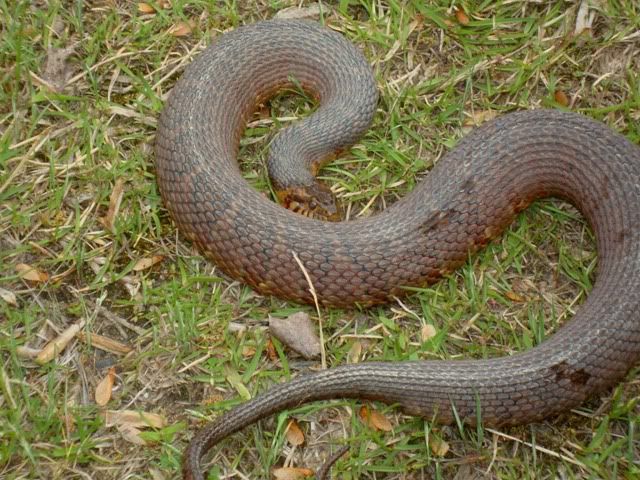
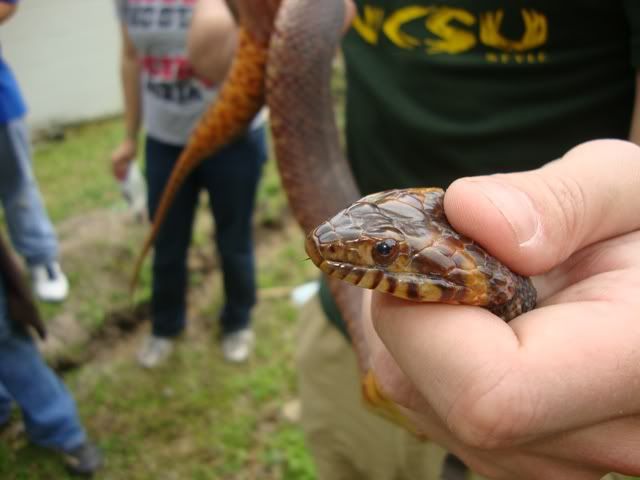
Above: three pictures of a Banded Watersnake that was captured at the hatchery during our trip to the Sandhills.  If you ask me, it's quite a pretty individual. The pattern on the head is very nice.
________________________________________________________________________
Yellow-Bellied Sliders (Trachemys scripta scripta):  There is a drainage ditch that runs through a portion of the fish hatchery property.  There is a point where this ditch runs into a cement pit....and the water is apparently then directed back to a natural stream...or maybe the sewer...I'm not sure.  Anyways, it's a trap for alot of herps...they fall in and can't get out.  I'm told that folks who visit the hatcher and are in-the-know always check the pit.

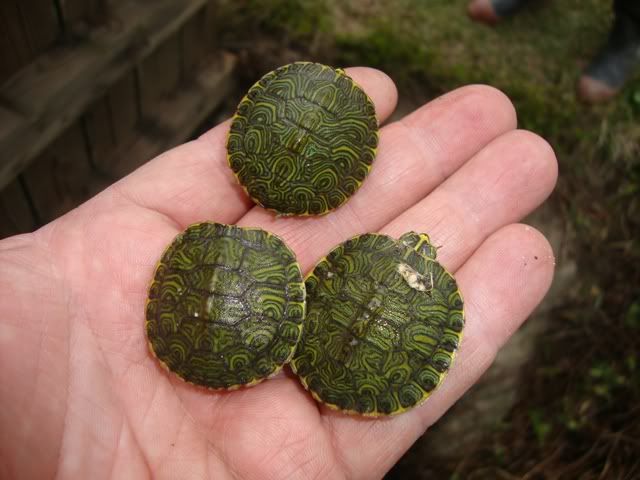
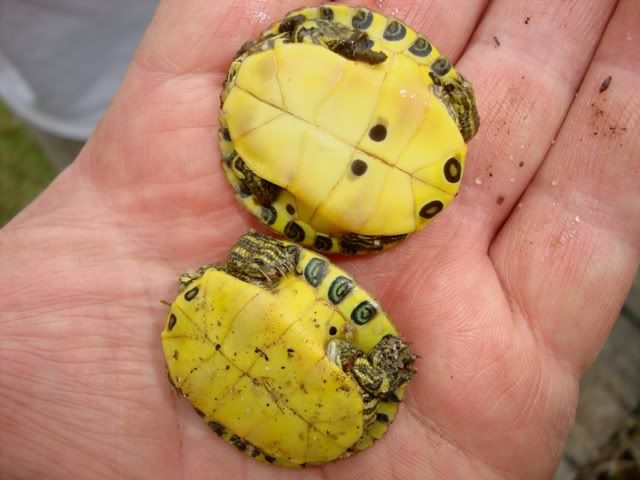
This time, the pit contained a handful of hatchling Yellow-Bellied Sliders.
Above: two pictures of hatchling Yellow-Bellied Sliders found in the cement trap at the hatchery.  Note the black dots on the humeral scutes of the plastron.  These distinguishes this species from the River Cooter.


Yellow-bellied sliders can be difficult to distinguish from the River Cooter (Pseudemys concinna concinna).  Both are dark with yellow lines around their heads and arms....both have yellow plastrons (lower shells).  But most of the time the Yellow-bellied Slider has characteristic dark circles or dots on the humeral scutes near the head (see pictures above).

These turtles are related to the Red-eared Slider (Trachemys scripta elegans), which is often sold in pet stores.  The Red-eared Slider is also an invasive species in many areas around the world, as pets are often released in water bodies outside of their natural geographic range.
__________________________________________________________________________

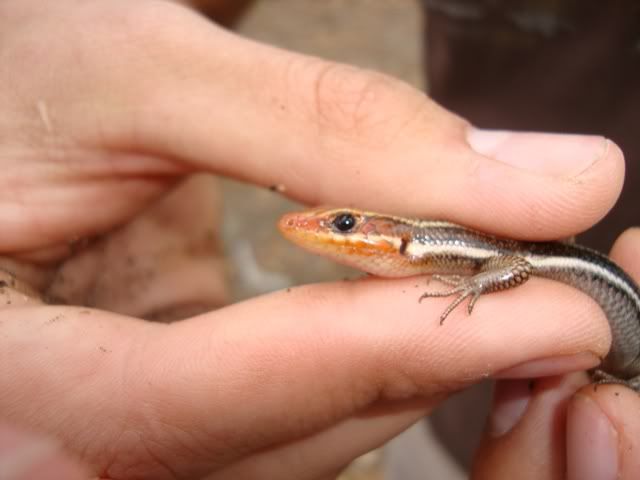
Southestern Five-lined Skink (Plestiodon inexpectatus):  I've posted about finding the plain-old Five-Lined Skink (Plestiodon fasciatus) back up in the Piedmont.  The Southeastern Five-Lined Skink is very similar....and basically can be distinguised by counting the number of labial, or mouth, scales between the eye and the nostril, or looking at the size of the scales that line the underside of the tail.  Either way, it requires you to catch them and scrutinize them pretty closely. 

We found oodles of these guys flipping boards and pieces of tin....pretty much everywhere we went.  

Members of this genus (Plestiodon, which used to be Eumeces) are very common in our fine state.  Usually associated with fallen woody debris (bark, logs, leaf-litter) in woodlands or semi-open woodlands.  They root around for invertebrates.  The picture of the male, sporting the red-head, is one I've posted before.  This was an individual that we found on our Sandhills trip.

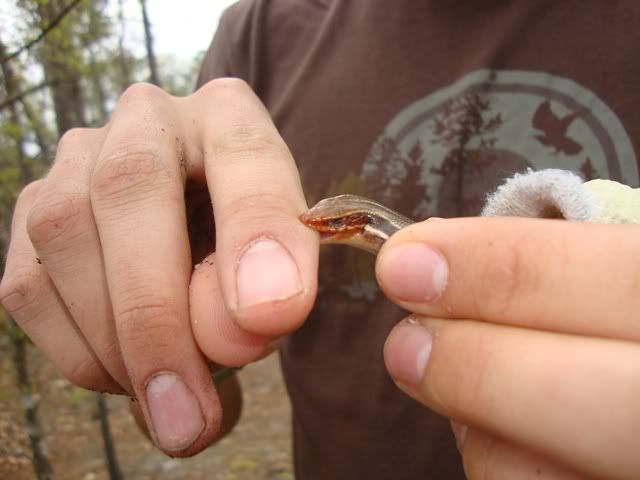
Above:  Skinks like to bite!  It's a last ditch effort to escape predation.  They will also undergo what is technically referred to as caudal autotomy.  This is where an individual purposefully separates its tail from its body.  The animal usually does this when captured by a predator.....the tail keeps wiggling after it has been separated, and apparently distracts the predator enough for the skink to make a hasty escape.

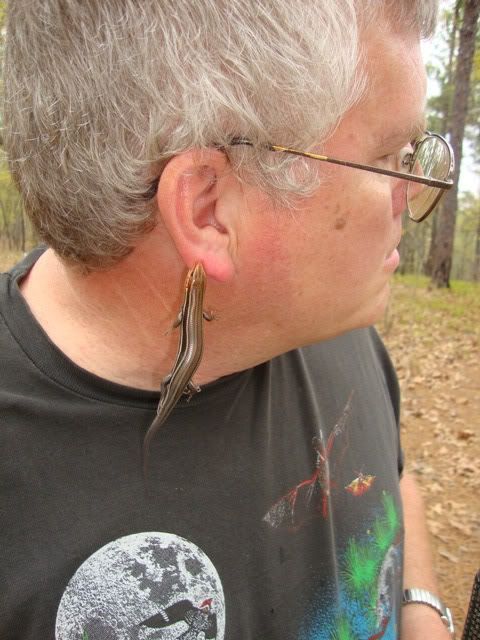
Above: Skinks even make good living jewelry for the fashion-savy individual on a budget.

_____________________________________________________________________

Only one more post focused on what we found during our trip to the sandhills is forthcoming. 

Stay tuned!

Tuesday, May 31, 2011

Herpin' In the Sandhills Part IV: A Pair of Awesome Constrictors.

Continuing my series of posts devoted to our herping trip to the Sandhills in April.  I've discussed the cottonmouths, the scarlet kingsnakes and the amphibians we encountered.  But, I still have some more incredible snakes to share with you all.

So, I'll contiue with a tale of two awesome constrictors.

The first of which was a huge treat for me.  Believe it or not, although this snake is not native to anywhere that I've lived prior to moving to the southeastern US, I've had alot of experience with this species in captivity.  It's one of the most commonly kept snakes by folks who are into herpetoculture (i.e., the keeping of amphibians and reptiles as pets).  I'd even had one as a pet for about 9 years.  One of the reasons I wanted to see one so badly was because it was hard for me to separate the domestically-bred pet from the wild animal.  Thus, it's hard to picture this snake outside of a terrarium.  So to find it out and about, just doing what wild snakes do, was sort of a geeky moment for me (perhaps equivalent to a Star Trek fan meeting Shatner, or something :) ).

The Corn Snake (Pantherophis = Elaphe guttata).  Jeff has a nice bit of property in the Sandhills.  Like every good Herpetologist should, he has littered his front and back yard with peices of tin.  The tin provides cover and warmth, which snakes like (especially on a cool April day).  So having alot of tin around to flip increases the chances of seeing something snakey.  Such was the means by which we captured TWO cornsnakes in about 25 minutes. 

Folks in the snake breeding business love to come up with ridiculous color morphs for these guys. 

That's cool and all....but in my mind, nothing beats just plain old cornsnake color.


Above: two pictures of the first individual we found under the tin.  A smaller, perhaps subadult, individual but very handsome!!

Above: the second and much larger individual we found under the tin.  We didn't want to disturb him, otherwise I suppose we could have gotten a picture of someone holding him for scale.  He was a nice size.


Notes on Corn Snake Diet:  Members of the Genus Pantherophis (previously Elaphe) are generally referred to as the "ratsnakes".  They get this name for obvious reasons (i.e., they like to feed on rats and other rodents).  The most thorough review of Corn Snake diet that I am aware of found that mammals make up 59% (by occurrence) of this species's diet, and 45% (by volume; Hamilton and Pollack, 1956).  But, Corn Snakes will also eat birds, bird eggs, lizards, other snakes, frogs, etc.  Regardless, the preference for mammals, like rodents, makes the Cornsnake a species that is beneficial to have around.
___________________________________________________________________________

The Northern Pine Snake (Pituophis melanoleucus melanoleucus): this is a critter very near and dear to my heart.  I'd spent three years radio-tracking the habitat selection and movement patterns of another member of this Genus (the Bullsnake, Pituophis catenifer sayi) in Wisconsin.  So gettting to handle a Pine Snake was like catching up with an old friend that I hadn't seen in awhile.

This species is relatively uncommon in North Carolina. We were fortunate with the individual pictured below.  Ed had found him the day before crossing a rarely travelled dirt road and put him in a bag for Jeff.  Jeff is currently involved in research on this species, but their general rarity makes them hard to find (it should be noted here that both of these folks have the appropriate state permits to do this sort of thing).  Dave and I were able to come with when the animal was released back at its capture location. 

Much like the Cornsnake, the Pine Snake is basically restricted to the fire-dependent habitats in the Sandhills region.  Many species within this genus prefer sandy soils and are actually very adept at burrowing, whether to create a refugia, a nest, or to find prey.  In fact, it has been estimated that the Bullsnake can move up to 207.5 cubic inches of soil per hour (Carpenter 1982)!  Not bad for something with no arms and legs.  The activity of digging is actually accomplished with a pointed & hardened rostral (nose) scale and powerful body undulations (see picture below).

Above: example of the habitat that northern Pine Snakes may be found in.

Only a handful of published research projects have been conducted on P. melanoleucus.  This includes a few studies on snakes in New Jeresy (USA; Burger and Zappalorti 1988, Burger et al. 1988), some in Tennessee (Gerald et al. 2006a, Gerald et al. 2006b), one in Mississippi (Baxley and Qualls 2009), and one in Florida (Franz 2005).  Currently, the best state-specific source for information on them is Palmer and Braswell (1995).  There is a real need for further published research on this species to help gain a better understanding of its ecology. 

As an aside, with the exception of the Indigo Snake (Drymarchon corais), members of the Genus Pituophis are the largest snakes north of Mexico.  Adults often grow larger than 5 ft, perhaps getting to 6 ft.  I have recieved anecdotal reports of 8 ft Bullsnakes in Wisconsin, which I have never substantiated (the largest individual I ever encountered was over 5.5 ft).


Above: a close-up of the head.  Note the thick rostral (nose) scale at the tip of the snout.  This is found in all members of the Genus Pituophis, and functions to aid these snakes in digging.


I've got a few more posts related to our trip, which I'll get to soon.


Literature Cited:

Baxley, D.L. and C.P. Qualls. 2009. Black Pine Snake (Pituophis melanoleucus lodingi): spatial ecology and associations between habitat use and prey dynamics. Journal of Herpetology 43:284-293.

Burger, J., and R.T. Zappalorti. 1988. Habitat use in free-ranging pine snakes, Pituophis melanoleucus, in New Jersey Pine Barrens. Herpetologica 44:48-55.

Burger, J., R.T. Zappalorti, M. Gochfield, W.I. Boarman, M. Caffrey, V. Doig, S.D. Garber, B. Lauro, M. Mikovsky, C. Safina, and J. Salvia. 1988. Hibernacula and summer den sites of pine snakes (Pituophis melanoleucus) in the New Jersey pine barrens. Journal of Herpetology 22:425-433.

Carpenter, C.C. 1982.  The bullsnake as an excavator. Journal of Herpetology 16:394-401.

Franz, R.D. 2005. Up close and personal: a glimpse into the life of the Florida Pine Snake in a north Florida sand hill. In Amphibians and Reptiles: status and conservation in Florida. W.E. Meshaka, Jr., and K.J. Babbitt (eds.). Krieger Publishing Company.

Gerald, G.W., M.A. Bailey, and J.N. Holmes. 2006a. Habitat utilization of Pituophis melanoleucus melanoleucus (northern pinesnakes) on Arnold Air Force Base in middle Tennessee. Southeastern Naturalist 5:253-264.

Gerald, G.W., M.A. Bailey, and J.N. Holmes. 2006b. Movements and activity range sizes of northern pinesnakes (Pituophis melanoleucus melanoleucus) in middle Tennessee. Journal of Herpetology 40:503-510.

Hamilton, W. J., Jr.  and J. A. Pollack. 1955. The food of some colubrid snakes from Fort Benning, Georgia.  Ecology 37:519-526.

Palmer, W.M., and A.L. Braswell. 1995. Reptiles of North Carolina. University of North Carolina Press.

Tuesday, May 17, 2011

Herpin' In The Sandhills Part III: Amphibians

It dawned on me recently that I still have alot of "stuff" to share with you all from our recent trip to the Sandhills.  I'm falling way behind as it's now been weeks since we were actually there!

So...I've talked about Cottonmouths, and Scarlet Kingsnakes to-date.  Now I'm gonna continue my overview of our herping experience with the amphibians we encountered. 

Our main focus during the trip was snakes (at least mine was :)  ), but we did make sure to take a few stops that were specifically devoted to amphibians.

One of our early stops on this trip was to a slow-moving stream.  The riparian area (i.e. area associated with the stream banks) was mostly wooded.  The stream bottom was silty with lots of organic matter (leaves, sticks, etc.).  Access was easy, as we basically hopped out of the vehicle at a bridge over the stream...walked down to the water and drug a dipnet along the mucky bottom.

Above: habitat where we found the Lesser Siren and Dwarf Mudpuppy

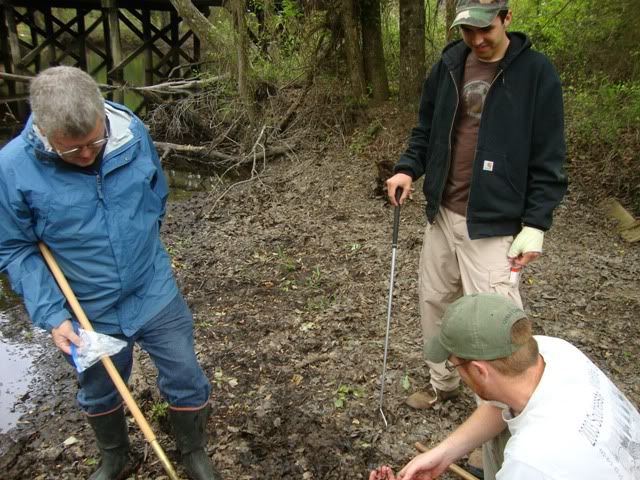
Above: Jeff, Dave and Ed sifting through a dipnet haul for amphibians

It didn't take but one or two net hauls for us to pull up some pretty neat stuff!

Unfortunately, none of these pictures turned out incredibly well.  Salamanders (especially aquatic salamanders) tend to wriggle alot when you take them out of that aqueous medium that they need to effectively breath.

Anyways, one of our grabs was a critter I had really wanted to see since moving here.

The Lesser Siren (Siren intermedia).


A unique little salamander that basically remains fully aquatic for its entire life, unlike many salamander species which have aquatic larvae (juvenile) stages and terrestrial adult stages.  Because they are primarily fully aquatic, adults retain bushy external gills found in most larval salamanders.  Yet, this species also has lungs, and is known to occassionally venture out onto land near the water's edge.  The Lesser Siren is also unique among most native salamanders in that adults have only small front legs and no hind legs. 

Lesser Sirens can be found in many aquatic habitats: slow moving streams, ponds, marshes, ditches, swamps, etc..  These must have plentiful aquatic vegetation and organic matter.

The next net haul revealed yet another species I had really wanted to see.

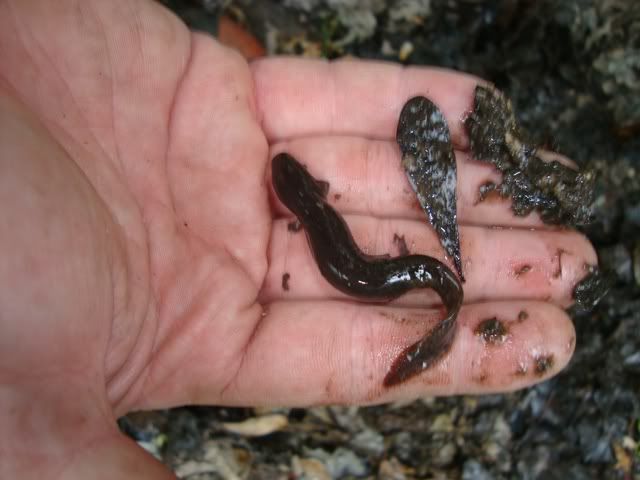
The Dwarf Mudpuppy or Dwarf Waterdog (Necturus punctatus).


Sorry for the poor picture, but this thing just would not hold still and we didn't want to keep it out of the water for too long.  Anyways, in the state we have the Dwarf Mudpuppy and the Common Mudpuppy (Necturus maculosus).  The Dwarf Mudpuppy is much more common than the Common Mudpuppy (confusing, I know).  It's further confusing for me because back home in Wisconsin, we have Common Mudpuppys....so I'd seen those before.  We don't have the dwarfs back home, however.  So, I was very excited to see the Dwarf.  Whereas the native folks from down here would probably have been more excited to see a Common Mudpuppy.  To each his/her own!

These two species do not have overlapping geographic ranges in the state.  The Common Mudpuppy only being found in a few drainage systems in the north east and the Dwarf found throughout the coastal plain.  This means you can differentiate between these species by the geographic location of capture.

Of further interest is the fact that a third species of mudpuppy or waterdog is found in the state: The Neusse River Waterdog (Nectrurus lewisi).  Although not as common as the Dwarf, the Neusse River Waterdog and the Dwarf overlap in their general geographic distribution.  The Neusse River Waterdog being found in a few drainages within the lower Piedmont and the Sandhills....and its in a few spots in the Sandhills that it overlaps with the Dwarf. 

Where they overlap, they can be distinguished in a few ways.  The Dwarf is comparatively smaller...more slender in general body shape...and has relatively small spots on the body.  The Nuesse River Waterdog has large bluish/black spots.
__________________________________________________________________

Another amphibian location we visited was an old over-flow spillway associated with a resevoir.  We were hoping to find individuals of a currently undescribed species called the "Sandhills eurycea" (Beane 2010).  Ed had seen a few there before and so we decided to check it out.  The spillway, apparently, rarely has running water in it, but seems to remain damp.  Over the years this ditch has also filled with organic debris (leaves, sticks, logs, etc.).  A perfect haunt for amphibians.  They fall into the spillway during migrations and have plenty of good cover and moisture.  This spot usually isn't a "trap", per se.  If they follow the spillway in one direction, or another, they can eventually find an exit out into the woods.

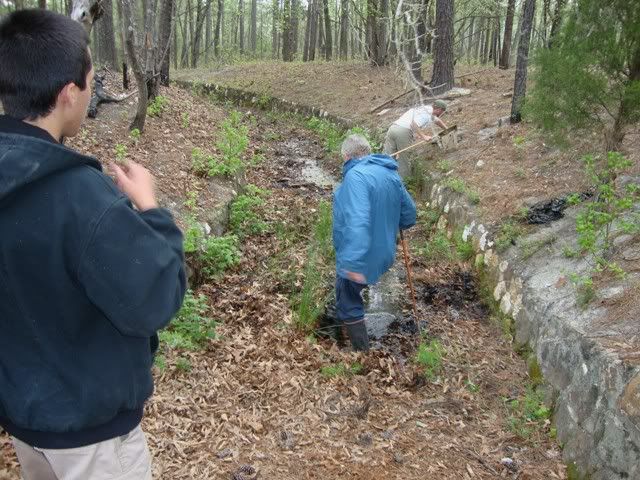
Above: searching through the damp leaf-litter in the spillway for amphibians.

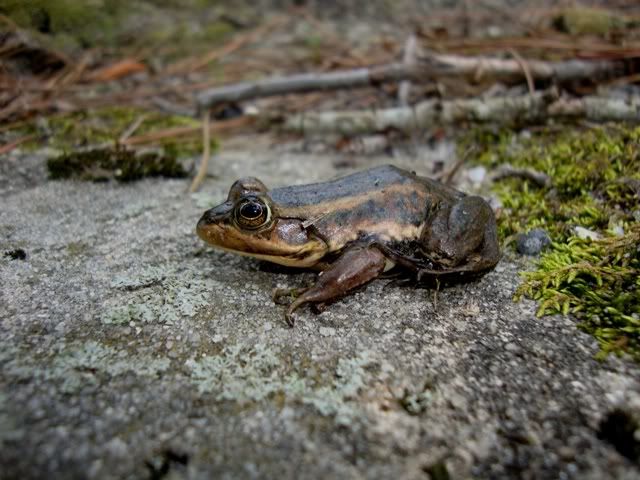
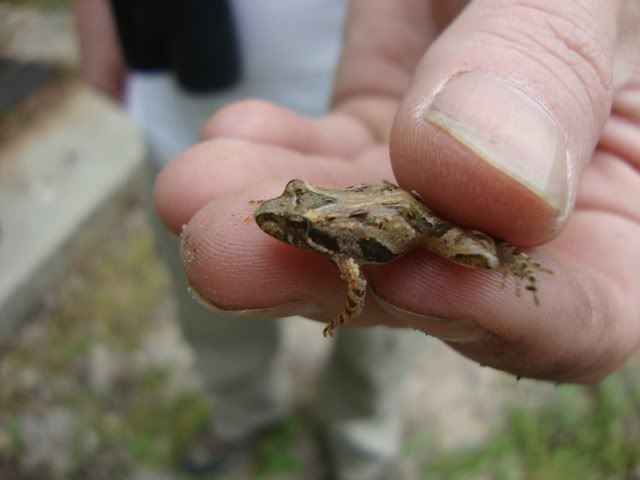
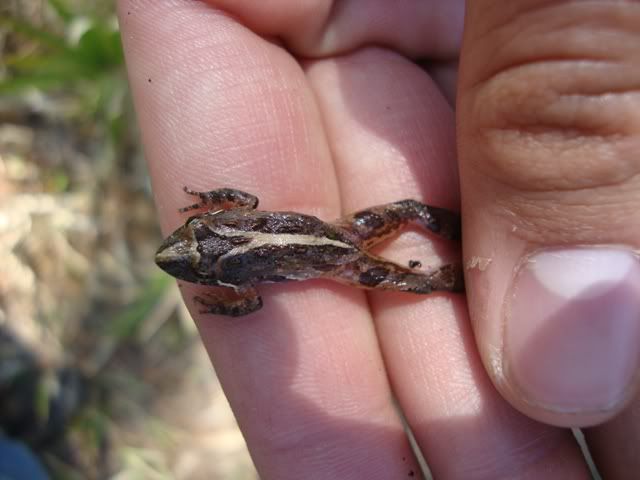
After a few minutes of searching, we found the "sandhills eurycea".  Unfortunately, I didn't get any pictures worth posting.  We also found a frog species that I had previously only seen in books: The Carpenter Frog (Lithobates = Rana virgatipes).  I had heard them calling a few years ago when in Florida, but we hadn't been able to catch any at that time.  So this was a real treat!
Above: a Carpenter Frog (Lithobates=Rana virgatipes) found in the habitat pictured previously

_________________________________________________________________________
In a previous post, I mentioned we visited a fish hatchery during this trip to the sandhills.  We'd found a number of species there, including Cottonmouths (Agkistrodon piscivorus).  The critters below were all found on hatchery grounds as well.  The first one mentioned below was a new species for me: the Southern Cricket Frog (Acris gryllus).  In our area of the Piedmont we have the Northern Cricket Frog (Acris crepitans), not the southern.  Back home in Wisconsin a particular subspecies of the Northern Cricket Frog (the Blanchard's Cricket Frog; Acris crepitans blanchardi) is state Endangered and rarely seen.  Because it is so rare, little is known about its ecology in the Upper Midwest.  Its declining throughout much of the midwest for reasons not entirely known.  In fact, some research manuscripts have actually referred to the decline of this species as "enigmatic"(Lehtinen and Skinner, 2006).  Its even believed that populations of the Southern Cricket Frog have been steadily declining, when compared to reports of their historic abudance.  As summarized by Jensen (2005a) a 1929 report mentioned that Southern Cricket Frogs were amazingly abundant in the southeastern United states.  Jensen's review outlines several recent studies from the late 1990's and early 2000s that have found the number of breeding populations has substantially decreased in areas where they were historically high. 

Still, most folks down here don't really bat an eye at finding them....but being from an area where they are rare....I'm always excited to find one.

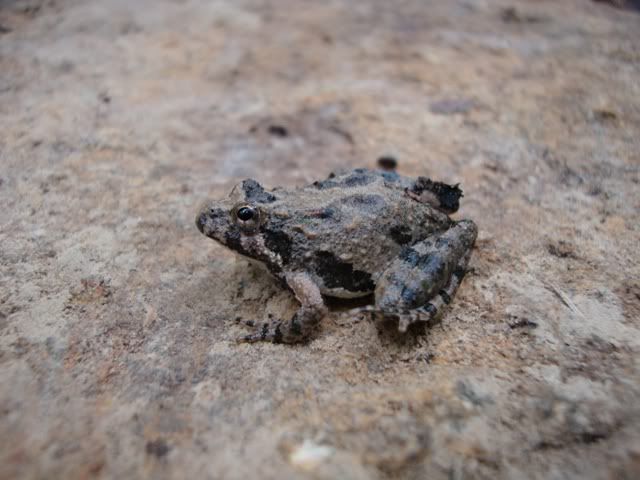
Note in the examples below the presence of a "triangle" mark between the eyes.  This is diagnostic for members of the genus Acris.

Above: an adult Southern Cricket Frog (Acris gryllus) found at the hatchery.

Above: for comparison, a Southern Cricket Frog found the next day at a different location.  Note the slightly different color pattern

Above: a Northern Cricket Frog (Acris crepitans) that I captured in the Peidmont in 2010.  It looks indistinguishable from the Southern Cricket Frog (for all practical purposes) and the two species are best differentiated by the breeding calls of the males. 


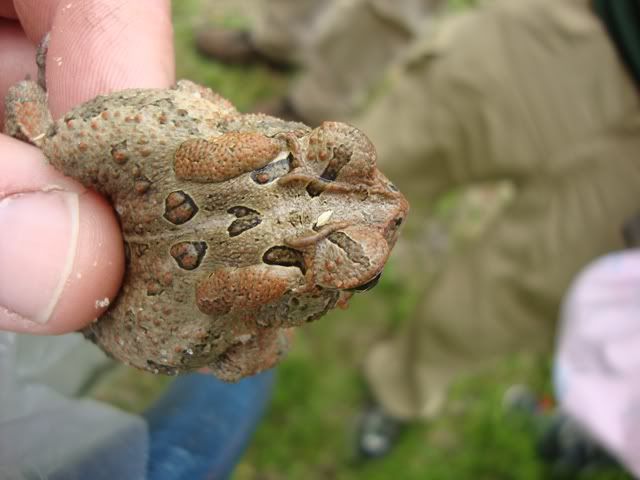
Another hatchery inhabitant was the Southern Toad (Bufo terrestris).  The Southern Toad is apparently common in many types of upland habitats in this region of the state.  According to Jensen (2005) it is even found in agricultural fields.  I'd actually seen this species before in Louisianna, but it was still nice to encounter one again!  Southern Toads are not found in our part of the Piedmont.  Instead we have the ubiquitous American Toad (Bufo americanus) and the less common Fowler's Toad (Bufo fowleri).  Interestingly, the Southern Toad will apparently hybridize with the Fowler's Toad (pertinent literature reviewed by Jensen (2005b).

Above: A Southern Toad (Bufo terrestris) found at the hatchery. 


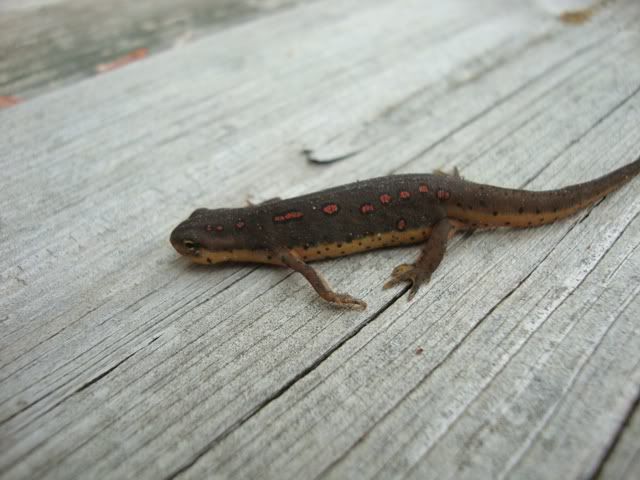
I'll round this out with pictures of an Eastern Red-Spotted Newt (Notophthalmus viridescens).  Another very cool critter.  This appears to be the terrestrial adult phase.  This species has three phases: a fully aquatic adult that hangs out in emphemeral wetlands.  It can remain aquatic indefinately, but should the wetland it calls home start to dry, it can become a terrestrial adult that lives on land. 

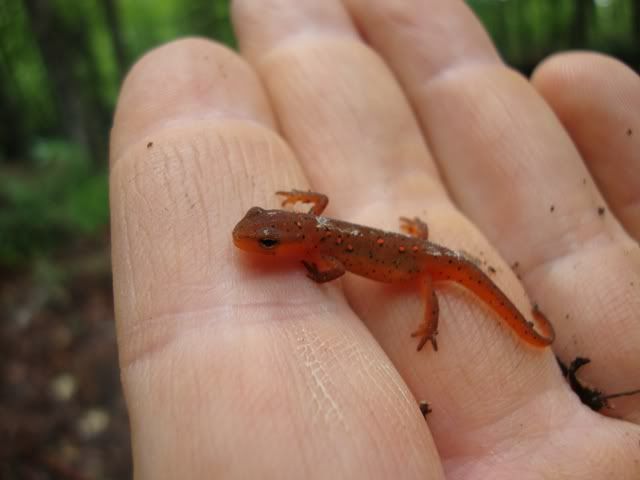
There is also a terrestrial juvenile phase called a "red eft".  Juvenile newts can remain aquatic until they become adults if the pond they live in does not dry.  Should the pond begin to dry when the newt is still a juvenile, it will become a terrestrial "red eft" and live on land like many adult salamanders....and eventually become a terrestrial adult.

Whew! 

This is an amazing survival mechanism and really highlights the plasticity in life history strategies that salamanders are capable of (how many critters can switch between fully aquatic and fully terrestrial lifestyles so willy-nilly?).

This is a species I am very familiar with from Wisconsin.  Still love seeing them, though.

Above: an terestrial phase adult Eastern Red-spot Newt (Notophthalmus viridescens) found at the Hatchery.

Above: a terrestrial juvenile or "red eft" phase of the N. viridescens.  This individual was not caught during our trip to the Sandhills, but in a drift fence at one of my study sites.


I STILL have a fair amount of stuff to share with you from our trip to the Sandhills!   More to come soon.

_______________________________________________________________

Further Literature on the amphibians discussed above, see the following summative resources:

Beane, J.C., A.R. Braswell, J.C. Mitchell, and J.W. Palmer. 2010. Amphibians and Reptiles of the Carolinas and Virginia (second edition).  University of North Carolina Press.

Braswell, A.R. 2005. Neuse River Waterdog, Necturus lewisi, Brimley 1924. In Amphibian Declines: the conservation and status of United States species. M. Lannoo (ed.). University of California Press.

Dundee, H.A. 2005. Dwarf Waterdog, Necturus punctatus, Gibbes, 1850. In Amphibian Declines: the conservation and status of United States species. M. Lannoo (ed.). University of California Press.

Husinger, T.W, and M.J. Lannoo. 2005. Eastern Newt, Notophthalmus viridescens, Rafinsque 1820. In Amphibian Declines: the conservation and status of United States species. M. Lannoo (ed.). University of California Press.

Lehtinen, R.M., and A.A. Skinner. 2006. The enigmatic decline of the Blanchard's Cricket Frog (Acris crepitans blanchardi): a test of the habitat acidification hypothesis. Copeia 2006:159-167.

Leja, W.T. 2005. Lesser Siren, Siren intermedia, Barnes, 1826.  In Amphibian Declines: the conservation and status of United States species. M. Lannoo (ed.). University of California Press.

Jensen, J.B. 2005a. Southern Toad, Acris gryllus, LeConte 1825. In Amphibian Declines: the conservation and status of United States species. M. Lannoo (ed.). University of California Press.

Jensen, J.B. 2005b. Southern Toad, Bufo terrestris, Bonnaterre, 1789. In Amphibian Declines: the conservation and status of United States species. M. Lannoo (ed.). University of California Press.

Matson, T.O. 2005. Mudpuppy, Necturus maculosus, Rafinesque, 1818. In Amphibians Declines: the conservation and status of United States species. M. Lannoo (ed.). University of California Press.

Mitchell, J.C. 2005. Carpenter Frog, Rana virgatipes, Cope 1891. In Amphibians Declines: the conservation and status of United States species. M. Lannoo (ed.). University of California Press.

Petranka, J.W. 1998. Salamanders of the United States and Canada (first edition). Smithsonian Press.

Tuesday, May 3, 2011

Herpin' In The Sandhills Part II: The King In Crimson (Lampropeltis triangulum elapsoides)


Please forgive the geeky title of this blog post.  I can't help myself.  I have too many geeky interests.

Anyways, one species that I have really wanted to see since moving here is the Scarlet Kingsnake (Lampropeltis triangulum elapsoides).  It's a beautiful little snake...the adults usually range from 14-27 inches long (Beane et al. 2010).  It's non-venomous, and a predator of primarily cold-blooded vertebrates.  In this region, the Scarlet Kingsnake is mostly fond of lizards, particularly skinks (Palmer and Braswell 1995).  Despite it's stunning colors, it is very secretive and difficult to find....so we were faced with a challenge!
__________________________________________________________________________

On the first day of our Sandhills trip, we spent alittle time with a Herpetology Class that was having a field trip in the same area.  Early in the morning, someone came across a nice little Scarlet Kingsnake.  It was very cool to see one.....but would have been more cool to find it ourselves.  So, after some time of hanging around with the class, we broke off for a spell.

Luckily...as with the Copperheads...Jeff knew where to go and also some tricks about the microhabitat to focus on when searching.  Finding them is not just about being in the right habitat at the right time of year....it's also about finding fallen logs and peeling back the bark (not even just rolling the logs themselves, but peeling back the bark!).  These little guys like to hide there, just below the bark layer, absorbing the warmth.

It should be noted that, these types of searches can be very destructive to the small habitats and micro-climates required by many of the critters living among fallen woody debris.  So, I would recommend doing this very sparingly, if at all.  I would also suggest taking all effort NOT to destroy the bark you peel off, so it can be carefully put back.  The average "herper", just going out there and tearing stuff up in an effort to see things and get pictures, can be very destructive.  The impact of destructive practices when "herping" has been found to be substantial, in some cases.  In fact, Goode et al. (2004) found a correlation between rock outcroppings damaged by collectors and fewer reptiles present.  Such disturbances do not need to be dramatic.  Pike et al. (2010) found that even rocks displaced less than 30 cm supported fewer lizards than undisturbed rocks.

To be responsible, you have to at least try and leave as little evidence of your presence as possible. 

But anyways....on to the kingsnakes.  We had been out for an hour or so looking among the fallen logs, under pieces of tin, and below the bark on fallen logs/trees amongst the wiregrass.  Having fun, but not much luck with Scarlet Kings.  I did happen across a Racer (Coluber constrictor) in the "blue" or "opaque" phase that occurs just prior to the snake shedding its skin.  Got a neat shot of his tongue.


Finally, however, our luck changed!

Ed was nice enough to drive the group of us around to a variety of spots.  Thus, we were able to hit a site for a period, then hop back in the vehicle as a group and move on to the next site en masse.  At our final location, we saw alot of fallen woody debris that looked promising.  We got to work.  At one point, Jeff peeled back some bark on a dead, but still standing upright, pine tree and a little Southern Flying Squirrel (Glaucomys volans) that had been hiding beneath bounded up the tree and into a hole.  Didn't get a picture of it, though!

Later, I peeled back the bark on an old fallen long-leaf pine trunk, and immediately was struck by the dazzling color pattern of a beautiful little snake beneath!


Next, Jeff peeled back some of the bark alittle further down on the same log and turned up another!!

Together they made quite a pair....

Because we had finally seen a Scarlet Kingsnake, we stopped searching for them to avoid damaging more potential micro-habitat in the area.
___________________________________________________________________

Great variation exists in the appearances of Lampropeltis triangulum (generically referred to as the "Milksnake").  The Scarlet Kingsnake (Lampropeltis triangulum elapsoides) is the only subspecies found in our particular state.  In other regions of North America, other subspecies are present.  There are currently nine sub-species recognized by Crother et al. (2008).
  • Louisiana Milksnake (Lampropeltis triangulum amaura)
  • Mexican Milksnake (Lampropeltis triangulum annulata)
  • New Mexico Milksnake (Lampropeltis triangulum celaenops)
  • Scarlet Kingsnake (Lampropeltis triangulum elapsoides)
  • Central Plains Milksnake (Lampropeltis triangulum gentilis)
  • Pale Milksnake (Lampropeltis triangulum multistriata)
  • Red Milksnake (Lampropeltis triangulum syspila)
  • Utah Milksnake (Lampropeltis triangulum taylori)
  • Eastern Milksnake (Lampropeltis triangulum triangulum).
If one refers to the map for this group in Gibbons and Dorcas (2005) areas of potential integration (where the ranges of different subspecies border one another) exist in the Southeast.  This makes delineating where individual sub-species exist problematic.  It also calls the validity of various sub-species into question.  This, coupled with the incredibly broad geographic range of Lampropeltis triangulum, in North America, warrant further phylogenetic research be done on this species/sub-species complex.

Literature Cited:

Beane, J., A.L. Braswell, J.C. Mitchell, W.M. Palmer, and J.R. Harrison III. 2010. Amphibians and Reptiles of the Carolinas and Virginia (second edition). University of North Carolina Press (Chapel Hill, NC).

Crother, B. I. (ed.) 2008. Scientific and Standard English Names of Amphibians and Reptiles of North America North of Mexico (6th Edition). pp. 1-84, SSAR Herpetological Circular No. 37.

Gibbons, W., and M. Dorcas. 2005. Snakes of the Southeast. The University of Georgia Press.

Goode, M. J., D. E. Swann, and C. R. Schwalbe. 2004. Effects of destructive collecting practices on reptiles: a field experiment. Journal of Wildlife Management. 68:429-434.

Palmer, W.M. and A.L. Braswell. 1995. Reptiles of North Carolina. University of North Carolina Press, Chapel Hill (NC).

Pike, D.A., B.M. Croak, J.K. Webb, and R. Shine. 2010. Subtle-but easily reversible-anthropogenic disturbance seriously degrades habitat quality for rock-dwelling reptiles. Animal Conservation 13:411-418.

Tuesday, April 26, 2011

Herpin' In The Sandhills Part I: Cottonmouths!


I've been fortunate since moving to this part of the country.  Mostly because I have had the good luck to become acquainted with some incredible herpetologists and naturalists.  Most of these individuals are also nice as hell!  Two stellar examples of what I'm talking about are Jeff Beane (NC Musuem of Natural Sciences) and Ed Corey (NC Division of Parks and Recreation).

I emailed Jeff almost out of the blue when I moved here.  I was told by a good friend of mine from Wisconsin (who is also a herpetologist) that THE guy to talk with about herps down here was Jeff.  Jeff was incredibly nice and immediately agreed to show me around in the Sandhills region.  He has an ongoing telemetry project focused on a few rare snake species down there, and invited me to come out when he tracked snakes.  Although we didn't see any snakes that day, I got to know Jeff as an incredible naturalist.  He not only knows the herps of this region...but also the mammals, fish, birds (by call!) and even many plants.  It was through Jeff that I met Ed, who is also incredible at identifying native flora and fauna.  I'm not sure how they do it!  I can barely stay on top of the species I find in a 20 mile radius of the campus I work on!  It will take years and years to come close to their combined field ID knowledge.

Luckily, however, both of these fine gentlemen were more than willing to take us out to do snake surveys this spring!  So, last weekend...myself a a current undergraduate research student working with me made an excursion down to the Sandhills.  For reference, our wonderful state is divided into three major regions: The Mountains to the west....the Coastal Plain to the far east....and the Piedmont in between.  I live in the Piedmont.  The Sandhills are to the east, associated with the coastal plain region 

The two regions (the Piedmont and the Sandhills) could not be more different.  Whereas the Piedmont is primarily eastern deciduous hardwood forest habitat (where not disturbed), dominated by clay soils.... the sandhills have alot of open pine savannah habitat with sandy soil.  The Sandhills are generally a flat, gently rolling landscape.  In the areas we were visiting (i.e., the state gamelands), the habitats are heavily managed with fire.  In other words, the state purposefully starts fires (that they control) to reduce the amount of shrubby/brushy woody vegetation.  These fires do not burn hot enough to damage healthy adult trees, and removal of the shrubs allows for the proliferation of grasses (for example).  So the undergrowth is not particularly thick or difficult to navigate...there's lot's of open sand and clumps of grasses.  The adult trees that remain are primarily long-leaf pine (Pinus palustris), as you can see in the picture below.


Even based on this very cursory overview of the differences between the sandhills and the Piedmont, you can still probably guess that (like the vegetation) the critters that inhabit these regions differ substantially.  No where this is more evident than when one compares the amphibian and reptile species in each region.  The Sandhills have a very different assemblage of snakes, in particular, than where I live in the Piedmont.  I was really itching to see some of these species!

We were there for two days and boy did we see the critters.  I can't fit them all into one post, so I'll have a series....each highlighting something different.  Ultimately, from reading these posts it will become clear that I was almost a tourist during our trip, but....hey....these were all new and much sought-after species for me :) 
________________________________________________________________________

I've got to start with one of my favorite encounters of the trip, which was an encounter with an often maligned critter here in the south: the Cottonmouth (Agkistrodon piscivorus).

I've seen Cottonmouths twice before: once in Louisianna and once in southern Illinois.  Both of these times, I saw juveniles and I really wanted to see a big adult.  Luckily, Jeff and Ed knew a good spot, which happened to be at a fish hatchery.  The large ponds for rearing fish provided habitat for many snakes, turtles and frogs....all of which may be eaten by Cottonmouths.  The ponds and over-flow streams nearby also created ample habitat for Cottonmouths.  Interestingly, this is about as far north in the state as Cottonmouths exist in high densities.  The hatchery really looks nothing like the Sandhills that I described above.  All of the water and thick vegetation reminded me of a southern swamp....not of sandhills.

Anyways, our trip happened to coincide with the day that a nearby univeristy's Herpetology Class was having their annual spring field trip.  More eyes searching meant more critters found.

When we arrived, the class was already there and had uncovered a beautiful adult Cottonmouth.

And boy was it a prickly individual!

But check out that beautiful color!  In pictures, I've always thought adult Cottonmouths were a tad drab, but this one was stunning!  You can just see the white flesh on the inside of the mouth, which gives the "cottonmouth" its name.  When really threatened, this snake will fling its head back and hold its mouth open wide to show off the white innerds as a threat display.


Above: "He's got tha devil in 'im!"
The flash hit the snake's tapedum lucidium just right and caused that
neat eyeshine in this picture.  Also note the enlarged supraocular scale above the eye.

 
So...we saw a Cottonmouth.  That's cool.  But, we didn't actually find a Cottonmouth.  Not quite as cool.

________________________________________________________________________

The next day, Jeff, Dave and I returned to the fish hatchery.  We hoped to see a Cottonmouth in a more natural setting, as opposed to dumped out of a pillow case onto a mowed lawn.  After arriving, Jeff (who always knows the best spots) had us focus on a stream that runs adjacent to some of the hatchery ponds.  The riparian area, or area of land closest to the stream bank, had alot of dense shrubs and trees.  Not great for seeing snakes, and alittle unnerving to walk along knowing there are Cottonmouths about.  Unfortunately we didn't have hip waders, so we couldn't really get into the water and search the stream that way. 

So, we walked to the stream on a trail and stood at an open spot and visually scoured the banks.  Jeff had binoculars, which helped...and he saw a big adult on the opposite bank.  It was wary though, and slipped into the water soon after we saw it.

No more Cottonmouths to be seen at that spot. 

We decided to walk along the artificial hatchery ponds...hoping to get snakes sitting in the sunny grass or hunting for frogs along the pond edge.  I hugged the pond edge, Jeff watched the brushy woodland edge to my left and Dave walked in between us on the hatchery maintenance road.  The stream we had hit early on also meandered along to Jeff's left, in the woods.  Occassionally it would run its course close to Jeff and he could give the banks a glance with his binoculars.  We were feeling confident.

After a few minutes, I saw a watersnake of some sort, but it pulled into a hole before I could grab it (...and I ain't sticking my hand in a hole at a Cottonmouth site!). 

Not long afterwards, Jeff noticed a pipe discharging water into the woods.  I think it was an overflow pipe from the hatchery ponds...but can't remember.  The water rushed out of the pipe into a scoured-out channel that eventually connected to the stream we had started at (see below).  It wasn't long before he saw some Cottonmouths near the pipe!


Two adults were sitting in the sun among a tree root mass.  Nice ones too.  Then Jeff got a glimpse of a coil in the water below the root mass....a third snake.  Next, he saw another Cottonmouth (a smaller one) resting on the steep bank across from us....a fourth snake.  Finally, he looked down into the channel two foot below where we stood and saw a juvenile Cottonmouth resting near the water's edge....a fifth snake!  If I remember correctly, a few minutes later we actually turned up a sixth Cottonmouth slightly upstream of the root mass.

Success! 

Unfotunately, the rather dense vegetation meant it would be difficult to get in at the snakes with a hook or tongs and safely maneuver them into an open area for photos.  Plus, I didn't have any experience with Cottonmouths...and after seeing that big ornery adult the day before, wasn't feeling very confident about my chances in such a tight place.

Jeff, however, didn't have any problems kneeling on the bank and hooking the little juvenile at our feet.  He brought it up so we could get some photos. 

And what a handsome little devil he was!


I didn't have the flash on in the top picture and it's not a terribly complimentary shot.  The lower one, I quite like however!

Easy to see how those little juveniles blend into the ground debris so well.  A great hunting advantage!

Notes On Cottonmouth Aggression and Ecology:
As already mentioned, Cottonmouths are often treated with scorn by folks.  This is largely out of fear and due to misinformation/myth.  In fact, David Steen has written some great blog entries dispelling common Cottonmouth myths on his blog.  Check 'em out (Cottonmouths Dropping Into My Boat, Cottonmouth Breeding Balls, Cottonmouths North of Virginia,  and I Got Chased by a Cottonmouth).  Anyways, they get sort of a bad reputation as being unusually aggressive, and scary.  Obviously, they are a venomous snake and must be treated with a hefty dose of respect, but they are not really a "scary" animal.  They look initimidating because of their tendencey to open their mouth and display the white flesh when threatened.....their supraocular scales (scales just above each eye) also jutt out slightly.  This almost gives the snake the appearance of being angry or annoyed, which may seem scary to some. 

As for the notion that they are particularly aggressive snakes.....  an interesting study by Gibbons and Dorcas (2002) sheds some light on the reality of these claims.  They confronted 45 wild Cottonmouths with a variety of artificial "threats".  These included (1) standing beside the snake with snakeproof boots and touching the snake with the boot, (2) stepping on the snake lightly, or (3) picking up the snake with an artificial hand.  Of the 45 snakes approached 23 (51%) tried to simply escape (NOT bite).  28 individuals (78%) used threat displays or defense behaviors.  Others simply sat there.  Only 13 of the 36 cottonmouths grasped with the artificial hand bit.

Cottonmouths are very general in their dietary preferences.  They opportunistically consume many prey items, and even known to eat carrion.  However, fish and amphibians are likely to most commonly consumed prey animals (Ernst and Ernst 2003).  They occupy nearly any type of aquatic habitat, including brackish coastal marshes....but also rivers, streams, wetlands, ponds, lakes, impoundments, ditches and etc..  Usually these habitats have many downed logs, brushy edges, etc. for cover (Ernst and Ernst 2003).

Literature Cited:

Ernst, C.H, and E.M. Ernst. 2003.  Snakes of the United States and Canada. Smithsonian Press. Washington, DC.

Gibbons, J.W., and M.E. Dorcas. 2002. Defensive behavior of Cottonmouths (Agkistrodon piscivorus) towards humans. Copeia 2002: 195-198.