Showing posts with label Trees. Show all posts

Wednesday, March 20, 2013

The Unwelcome Old Man and Skunks by the Crescent Moon

Old man winter still has a firm grip on the upper Midwest.

I love the snow and cold, but this time He's screwed up one of our lab exercises........

Normally, this week is for medium-sized mammal trapping with wire cage traps.  In fact, last year...the weather was perfect for such an endeavor, as depicted in this picture from almost exactly a year ago today.
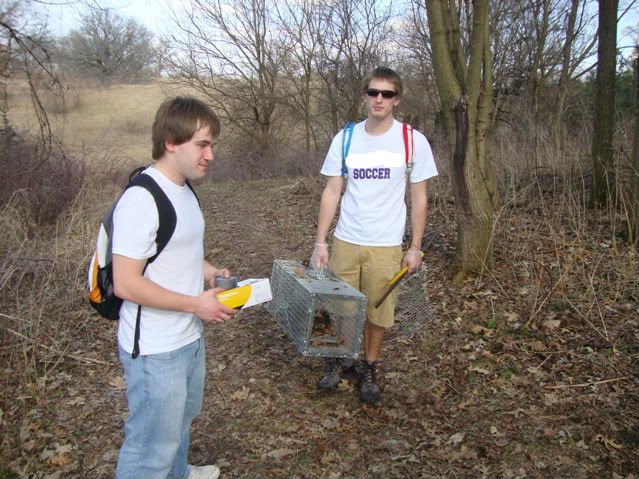
But because the Old Man keeps peeking in on us this year, we have recently experienced another bit of snow and nighttime temperatures dipping to below 10 degrees (F) for two days in a row.  Even as I type this....it is only 11 degrees (F) outside and I'm wearing my extra-heavy smartwool socks!

There is no small amount of irony in the fact that today is technically the first day of spring, or the vernal equinox.

Granted, it's possible we could have set this up so that any captured critters wouldn't freeze to death (placing alpaca wool into the cages...putting the cages in sheltered locations....place spruce boughs around them to block the wind) but I don't want to take any chances.
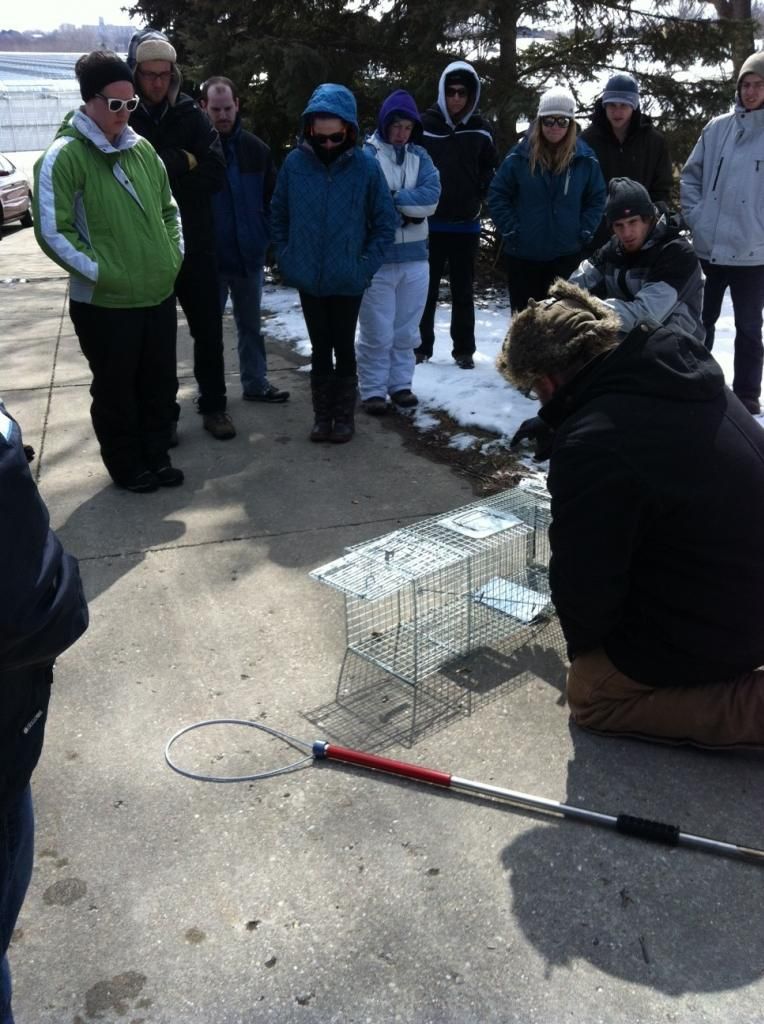
Photo by L. Schulte
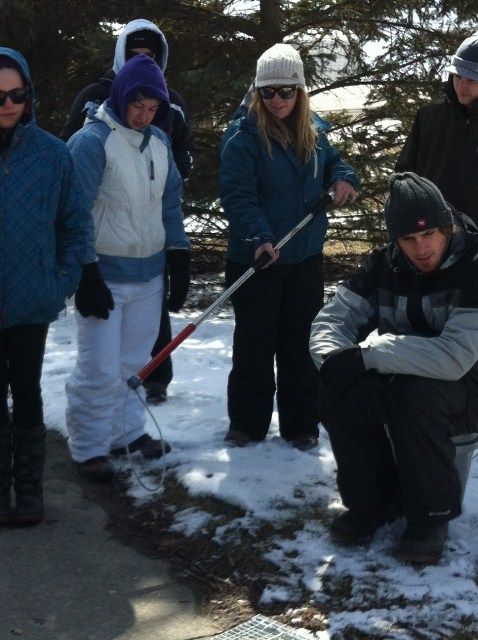
Thus, today involved review of how the traps work, a discussion of various other traps employed to catch mammals, and scoping the site for locations (in addition to upkeep of their ongoing monitoring projects on-site).
Photo by L. Schulte

Luckily, I had somewhat planned for this possibility and scheduled two weeks of mammal trapping (and seeing next week is Spring Break....we may have enough time for things to warm up before we try this again!).

I shouldn't be shocked by anything this year, I guess.  There has been quite a trend for cold and snow (unlike last year).  You can see some past examples here and here.  There have been other snowy lab periods since then.

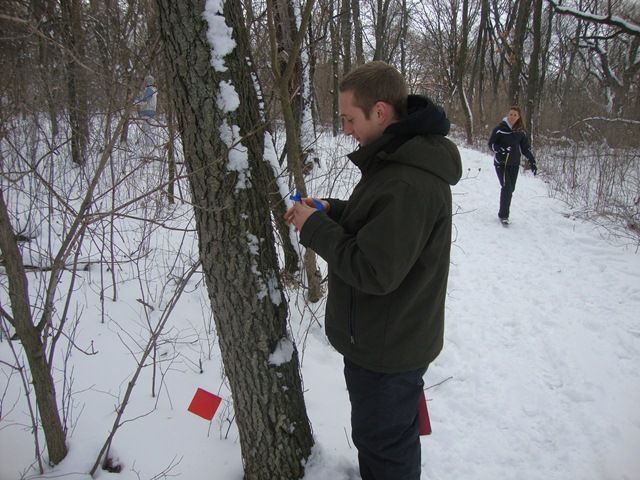
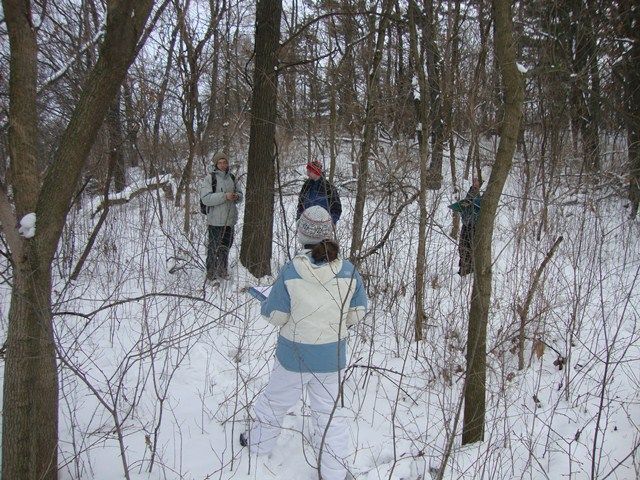
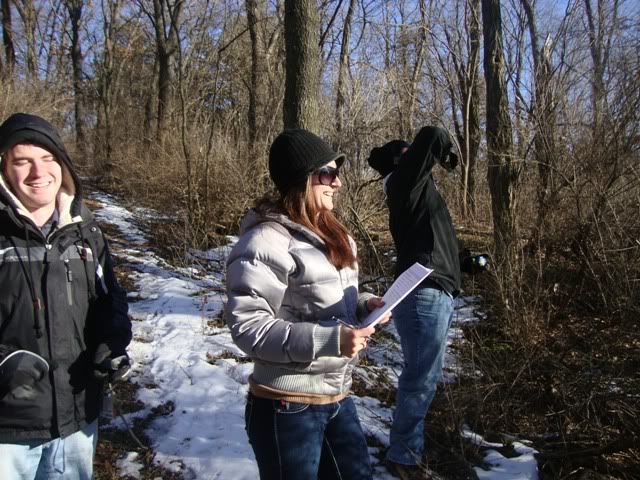
For example, we collected data in the snow to quantify forest community type and composition a while back......
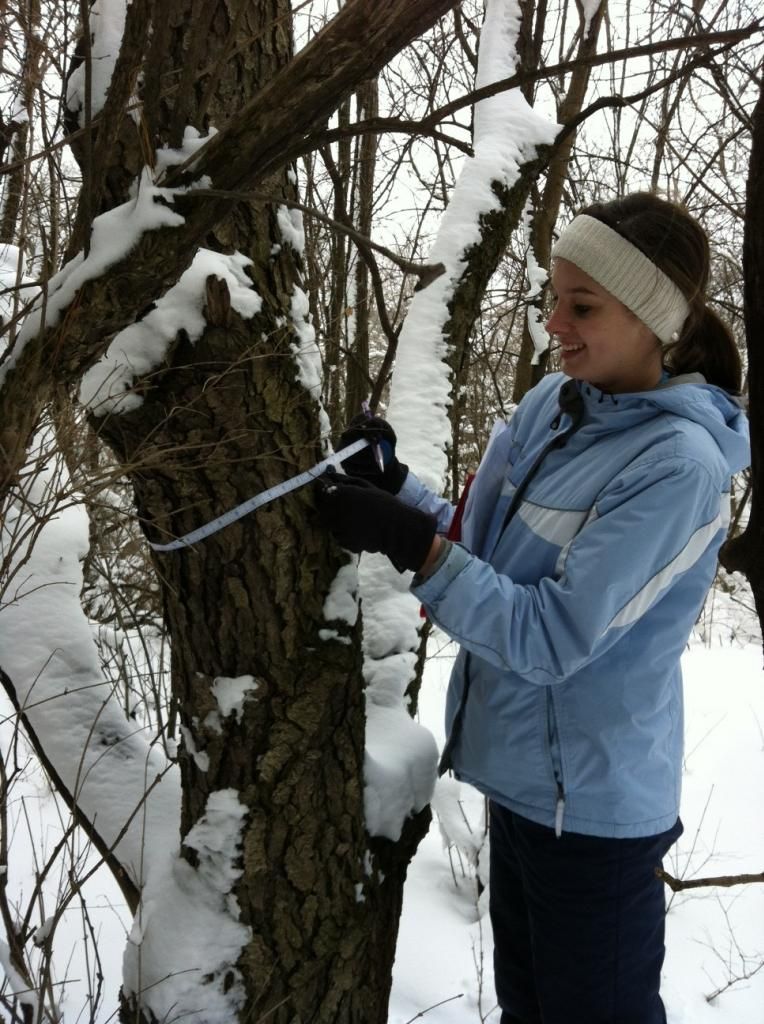
Photo by L. Schulte


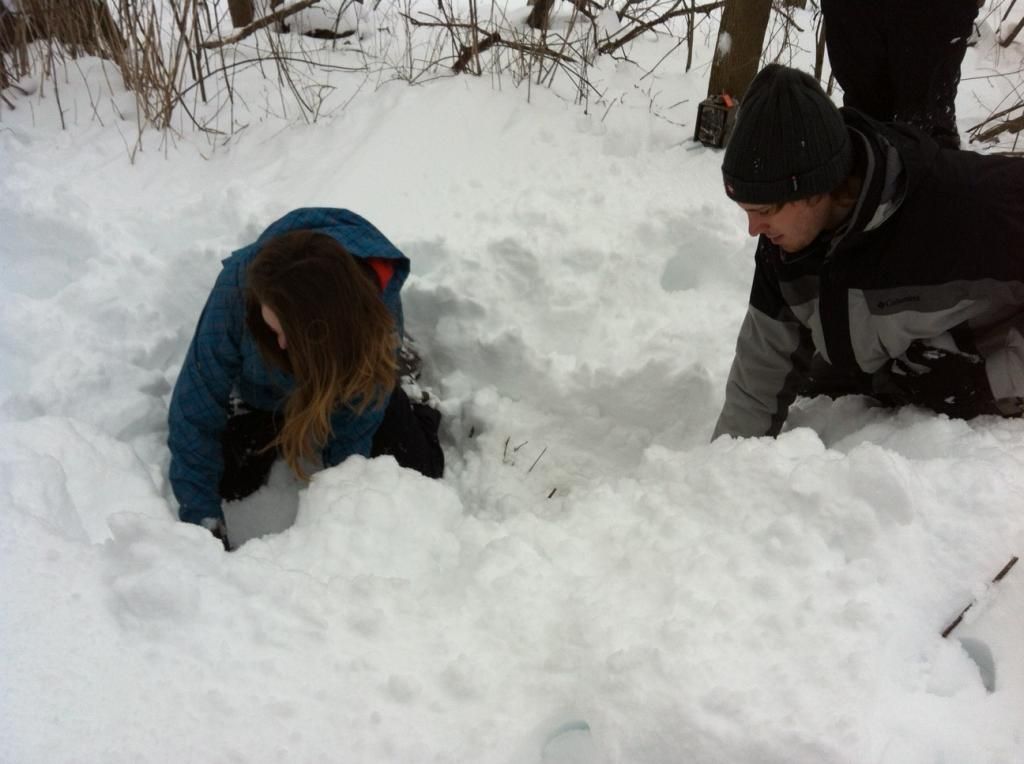
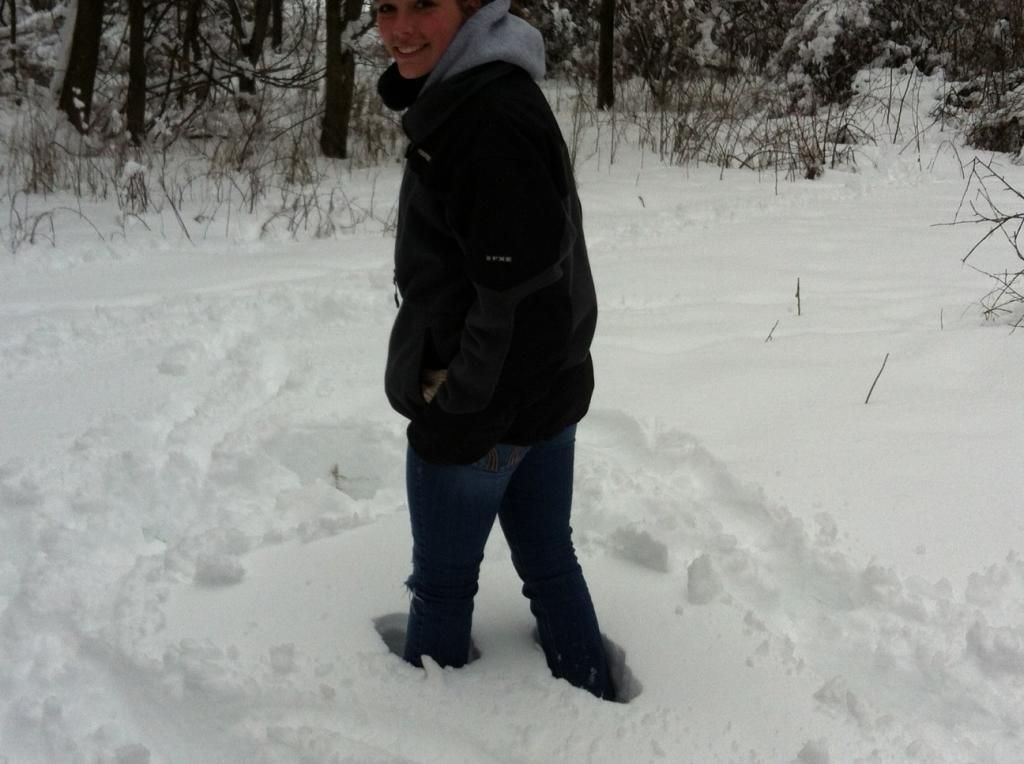
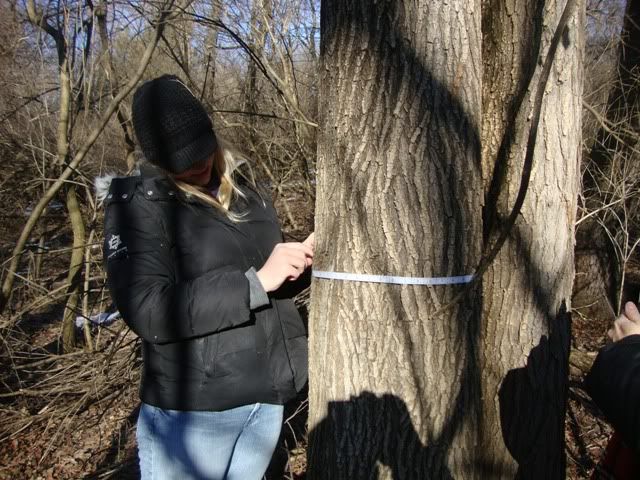
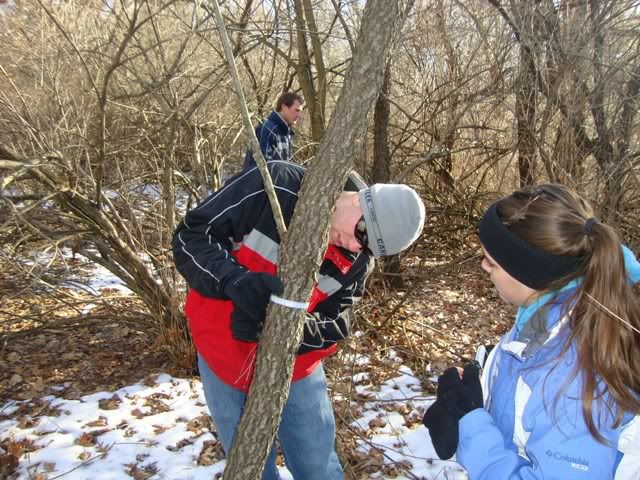
And several weeks ago, as we worked on determining the age distribution of Black Cherry Trees (Prunus serotina), we dealt with probably the deepest snow of the 2012/2013 winter (and it all fell within 24 hrs).  See examples of how deep that snow was below...
Photo by L. Schulte
Photo by L. Schulte
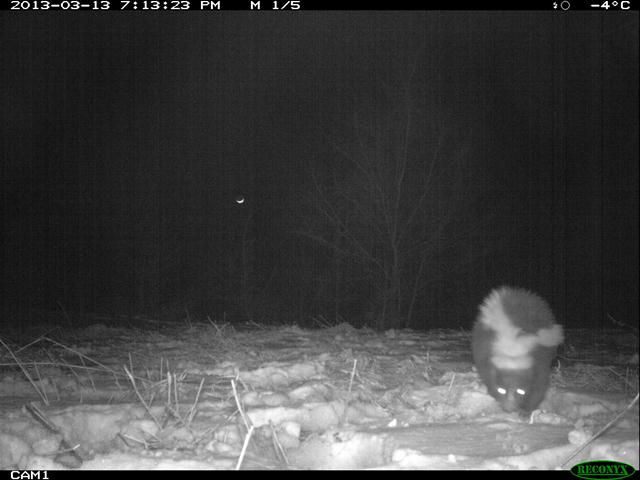
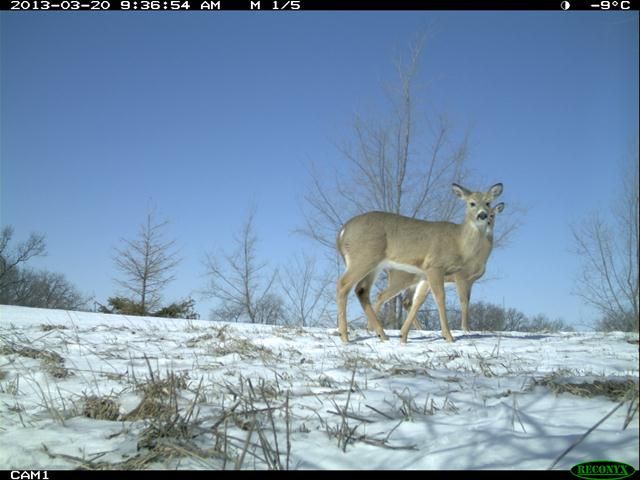
The critters are still moving about, though....

I particularly like the pictures below.

The crescent moon behind this Striped Skunk is kinda neat....
...and these White-tails look nice against that bright blue sky.....
Interestingly, the entire site was criss-crossed with Canine tracks today (Red fox and possibly 'Yote), but we didn't get a single picture on our cameras over the last week.  We had several come close (based on tracks) and one actually marked within ~22 meters on two sides of one of our cameras.

More Phenology Updates:

On Monday, March 18th, I saw my first Killdeer (Charadrius vociferus) of the year.

Bit of a slow week out there.

Stay tuned.

Sunday, February 12, 2012

Advanced Ecology Lab Week 3: Red-tails and Tree Quadrats


There is no type-o in the title.  I meant to jump from week 1 to week 3 in my posts.  The stuff the class did during week 2 is associated with week 4...so I'll talk about it later!

The cameras picked up some interesting stuff over the past week.  Again, the White-tailed Deer was in greatest abundance.

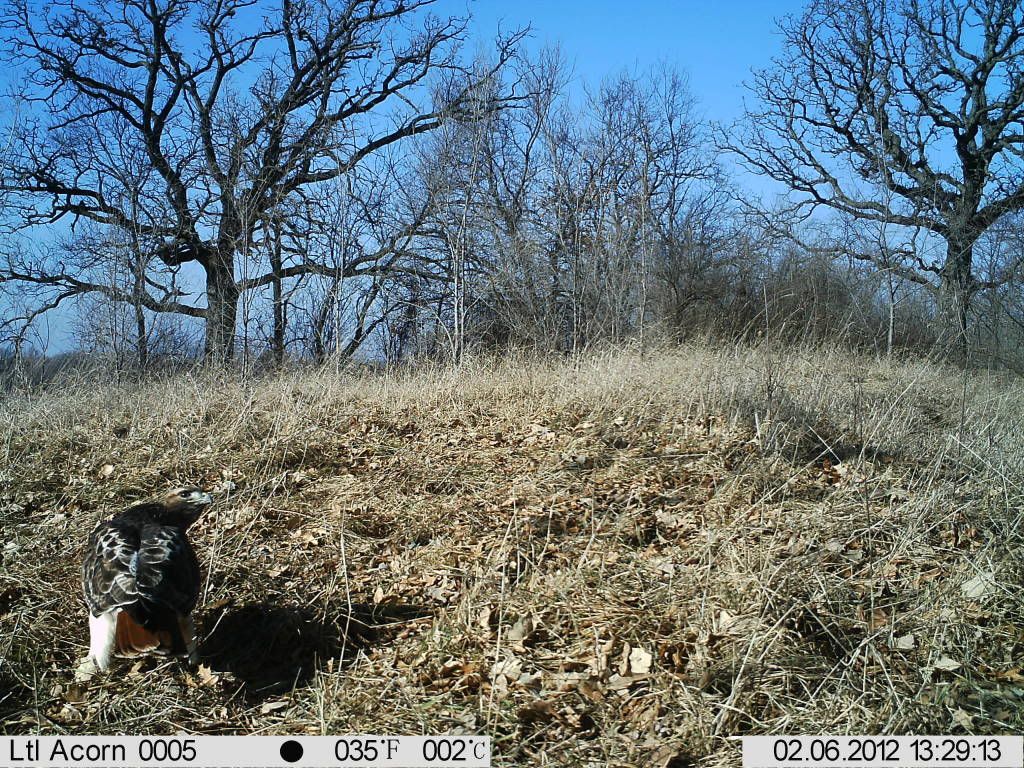
But...this week we were also fortunate enough to get a nice shot of a Red-Tailed Hawk (Buteo jamaicensis).  The first Red-tail I've caught pictures of on a camera trap (although not the first bird).


Interestingly, two weeks ago, we saw a pair of red-tails flying overhead on-site and screaming at eachother.  One had a small mammal in its talons and the other didn't.  I wonder if there was some kleptoparasitism about to happen?
______________________________________________________________________

Tree Sampling:

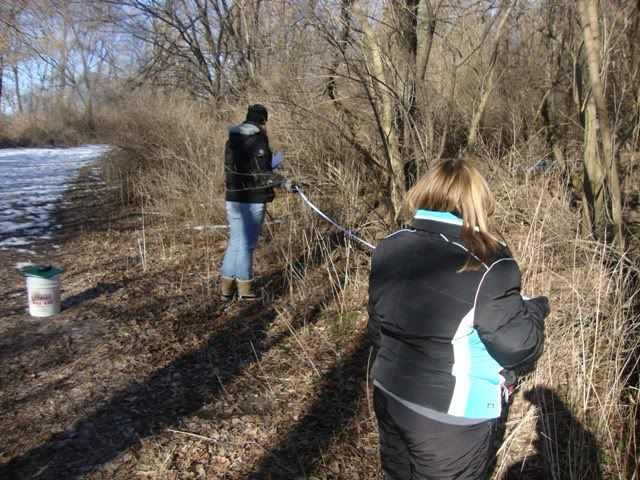
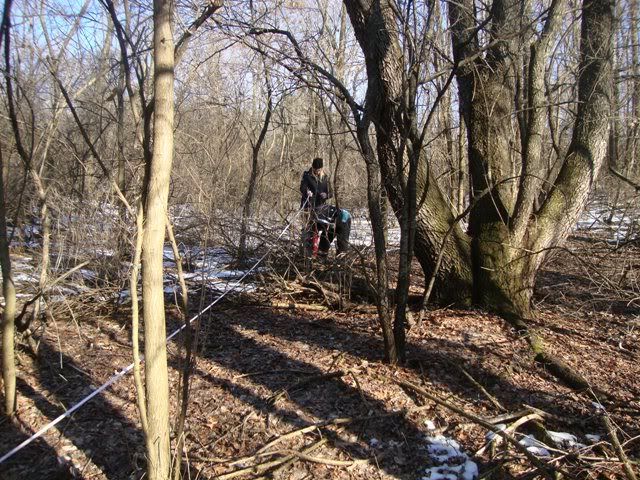
This week, as part of the battery of assessments being conducted of the property we are focused on, students conducted a tree survey.  This involved each group measuring out five non-overlapping "quadrats".  A quadrat (or sample plot) is a way to radomly select certain areas in a tree stand to sample, considering that measuring every tree in a forest is not practical.  Each quadrat measured 33 ft X 33 ft (or 1/40 of an acre).

So, the first step is to measure out the quadrat.


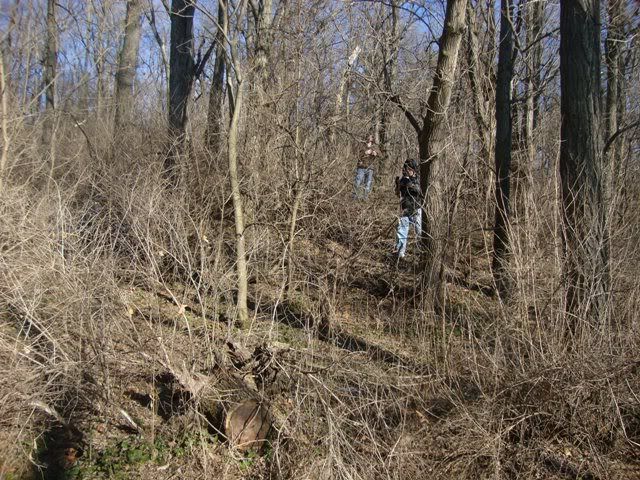
This can be difficult with thick underbrush....

Then, comes tree identification.  Obviously, identifying trees in winter can be challenging.  There are no living leaves to work with.  So, one is stuck using bark, twigs and leaves near the base of the tree that you hope came from the tree in-question.

Luckily for us, the diversity of trees on-site was not huge (probably the only time something like low diversity can be considered "lucky").

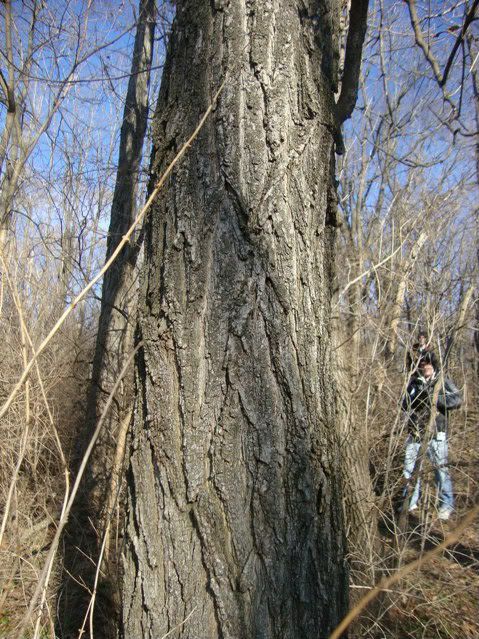
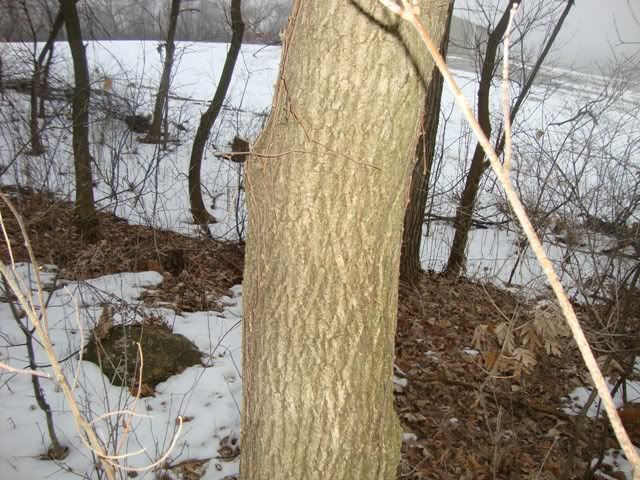
There is the Locust (Robinia sp.)....with its deeply furrowed bark.....

...the Box Elder (Acer negundo)....Box Elders tend to hold on to seed pods (the commonly referred to "helicopters") in the winter.

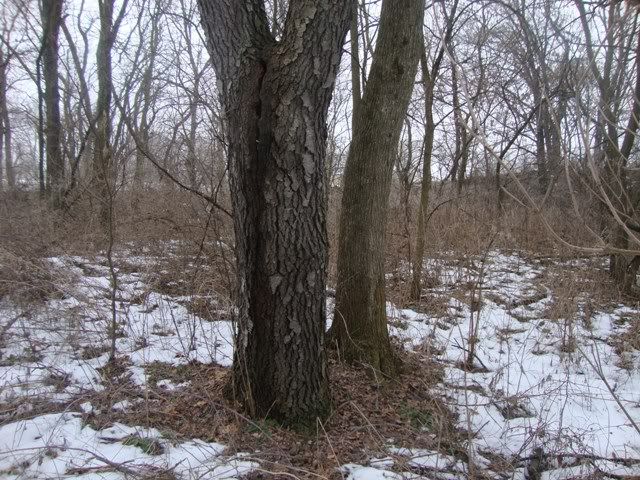
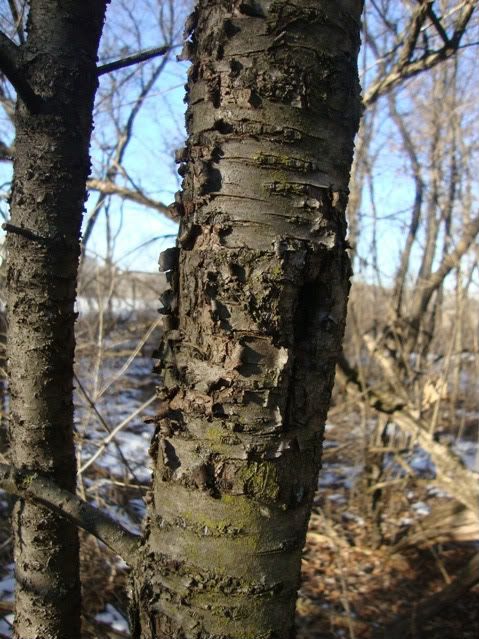
...the Black Cherry (Prunus serotina)...check out how much darker its trunk is compared to the Elm (I think) just behind it and to the right.  The bark will also look scaly, like potato chips.

....the Mullberry (Morus alba)...although this picture doesn't show it well, they have a more "yellowish" tinge to their bark.

...the Hackberry (Celtis occidentalis)....no mistaking that warty bark, with the roundish nodules....

...the Red Oak (Quercus rubra).....oaks often hold their leaves in the winter....although there are a few sporadic White and Bur Oaks (Q. alba and Q. macrocarpa) on-site, the leave shape of these three species differ.

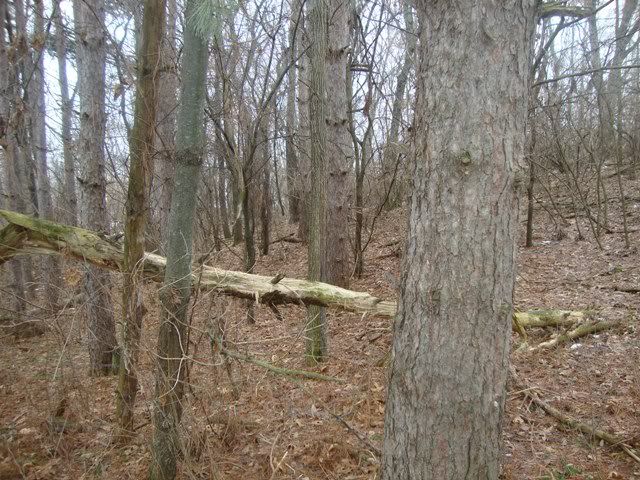
...the White Pine (Pinus strobus; the thin tree with the smooth bark in the background to the left) and the Red Pine (Pinus resinosa; rough bark more in the right foreground)...also White Pine needles occur in bundles of five, and Red Pine needles occur in bundles of two.

...and, of course, the terribly invasive Cathartic (or European) Buckthorn (Rhamnus cathartica).....its bark almost looks like it would belong to a black birch tree, or something....


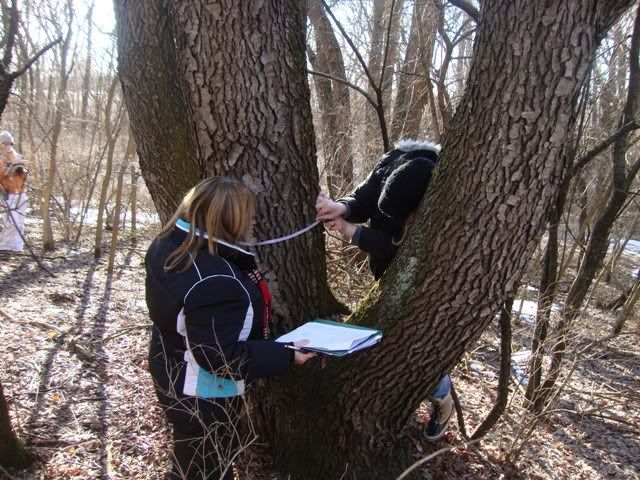
For every tree within their quadrat that was of the appropriate size, students measured diameter at breast height (DBH).

The data the students generate can then be used to calculate tree frequency, also relative and absolute density, and dominance.  Students can also calculate average number of trees (and circumference) per acre.  Finally, using adaptation scores for each species, students can calculate compositional indices for the site, that can help classify what type of vegetative community is present.

...and although it was alittle cool out and the underbrush ocassionally got alittle thick, you can see they had a miserable time.....