Showing posts with label Newt. Show all posts

Saturday, May 25, 2013

Winter is for mammals....but summer is for HERPS!!!!

So much going on....

I guess I should start at the beginning of the real herp field season this year....and it began with a field trip that I took my advanced ecology class on.  This is the same trip we took last year, although back then we didn't have much luck finding the cold-blooded crawly critters.

The conditions were alot better this year, so we pulled out of the parking lot with feelings of hopefullness a few weeks ago.

After nearly 2 hours in the car, we reached the first of our destinations: a sand prairie/savanna located immediately adjacent to a large river.  The part of the property where we were given access to is primarily used by a retriever club.  As a result, there was alot of more typical "grasses" that one might fing in a homeowner lawn.  As we moved further away from where the club operates, we ran into the results of recent habitat management.  These activities involved removal of some un-desirable/exotics: common buckthorn (Rhamnus cathartica) and Honeysuckle (Locinera sp.).  While it's good to get rid of these troublesome species of vegetation, it didn't provide great "herping" habitat.....

Yet, there were several pot-hole wetlands on site and lots of downed debris that the critters we wanted could be hiding in.  The morning was still a tad cool, but the sun was quickly warming things.  I felt confident we'd find something....

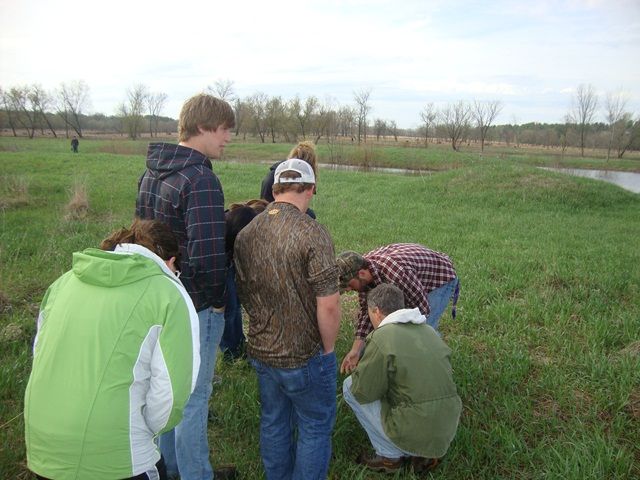
It wasn't long before....success!  One of my students called out that they found a snake...
A small species, the Northern Brown (or Dekay's) Snake (Storeria dekayi).
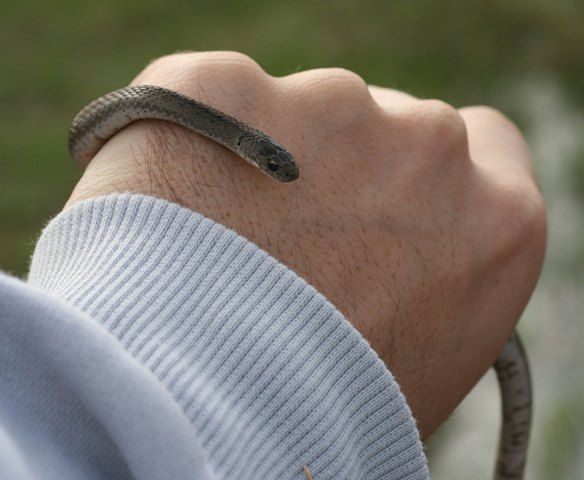
Photo by K. Kron
Brownsnakes are highly fossorial (living below ground or ground debris) and rarely seen for that reason.  They are relatively common, however....but still a great find!

We also found several other species at this site: a Common Gartersnake (Thamnophis sirtalis), a Northern Leopard Frog (Lithobates pipiens), various birds, and some interesting plants (although this site was a tad disturbed for any really cool plants).

We ended our time there with only a handful of captures.   BUT...it was still early and there were several more sites to check.
_______________________________________________________________

Next we headed towards a floodplain forest habitat along a major river in the state.  The primary objective here was salamanders and frogs, which require a bit of log-rolling (and "log-returning" after checking underneath).

So it was that we hopped out of the vehicles and plunged into the deer tick infested forest in search of sallies....
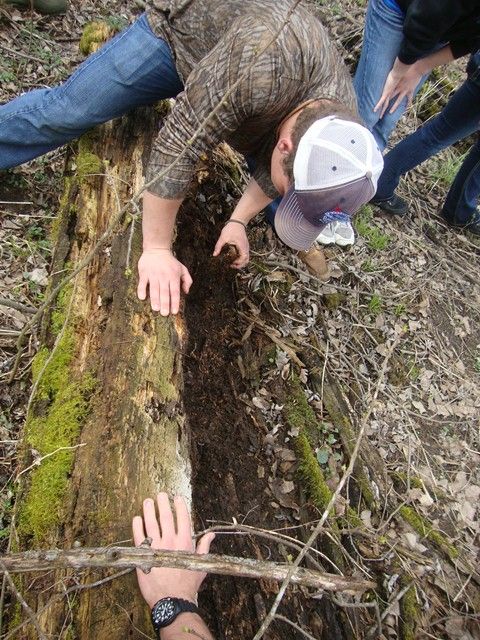
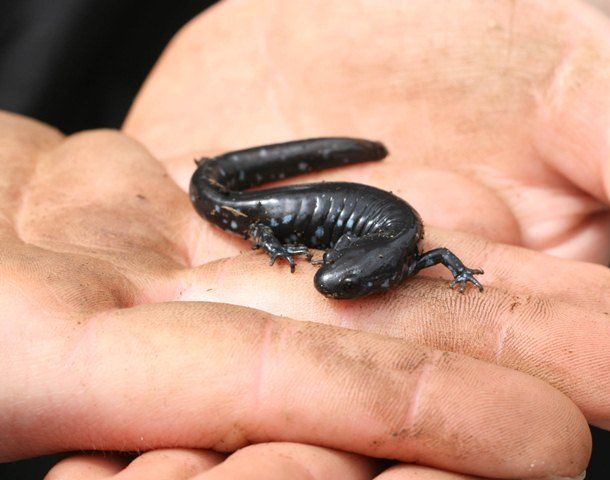
With 19 plus sets of boots on the ground, our chances of finding something were high.  It wasn't long before calls started going up that critters had been found.  The most commonly encountered was the cute little Blue-Spotted Salamander (Ambystoma laterale).
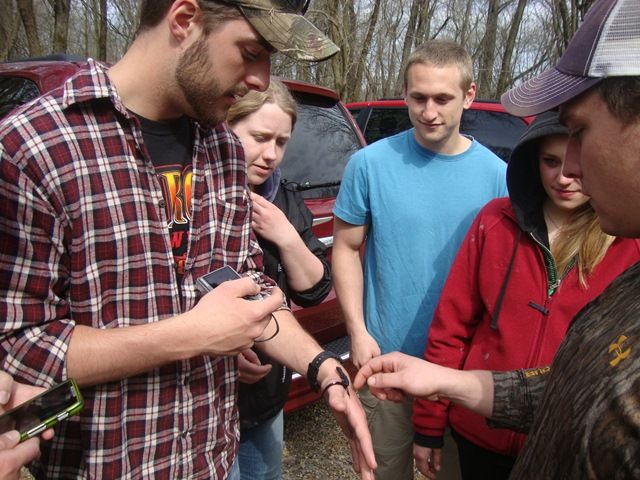
Photo by K. Kron
Another commonly captured critter was the terrestrial phase of the Eastern Newt (Notophthalmus viridescens).  The one pictured below is employing an interesting anti-predation behavior.  I believe the goal is to make themselves too awkard for certain predators to swallow whole.

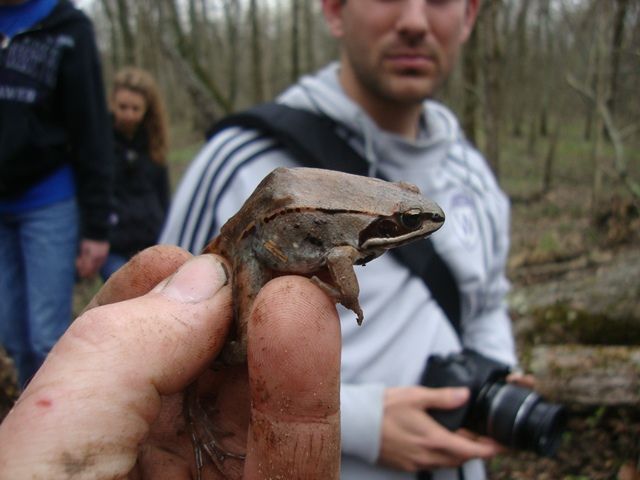
A variety of frogs were also hopping around in the forest.  This included the Wood Frog (Lithobates sylvatica), easily identifiable by it's coppery color and black mask.....
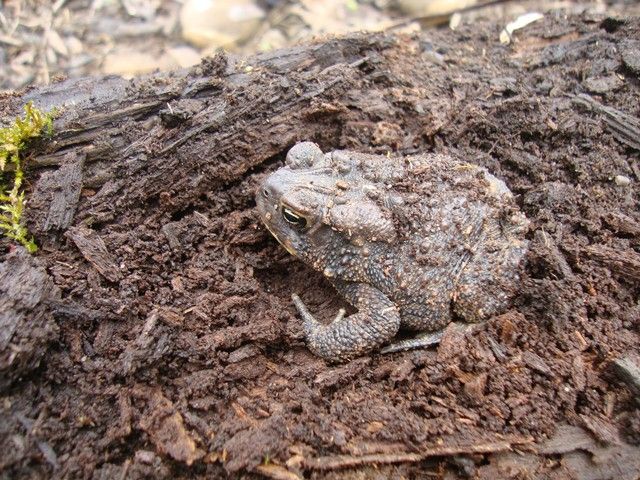
We also found Spring Peepers (Pseudacris crucifer) and a few American Toads (Anaxyrus americanus)....
So....the flood plain forest was mostly successful.  Thus, we moved on, hoping to grab some lunch and get to the next site: a sand prairie.
__________________________________________________________________
Then....the equivalent of a herpetological distaster occurred!  On an already almost too cold day, clouds rolled in.  Next came the water-works, and the rain began to pour!  As we drove to the new location we were bombarded with a deluge.  Thus, we ate lunch and I watched through the windows glumly as the rain came down. 

We hadn't seen many snakes so far.  If the rain kept up this way, we were sunk.

But...then...as we were finishing our meals and throwing away our trash...things changed.  The sun suddenly poked through, the clouds started to break....and I got excited as the air temperature began to climb.

So it was that our boots hit the ground at the next location....
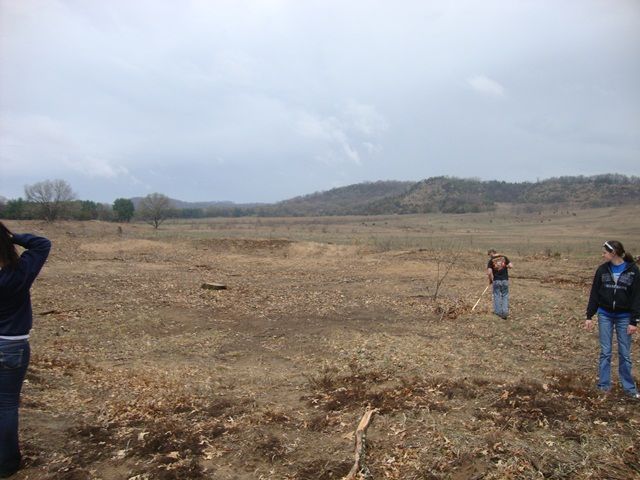
 
Although it was still a bit cloudy, the sun was peeking through occassionally and it became noticeably warmer.  Due to this positive change in the weather, it didn't take long for us to start catching things.

Within 20 minutes of arriving...one of the students yelled out: 

"Doc, there's a snake over here!" 

"Well, grab it!" I replied.

"There's actually two snakes!"

"Well, grab THEM!" 

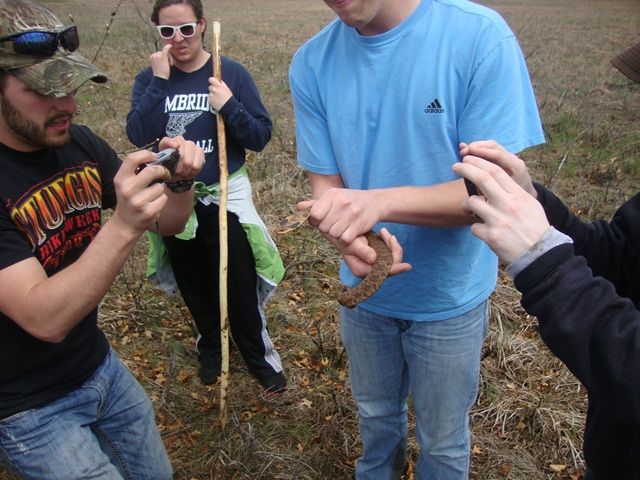
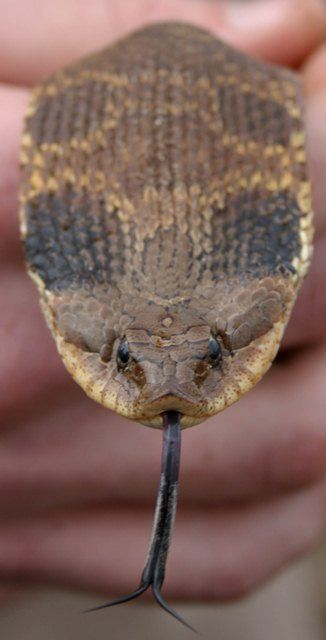
I don't know if they heard me or not over the commotion, but when I got there, we had two nice Eastern Hognose Snakes (Heterodon platyrhinos) to admire!
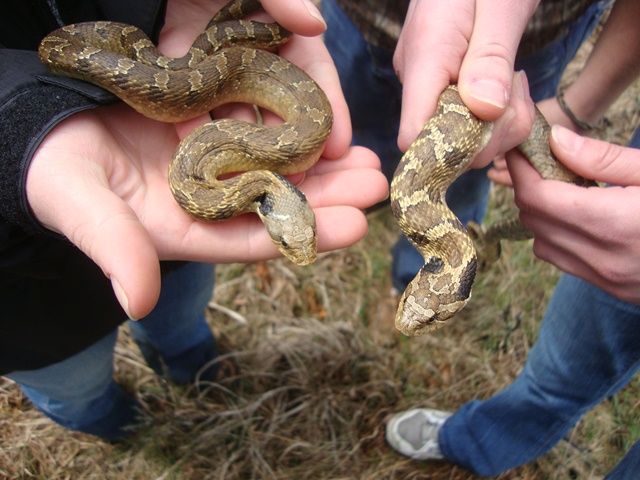
 
One was a very pretty orange-brown......
Photo by K. Kron
Photo by K. Kron
In total, we found four (or maybe even five?) Hognose Snakes in a matter of an hour.  Presumably, they were congregated in such a tight area for breeding....although we didn't actually see them doing so.

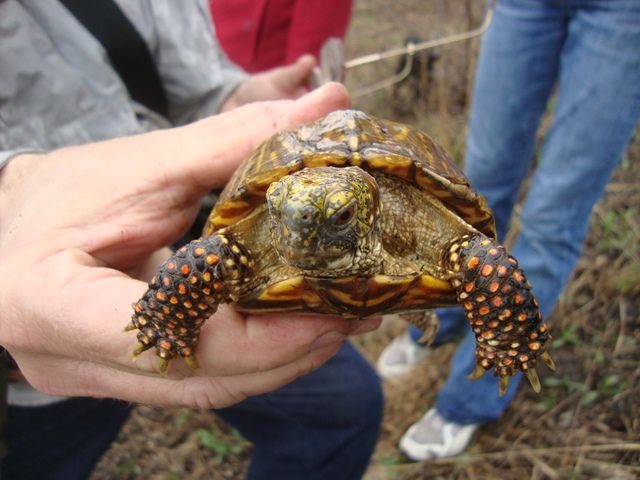
Next we moved to the north a bit, searching for some of the other critters that I knew were on-site. It was not long before we found one: the incredibly rare Ornate Box Turtle (Terrapene ornata).  The Ornate is the only fully-terrestrial turtle in the upper Midwest.  It generally requires deep, sandy soils to burrow below the frost-line in the winter.  Because such habitats have mostly been converted to agriculture or housing developments around here, this species has been nearly extirpated from the region.  In addition to habitat loss, herp-enthusiasts who collect them to keep as pets have severely impacted their populations.  Luckily, our fine state protects this species, and large fines can be incured for removing them from the wild.

Given how rare they are, it was encouraging to find a juvenile individual.....

Also...a very nice looking adult male.  Males have bright-red eyes and reddish orange on their front-legs.
As we moved along, we found another rare species: the Racer (Coluber constrictor).
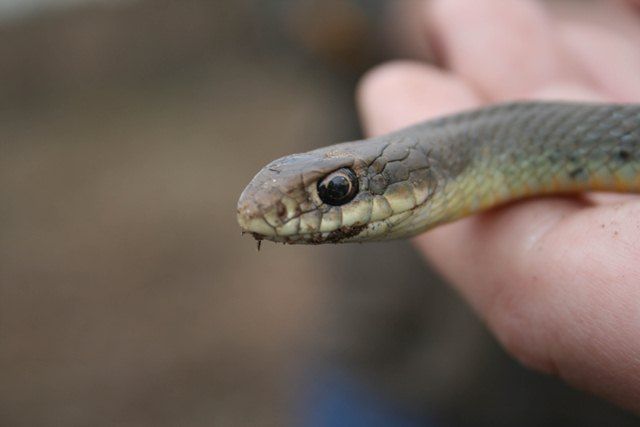
Photo by K. Kron
.....but we weren't done there!

A rare snake and a rare turtle....not to mention a few Hognose Snakes.  I was feeling pretty good about our trip, but not completely satisfied.  There were two other species that I knew were present, but we hadn't seen yet.  If we found only one of these, I decided that I would consider the day a success.

Luckily, the Herp-Gods smiled on us, and it was not long before we found one of the two sought-after species. 

Someone found a Bullsnake (Pituophis catenifer sayi)....my favorite snake in North America....
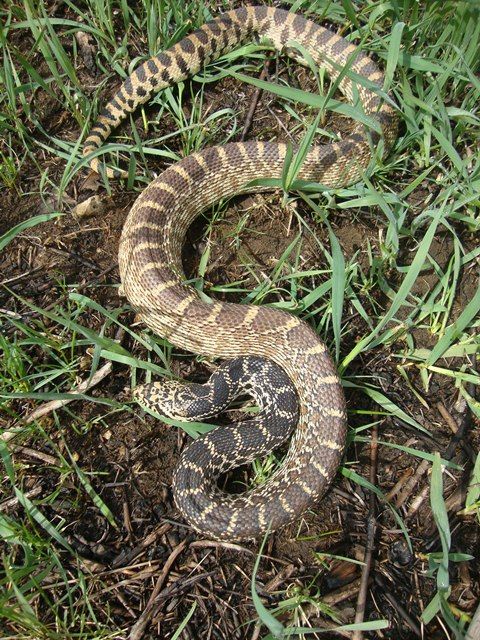
This one was polite enough for several of the students to get a chance at holding it.  Many of them were shocked that a snake species of this size lives in our region.  Unfortunately, this is another species that has been significantly (and negatively) impacted by the activities of humans.  The reasons run the gamut:  habitat loss is a key factor again....direct killing/persecution by folks afraid of snakes is another (to have such an unreasonable fear of something that you would kill it outright has never made much sense to me).  And...as with the poor Ornate Box Turtle....the Bullsnake has suffered greatly at the hands of collectors.  Unscrupulous "herp-enthusiasts" just can't resist bringing these back to keep in an aquarium....a damn shame, if you ask me.

It was not long after that when I heard more yelling "Doc! There's another big snake over here!".  Again, I yelled "grab it!", while running up towards the student waving his hands in the air. 

Another Bullsnake!
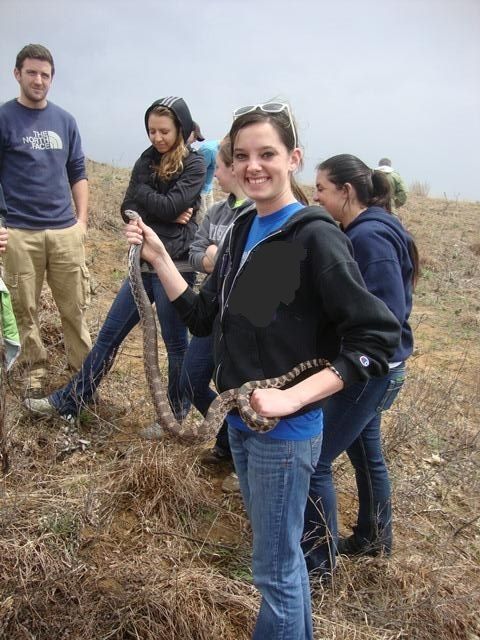
In total, we found five Bullsnakes! 

Even the students that were alittle uncomfortable with snakes, at least sucked it up and held one (even without any chiding from me! :)  ).
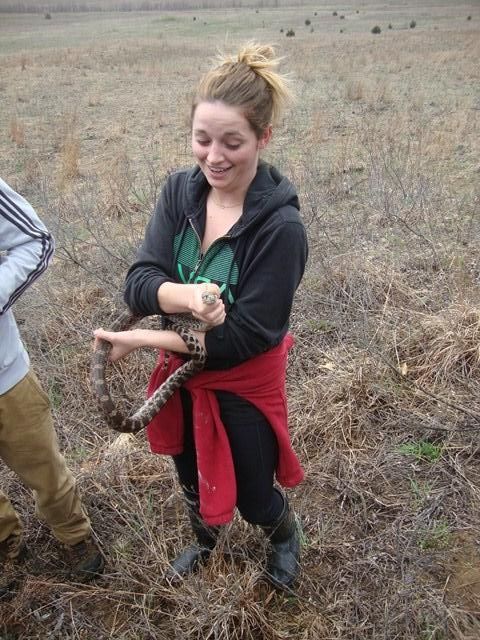
With every capture and encounter, they became more confident and several even grabbed the snakes without help.
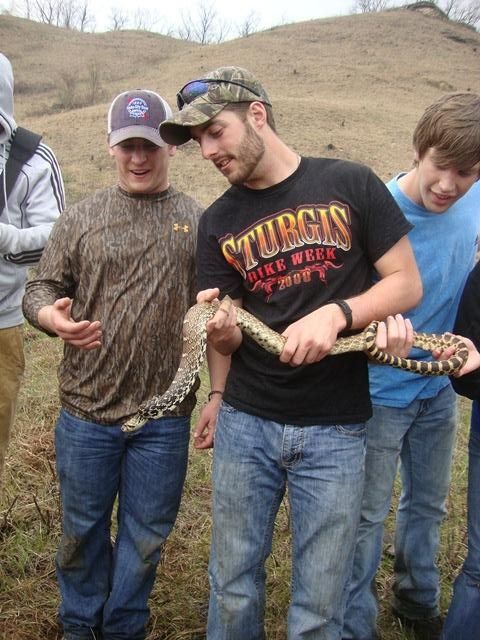
All-in-all, I'd say it was a very successfull trip!  Probably one of the most important achievements of this trip is that those who are afraid of snakes (hopefully) see them in a more positive light.  Snakes really aren't scary....heck, they aren't even aggressive, if you leave them be.  Every snake we encountered on this trip first made a mad-dash for escape...it was only after we started to "mess" with them that any took a defensive posture.   Some never even did that. 

It also exposes younger folks to rare herps, and helps them understand the importance of conserving all components of an ecosystem....not just the furry/feathery charismatic ones....

I look forward to bringing a new crop of students on the trip again next year!

Tuesday, March 27, 2012

Of Newts, Turtles and Timber Wolves...


....alright....I suppose there is debate about whether or not the Timber Wolf (Canis lupus lycaon) is a valid subspecies....and regardless, the US Fish & Wildlife Service has deemed that we can only have the Gray Wolf (Canis lupus) in our part of the U.S.......but "Timber Wolf" fit into the title so well!


Anyways, with the nice weather (unseasonably warm...in the 80s in March, which here doesn't happen until May) hiking is a viable daytime activity.

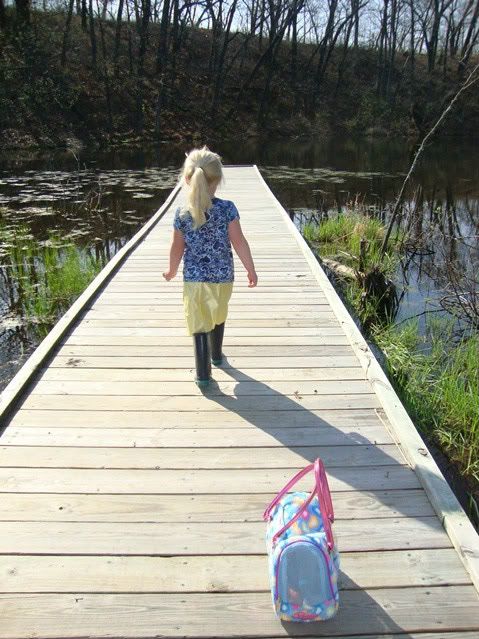
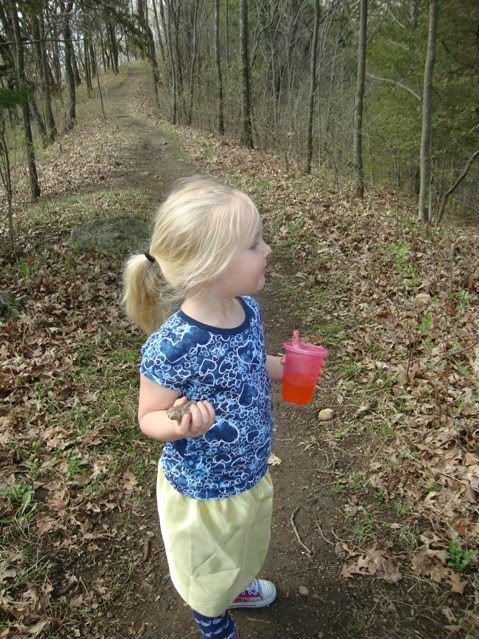
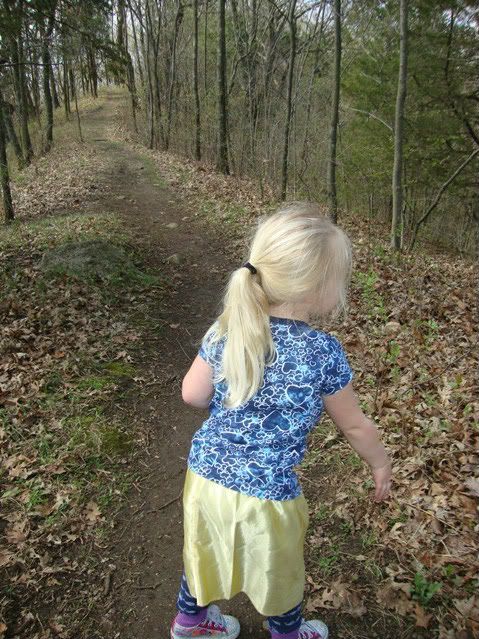
So, the kid and I went to a nearby state forest for a little hike.  She's sort of a paradox, this daughter of mine.  A nearly perfect mix of myself and her mother, as evidenced by the outfit she selected for a day of getting dirty (which she has no problem doing...nor picking up anything that she finds interesting, including a nugget of Canada Goose turd, which she threw into the water, before I could stop her...).

So...the chosen get-up included a shirt with colorful print, the skirt from her Snow White dress-up outfit, a pair of leggings with whales on it, and her La Crosse brand rubber boots.  This was drawn together with a plush purse, in which she carried countless treasures...including an orange (which I had not seen her grab) that she proudly produced later after exclaiming she was hungry.

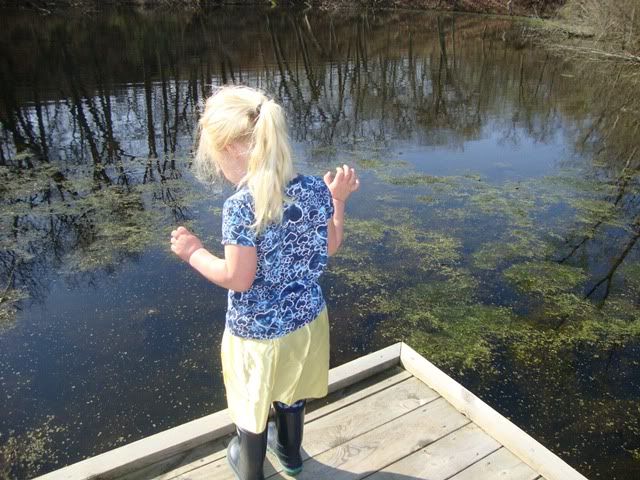
One of the first things we found along the trail was a pond with a boardwalk that allowed us to walk out over the water.
The Spring Peepers (Pseudacris crucifer) were screaming around the pond peripheries....which possessed a nice buffer of flooded woodlands.  These were the first Peepers I've heard this spring, although I've recieved reports of them calling for the past several weeks by colleagues (which is very early, by the way). 

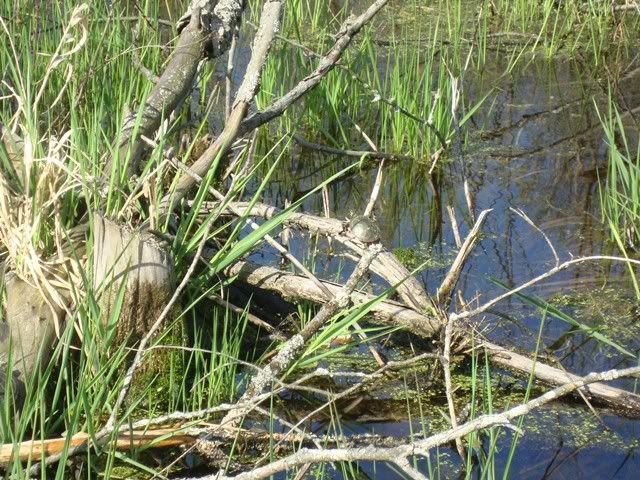
There were also Painted Turtles (Chrysemys picta) to burn in this little pothole scoured out by the glaciers.  It seemed that every available space above the water line, be it log, stick or clump of mud, had a turtle basking on top of it.  Some were even close enough to snap a picture of with a camera that has little zooming ability.

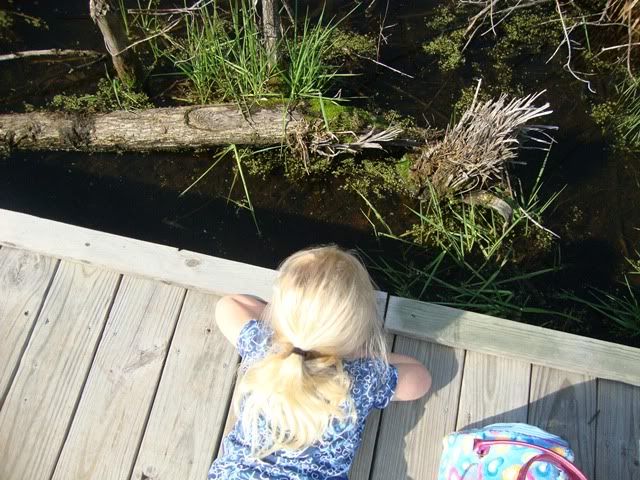
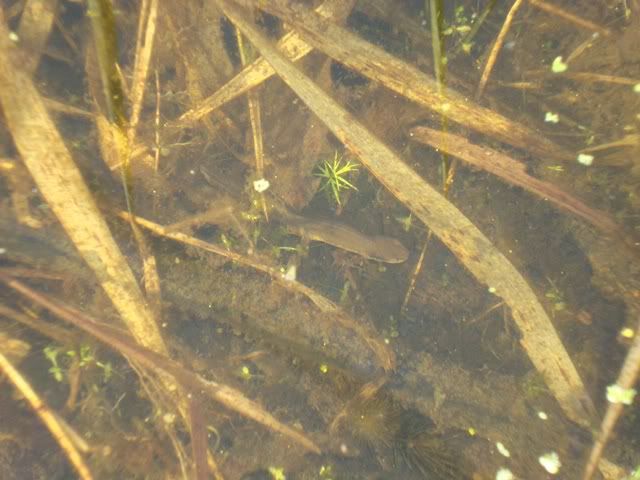
The best part, however, was peering down into the clear wetland water.  It teemed with activity, and we were obliged to get down and take a closer look.

 Water striders and other aquatic invertebrates were plentiful.  I even watched a leech swimming sinuously through the substrate.  But what drew our attention most were the amphibians.  It seemed that every square foot of real-estate was occuppied by large a tadpole.  Based on the fact that they were already sizeable this early in the spring, it's a no-brainer to assume they were a member of the Family Ranidae, and almost certainly Green Frogs (Rana=Lithobates clamitans).  Green frogs lay their eggs late in the summer and the tadpoles remain as tadpoles through winter, only to metamorphose in the following summer.  With the exception of the Bullfrog (Rana=Lithobates catesbeiana), all other frogs in our region have tadpoles that hatch and develop into froglets during the same season.  It's possible these were Bullfrog tadpoles, but they just didn't seem big enough to me.

Anyways, the tadpoles were neat...but they dont' really move much.  They basically sat in one place, soaking up some of the rays penetrating through the water's surface.  Much more interesting to watch were the Eastern Newts (Notophthalmus viridiscens).  These little guys were fairly numerous as well, we could see them pushing through the leaf litter at the bottom of the pond, and occassionally swimming up to the surface.  As I've mentioned before, the newt is a most amazing amphibian.  It has several possible "phases" in which it can exist: an aquatic adult, a terrestrial adult, an aquatic juvenile and a terrestrial juvenile.  Basically, these phases are adopted depending on environmental conditions.  If the newt grows up in a wetland that doesn't dry out, they will go from an aquatic juvenile to an aquatic adult.  But, should the water levels receed, they are capable of transforming into a terrestrial adult, or a terrestrial juvenile.  The terrestrial juvenile is beautiful, and is often referred to as a Red Eft.

The individuals my daughter and I saw were adults, and clearly in the aquatic phase.

All of this information: the basking turtles, the tadpoles that need to over-winter, and the newts in their aquatic phase tells us something important (albeit not unusual) about this wetland: it rarely goes dry....or is not ephemeral.  If it went dry by the end of the summer, there would be nowhere for the turtles and tadpoles to overwinter....and the adult newts would have transformed from their aquatic phase to their terrestrial phase.
__________________________________________________________________________
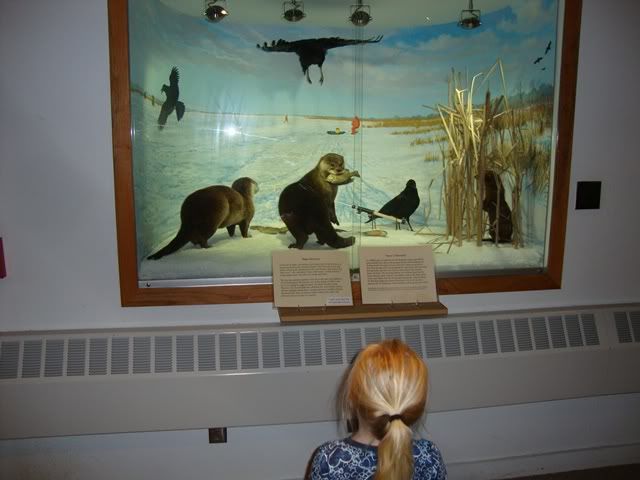
We passed the State Park's headquarters during our adventure.  They had a neat little museum, which we made use of, seeing that the kid loves to look at stuffed dead things (the reason she likes museums so much, I suppose).

A number of cool dioramas, including this rather comical scene of a pair of River Otters cleaning up the leavings of an ice fisherman (as a Mink watches from the cattails).

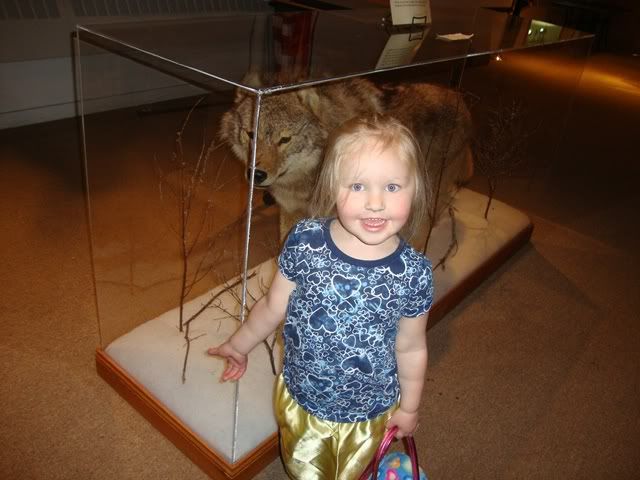
There was also a nice mount of a Gray Wolf (Canis lupus), which made for a perfect photo-op.

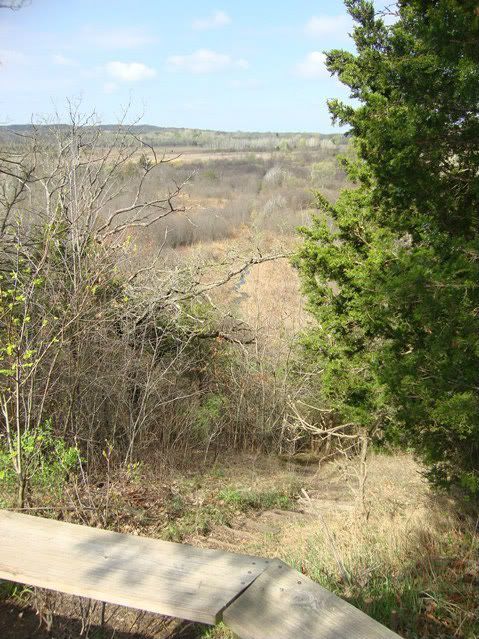
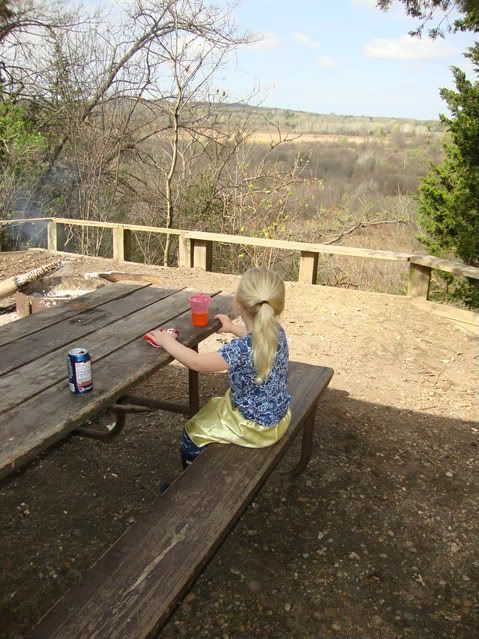
We walked on, and continued to follow the trail until we found a scenic overlook.  A decent-enough spot to stop for some juice and crackers.

...and of course...the rocky path provided many opportunities to lob some geologic protectiles down the hillside.

I guess it's hard to turn down an opportunity to throw a good rock.....

Tuesday, May 17, 2011

Herpin' In The Sandhills Part III: Amphibians

It dawned on me recently that I still have alot of "stuff" to share with you all from our recent trip to the Sandhills.  I'm falling way behind as it's now been weeks since we were actually there!

So...I've talked about Cottonmouths, and Scarlet Kingsnakes to-date.  Now I'm gonna continue my overview of our herping experience with the amphibians we encountered. 

Our main focus during the trip was snakes (at least mine was :)  ), but we did make sure to take a few stops that were specifically devoted to amphibians.

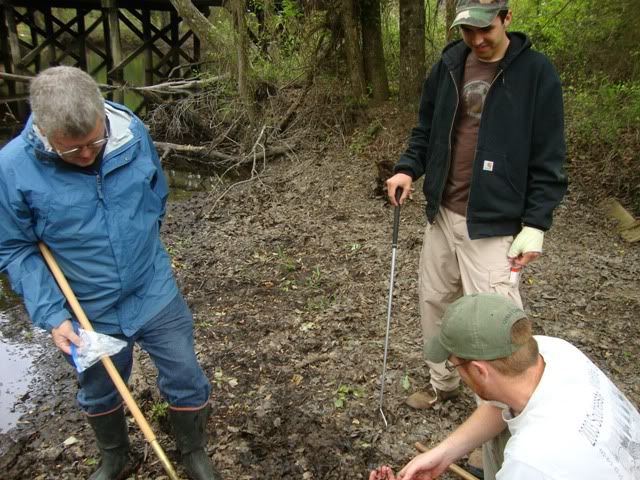
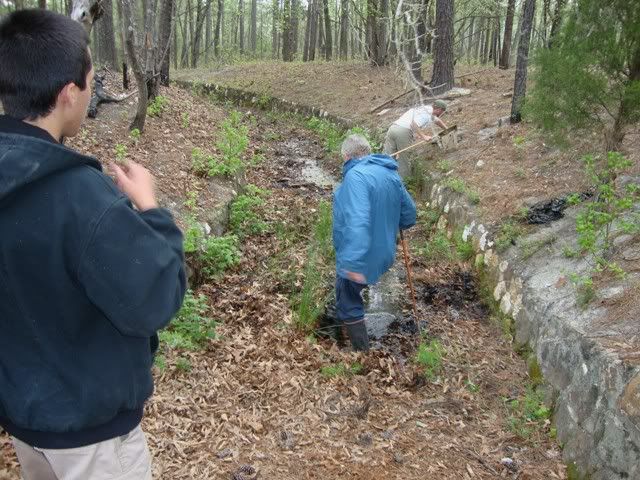
One of our early stops on this trip was to a slow-moving stream.  The riparian area (i.e. area associated with the stream banks) was mostly wooded.  The stream bottom was silty with lots of organic matter (leaves, sticks, etc.).  Access was easy, as we basically hopped out of the vehicle at a bridge over the stream...walked down to the water and drug a dipnet along the mucky bottom.

Above: habitat where we found the Lesser Siren and Dwarf Mudpuppy

Above: Jeff, Dave and Ed sifting through a dipnet haul for amphibians

It didn't take but one or two net hauls for us to pull up some pretty neat stuff!

Unfortunately, none of these pictures turned out incredibly well.  Salamanders (especially aquatic salamanders) tend to wriggle alot when you take them out of that aqueous medium that they need to effectively breath.

Anyways, one of our grabs was a critter I had really wanted to see since moving here.

The Lesser Siren (Siren intermedia).


A unique little salamander that basically remains fully aquatic for its entire life, unlike many salamander species which have aquatic larvae (juvenile) stages and terrestrial adult stages.  Because they are primarily fully aquatic, adults retain bushy external gills found in most larval salamanders.  Yet, this species also has lungs, and is known to occassionally venture out onto land near the water's edge.  The Lesser Siren is also unique among most native salamanders in that adults have only small front legs and no hind legs. 

Lesser Sirens can be found in many aquatic habitats: slow moving streams, ponds, marshes, ditches, swamps, etc..  These must have plentiful aquatic vegetation and organic matter.

The next net haul revealed yet another species I had really wanted to see.

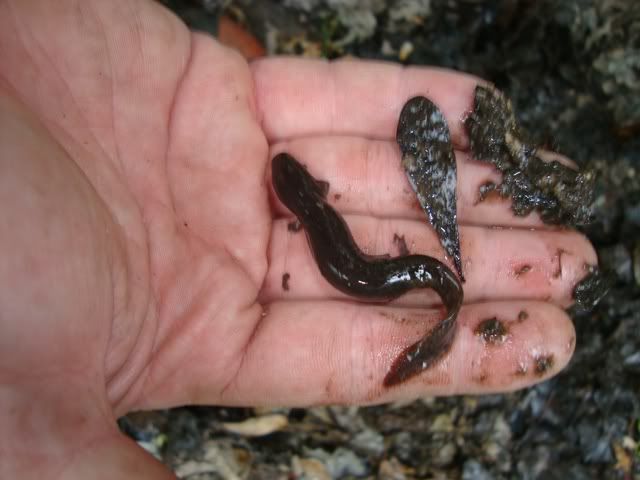
The Dwarf Mudpuppy or Dwarf Waterdog (Necturus punctatus).


Sorry for the poor picture, but this thing just would not hold still and we didn't want to keep it out of the water for too long.  Anyways, in the state we have the Dwarf Mudpuppy and the Common Mudpuppy (Necturus maculosus).  The Dwarf Mudpuppy is much more common than the Common Mudpuppy (confusing, I know).  It's further confusing for me because back home in Wisconsin, we have Common Mudpuppys....so I'd seen those before.  We don't have the dwarfs back home, however.  So, I was very excited to see the Dwarf.  Whereas the native folks from down here would probably have been more excited to see a Common Mudpuppy.  To each his/her own!

These two species do not have overlapping geographic ranges in the state.  The Common Mudpuppy only being found in a few drainage systems in the north east and the Dwarf found throughout the coastal plain.  This means you can differentiate between these species by the geographic location of capture.

Of further interest is the fact that a third species of mudpuppy or waterdog is found in the state: The Neusse River Waterdog (Nectrurus lewisi).  Although not as common as the Dwarf, the Neusse River Waterdog and the Dwarf overlap in their general geographic distribution.  The Neusse River Waterdog being found in a few drainages within the lower Piedmont and the Sandhills....and its in a few spots in the Sandhills that it overlaps with the Dwarf. 

Where they overlap, they can be distinguished in a few ways.  The Dwarf is comparatively smaller...more slender in general body shape...and has relatively small spots on the body.  The Nuesse River Waterdog has large bluish/black spots.
__________________________________________________________________

Another amphibian location we visited was an old over-flow spillway associated with a resevoir.  We were hoping to find individuals of a currently undescribed species called the "Sandhills eurycea" (Beane 2010).  Ed had seen a few there before and so we decided to check it out.  The spillway, apparently, rarely has running water in it, but seems to remain damp.  Over the years this ditch has also filled with organic debris (leaves, sticks, logs, etc.).  A perfect haunt for amphibians.  They fall into the spillway during migrations and have plenty of good cover and moisture.  This spot usually isn't a "trap", per se.  If they follow the spillway in one direction, or another, they can eventually find an exit out into the woods.

Above: searching through the damp leaf-litter in the spillway for amphibians.

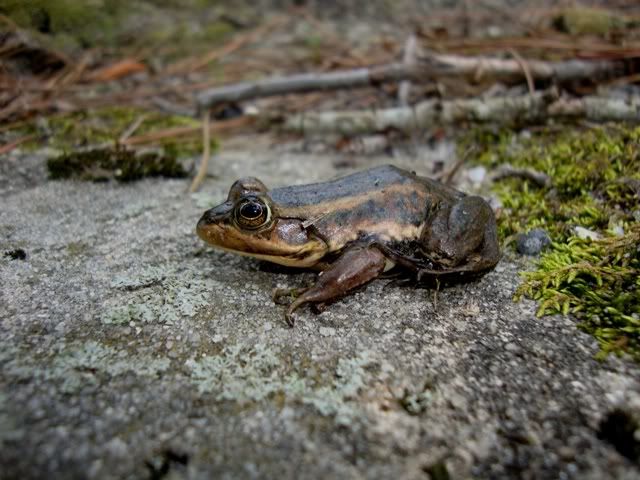
After a few minutes of searching, we found the "sandhills eurycea".  Unfortunately, I didn't get any pictures worth posting.  We also found a frog species that I had previously only seen in books: The Carpenter Frog (Lithobates = Rana virgatipes).  I had heard them calling a few years ago when in Florida, but we hadn't been able to catch any at that time.  So this was a real treat!
Above: a Carpenter Frog (Lithobates=Rana virgatipes) found in the habitat pictured previously

_________________________________________________________________________
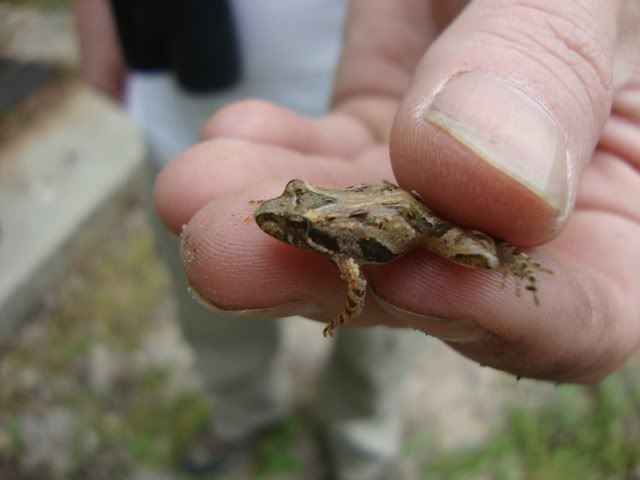
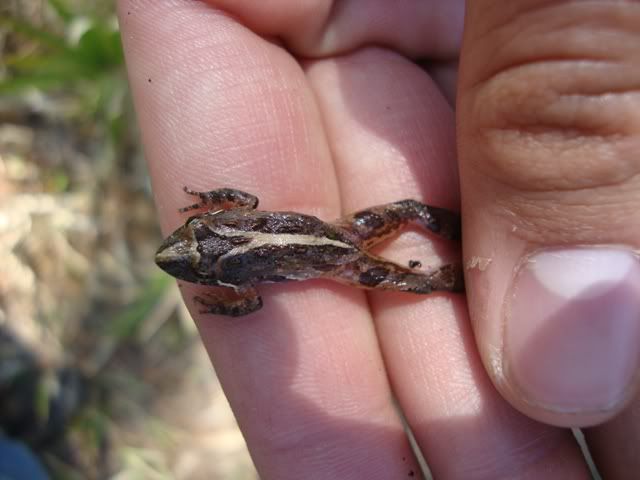
In a previous post, I mentioned we visited a fish hatchery during this trip to the sandhills.  We'd found a number of species there, including Cottonmouths (Agkistrodon piscivorus).  The critters below were all found on hatchery grounds as well.  The first one mentioned below was a new species for me: the Southern Cricket Frog (Acris gryllus).  In our area of the Piedmont we have the Northern Cricket Frog (Acris crepitans), not the southern.  Back home in Wisconsin a particular subspecies of the Northern Cricket Frog (the Blanchard's Cricket Frog; Acris crepitans blanchardi) is state Endangered and rarely seen.  Because it is so rare, little is known about its ecology in the Upper Midwest.  Its declining throughout much of the midwest for reasons not entirely known.  In fact, some research manuscripts have actually referred to the decline of this species as "enigmatic"(Lehtinen and Skinner, 2006).  Its even believed that populations of the Southern Cricket Frog have been steadily declining, when compared to reports of their historic abudance.  As summarized by Jensen (2005a) a 1929 report mentioned that Southern Cricket Frogs were amazingly abundant in the southeastern United states.  Jensen's review outlines several recent studies from the late 1990's and early 2000s that have found the number of breeding populations has substantially decreased in areas where they were historically high. 

Still, most folks down here don't really bat an eye at finding them....but being from an area where they are rare....I'm always excited to find one.

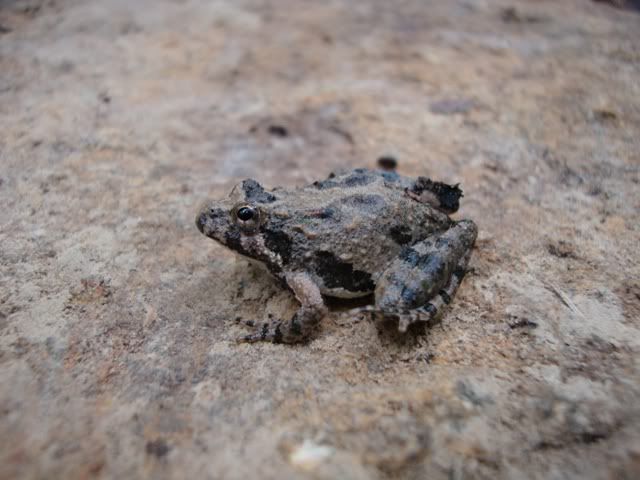
Note in the examples below the presence of a "triangle" mark between the eyes.  This is diagnostic for members of the genus Acris.

Above: an adult Southern Cricket Frog (Acris gryllus) found at the hatchery.

Above: for comparison, a Southern Cricket Frog found the next day at a different location.  Note the slightly different color pattern

Above: a Northern Cricket Frog (Acris crepitans) that I captured in the Peidmont in 2010.  It looks indistinguishable from the Southern Cricket Frog (for all practical purposes) and the two species are best differentiated by the breeding calls of the males. 


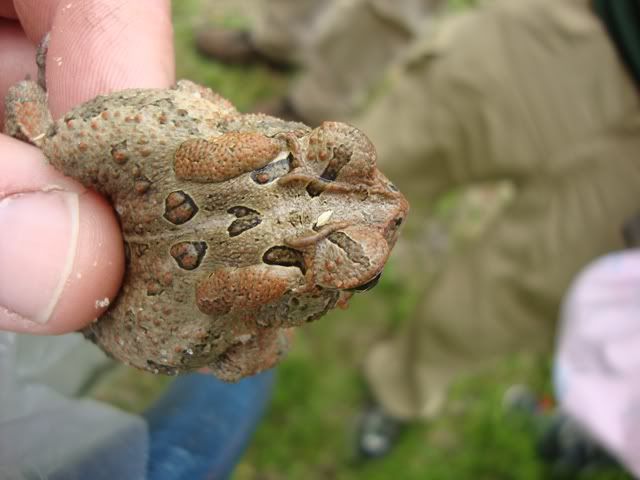
Another hatchery inhabitant was the Southern Toad (Bufo terrestris).  The Southern Toad is apparently common in many types of upland habitats in this region of the state.  According to Jensen (2005) it is even found in agricultural fields.  I'd actually seen this species before in Louisianna, but it was still nice to encounter one again!  Southern Toads are not found in our part of the Piedmont.  Instead we have the ubiquitous American Toad (Bufo americanus) and the less common Fowler's Toad (Bufo fowleri).  Interestingly, the Southern Toad will apparently hybridize with the Fowler's Toad (pertinent literature reviewed by Jensen (2005b).

Above: A Southern Toad (Bufo terrestris) found at the hatchery. 


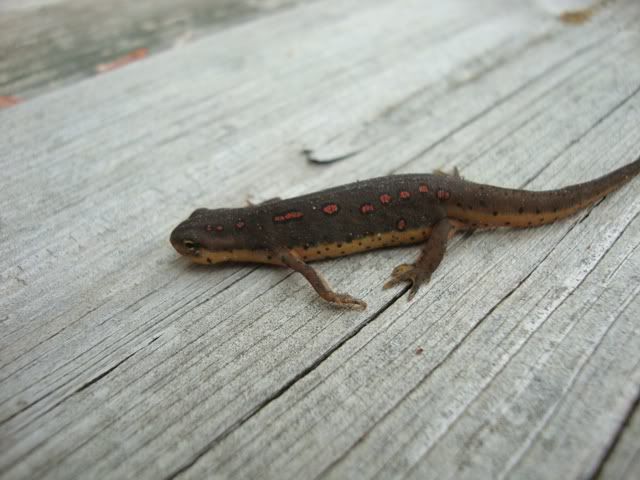
I'll round this out with pictures of an Eastern Red-Spotted Newt (Notophthalmus viridescens).  Another very cool critter.  This appears to be the terrestrial adult phase.  This species has three phases: a fully aquatic adult that hangs out in emphemeral wetlands.  It can remain aquatic indefinately, but should the wetland it calls home start to dry, it can become a terrestrial adult that lives on land. 

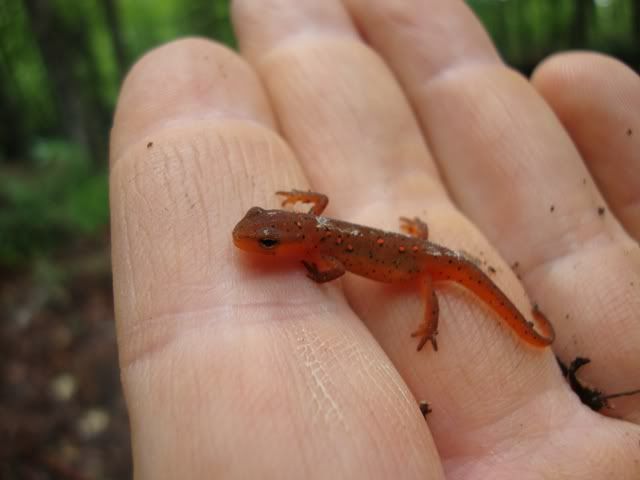
There is also a terrestrial juvenile phase called a "red eft".  Juvenile newts can remain aquatic until they become adults if the pond they live in does not dry.  Should the pond begin to dry when the newt is still a juvenile, it will become a terrestrial "red eft" and live on land like many adult salamanders....and eventually become a terrestrial adult.

Whew! 

This is an amazing survival mechanism and really highlights the plasticity in life history strategies that salamanders are capable of (how many critters can switch between fully aquatic and fully terrestrial lifestyles so willy-nilly?).

This is a species I am very familiar with from Wisconsin.  Still love seeing them, though.

Above: an terestrial phase adult Eastern Red-spot Newt (Notophthalmus viridescens) found at the Hatchery.

Above: a terrestrial juvenile or "red eft" phase of the N. viridescens.  This individual was not caught during our trip to the Sandhills, but in a drift fence at one of my study sites.


I STILL have a fair amount of stuff to share with you from our trip to the Sandhills!   More to come soon.

_______________________________________________________________

Further Literature on the amphibians discussed above, see the following summative resources:

Beane, J.C., A.R. Braswell, J.C. Mitchell, and J.W. Palmer. 2010. Amphibians and Reptiles of the Carolinas and Virginia (second edition).  University of North Carolina Press.

Braswell, A.R. 2005. Neuse River Waterdog, Necturus lewisi, Brimley 1924. In Amphibian Declines: the conservation and status of United States species. M. Lannoo (ed.). University of California Press.

Dundee, H.A. 2005. Dwarf Waterdog, Necturus punctatus, Gibbes, 1850. In Amphibian Declines: the conservation and status of United States species. M. Lannoo (ed.). University of California Press.

Husinger, T.W, and M.J. Lannoo. 2005. Eastern Newt, Notophthalmus viridescens, Rafinsque 1820. In Amphibian Declines: the conservation and status of United States species. M. Lannoo (ed.). University of California Press.

Lehtinen, R.M., and A.A. Skinner. 2006. The enigmatic decline of the Blanchard's Cricket Frog (Acris crepitans blanchardi): a test of the habitat acidification hypothesis. Copeia 2006:159-167.

Leja, W.T. 2005. Lesser Siren, Siren intermedia, Barnes, 1826.  In Amphibian Declines: the conservation and status of United States species. M. Lannoo (ed.). University of California Press.

Jensen, J.B. 2005a. Southern Toad, Acris gryllus, LeConte 1825. In Amphibian Declines: the conservation and status of United States species. M. Lannoo (ed.). University of California Press.

Jensen, J.B. 2005b. Southern Toad, Bufo terrestris, Bonnaterre, 1789. In Amphibian Declines: the conservation and status of United States species. M. Lannoo (ed.). University of California Press.

Matson, T.O. 2005. Mudpuppy, Necturus maculosus, Rafinesque, 1818. In Amphibians Declines: the conservation and status of United States species. M. Lannoo (ed.). University of California Press.

Mitchell, J.C. 2005. Carpenter Frog, Rana virgatipes, Cope 1891. In Amphibians Declines: the conservation and status of United States species. M. Lannoo (ed.). University of California Press.

Petranka, J.W. 1998. Salamanders of the United States and Canada (first edition). Smithsonian Press.