Showing posts with label Radio Telemetry. Show all posts

Saturday, April 27, 2013

The 2013 Spring/Summer Field Season Approach-eth.....

....two weeks ago it was the "calm before the storm" and now we are in full-throttle "deployment" and "turnover" mode.

We're also getting to that crazy crunch time in the semester.  A constant string of grading and gearing up for finals.

This summer will be hectic, to say the least.

One camera trap project that has been ongoing for a year will terminate at the beginning of May.  And this will be replaced with a slew of new projects (all involving undergraduate researchers) that I will oversee and have to bounce around in-between all summer.

A second camera trap project will continue for another year.  One of my research students will take this one over for the summer (I usually do it, but it would be perfect for him).

I have one student who will continue wolf research that was started this last winter.

I also have two new herp-related projects starting....

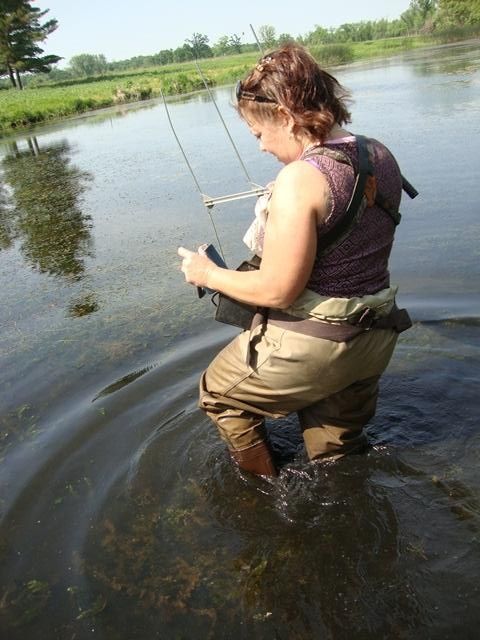
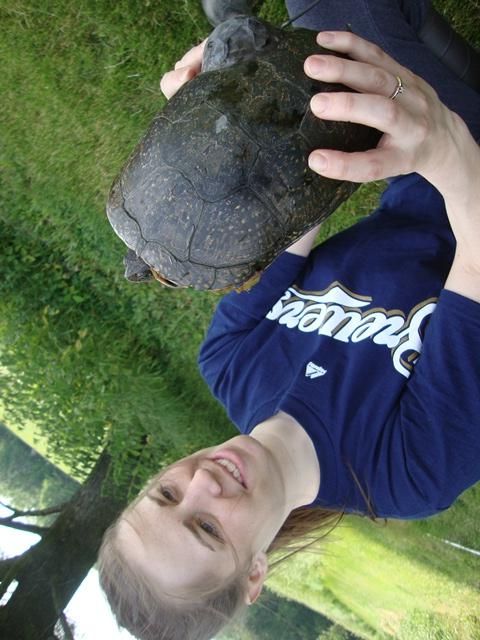
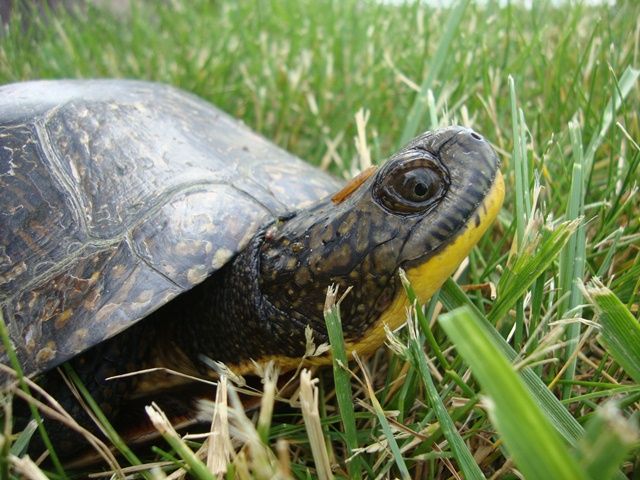
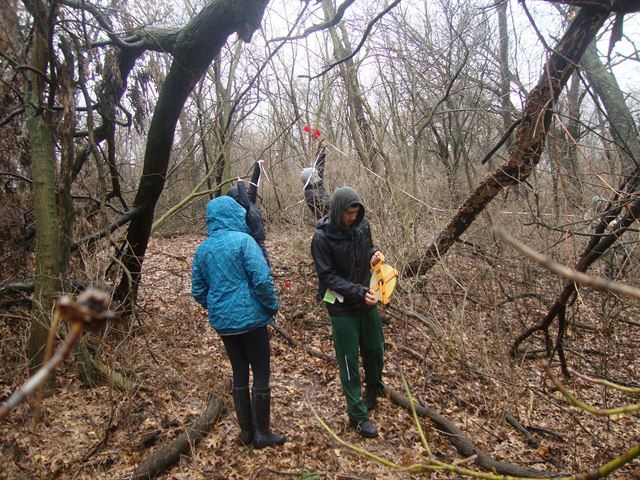
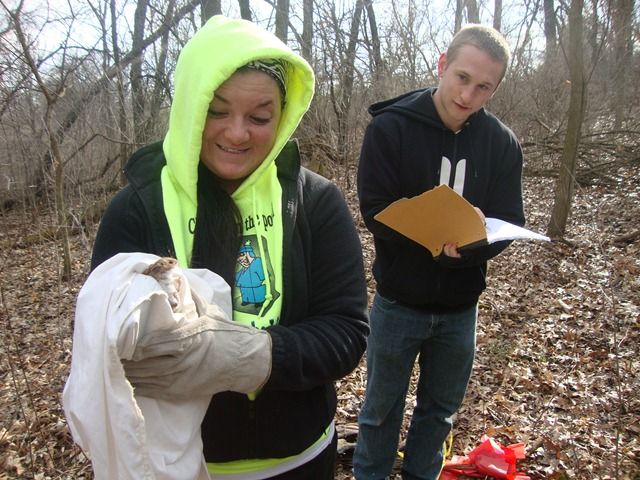
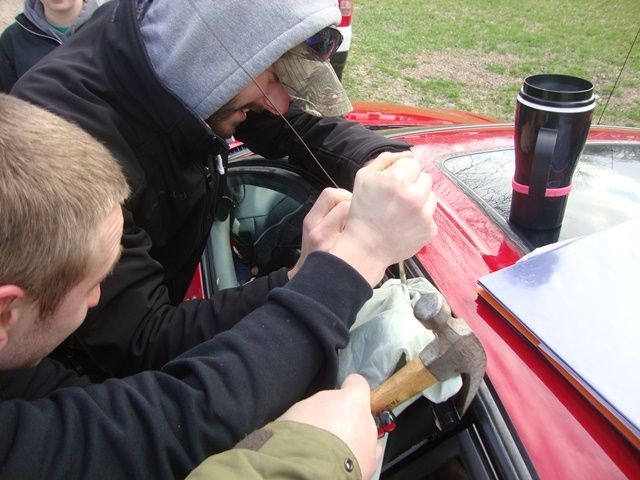
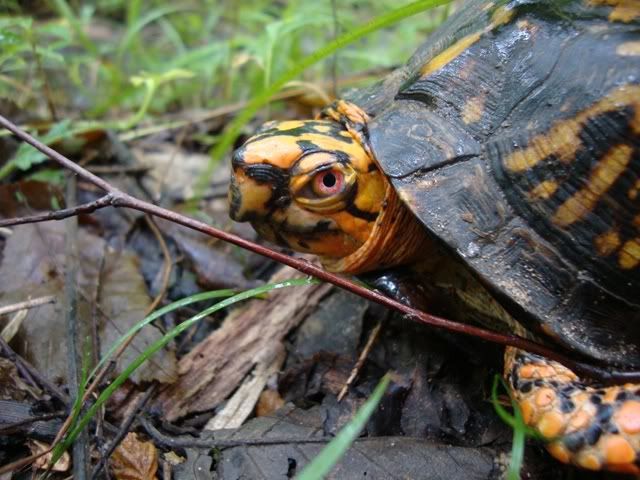
1) A radio telemetry study involving Blanding's Turtles (Emydoidea blandingi)....you can see some photos below from the prep work for this project that started LAST spring.  I have three students involved in that project.

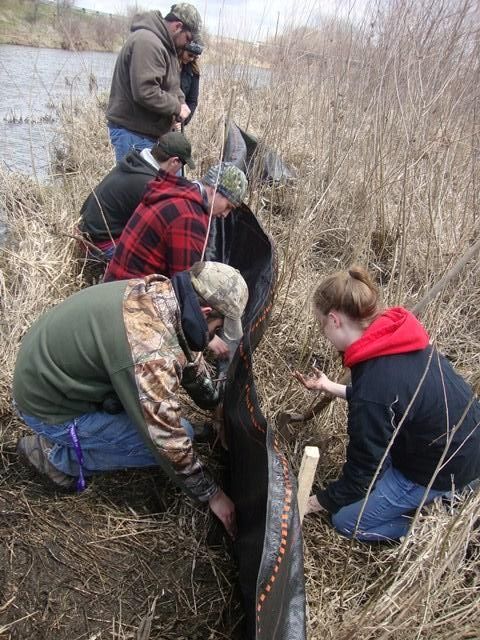
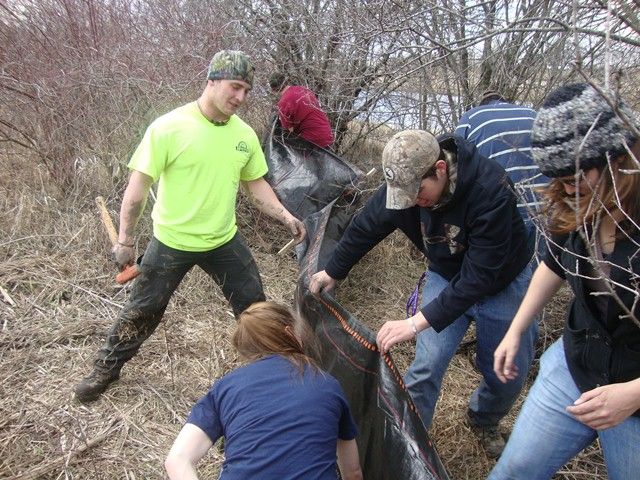
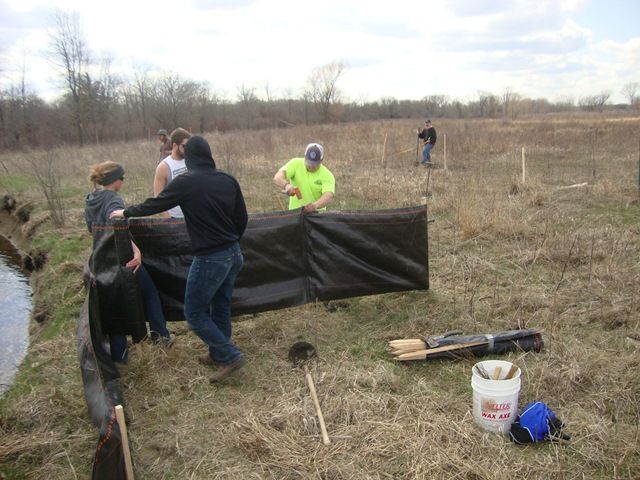
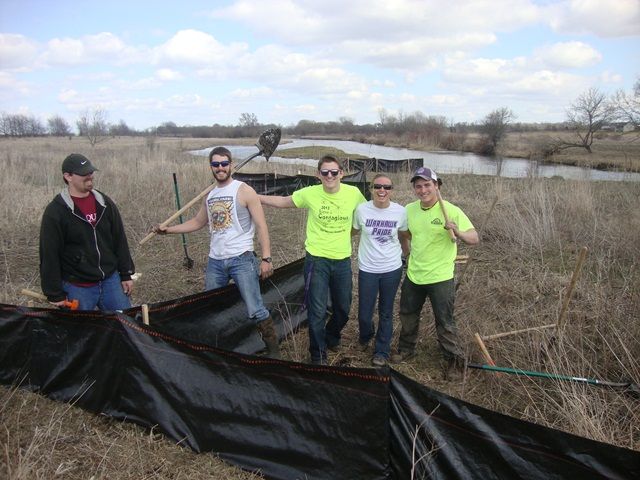
2) a study of riparian snake communities, which requires drift fences.  This week it was finally warm enough to really try and install the fences.  Luckily, I have a cadre of hard-working undergraduate students that I can trust to volunteer and help me with stuff like this.....

As a mentor to budding ecologists, nothing makes me happier than to see them all working hard....no one standing around....and no complaining or whining (which I have a zero-tolerance policy on.... ).  Furthermore, they looked to be enjoying themselves.

In a single afternoon we installed all of the fencing for one of three study sites.  Hopefully we get the other two sites done in the next week and we can start catching "stuff".  :)

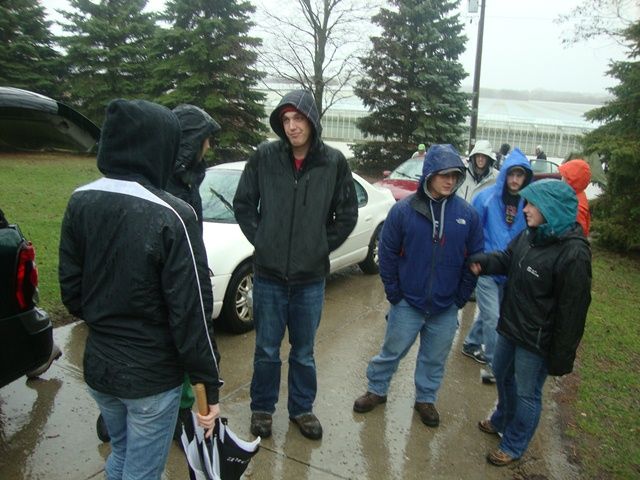
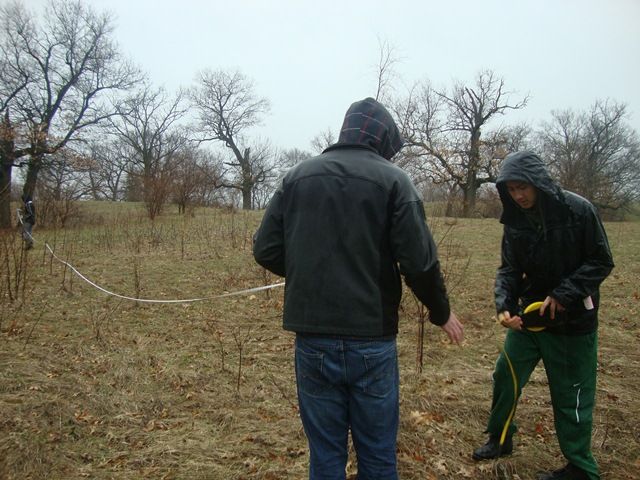
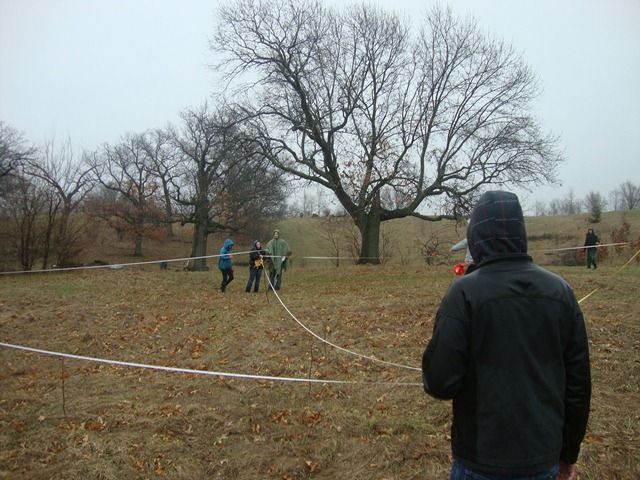
I also was "mean" enough to force my Advanced Ecology students to measure out a small mammal trapping grid as part of a class exercise, just like last year.

Yet, this year we did our work in the middle of a down-pour......

We didn't actually set any Sherman Traps until the following week, when it was not raining and the critters wouldn't be so likely to die due to exposure.  We added a bit of alpaca wool to the traps to help them out (it was in the 30s the evening the traps went out.

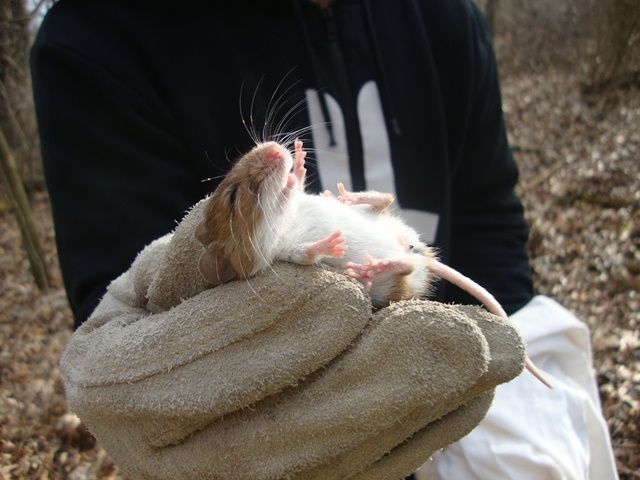
Rodents were more than willing to take advantage of the peanut butter and oats we provided.  These are a Peromyscus sp., I always call them White-Footed Mice (P. leucopus), but they could just as easily be Deer Mice (P. maniculatus).

Then...of course....one of the students locked their keys in the car.  Luckily some of the others knew how to solve this problem (because they had locked their own keys in their cars at one point :)  ).

More to come when I get a chance to breathe!

Tuesday, May 10, 2011

Up and About for Spring


You may remember that I posted some information on the box turtle radio telemetry project that I have ongoing (see The Turtle In the Box, posted on February 23, 2011).  We've been monitoring the critters since late February, hoping to nail down their emergence from hibernation.

Since that time, the six turtles* with radio transmitters attached to their shells had remained buried in their winter hiding locations....until about late April.

On April 20th, the one individual (a male named H001) had left his burrow for the first time this spring.  I found him about 8 ft away from the burrow sitting in a sunny patch.  None of the other turtles had moved from their overwintering locations at this time, although two individuals had "semi-emerged" from winter dormancy.  They (both males) were completely buried the week before, but on the 20th they had come close enough to the surface that their heads and upper shells were exposed. 

Above: H005 found on 5/6/2001 in a burrow created when the root of an old tree stump rotted away.


The rest of the turtles were still down at that time.
________________________________________________________________________

By April 30th, all of the turtles had left their winter abodes and moved some distance.  In fact, at that time I couldn't find H001 with the telemetry equipment.  I kept getting a signal, but it was wonky because he had moved so far.  I was in alittle bit of a rush on that particular day, so I had to give up on locating him for the short term.

Above: Undergraduate researcher tracking box turtles with telemetry equipment.

On Friday (May 6, 2011), with the help of some undergraduate researchers, I was finally able to get out and make a full-scale attempt to locate H001.  It took a while, but this time he was found.  Telemetry signals bounce around something terrible when in a woodland (the signal is blocked by and bounces off of trees, rocks etc.).  This is exacerbated if the person holding the telemtry antennae is in a ravine and the turtle being tracked is at the top of an adjacent hill (which is exactly what happened with H001).  The result is that the person who is tracking the turtle may wander around in circles, as the signal leads him/her in many different directions that don't end up at the turtle.  Once I got it through my thick noggin' that this was the score for H001, I finally thought to hike to the top of the ravine slope.  That's when I found him.

There he sat....partially covered with leaves in the middle of the woods.  He looked almost indignant, or at least annoyed, when I walked up to him.  This is probably because no matter how far he travels, this silly pink bipedal mammal seems to find him.

I'd be annoyed too.

Above: the incredibly mobile H001 as I found him on 5/6/2011

Above: Box turtles blend in particularly well.  Pictured above is the same turtle (H001).  This photo was taken at chest height, pointed down at the turtle.  He's in there, if you know where to look!


Anyways, he really had to high-tail it to get that far in such a short time.  In the process, he crossed a rather quick flowing stream with pretty steep banks and a rocky bottom.  How he crossed the stream, I honestly do not know.

Why did he go so far?  It's likely part of what he does every year.  Perhaps he was on the hunt for a female...males tend to move alot for this reason.  In general, however, this is not a very mobile critter.  Most remain within the same small home range (i.e., the area the animal roams in during the active season) throughout their lives.  For example, an individual Eastern Box Turtle tracked in New York was found to remain in the same general home range for 15 years (Nichols, 1939).

We'll see where he goes from here.

Literature Cited:

Nichols, J.T. 1939. Range and homing of individual box turtles. Copeia 1939: 125-127.
_______________________________________________________________________

*At the start of this study, 9 turtles were affixed with radio transmitters...three had the transmitters chewed off by something over the winter.  Although it's plausible that they were eaten by a racoon or oppossum, I never found any turtle corpse....just the transmitter.  I'm hoping the Raccoon, or whatever, simply chewed the transmitter off, but realized the actual turtle, with its tough shell, was too much work and gave up.

Wednesday, February 23, 2011

The Turtle in The Box


The Eastern Box Turtle (Terrapene carolina) can be a rather common sight if one knows what to look for when walking through the deciduous hardwood forests here in the eastern U.S..  The true explanation for where this small, unobtrusive critter got its vernacular name ("box turtle") is apparently open to debate.   Some say it's because they are shaped like a box.   Others say it's becuase they can close up tightly like a box when threatened.  Whether or not the latter is true, it is a particularly interesting point about box turtles.  Their lower shell, called a "plastron", is hinged.  As such, these turtles can draw their lower shells up tight against their upper shells (called a "carapace"), looking something like this after doing so:

A nifty little defense mechanism.  These turtles need the extra help becuase they are basically terrestrial (land-dwelling).  So, whereas their aquatic relatives can dive into the drink at the first hint of danger, box turtles cannot.  The ability to close their shells helps them avoid predation.

When one is a weirdo ecologist, like myself, one often wonders: "What do these turtles do every day?"  Not an easy question to answer without alittle help.  So, what do weirdo ecologists do to rectify this problem?  Attach a radio transmitter to a bunch of turtles and track their movements, of course!

So, in the summer of 2010, I started affixing radio transmitters to the shells of turtles using Epoxy.  To the newbie, this may sound ingenious...but trust me, I stood on the backs of geniuses to get to this point. 


Each transmitter emitts a signal with a unique frequency.  Then the weirdo ecologist takes a reciever with a giant awkward antennae, dials in the specific frequency of a transmitter attached to a specific turtle and listens for the "beep".  The beep grows louder as the weirdo ecologist draws closer to the turtle with the transmitter until they are found.  In doing so, we can learn about the turtles' movement patterns, habitat selection, behavior, diet, etc.. 

BTW, I should note the picture below is not of me, but of students that I also forced into behaving like weirdo ecologists as part of their college education.


So, the turtles were tracked throughout the summer.  Habitat observed, GPS coordinates recorded, and so forth.  During the time period in which they were tracked, my students and I determined that (based on Aebischer's Compositional Analysis), box turtles prefer lowland hardwood forest and wooded riparian areas (as opposed to upland forest, grassland, or disturbed habitats).  Also, of nine turtles tracked across two sites, the average minimum convex polygon home range estimations were 2.5 acres at Site A and 3.3 acres at Site B (that's alot of moving for a little critter like this!).

Then...some time in October...the turtle's decided it was time to take a winter's nap.  So they either burrowed into the ground, or found existing mammal burrows that they climbed into, or rested in the root channels of a fallen tree, awaiting the warmth of spring.  As such, there was no need for weirdo ecologists to track them any more.  At least not until spring.

In the last few weeks, temperatures here have rose into the seventies on more than one occassion...and have often been in the fifties or sixties.  I've heard upland chorus frogs (Pseudacris ferarium) calling for more than two weeks now, which is always an indication that spring is on the way. 

So today, and with the help of a dedicated student, went out and tracked the turtles to see if anyone had started moving about yet.

Interestingly, they have not.  Despite the warm temperatures, they have not budged.  I guess February is still too unpredictable for them to fall for a few warm days.  The only glimpse we got of a turtle was this individual buried near enough the surface for us to see its transmitter and the top of its shell.


So, regardless of whether or not the Whistle-pig saw his shadow (I honestly don't know if he did around here....didn't read the paper that day), it ain't spring yet!