Last week, I investigated the river otter latrine (Lontra canadensis) that I have been monitoring for a month.
As has been the case every week, I found fresh otter scat carefully deposited on pile of debris.
This otter scat looked alittle different than it did in previous weeks. How did it differ, you ask?
It was red.
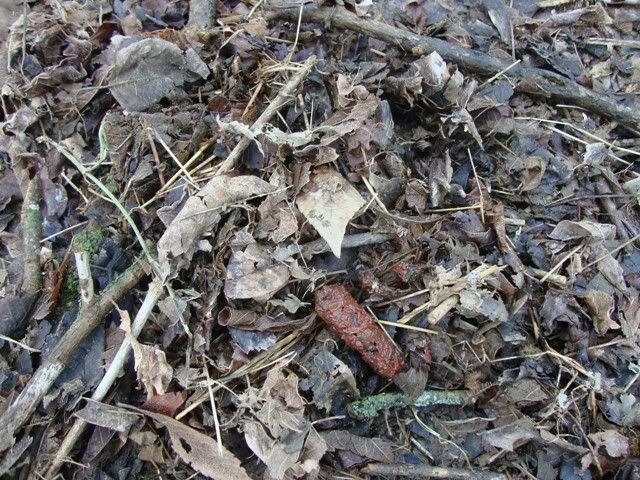
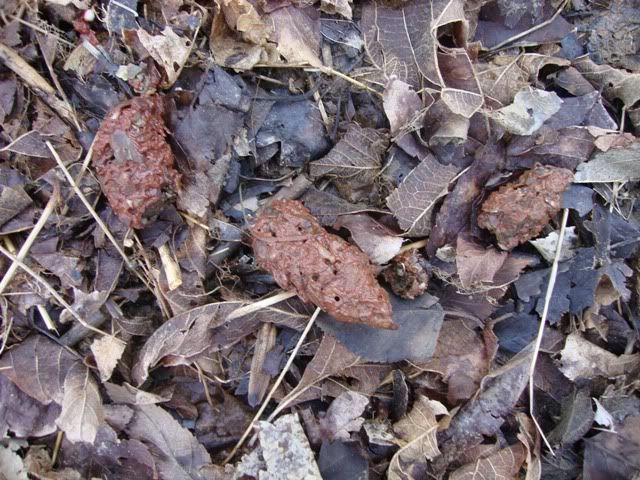
Above: Two examples of red otter scat found on March 11, 2011
Although it is tempting to think the crimson hue of this poop is the result of blood....I think another culprit is more likely: soil erosion.
We had heavy rains for nearly a full day and night immediately prior to me visiting the otter latrine and finding the red scat. You'll see from the pictures below that the soil in our region is dominated by reddish clay (see below). This clay erodes into waterways during heavy rain events. This sediment is then picked up by the otters when they feed on crayfish or shellfish (which hang out on the stream bed).
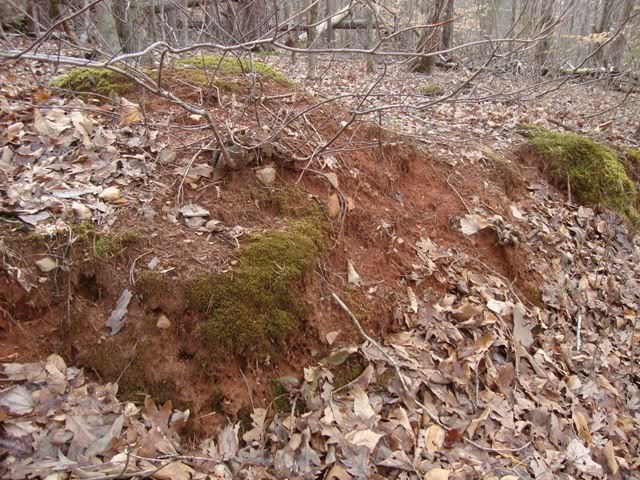
Above: examples of the red clay soil in our region
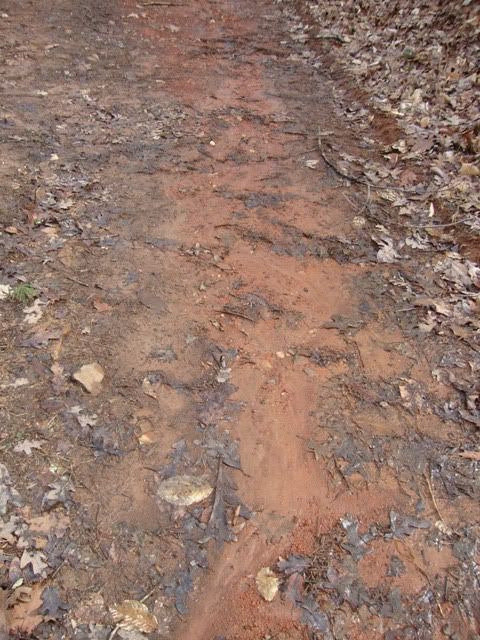
Above: red clay being washed down a trail near the stream after heavy rains
What impact does this have on river otters? I dunno. I couldn't really find any information on how sedimentation affects otters. I found a few sources that comment on how erosion isn't a good thing for otters(for example Illinois DNR, 2006). Yet, these comments seem more to do with associated fertilizer/pesticide run-off than sediment deposition in streams. Furthermore, from what I've found, comments on how erosion and sedimentaiton affects otters is mostly anecdotal. There is some work done on how contaiminants (such as PCBs) can affect European otters (Lutra lutra), and these contaiminants can get bound in sediments (Traas, et al., 2001). But other than that, I couldn't find much. Perhaps someone else knows of research that I've missed.
But, anyways....what makes the otter crap red? Soil erosion (I think).
More otter-related posts to come in the future!
Literature Cited
Traas, T. P., et al. 2001. Congener-specific model for polychlorinated biphenyl effects on otter (Lutra lutra) and associated sediment quality criteria. Environmental Toxicology and Chemistry 20:205-212.

