Showing posts with label Painted Turtle. Show all posts

Sunday, September 22, 2013

The End of the 2013 Herp Season Approach-eth....but there are still TURTLES!

The beginning of the semester sort of stinks.....
The collision of the field season and the school season means there isn't a free second.  We have three projects still in the active data-collection phase, which we are trying to coordinate schedules for....and everyone has class (students) or teaching/grading (me).

All of that will change sooner than we think, though.  We are in that time of the year when weather becomes highly variable.  Last week, for example, we had a high of 90 deg. F on Tuesday, and a high of 63 deg F on Friday.  This week we had two days in the mid-80s, while today it was in the mid-60s over the weekend.

That means Fall is coming, which also means the cold-blooded critters will be going down for the winter very soon.

So....thought I'd share some late-season "herpstuff".  Mostly a random conglomeration of neat things seen over the last few weeks.

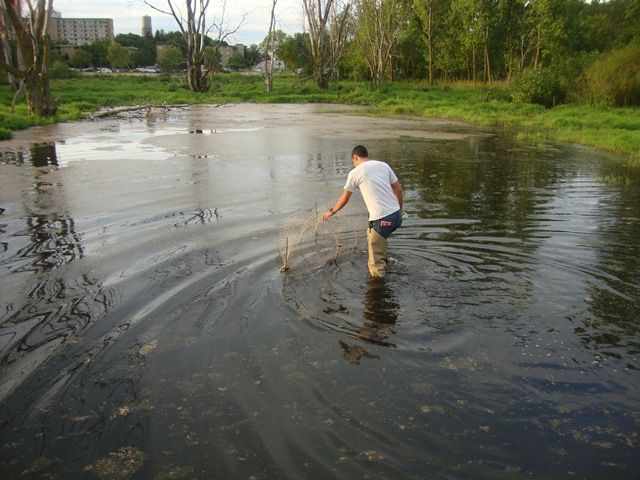
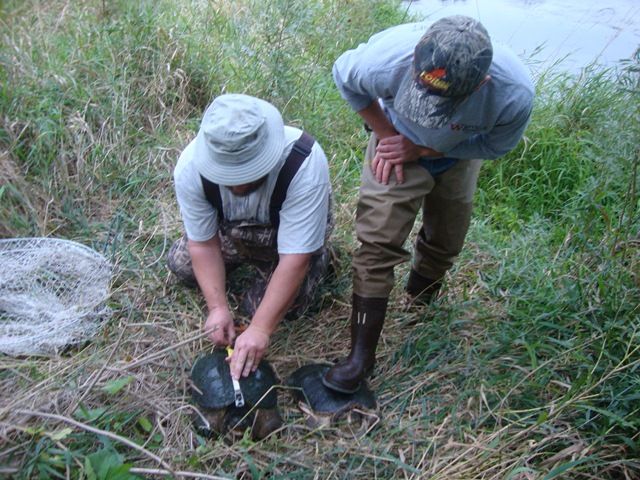
Our 200-level Field Methods in Ecology class had their annual day of turtle trapping and marking (see here for last year's haul).  This year was another great one.  By luck, we got to take advantage of the last few good days left for trapping before the turtles started to focus on hibernation (and, thus, aren't as attracted to bait). 


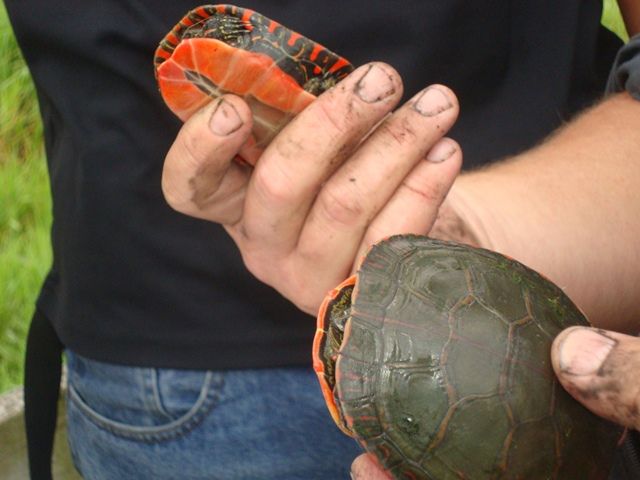
We set traps out for two days straight.  Day 1 yielded some nice little Painted Turtles (Chrysemys picta)........
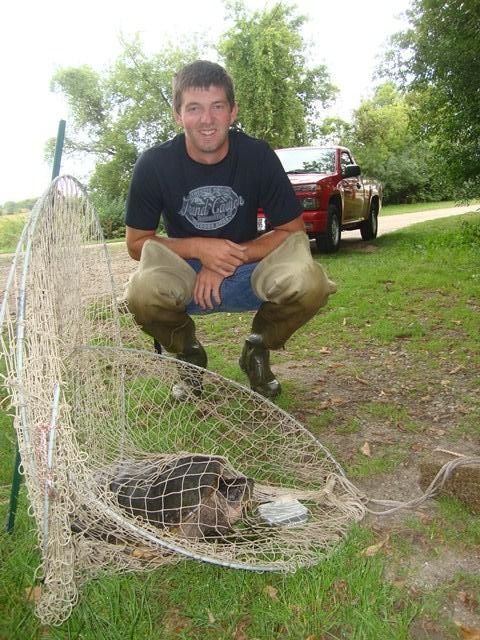
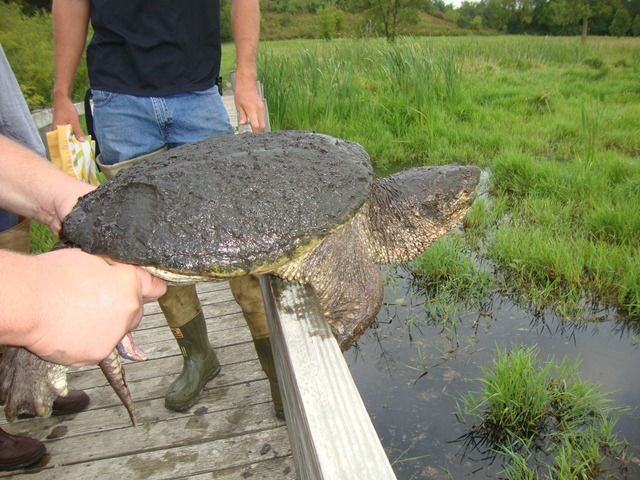
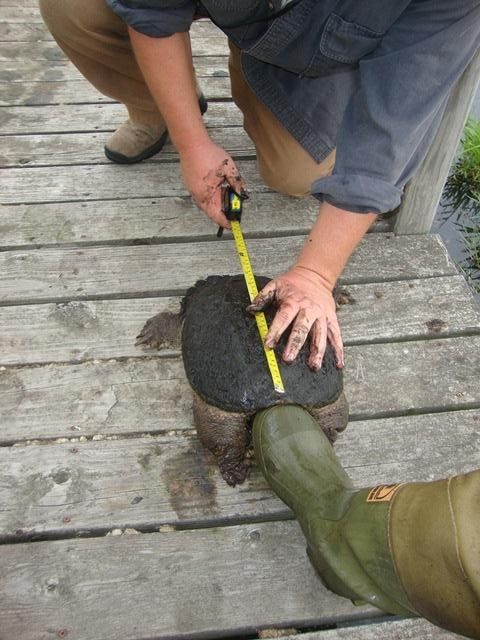
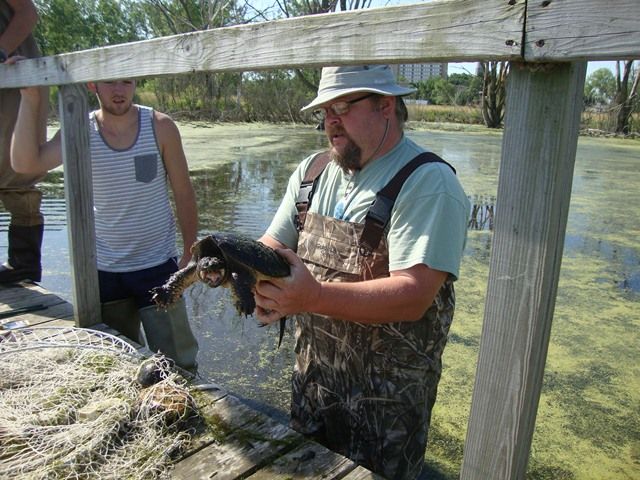
........ and of course some nice Common (northern) Snapping Turtles (Chelydra serpentina).


On Day 2, however, our traps were nearly exploding with turtles! 

A ton more Paints....
.....no Snaps (suprisingly)...BUT...a much rarer find: a Blanding's Turtle! (Emydoidea blandingii). 
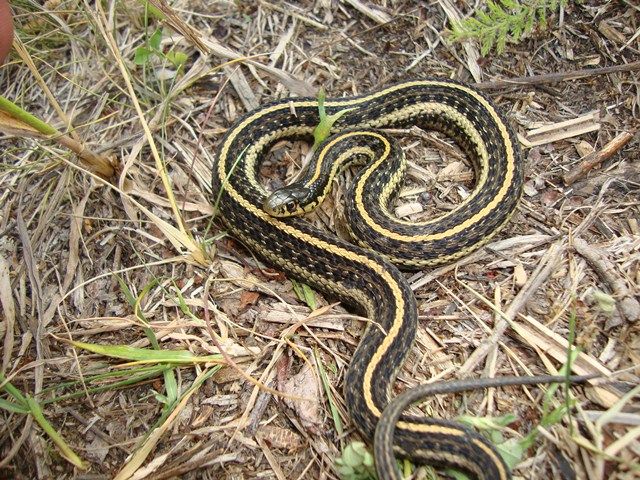
Photo courtesy of T. Gotrik
In three years of trapping this location, we've never caught a Blanding's Turtle before.....

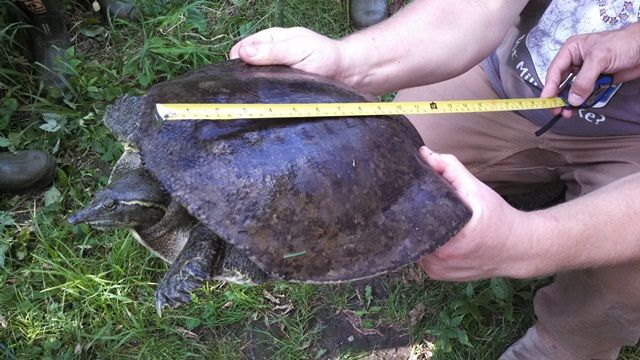
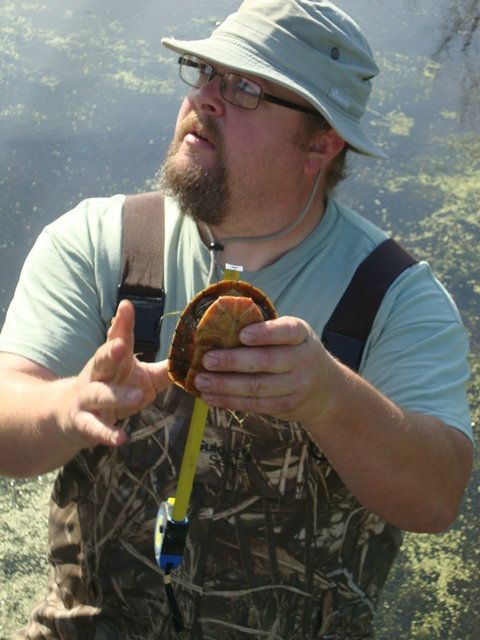
We also trap the nearby creek...and this year got another first: a Spiny Softshell Turtle (Apolone spinifera).
Photo courtesy of T. Gotrik

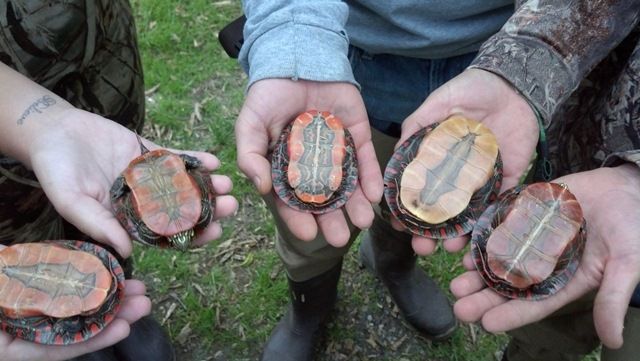
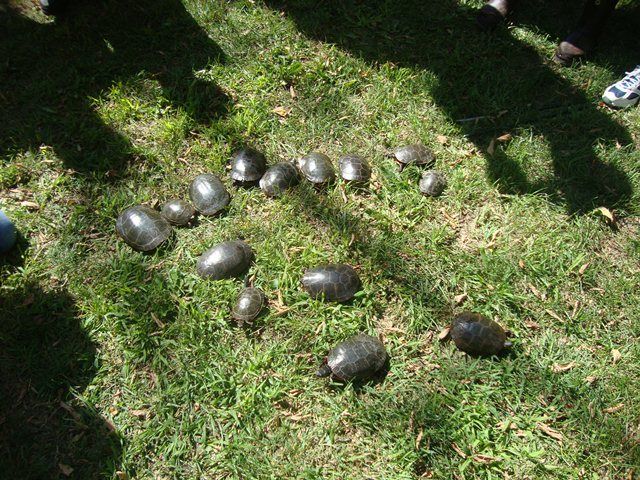
The students were pretty excited (and so was I).  In the end, we caught 26 Paints, 2 Snaps, 1 Blanding's Turtle and 1 Spiny Softshell.

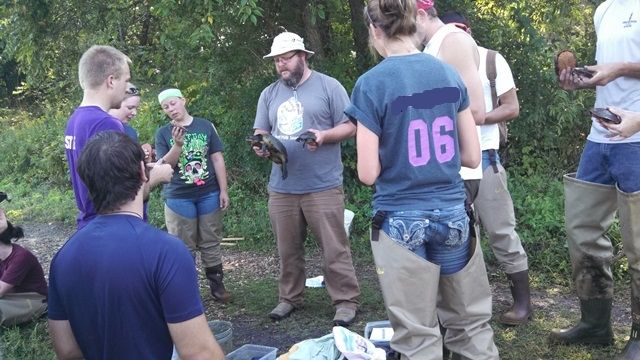
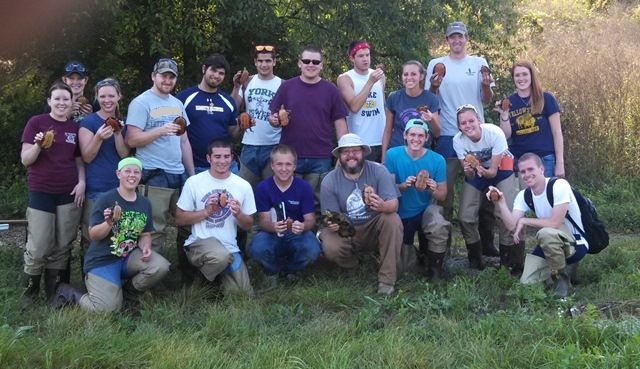
Enough turtles for everybody to be able hold at least one in a group photo!
Photo courtesy of T. Gotrik

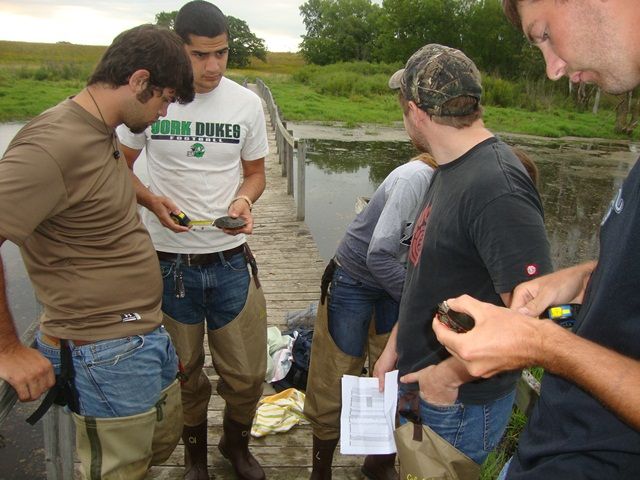
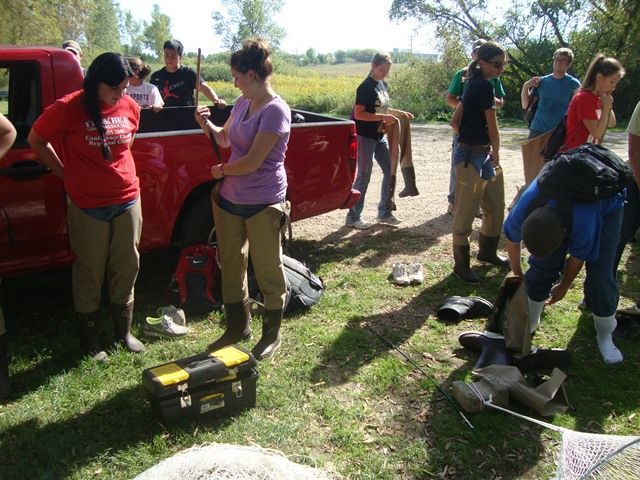
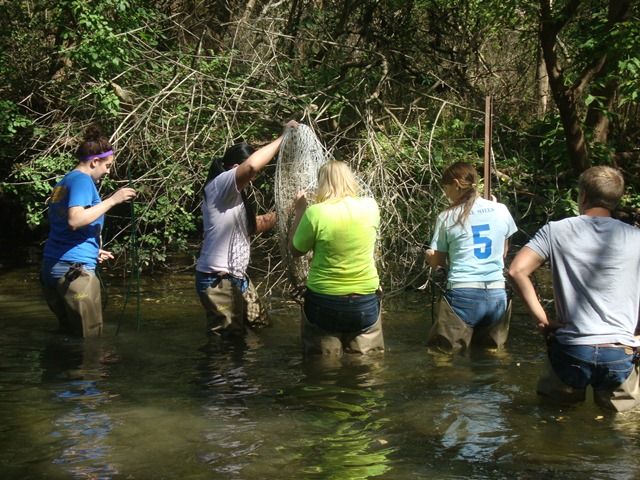
The students worked hard and enjoyed themselves....even when hip waders weren't quite enough to keep them dry....


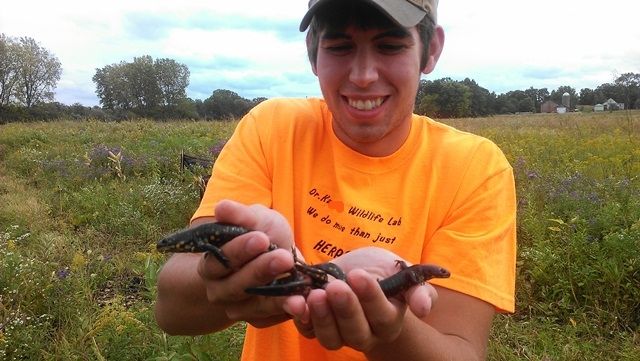
OH...and it's the time of year when salamanders are migrating from their summer ponds, to where they will spend the winter.

As we found out when checking our drift fences recently.....
Tiger Salamanders (Ambystoma tigrinum).
Photo courtesy of N. Rudolph


Blue-spotted Salamanders (Ambystoma laterale)
Photo courtesy of N. Rudolph

Sunday, June 23, 2013

Hunk O' Steamin' Bear

I wish I had more time for an in-depth post.

For now, the best I can do is show you a few video clips that my students working on the wolf project captured of curious upper Midwestern Black Bears (Ursus americanus).

Obviously, these critters weren't moving around too much in the winter during their first round of camera trapping on this project.

But, much to our satisfaction, they are showing up now....
....and about two days later....

We also got a clip of (what appears to be) a pretty massive individual.

For comparison, here's a White-Tailed Deer (Odocoileus virginianus) on the same camera at, what I *think* is, about the same distance.....

Followed by the steaming hulk....

Most of my projects don't occur in bear country, so these clips were a real treat.

Lots more to share when I get a sec.

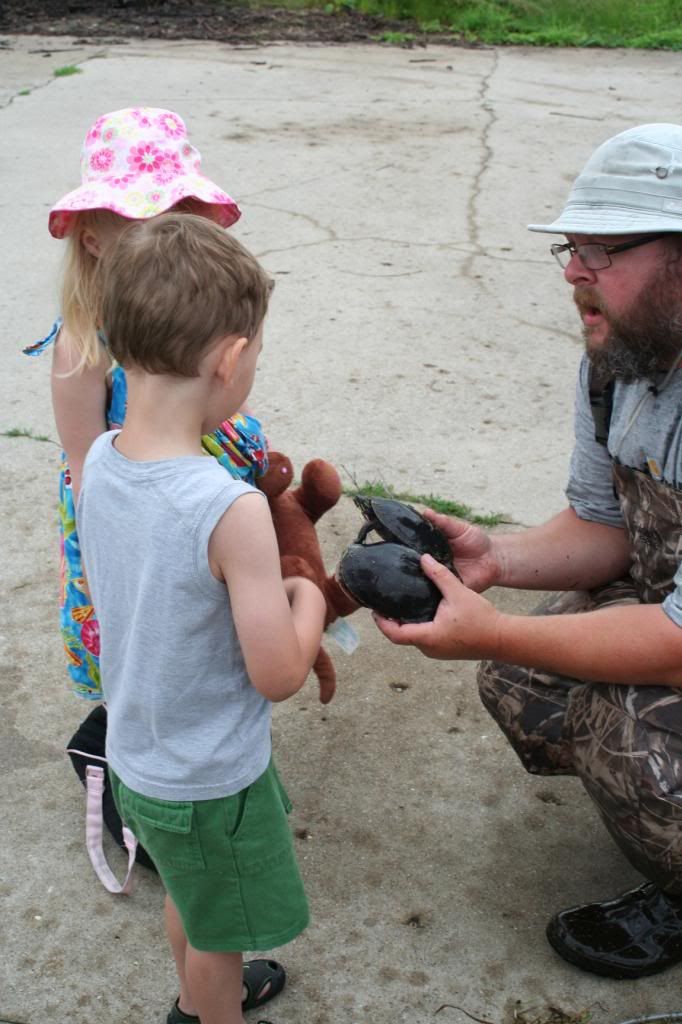
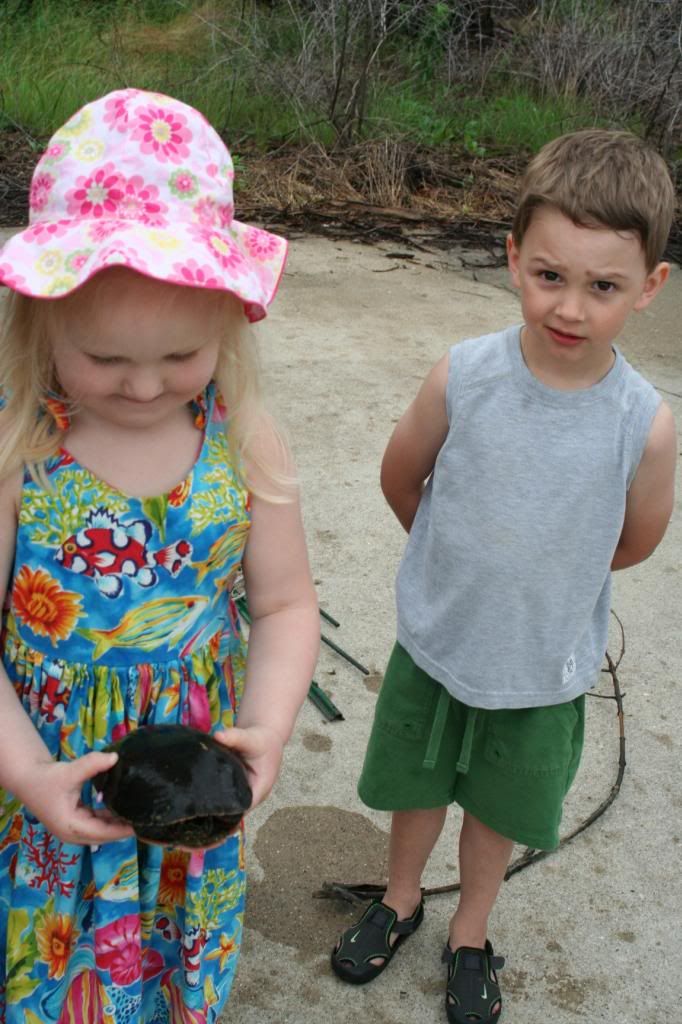
For now I'll leave you with a few images of future naturalists helping me check turtle traps over the weekend.
 

Thursday, September 27, 2012

Field Ecology Methods Week 2 (2012): Reptiles

After a week of invertebrates and Limnological techniques, the students spent some time learning how to conduct some standard surveys for reptiles.

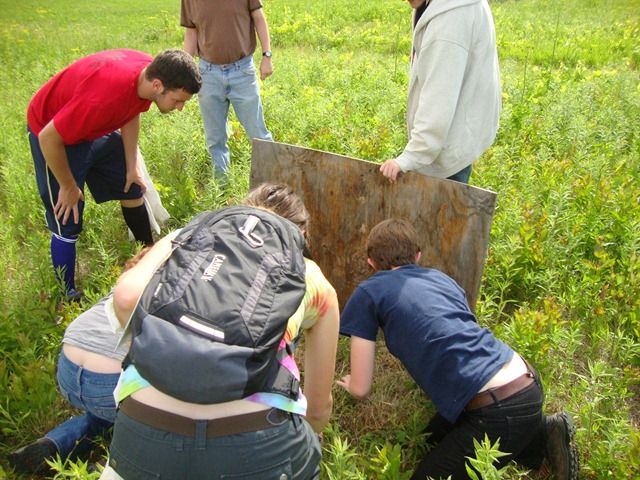
First, we checked the existing artificial cover objects on-site for snakes....

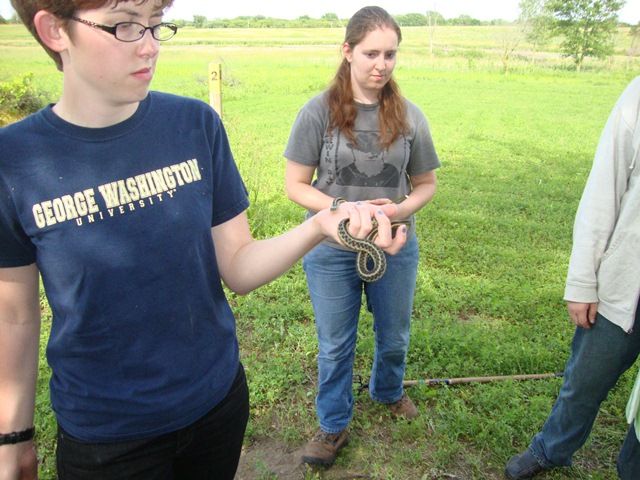
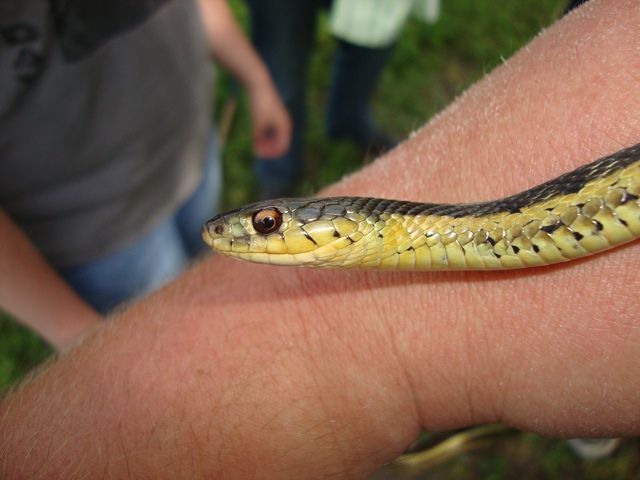
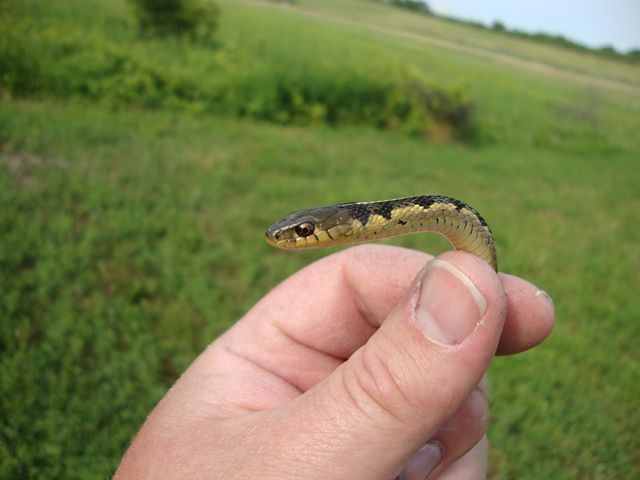
This resulted in only TWO juvenile Gartersnakes (likely born this year).  But it was unseasonably warm on the day we checked the boards (upper 80's)....probably too warm for snakes.

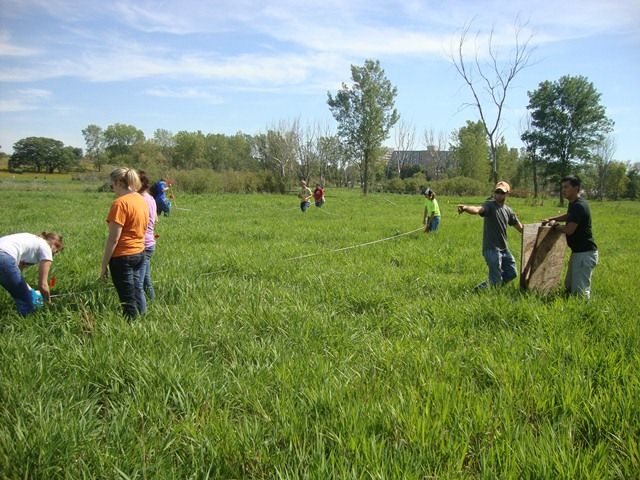
The students then worked to measure out additions to our existing coverboard grid. 

Few things make me happier than to see all 18 of these students working hard in the field and no one standing idle.


Let's face it....field work can be grueling (especially in the warm conditions we had while deploying the boards).  But, this gives the students a small taste of less than ideal field conditions that one might face as a field ecologist.  It's not all catching Cougars and Narwhals every second (or as a colleague here says...there's not a "gorilla behind every tree").

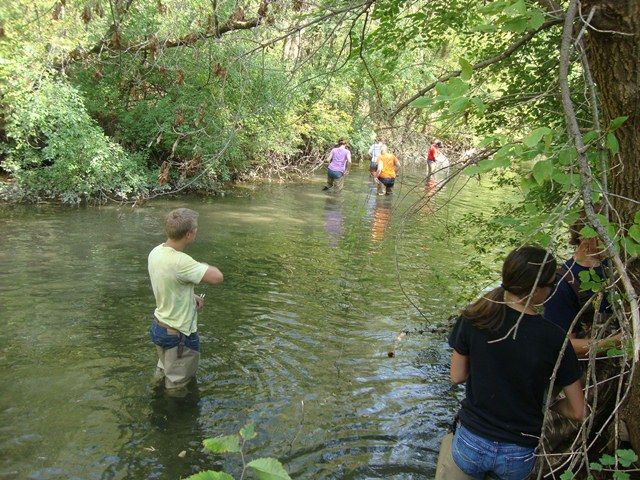
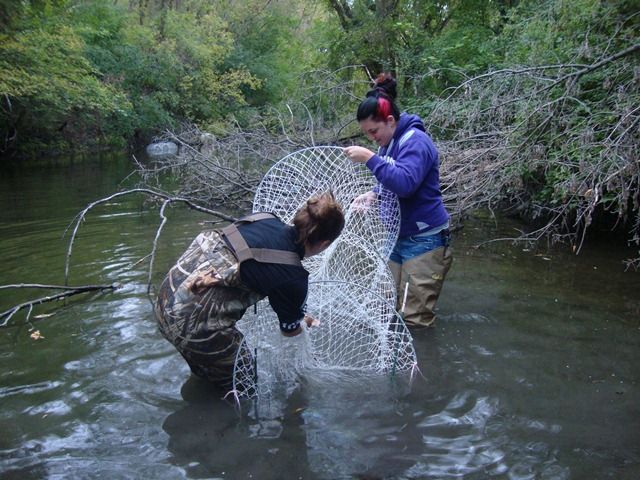
After the artificial cover objects were laid, we moved over to the creek and deployed some hoop traps for turtles.

........................................

The traps sat for a night, and a small group of volunteers came out with me the next morning to check and re-bait the traps.

Thankfully, we had more luck with turtles than with snakes.

Two large adult Snapping Turtles (Chelydra serpentina).....

Five cute little Painted Turtles (Chrysemys picta).......

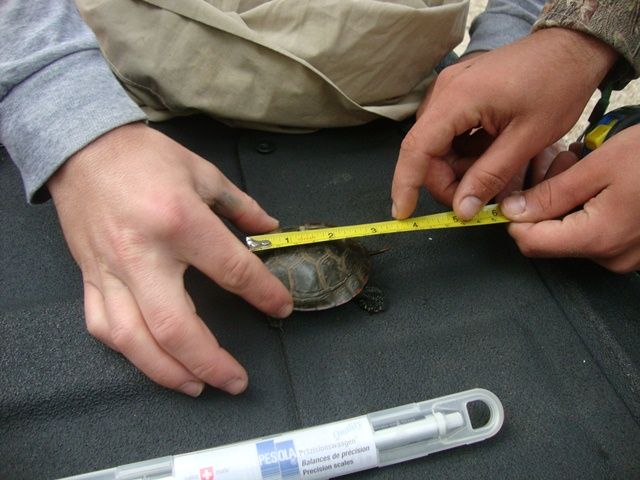
We took our morphological measurments, such as carapace (or upper shell) length....

Then we released the turtles back into the stream.
.........................................

The next day it was back to check the traps again, and this time the entire class was present.

...and once again, we had good fortune!

Day 2 yielded 14 painted turtles and one little snapper....a good haul!
Once again, appropriate morphological measurments were made....the turtles were given a permanent mark....and released back into the creek. 

Hopefully, we'll see some of them again in the spring!

For more information on standard survey techniques for reptiles, see this excellent new book:

McDiarmid, R.W., et al. 2012 Reptile Biodiversity: standard methods for inventory and monitoring. University of California Press. Berkeley.

The following book is also a good introduction to standard reptile survey methods.  Unfortunately, it's out-of-print, but you can still get it from libraries or through interlibrary loan.

Karns, D.R. 1986. Field Herpetology: methods for the study of amphibians and reptiles in Minnesota. Occassional Paper 18 of the James Ford Bell Museum of Natural History, University of Minnesota.

Tuesday, June 19, 2012

Field Ecology, Summer 2012: Herpetological Survey Methods

We offer a semester-long course in field methods for our Ecology majors.  They are exposed to a variety of techniques, ranging from plant identification/collection-making and tree community composition analyses, to aquatic sampling methods, to techniques for surveying vertebrates.  The summer session version of this course offers some unique opportunities for sampling amphibians and reptiles because....well....it's warm out!

There is a small wetland on campus.  It's shallow and warm.  It's also incredibly productive (teeming with aquatic invertebrates, vegetation, and ampibians)....a great place for turtles.  In fact, turtles in this wetland undergo a fairly treacherous journey every spring and fall.  They leave the shallow wetland and migrate across a road to a nearby stream, where they spend the winter (a journey I've commented on before).  Once they are in the wetland, it's easy street.....assuming some annoying university professor and his students don't screw up your whole morning by setting turtle traps!

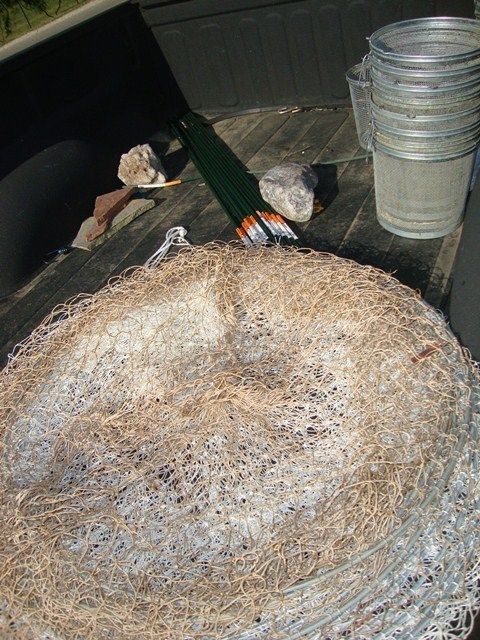
The traps we use are of a size and type that is accepted by our state regulatory agency.  These regulations vary by state (even down to a specific mesh size), so make sure you know these before throwing out turtle traps.  The traps themselves are not particularly difficult, once things have been explained a bit...

Basically, the mechanics of setting the traps is easy.  Finding the best location is one of the most challenging parts of turtle trapping.  Also, finding what type of bait works the best is very important.  I've tried alot of bait in my day (dog food, cat food, tuna, fish guts) and the best all-purpose turtle bait is a cracked tin of sardines! The brand doesn't even really matter.

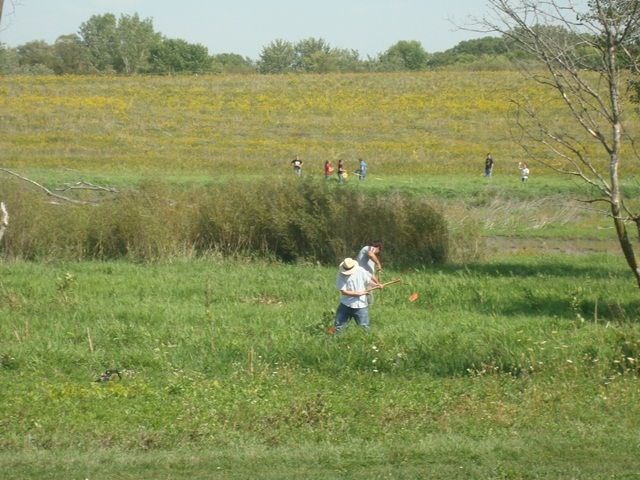
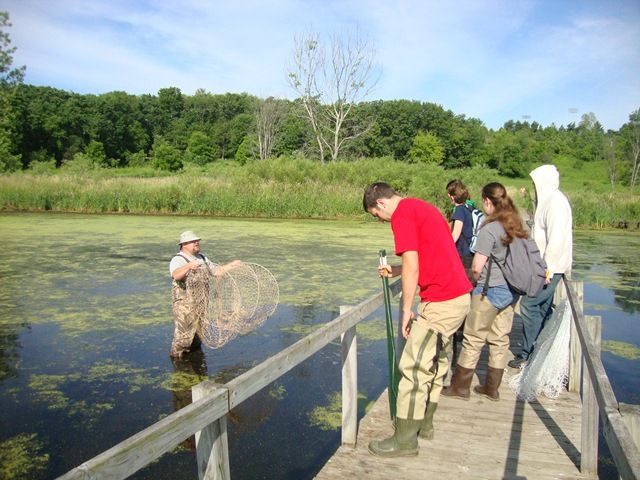
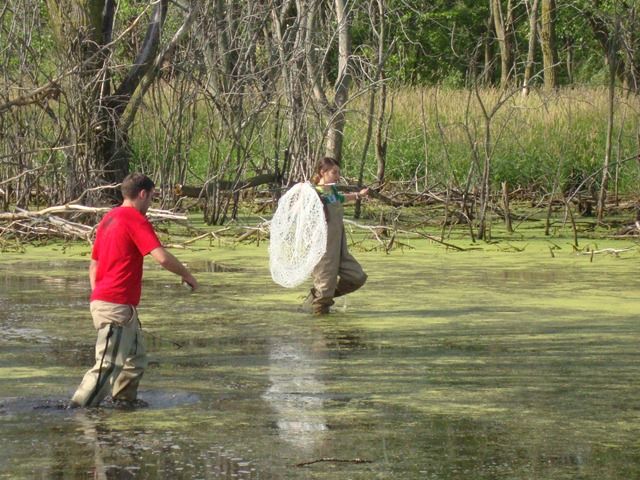
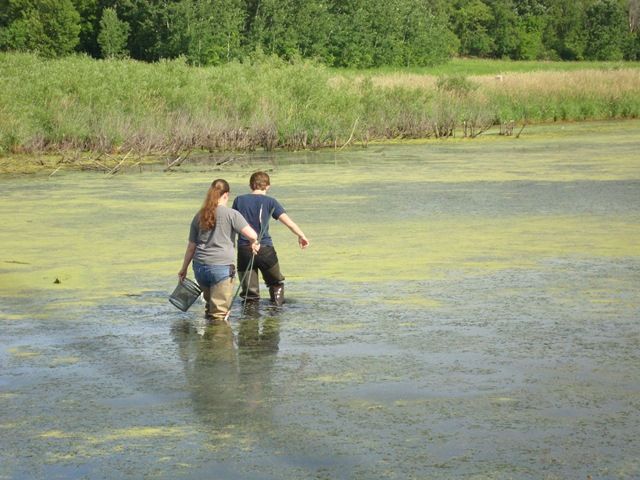
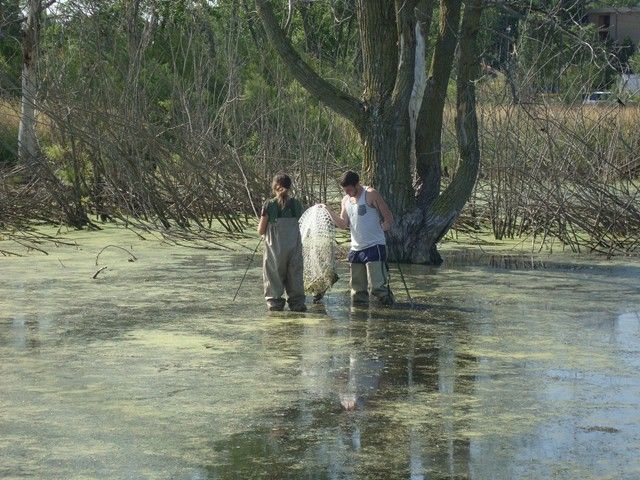
Armed with their knowledge, the students plunged in to set their own traps for an overnight soak....


______________________________________________________________________

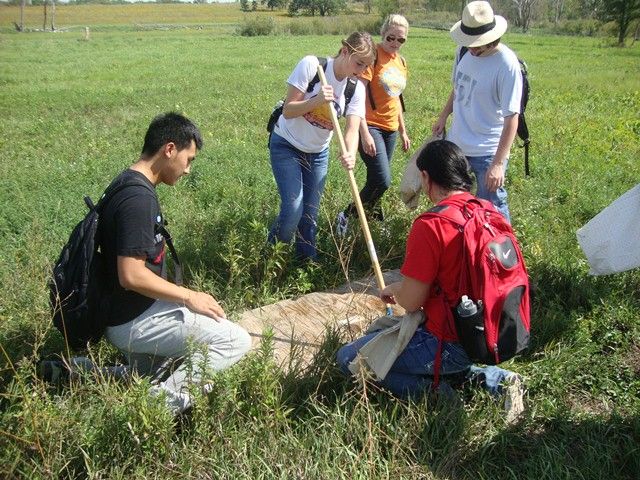
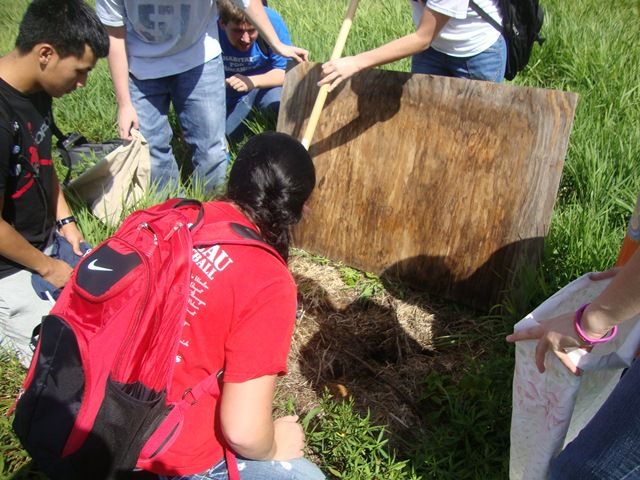
A commonly incorporated technique for sampling snakes involves the use of Artificial Cover Objects (ACOs).  These are essentially a board laid flat on the ground (often CXD plywood in 3 ft x 4 ft sections is ideal.  Once put into place, these boards are warmed by the sun, and also hold moisture, so that the conditions underneath become nice and warm and humid.....perfect for a thermoregulating ectotherm! In early May, the students in the summer session course measured out and deployed a 5 x 5 grid of these boards in a little prairie preserve on campus.  We let the boards age for a few weeks, which gives the snakes some time to find the boards.  So....in the late afternoon on the same day as setting the turtle traps.....we got out there as a group to check what was underneath.

We were not disappointed!  In total we caught 17 snakes in about a half an hour of checking ACOs.

Many of the little live-bearing species that are native 'round these parts will use ACOs.  For example, Brown Snakes (Storeria dekayi), Red-Bellied Snakes (Storeria occipitomaculata) are easy to capture using ACOs.  Gartersnakes (genus Thamnophis) are also commonly captured with this method.  There are several species in this genus that are native to our region, including the Common Gartersnake (Thamnophis sirtalis). 
All captured snakes were then processed, which meant learning to sex snakes and learning to record some very basic morphological characters (such as snout-to-vent length, tail length, and weight).

We then let the snakes go along their merry way!
_______________________________________________________________________

The next morning, it was time to check our turtle traps....and again....we were not disappointed!

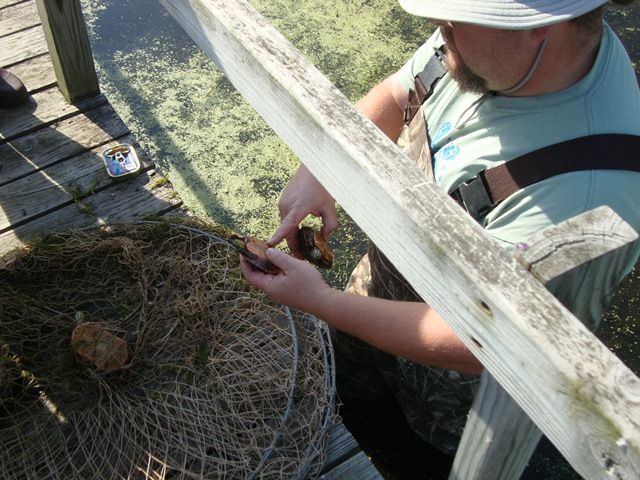
Painted turtles (Chrysemys picta) were the order of the day!  We caught 12 total in our traps...

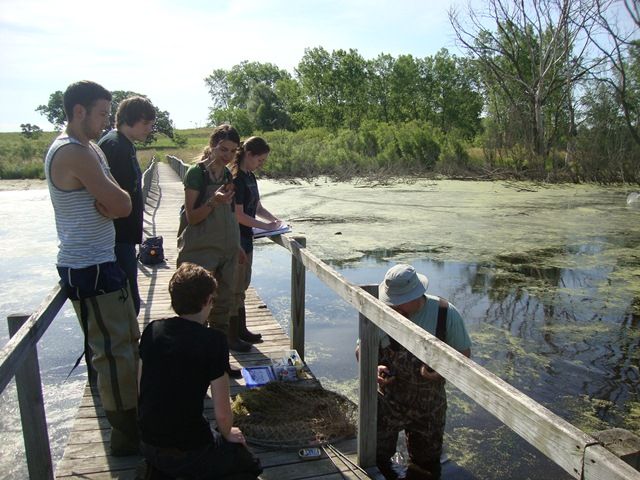
We then discussed methods for measuring and marking turtles.

We measured and marked all of our turtles, including a rather small Common Snapping Turtle (Chelydra serpentina) with attitude to burn.

These marked turtles will now be part of an ongoing long-term population monitoring project carried out by students in this little wetland.

Tuesday, March 27, 2012

Of Newts, Turtles and Timber Wolves...


....alright....I suppose there is debate about whether or not the Timber Wolf (Canis lupus lycaon) is a valid subspecies....and regardless, the US Fish & Wildlife Service has deemed that we can only have the Gray Wolf (Canis lupus) in our part of the U.S.......but "Timber Wolf" fit into the title so well!


Anyways, with the nice weather (unseasonably warm...in the 80s in March, which here doesn't happen until May) hiking is a viable daytime activity.

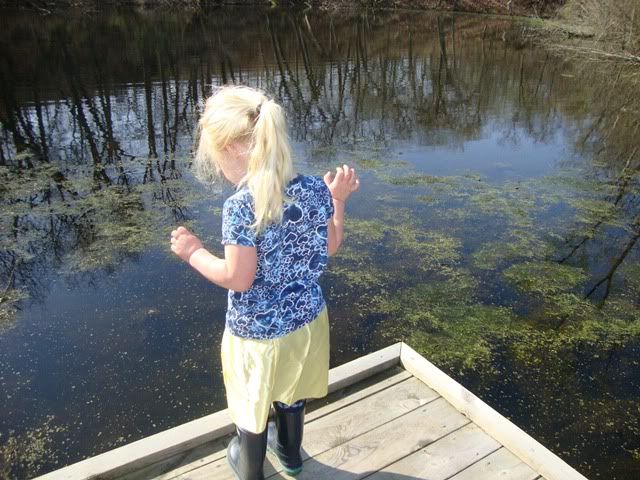
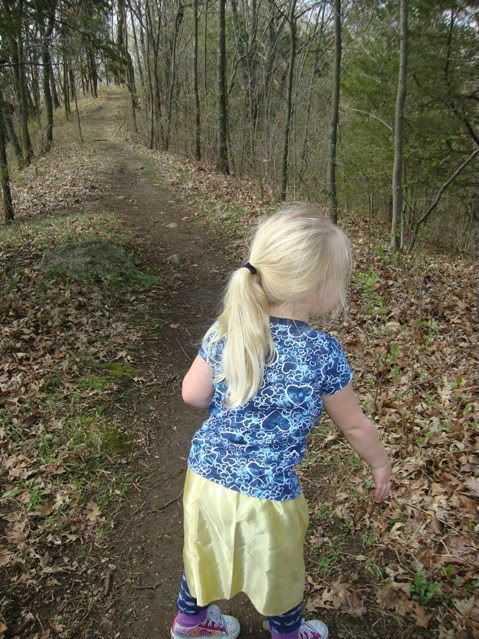
So, the kid and I went to a nearby state forest for a little hike.  She's sort of a paradox, this daughter of mine.  A nearly perfect mix of myself and her mother, as evidenced by the outfit she selected for a day of getting dirty (which she has no problem doing...nor picking up anything that she finds interesting, including a nugget of Canada Goose turd, which she threw into the water, before I could stop her...).

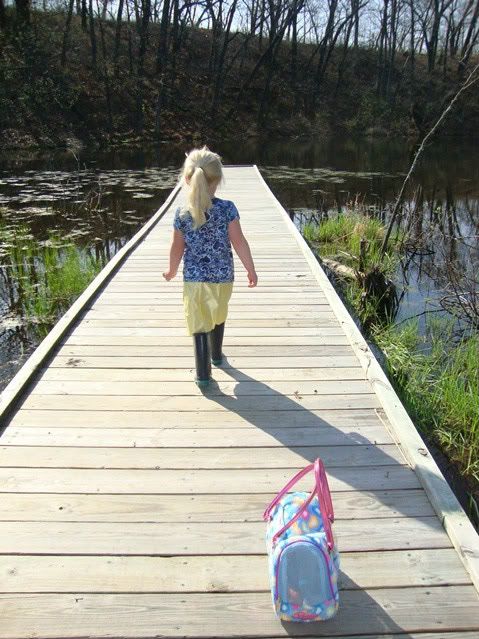
So...the chosen get-up included a shirt with colorful print, the skirt from her Snow White dress-up outfit, a pair of leggings with whales on it, and her La Crosse brand rubber boots.  This was drawn together with a plush purse, in which she carried countless treasures...including an orange (which I had not seen her grab) that she proudly produced later after exclaiming she was hungry.

One of the first things we found along the trail was a pond with a boardwalk that allowed us to walk out over the water.
The Spring Peepers (Pseudacris crucifer) were screaming around the pond peripheries....which possessed a nice buffer of flooded woodlands.  These were the first Peepers I've heard this spring, although I've recieved reports of them calling for the past several weeks by colleagues (which is very early, by the way). 

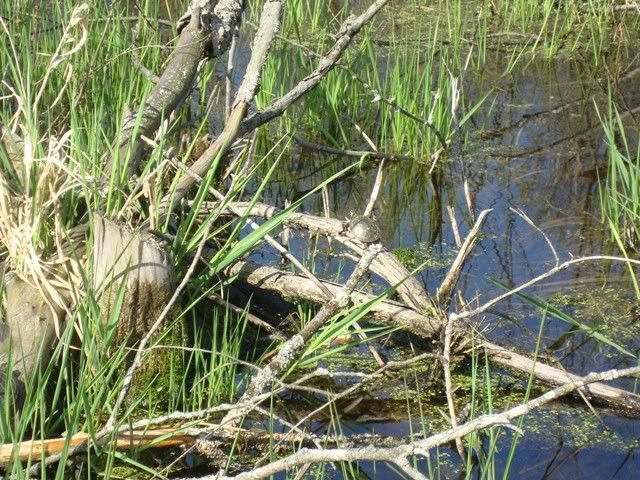
There were also Painted Turtles (Chrysemys picta) to burn in this little pothole scoured out by the glaciers.  It seemed that every available space above the water line, be it log, stick or clump of mud, had a turtle basking on top of it.  Some were even close enough to snap a picture of with a camera that has little zooming ability.

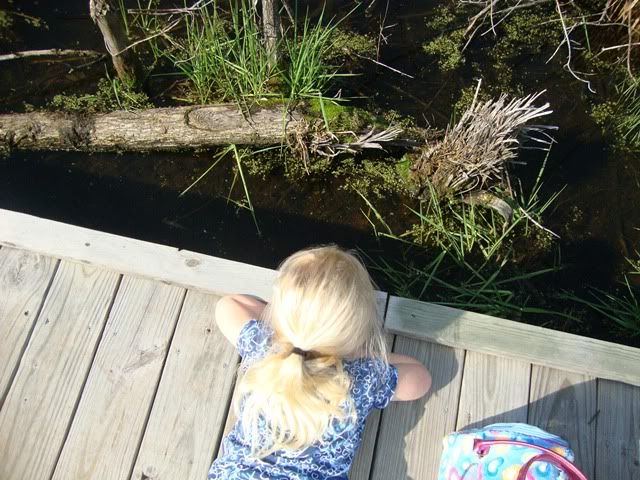
The best part, however, was peering down into the clear wetland water.  It teemed with activity, and we were obliged to get down and take a closer look.

 Water striders and other aquatic invertebrates were plentiful.  I even watched a leech swimming sinuously through the substrate.  But what drew our attention most were the amphibians.  It seemed that every square foot of real-estate was occuppied by large a tadpole.  Based on the fact that they were already sizeable this early in the spring, it's a no-brainer to assume they were a member of the Family Ranidae, and almost certainly Green Frogs (Rana=Lithobates clamitans).  Green frogs lay their eggs late in the summer and the tadpoles remain as tadpoles through winter, only to metamorphose in the following summer.  With the exception of the Bullfrog (Rana=Lithobates catesbeiana), all other frogs in our region have tadpoles that hatch and develop into froglets during the same season.  It's possible these were Bullfrog tadpoles, but they just didn't seem big enough to me.

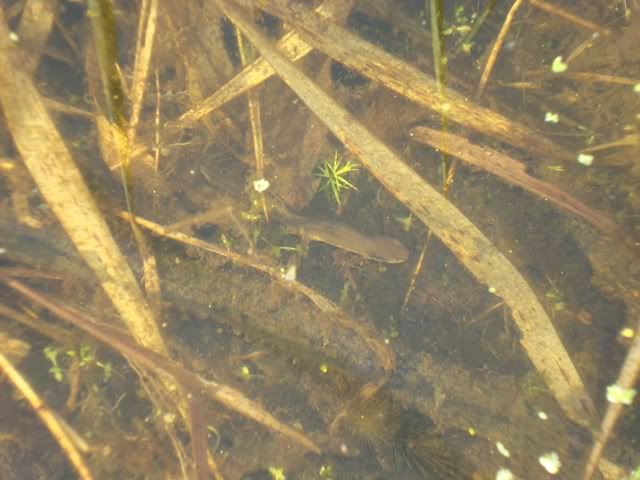
Anyways, the tadpoles were neat...but they dont' really move much.  They basically sat in one place, soaking up some of the rays penetrating through the water's surface.  Much more interesting to watch were the Eastern Newts (Notophthalmus viridiscens).  These little guys were fairly numerous as well, we could see them pushing through the leaf litter at the bottom of the pond, and occassionally swimming up to the surface.  As I've mentioned before, the newt is a most amazing amphibian.  It has several possible "phases" in which it can exist: an aquatic adult, a terrestrial adult, an aquatic juvenile and a terrestrial juvenile.  Basically, these phases are adopted depending on environmental conditions.  If the newt grows up in a wetland that doesn't dry out, they will go from an aquatic juvenile to an aquatic adult.  But, should the water levels receed, they are capable of transforming into a terrestrial adult, or a terrestrial juvenile.  The terrestrial juvenile is beautiful, and is often referred to as a Red Eft.

The individuals my daughter and I saw were adults, and clearly in the aquatic phase.

All of this information: the basking turtles, the tadpoles that need to over-winter, and the newts in their aquatic phase tells us something important (albeit not unusual) about this wetland: it rarely goes dry....or is not ephemeral.  If it went dry by the end of the summer, there would be nowhere for the turtles and tadpoles to overwinter....and the adult newts would have transformed from their aquatic phase to their terrestrial phase.
__________________________________________________________________________
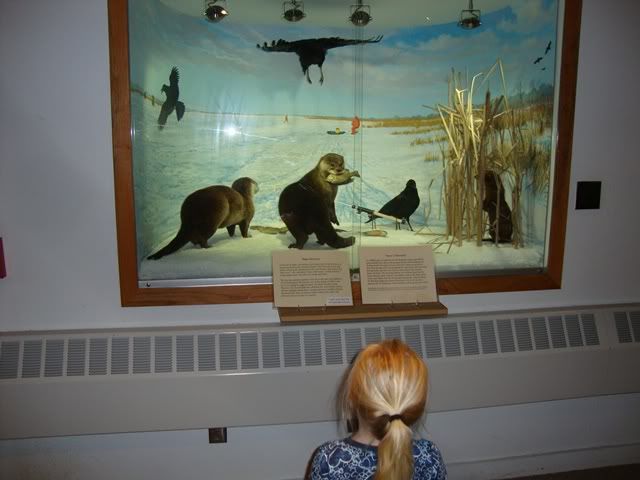
We passed the State Park's headquarters during our adventure.  They had a neat little museum, which we made use of, seeing that the kid loves to look at stuffed dead things (the reason she likes museums so much, I suppose).

A number of cool dioramas, including this rather comical scene of a pair of River Otters cleaning up the leavings of an ice fisherman (as a Mink watches from the cattails).

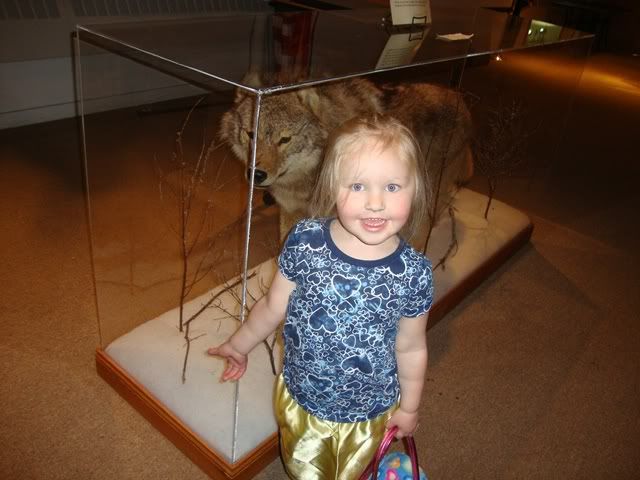
There was also a nice mount of a Gray Wolf (Canis lupus), which made for a perfect photo-op.

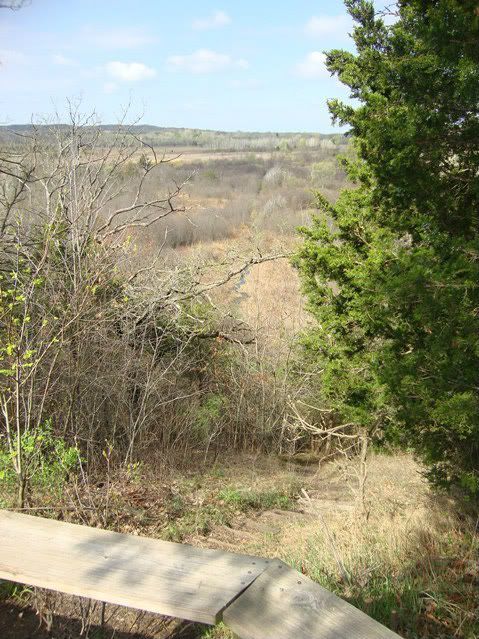
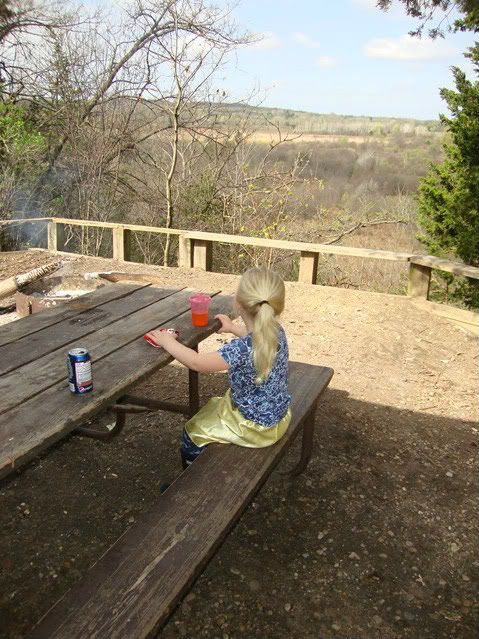
We walked on, and continued to follow the trail until we found a scenic overlook.  A decent-enough spot to stop for some juice and crackers.

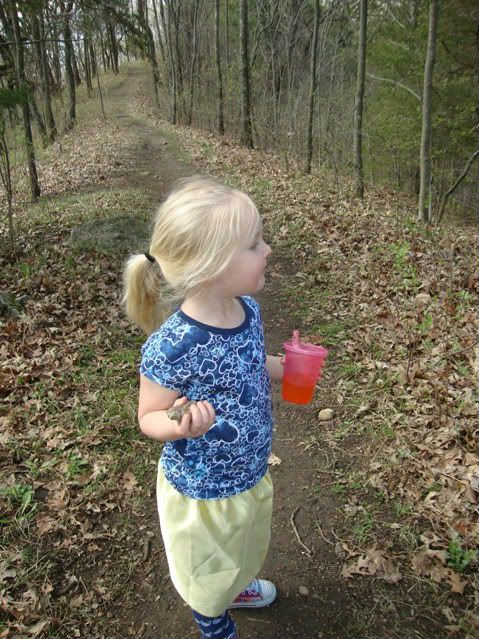
...and of course...the rocky path provided many opportunities to lob some geologic protectiles down the hillside.

I guess it's hard to turn down an opportunity to throw a good rock.....