Showing posts with label Woodchuck. Show all posts

Friday, June 29, 2012

Your Weekly Fawn AND MORE Wildlife Babies!

Wildlife babies still abound.  But now they are getting bigger and venturing out on their own a bit.

In addition to the quadruplet Raccoons (Procyon lotor) that I've posted about recently, I've also gotten clips of some other little ones out and about.

The fawns, in particular, are showing up alot.

So, in an effort to keep up with what I started, here's your weekly fawn (or fawns)!


Here's another, slightly bigger fawn from a different site....

This little fella is part of a two-for-one special!


There's is boldness in numbers, and I ended up with about 20 video clips of these two....until something spooks them (check out that leap!).

Yet ANOTHER set of twins at a different site! 

The females must have had alot of resources available to them in the area this year to produce so many twins!  It's been very hot and dry out there lately, so we'll see how long these babies last....

But for now they look happy.

Plus, there are MORE!

This baby Whistlepig (Marmota monax).

A baby Stiped Skunk (Mephitis mephitis).  This little fella comes back repeatedly and I have many video clips of him (or another one that's the same age).  In every clip he is snuffling about in circles, apparently fascinated by something in front of the camera.  I never see him eating anything, so I am not sure why he keeps returning.  Whatever the reason, he always seems very serious and determined!

There's something I find incredibly endearing about skunks.  Can't place my finger on it....but whatever....the videos of this little critter always give me a chuckle.  He actually could be the ornery little stinker, I've gotten clips of in the past.....

 And finally....a first for me....a Coyote pup!  Don't see many of the pups (even though I knew the adults were on-site).  The parents must keep them well-hidden.

Wednesday, June 6, 2012

Phenology: Wildlife Babies Abound

Things have been crazy as usual around here.

I've got alot of stuff to share with you all, but no time to post it!

Figured I could at least get this quickie post in, as it requires little explanation.

The babies started showing themselves for several species just in the last week 'round these parts.....

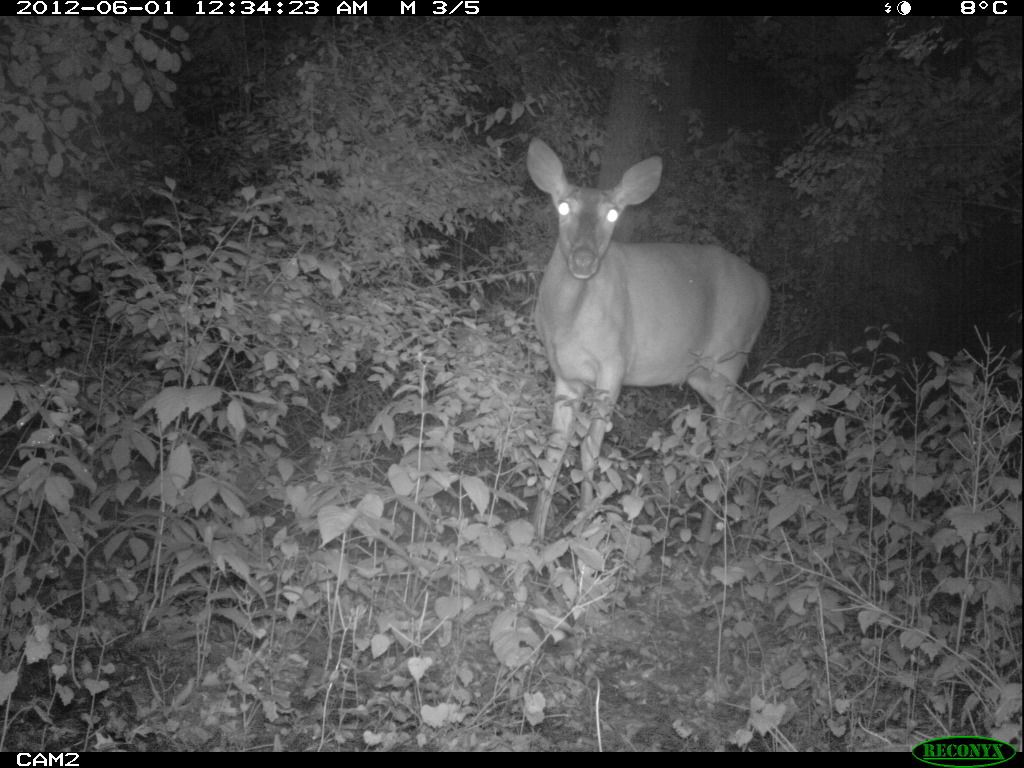
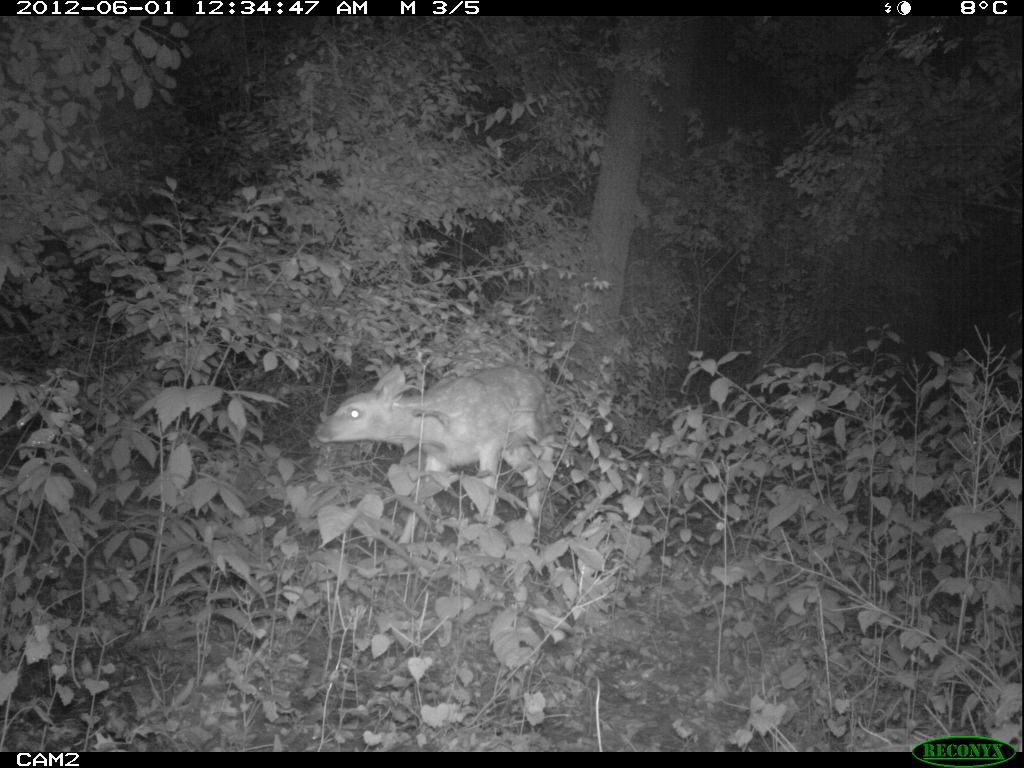
To start things off: my first camera-trapped fawn of 2012.

The momma comes forward with some trepidation.....

...but she's followed closely by junior......

At a completely different site, several species have acted like "proud parents" for the camera.

First a video clip of a Whistlepig (Marmota monax) with two youngsters close behind....  I've actually managed to get pics of baby 'pigs before, back in NC (see here).

...and just this morning.....a momma Racoon (Procyon lotor) with a group of little ones in-tow.....

More to post again soon (hopefully)....as soon as I catch my breath, that is!

Friday, March 2, 2012

Phenology: skunk streaks, whistlepigs, red-winged black birds and sparring bucks

There has been a recent flurry of new spring activity among some of the critters in the area.

On Thursday morning (March 1st), as I took the dog out, I heard Red-Winged Black birds (Agelaius phoeniceus) calling for the first time in the trees along the driveway (there's a wetland nearby).

Also, the camera traps deployed as part of Advanced Ecology lab have been snapping many pictures.  This week the students finally got back on-site to check their cameras (as well as set up a new particularly smelly experiment, that I'll talk about in the future).  It had been three weeks since our last on-site visit and we had plenty of pictures.....although most of these were of white-tailed deer.

But, we did get some other cool shots....

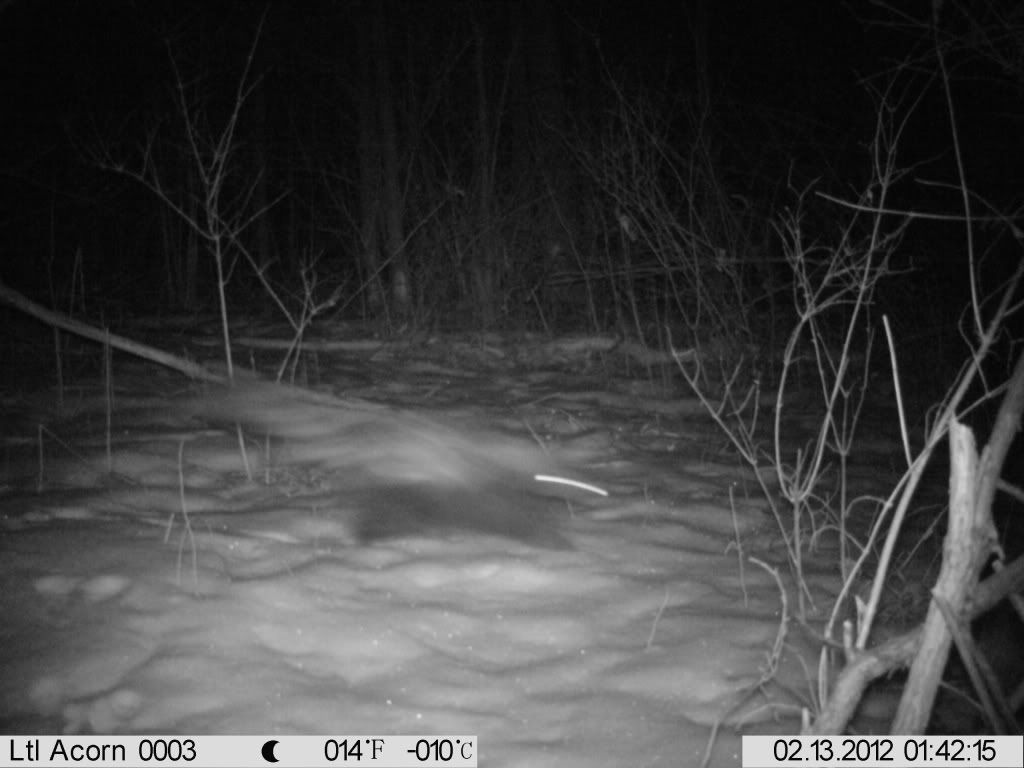
This included numerous pics of skunks (Mephitis mephitis) for the first time this year.  Suddenly in the last two weeks or so, skunks were caught numerous times on three of the six cameras we have out.  Late February through March is the breeding season, so I'm not surprised to see these little fellers out and about now.

None of the pics were particularly great.  In fact, most of them look like streaks....as you can see below.

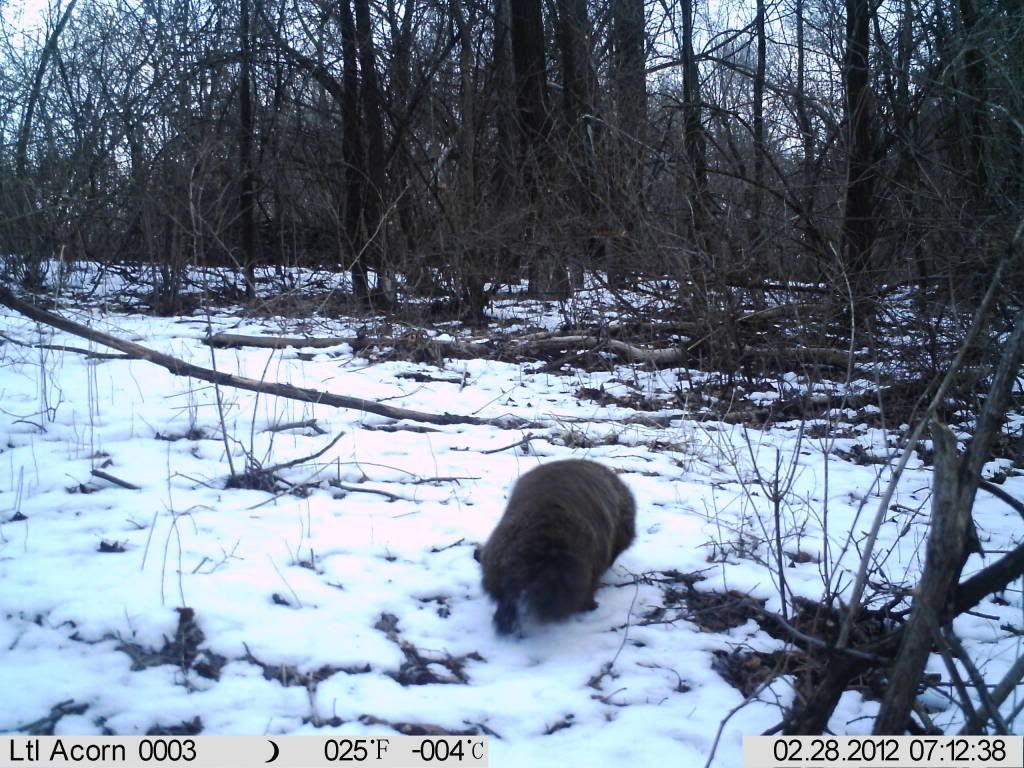
We also nabbed our first shots of a Whistlepig (Marmota monax).  This is alittle early for them, but not unheard of.
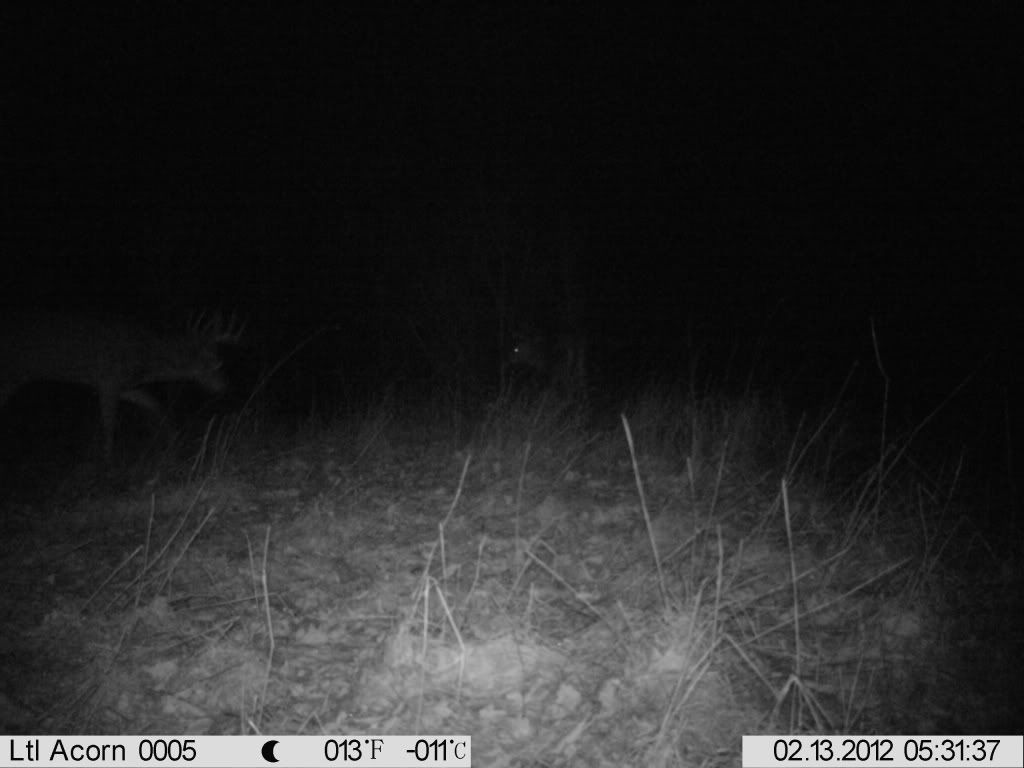
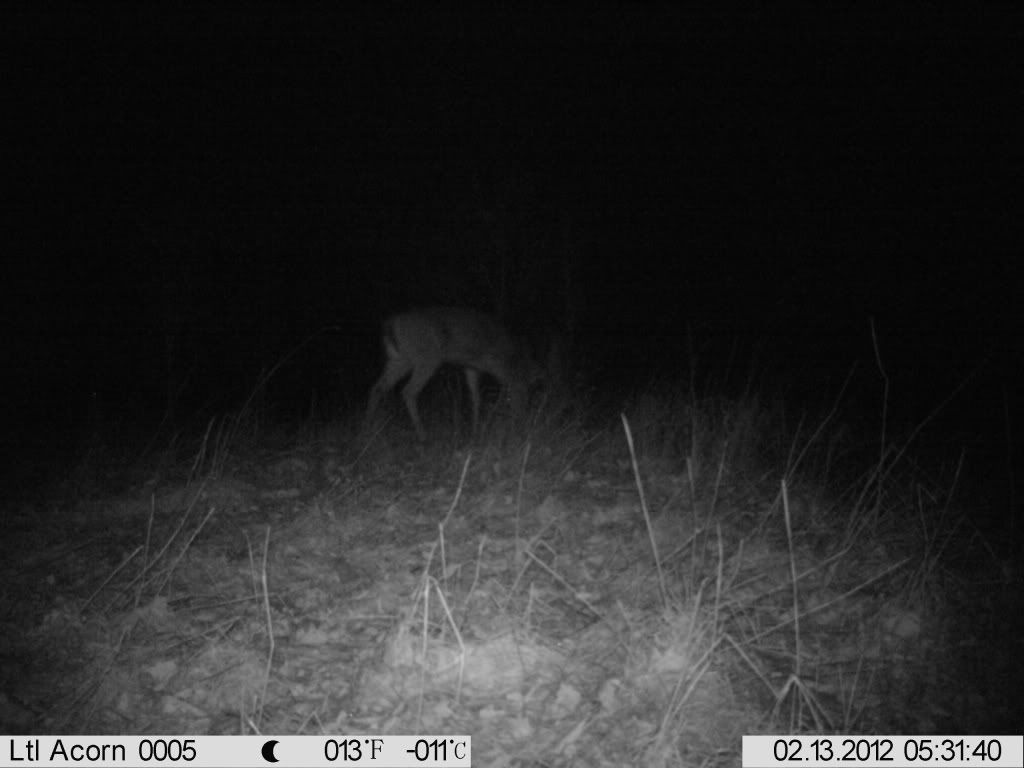
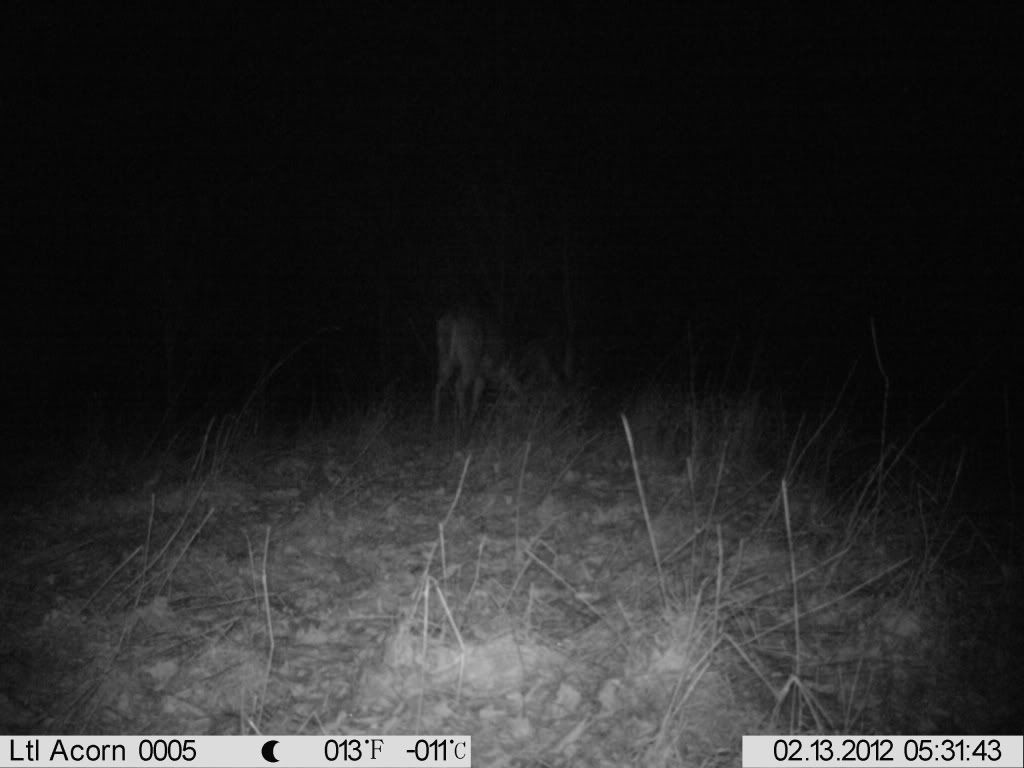
Then...surpisingly....a pair of bucks that really appear to be sparring!  Seems pretty out of season for that, and both have retained their antlers for a while.  This is the same location where I observed pre-hanky panky by a pair of white-tails a few weeks back (see here).  Look close, they are in the background (one of them is the many-pointer that's been hanging around for awhile now).

We also caught racoon, red fox and coyote again....but the pics really weren't anything to write home about.

More results related to our lab to come in the future, hopefully!

Wednesday, May 25, 2011

Baby Whistle Pigs


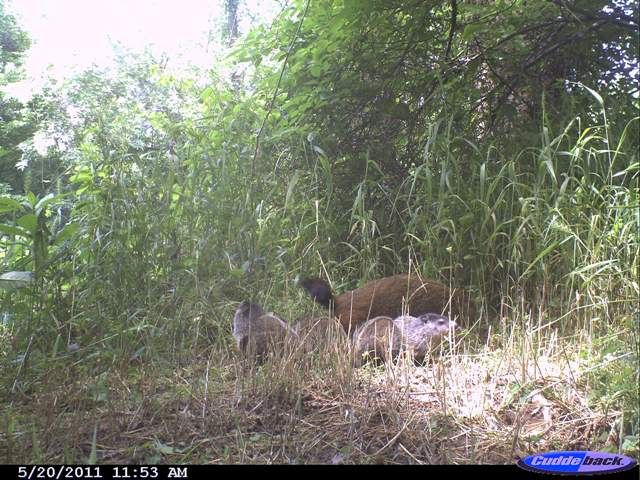
The first shot of some baby Whistle Pigs (Marmota monax) at this camera trap set.  Four of 'em, it appears.

According to a variety of sources summarized by Feldhammer et al. (2003), average litter size for this species hovers right around 4 to 5 individuals.
  • Litter size of 4.8 (sample of five females) in Ontario.
  • Litter size of 4.5 (sample of four) in Illinois
  • Litter size of 4.3 (sample of seven) in New York.
At 33 days old, young emerge from the nest for the first time and they wean at 42 days (Ferron and Oullet, 1991).  After one week of age, mother-infant contact begins to decline, which culminates in no contact at the time of weaning (Barash 1974).

Breeding usually occurs immediately after emerging from hibernation.  Young are born after a gestation period of 28-33 days (reviewed by Feldhammer et al. 2003).

The litter size pictured above is within the norm.  Also, these little Whistlers were probably born in late April (around the 20th, or so), as a result of adult copulation in late March.  The first adult pig captured active and above ground on this camera was on March 7th...so copulation occurring shortly after this makes sense, given the timeline I've just laid out.

Regardless of all that, those babies are pretty cute.

Lots going on this time of year, and lots more to report!  Trying not to fall behind!  More to come soon.....


Literature Cited:

Barash, D.P. 1974. Mother-infant relations in captive woodchucks (Marmota monax). Animal Behavior 22:446-48.

Feldhammer, G.A., B.C. Thompson, and J.A. Chapman. 2003. Wild Mammals of North America: biology management and conservation (second edition). The Johns Hopkins University Press.

Ferron, J. and J. P. Ouellet. 1991. Physical and behavioral postnatal development of woodchucks (Marmota monax).  Canadian Journal of Zoology 69:1040-1047.

Thursday, April 28, 2011

The Whistlepig


Gonna break up the herp-related posts a bit with some mammal stuff.

I've been camera trapping an area along a river bank since early February 2011.  The spot has yielded some interesting shots, including a mystery animal that remains un-identified (The Mystery! posted on 2/23/2011) and a nice Coyote shot (Coyote on the Otter Lure posted on 3/6/2011).

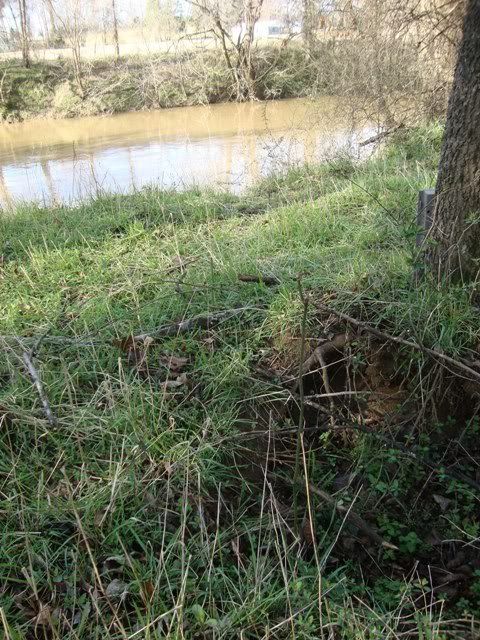
In an effort to get a better picture of the mystery animal, I repositioned the camera at this location.  I was hoping to get a broad-side shot of the critter, which never happened.  One of the reasons why I originally picked this spot was because there was a burrow entrance not far from the banks of the river (see below).

Above: the burrow entrance near the camera and the vacinity to the river.

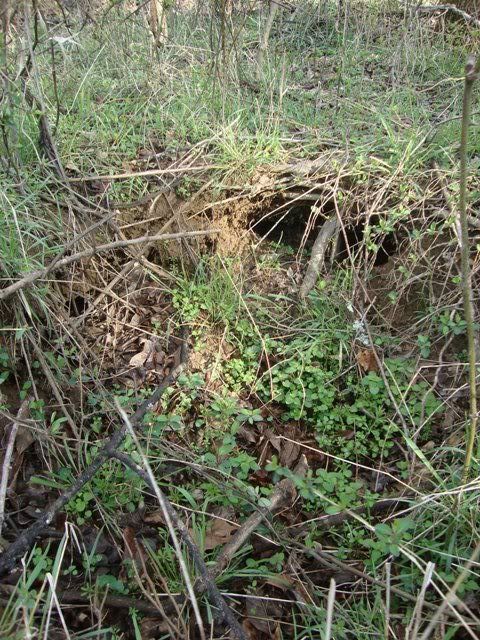
Still having mink on the brain for the mystery animal, I crossed my fingers......even though the burrow didn't really look like a mink burrow (see below).


After a few weeks, I had to give up on concretely identifying the mystery animal, as it just wasn't showing up anymore.  In other words...no mink....no mystery animal.  I did, however, figure out what was using the burrow.
________________________________________________________________________

I like the name "Whistlepig".  Something about saying it just  puts a smile on my face.  It's so much more enjoyable to say than the rather vulgar-sounding "Groundhog" or "Woodchuck"....but (-sigh-) the latter two seem to have stuck for this critter (Marmota monax).

But, I'm bringing back the term Whistlepig....dammit!  You wont hear me use those other names ever!  :)

Anyways, whistlepigs are yet another example of a species that is viewed with scorn by many humans.  The scourge of gardeners, golf courses and manicured lawn-keepers across the continent!  The whistlepig cares not for your expensive ornamenal flowers!  It devours your garden vegetables with a cavalier flair!  It laughs at your flimsy chicken wire fences!  It scoffs at your silly wire box traps baited with apples! 

And because of its non-conformist attitude towards your agenda....I can't help but admire the Whistlepig.

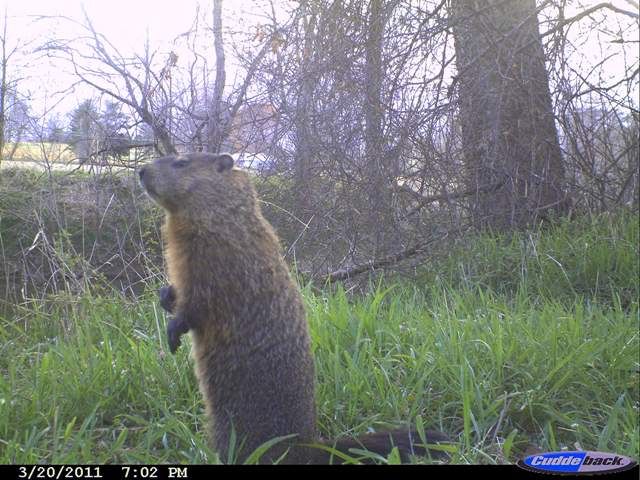
Strangely, one of these rather large rodents had been the occupant of this river-side burrow.  As such, I got some pretty nice pictures of it! 

The camera was first depolyed on February 9th.  The Whistlepig, however, didn't start showing up until early March, probably becuase its winter dormacy had officially ended then.

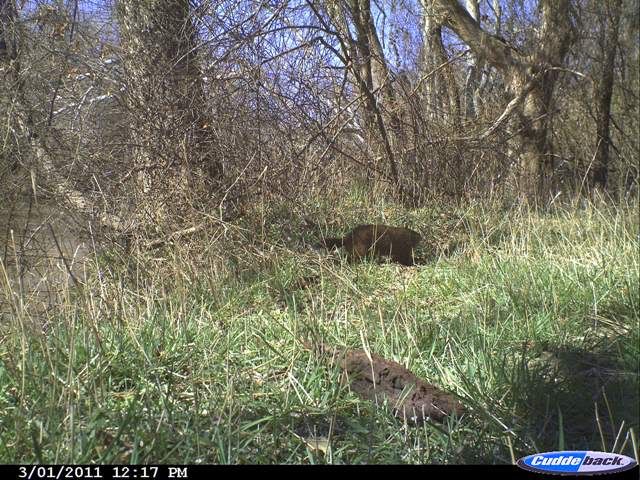
In fact, the first picture I got of one actually occured on March 1st, before I repositioned the camera.  In the picture below, the burrow entrance is to the right of where the whistlepig is standing.  This shot isn't particularly good.


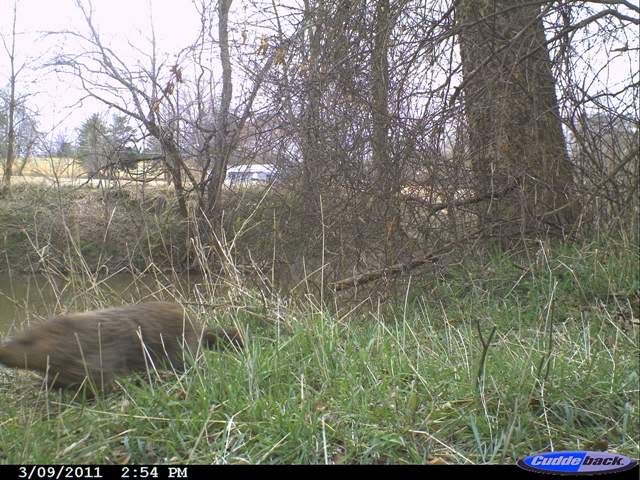
The next picture didn't come until March 7th, then another right away on March 9th.  This was after repositioning the camera.  In these shots, the burrow is behind the tree that the camera is mounted on.  Neither picture is great.  The March 7 picture isn't too bad, but the animal is looking the other way!


_______________________________________________________________________

From Mid to late-March, activity picks up considerably.

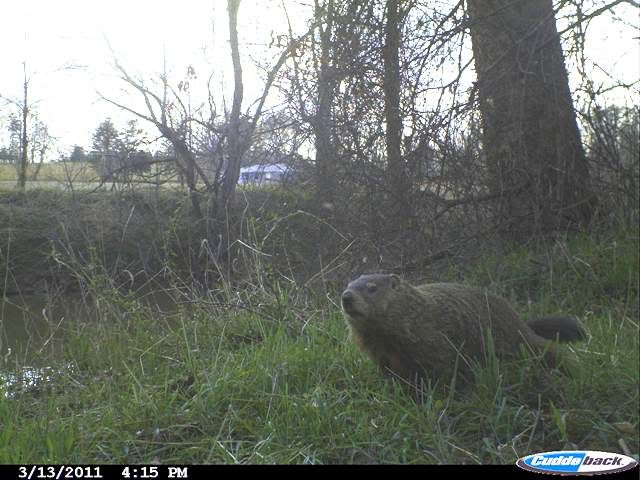
On March 13, the whistler faces the camera...but of course the photo is sort of dark. 

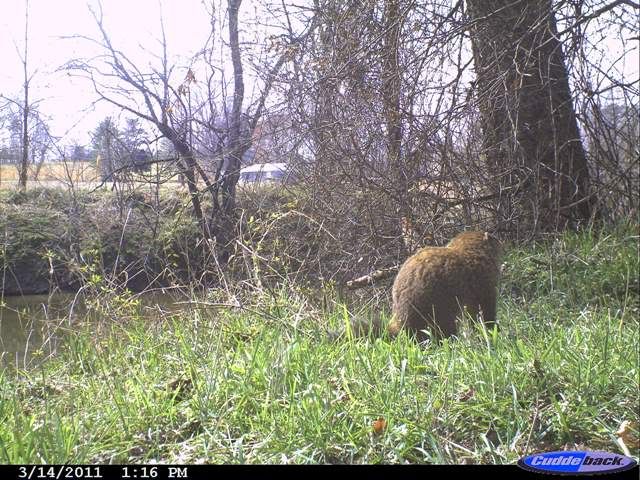
On March 14, he decides to show off his backside again....

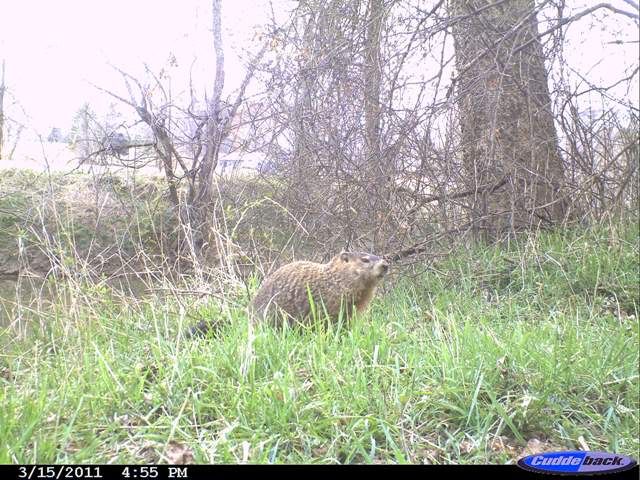
Finally, on March 15 I get a good shot!

Running past on March 16th.

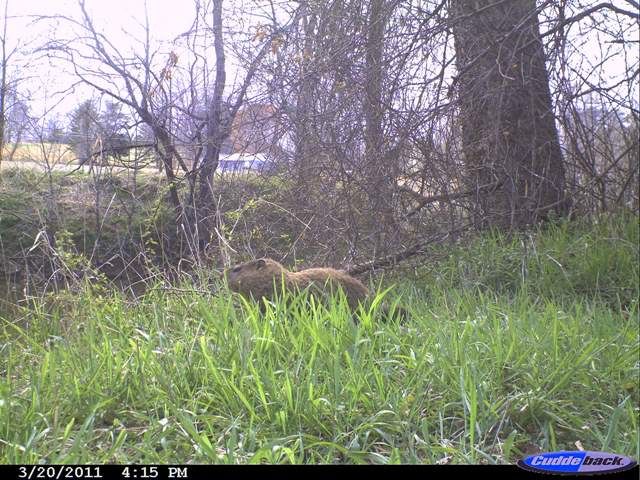
Three pictures on March 20th, including my favorite at the bottom.

The batteries gave out on the camera in the next week and I lost a few days.

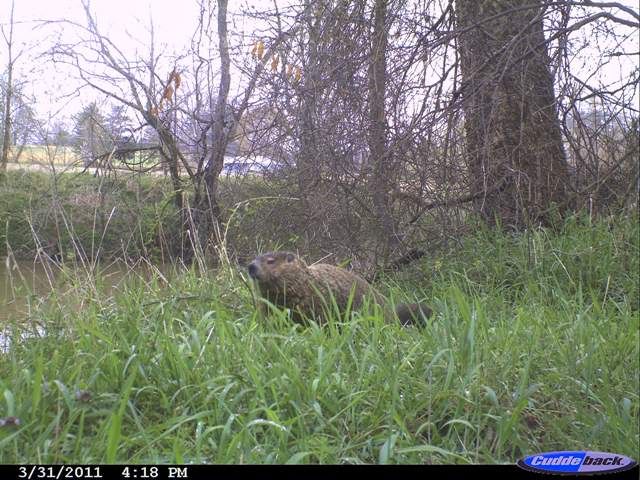
The next pictures come on March 31st.  There were actually two pictures taken of him that day, but only one is worth posting.


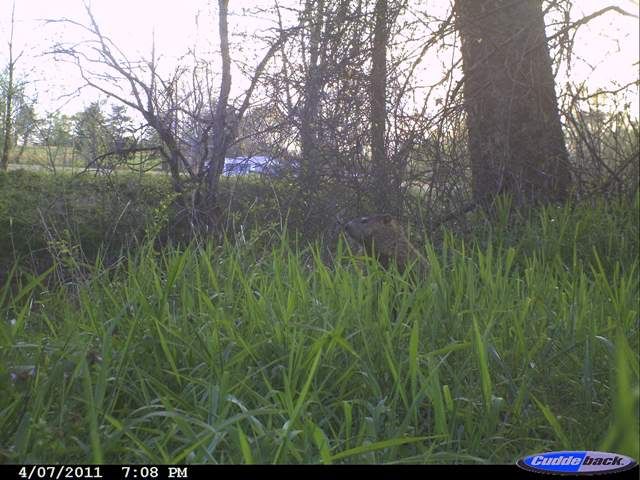
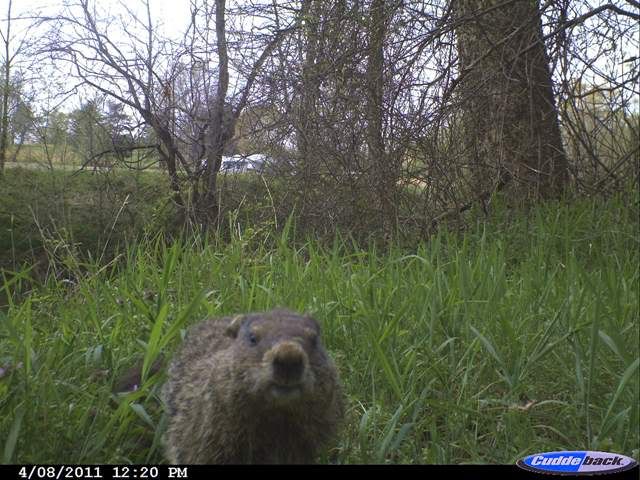
Then the Whistlepig goes AWOL until April 7th, 8th and 11th.

The camera remains at this location and I haven't been able to check it in almost two weeks.  I'm sure I have more pig pics....but I'm also sure the grass and overtaken the field-of-view.  Hope to get out there early next week.

Notes on Whistlepig Ecology.

Habitat

Whistlepigs are usually considered a forest edge species, frequenting meadows, old fields and agricultural landscapes.  Interestingly, Swihart (1992) found that burrows were preferentially placed in well-drained soils along woodland edges and brushy fence rows up to 2 or 3 times as often as expected.  This makes the choice of the individual(s) picture above to place their burrow near the river an interesting one.  A whistlepig den may have multiple entrances (up to 11 according to Merriam, 1971).

Hibernation and Activity

Hibernation is typically an adaptation to deal with a food shortage that may occur at certain times of year (Davis, 1967, Armitage et al. 2003).  In the winter...for example...when vegetation (the major food of the whistlers) is in lower abundance, the animals hibernate.  So, the onset of winter occurs, food becomes scarce, the animal goes into a sort of torpor and slows its metabolism so there are not the energetic requirements as when completely active.  The length of the hibernation period, however, varies based on geographic location.  According to Armitage (2003), early to late October is reported to be when whistlers in most regions enter hibernation (although I did see one up and active at a different location nearby on November 8 of last year).  Whistlepigs in Canada hibernate for about 5.5 months (de Vos and Gillespie 1960).  For about 4-4.5 months in Penssylvania (Snyder et al. 1961), and for about 3.5-4 months in Maryland (Grizzell 1955). 

 
Literature Cited

Armitage, K.B. 2003. Marmots (Marmota monax and Allies). In Wild Mammals of North America: biology, mamangement and conservation (second edition). Feldhamer, G.A., B.C. Thompson, and J.A. Chapman (editors). Johns Hopkins University Press (Baltimore & London).

Armitage, K. B., D.T. Blumstein, and B.C. Woods. 2003. Energetics of hibernating yellow-bellied marmots (Marmota flaviventris). Comparative Biochemistry and Physiology 103A:729-737.

Davis, D.E. 1967. The role of environmental factors in hibernation of woodchucks (Marmota monax). Ecology 48-640-644.

de Vos, A. and D.I. Gillespie. 1960. A study of woodchucks on an Ontario farm. Canadian Field-Naturalist 74:130-145.

Grizzel, R.A. 1955. A study of the southern woodchuck, Marmota monax monax. American Midland Naturalist 53:257-293.

Merriam, H.G. 1971. Woodchuck burrow distribution and related movement patterns. Journal of Mammalogy 47:103-110.

Snyder, R.L., D.E. Davis, and J.J. Christian. 1961. Seasonal changes in weights of woodchucks.  Journal of Mammalogy 42:506-515.

Swihart, R.K. 1992. Home-range attributes and spatial structure of woodchuck populations. Journal of Mammalogy 73:604-618.