Showing posts with label Antlers. Show all posts

Wednesday, November 13, 2013

Bucky, the Red-Tail and Others....

Mostly random stuff to post today....

I can't help but post another clip of the resident Badger (Taxidea taxus).  I just don't get them that often, so I get excited about any clip we get.


Then, another rarity, a raptor on the cams.  I have gotten Red-tailed Hawks (Buteo jamaicensis) in the past (as well as a few other raptors, see here and here).  This is the first video clip, I think.

From what I can tell, this Red-tail appears to have nabbed something....


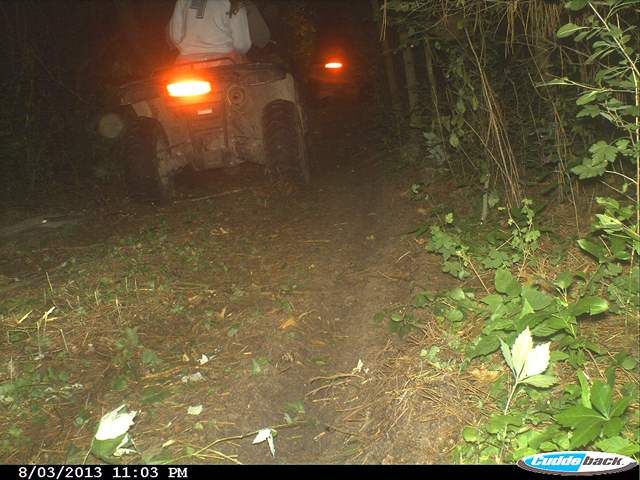
We still get some Canids, but they have become rare on this site lately....mostly becuase there has been an increase in human activity from the landowners.

I can't blame them at all for wanting to ride their ATVs on the property.  Plus, they are nice enough to let me use the land for my research, so I can't really complain.  Just a shame to see a real decline in the activity of some species on-site due to the ATVs....  Especially considering the the diversity I had seen on that tiny parcel prior to the ATVs (including Otters, Mink, Long-tailed Weasel, and Badgers).

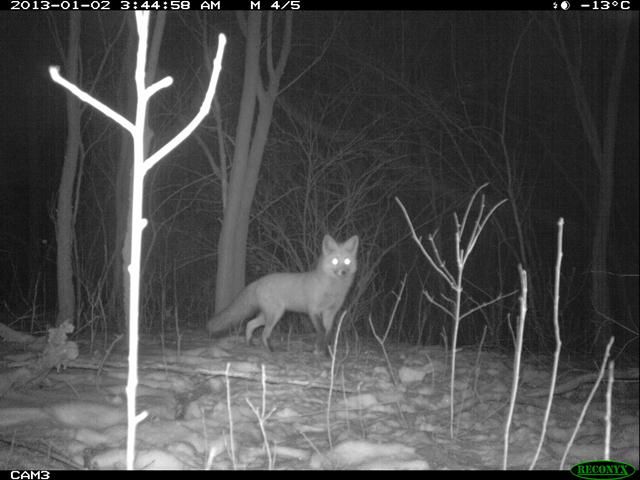
Recently, we got a few fleeting shots of Red Fox (Vulpes vulpes) and Coyotes (Canis latrans) on-site.  We hadn't seen either species since July, whereas the Red Fox in particular was a constant fixture in the previous two years.  We even had pups this spring, but shortly after the pups showed up, there was a real decrease in Canid activity on-site (which coincided with the greater ATV activity).

So, I was very happy to see some Canids on the cams this week, even if the Red Fox does look a little mangy....
 
Wil E. appears characteristically cautious....


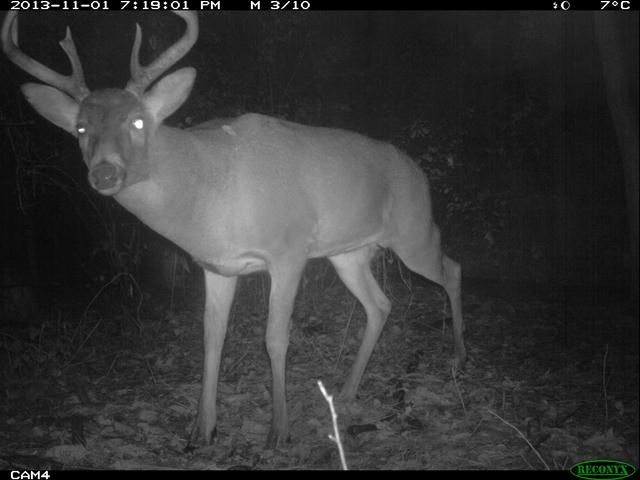
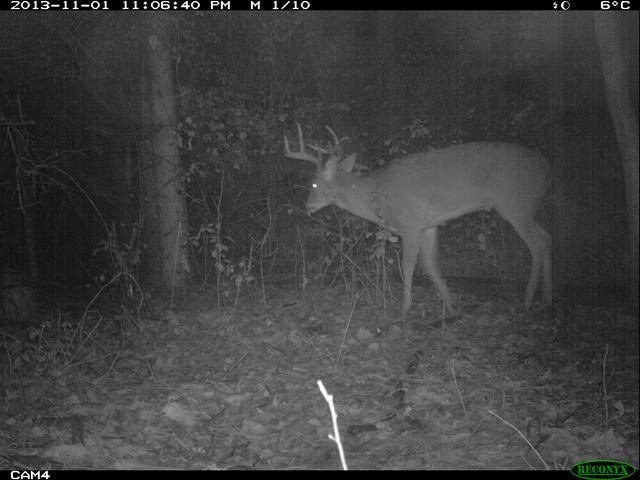
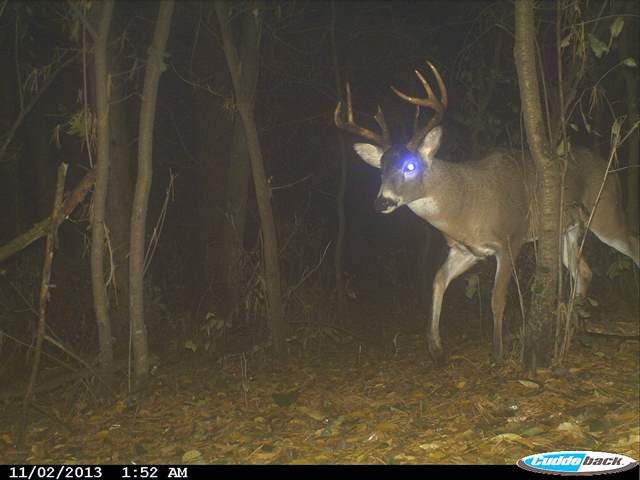
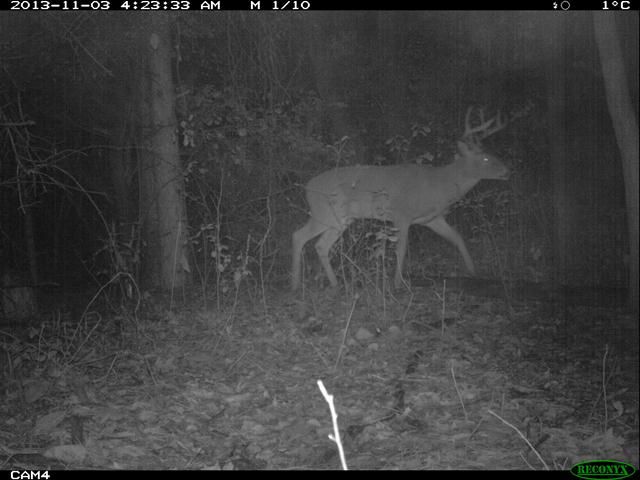
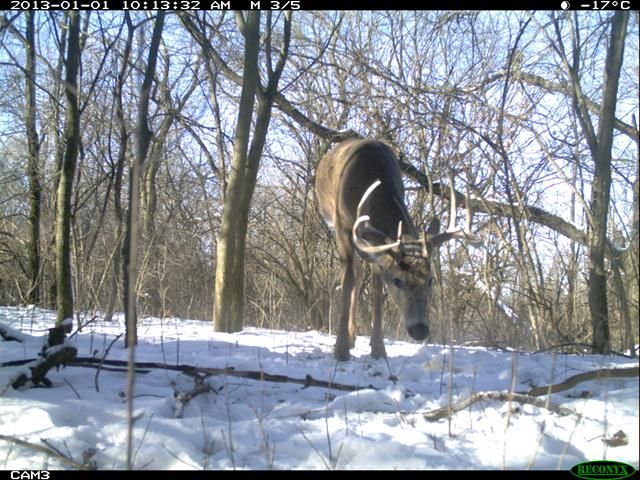
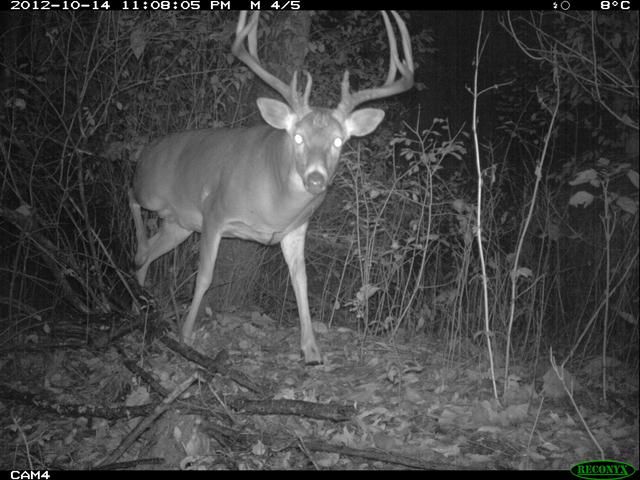
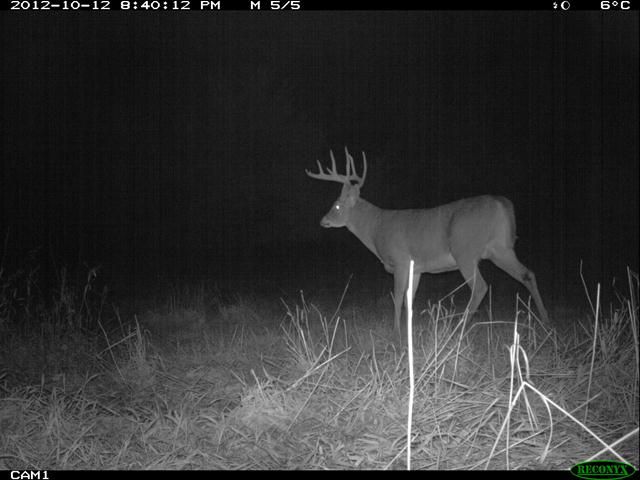
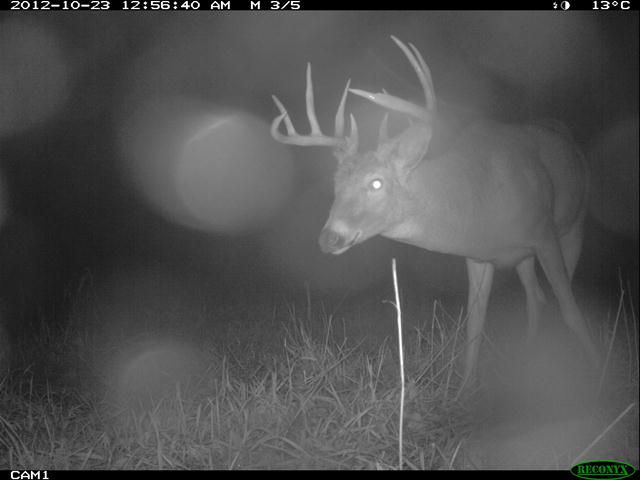
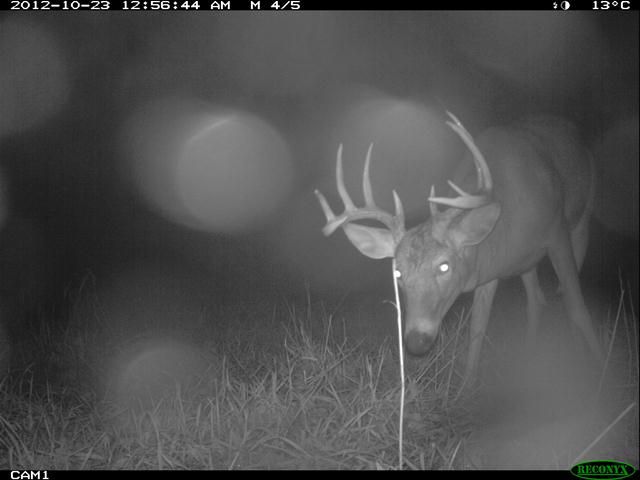
There's also an impressive (but lazy-eyed) buck still occassionally running through the site.  He's also been pretty rare since the ATVs started moving around.  We now only see Bucks like this after there has been no ATV activity for a few days in a row. 


He's avoided the arrows so far (probably because he only appears to be active when its dark out, from what I can tell).  We'll see if he lasts the gun season.  Interestingly, I don't think he's one of the two bucks seen earlier in the year (see here).

That 18-pointer hasn't been back since the summer.

Sunday, September 1, 2013

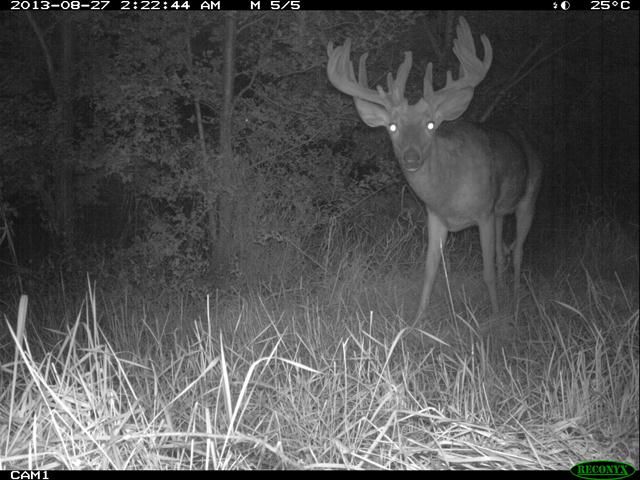
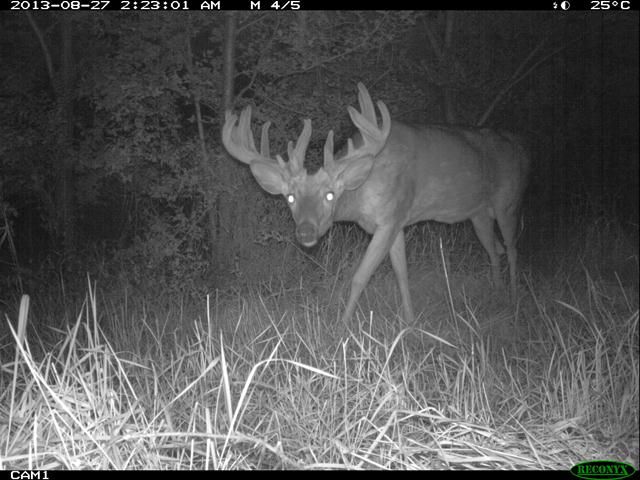
Holy 18-Point Buck, Batman!!

I had to sneak this one in quick.....

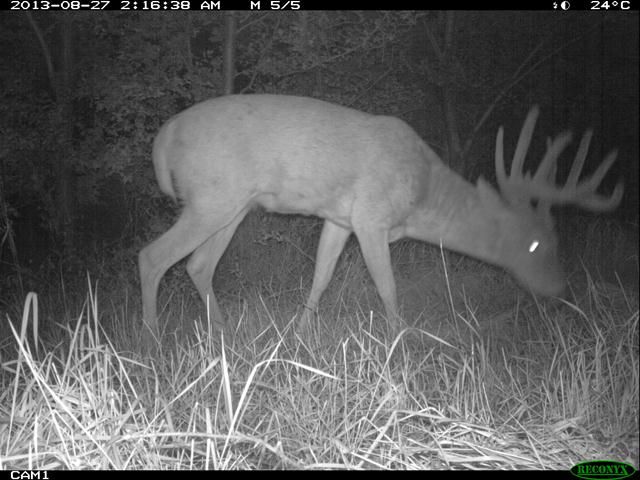
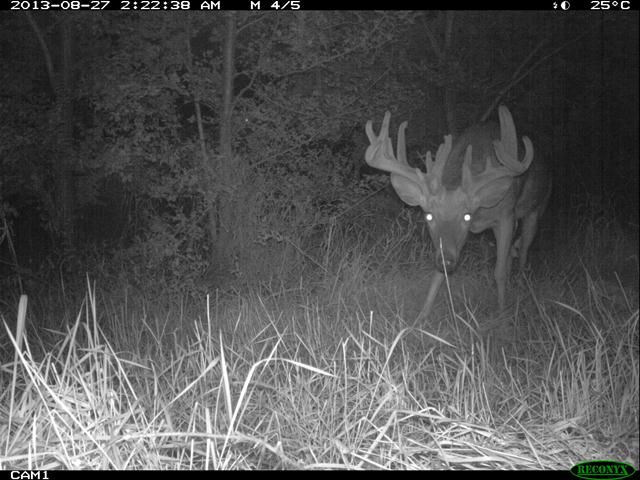
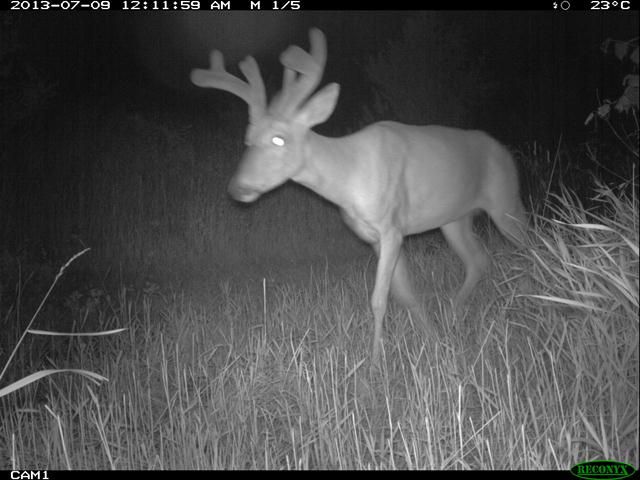
Two impressive animals on the cameras.

The first one would make most hunters drool.....


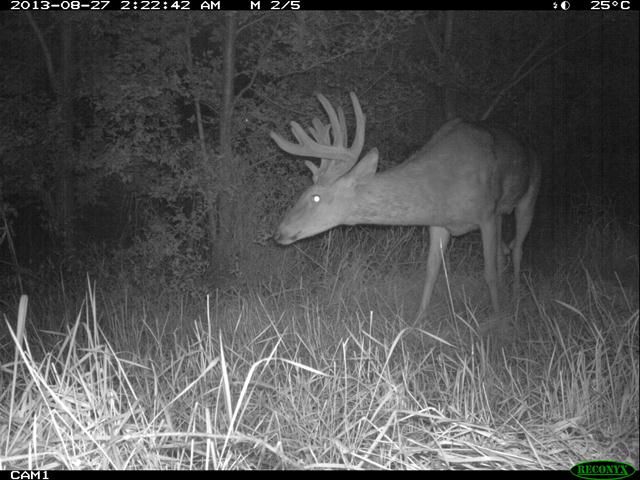
The second one, however, would probably give the average hunter a heart attack, if they saw it from a deer stand.


Despite the title of this blog post, I'm honestly not sure how many points this one has.  I count anywhere from 16 to 18, depending on the picture. 

Here are more....he's still in velvet, by the way.


This is the same site where I've been getting these nice bucks on camera year after year (see here, here, and here).  I will point out that we have a plethora of Coyotes on this same site.  There is also a fair number of hunters in the general area, and the property in-question is hunted. 

Still...every year I get these massive bucks on my camera traps, although the pictures are always in the middle of the night.

Saturday, July 20, 2013

Wildlife Babies 2013: Twin Critters

I've gotten twins of several species numerous times in the past.  In fact, last year I had a mother with five baby Raccoons at two of my study sites (see here).  Furthermore, at one of these sites, the baby raccoons were a constant fixture in front of my camera traps.

This year, however, there have been very few Raccoon babies to speak of.  One of the sites with the momma and five offspring is now devoid of Raccoons....so I wonder if she got hit by a car, or met some other untimely demise.

Regardless, it was not until a little over a week ago, that a camera at a completely new study location yielded some baby raccoons.  Not quintuplets this time, but twins....


White-Tailed Deer offspring also seem to come in "multiples" frequently.  I had twins at two sites last year (here)....and have even had triplets at a site in North Carolina (here).

This year, however, I have gotten relatively little in the way of fawns (in general) at the site where they were very common last year.  In fact, at a site where I not only had twins last year, but several other fawns, I've only got pictures of a momma with a single baby once (here).

Once again, the completely different sites (with the twin Raccoons) is where I've gotten pics of twin fawns this year.
 
On a different subject, it appears that a large buck who was at one of my study sites last year survived the hunting season and is back.  This could be the third year in a row that he's been around (see 2011 shots here, and 2012 examples here).....
 
 
You may remember that there were two at this site last year, but one was taken down by an automobile in late fall (here).


Thursday, January 10, 2013

The Birthday Otter Returns?

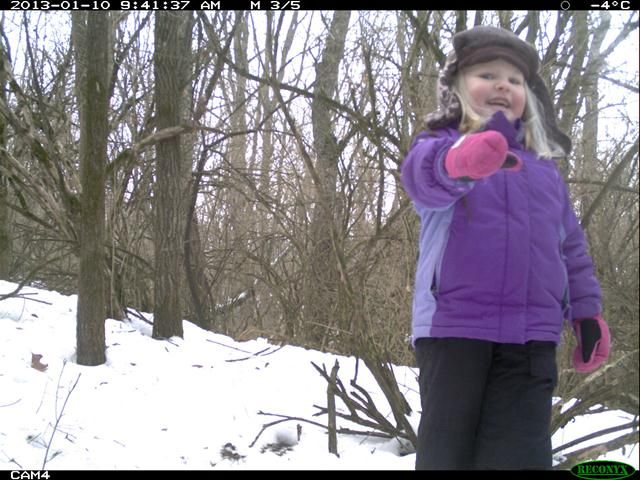
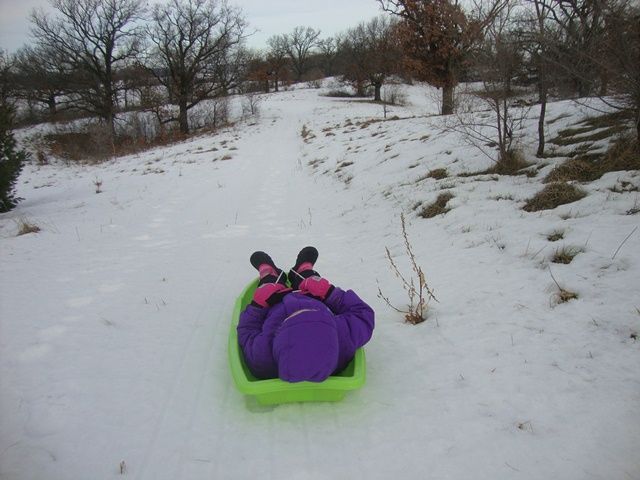
I had to pull two of my research cams today and brought my daughter with.  Figured I could pull her in the sled from camera to camera and then we'd sled down one of the hills nearby.

The first order of business was to find the cameras.  I try to encourage her to walk ahead and tell me what she can see.  Often she identifies "deer poop" and the occassional track.

Today, she found my camera for me ;)

It also appears that some of our residents have continued moving about, despite the snow.

This includes the remaining Brute....whom survived the hunting season for yet another year.

...and, of course, The Todd still graces us with his presence every now and then.....

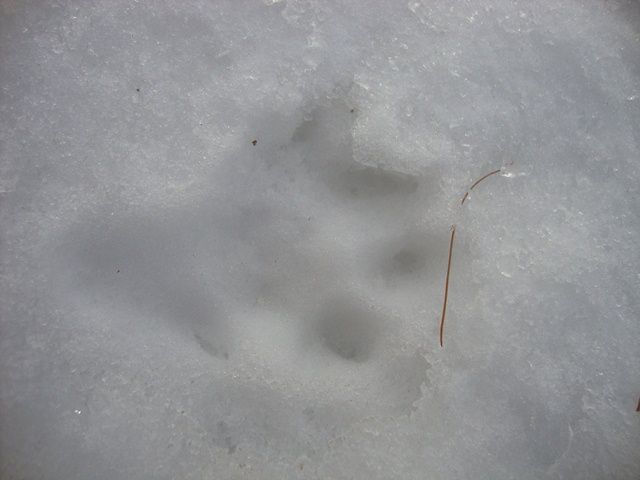
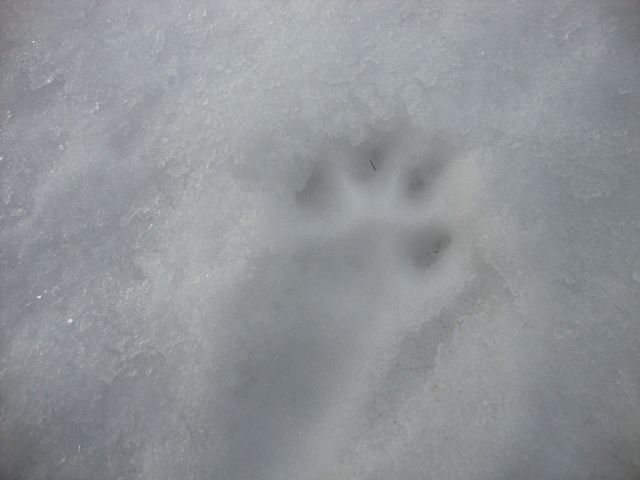
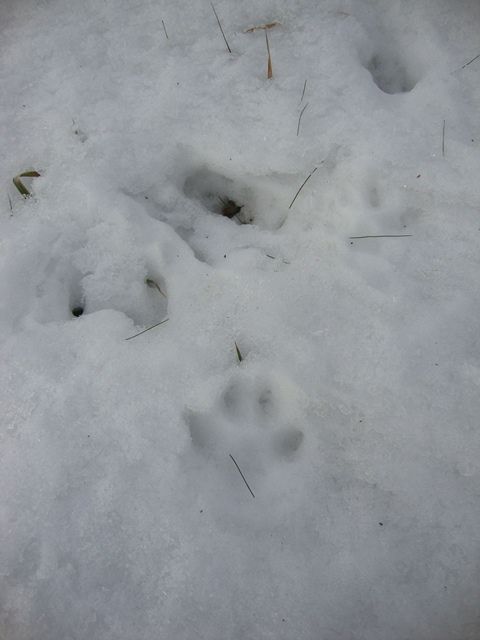
Today, however, as I pulled my daughter in the sled to the top of a hill near the cameras.....I happened to look down and see (what I'm almost certain are) otter tracks!  Comments on ID welcome!

It's the same high and dry site where I got a picture of the birthday otter in early December.  These tracks are heading in the opposite direction of the one I got on the cam trap before.

Perhaps a return trip?

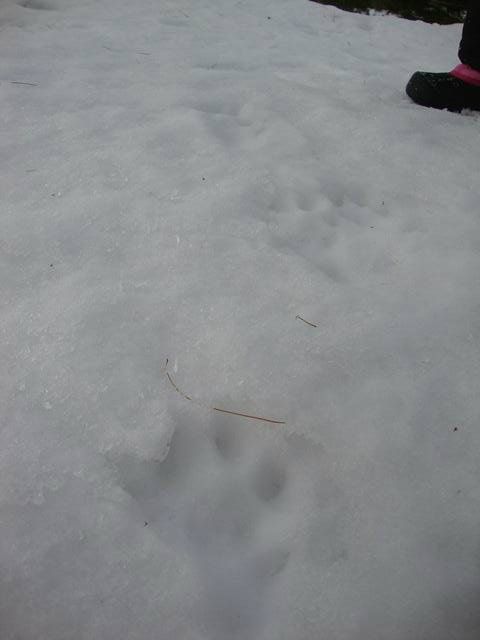
There are so many fox and coyote tracks on-site.....it's always a possibility that I've mis-identified these.  Furthermore, the snow is melting...which distorts the tracks and makes them look strange.  Than there's the fact that the toes on Canine tracks in snow are more spread out than in hard mud (which could give the impression of otter toes sometimes).   But I'm pretty sure I see a fifth toe on both of these tracks above, webbing depression, and an elongated inter-digital pad.  Also these tracks were fresh...not melted Canine tracks.  Unfortunately, gaits were hard to make out, due to the snow melt.  I quickly lost the trail in the melted patches.

The pics above really look like otter tracks.  The ones below (which were the obvious next tracks in the trail) give me pause.  There still looks like a dragging depression where that fifth toe might have come down and was lifted when the animal moved forward (right side of the track).  Looks like a long inter-digital pad as well.


The one below has nice spread-out toes like an otter track and apparent webbing, but no fifth toe....

Eventually the patience that a 4 year old has with looking at holes in the snow wanes (even a 4 year old that likes animals). 

So, we got down to the activities that we had really set out to do.....

Wednesday, November 28, 2012

The Death of a Titan

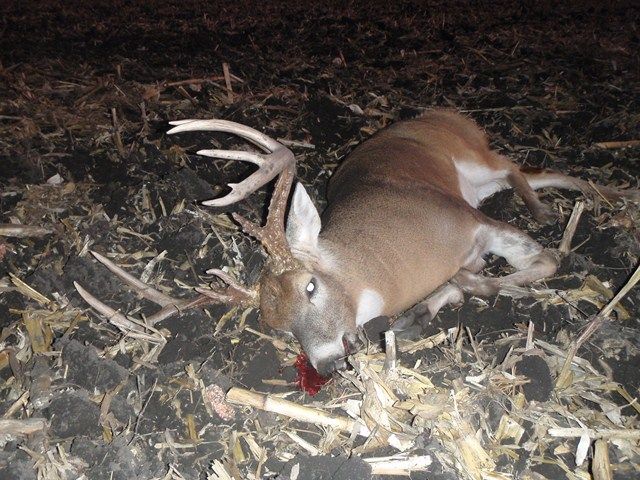
A Titan has fallen.

And...no....this individual hasn't fallen in the way you might imagine.

This Brute wasn't felled by a bullet or an arrow (he was far too smart to be outwitted by the average hunter).

It was the mechanical beast.....that metallic slayer......death on wheels.....which brought this Titan down.

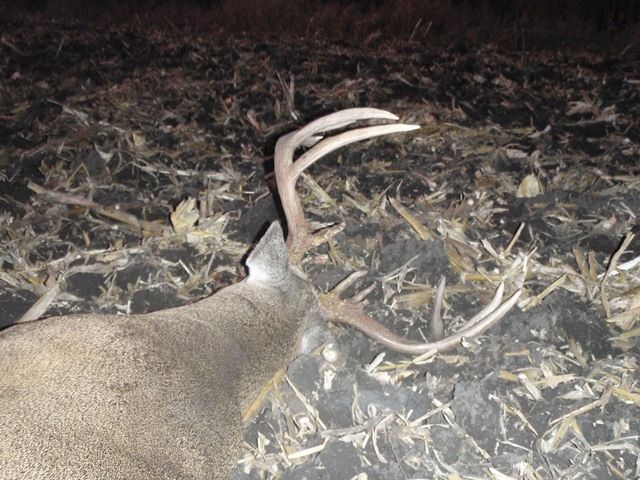
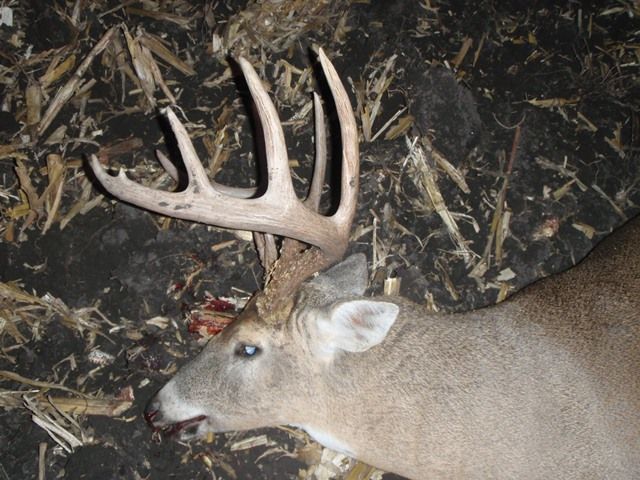
A student forwarded these pictures to me a few days ago.  They were taken in a cornfield along a roadside not far from where we had obtained photos and video clips of large bucks just a few weeks ago.

Photo by B. Chapman
Photo by B. Chapman
Photo by B. Chapman

Comparing pics of the roadkilled specimen above to the individual below, would suggest to me they are one and the same.

A fairly sad state of affairs, if you ask me.

This impressive individual was removed from the breeding population at (what would appear to be) the prime of his life.

Although....it's not all gloom and doom, I suppose.  As far as I can tell, the big fella below is still wandering around out there somewhere (he was also the star of a recent blog post here).  We'll see if he lasts the hunting season.

Friday, November 16, 2012

White-Tail Chemical Ecology

I accummulate hundreds and hundreds of White-Tail Deer pictures and video clips throughout the year.  I realize that countless pictures of deer get a bit boring and repetitive.  This is evidenced by the fact that my blog entries related to deer consistently have the lowest numbers of views compared to my other entries. 

Therefore, I try to limit the number of entries I write that are focused solely on deer.  I obviously can't help showing you all any large bucks I happen to get (at least once or twice a year)....they are just too impressive when in their prime not to be enamoured with them.  Yet, I try and focus deer-related posts to something specific regarding interesting behavior or phenomena....and I think the interactions below fall into that category.

The video clips below provide a bit of insight into how frequently bucks and does return to investigate a scent location....and also for how long they will return to this spot over time.  Granted, this is a sample size of 1....but it's still neat to see.

You'll also note that there is not a single clip that occurs during the daylight.  Even though the behavior below is occuring outside of the rifle hunting season in our area, most of my pics/videos of deer activity throughout the fall and winter (particularly for the large bucks) happens at night.  There's tons of deer out there....but they're just too dang "smart".  I often wonder if pressure from hunting hasn't acted as a force that drives natural selection to "favor" individuals that more often operate at night....and thus don't get shot! 

But, that's a different topic of discussion.
__________________________________________________________________________

The camera that took these clips is mounted on the trunk of a very young tree.  The trunk is pretty narrow and the branches are low to the ground (in fact, I had to trim some away just to access the tree trunk for camera mounting). 

The camera was deployed to this location on the morning of 9/26/2012.

9/26/2012

9:23 pm:  Doe browsing a bit, but also stopping by to investigate some fox urine that I put out.

11:28 pm: One of The Brutes comes by to investigate....

9/27 to 9/28/2012 (evening to early morning)

7:24 pm: A doe (perhaps the same one from the previous night) once again is sniffing around the same spot...

10:07 pm: The Brute comes by to get a nose-full.....
He then moves towards another low-hanging branch.  He appears to browse a bit, but also deposit scent from his forehead glands....

11:32 pm:  A small buck stops by.  I think he's part of  set of twins that belong to the doe that visits this spot.  He does some browsing, but also appears to investigate the scent from the larger male....

 1:42 am:  The young feller comes back to sniff around a bit.

1:46 am: There's a-doings a-transpirin' off to the right of our field of view!  Something is shaking the limbs of the tree the camera is mounted on, and kicking up the grass.  You can also barely see a pair of eyes watching cautiously in the background (far left).


You can probably guess who's responsible for the ruckus (the little buck also skee-daddles in the background).

......wait for it.....
"Holy .....!  What was that all about?!"
9/28/2012 (evening)

8:59 pm: A doe sniffs the branch that appears to be a despository for scent from the forehead glands of the big male...
For the next two days, the doe and the young bucks come back and sniff around some more.

9/30 to 10/1/2012 (evening to early morning)

11:39 pm: The Brute comes back to invesitage his scent branch...

1:03 am:  There's another ruckus off-screen....and then....

...wait for it....
The Crown!

___________________________________________________________________________

Although the buck meandered by this spot again once or twice, I never saw the back and forth investigation of scent after the first of October.  The camera was moved from this location on November 14, 2012.  So all of that activity was occuring over a period of about 5 days.  An important caveat: almost immediately after I mounted the camera...I was getting clips of this behavior.  Who knows how long it was going on prior to me mounting the camera.

It is worth noting that I started seeing the first actual buck scrapes on the ground in about mid-October at this site.  You may also recall that I first started seeing velvet rubbed off of antlers (at a different site) on September 8, 2012.

It is also fun to go all the way back to the beginning of the year and look at when the antlers first starting showing on these bucks. At the site where the video clips above were taken, antler nubs first became evident on April 17, 2012.

Tuesday, October 9, 2012

Some New Brutes for 2012

I'm not one to go nuts over "big bucks"....however, there are some brutes hanging around the property.

Could be one of the same individuals from last year (see here and here).

Seeing that the "rut" is soon to be upon us....I can't resist posting some clips of these guys.


This one is at a completley different site....almost in the next county.  But he's still a brute.  His antlers are not quite as impressive as the top fella, but check out the neck on this one!  Thick as a mature oak branch!


The clips below were grabbed at a location very near where the video clips at the top of this post came from.  Either it's the same individual (hard to tell from the clips), or another large bruiser in the area.


I've also captured some interesting behavior associated with this last individual. 

But I'll save that for a subsequent post!

Monday, September 17, 2012

Phenology: Buck Past Velvet

I recently obtained the first evidence of a White-tailed Deer buck without velvet in 2012.

These clips were taken on Sept. 8, 2012.


September is the primary month in which buck White-tailed Deer rub the velvet from their antlers in preparation for the rut (although there is variation in this date, and velvet may be rubbed off as early as late August, or as late as November).  The triggers for this rubbing behavior are the result of a battery of hormones, but changes in testoterone levels (often triggered by changes in daylength) are important.  For example, according to Miller et al. (2003) the "hardening of the antler and shedding of velvet are a direct result of rising testosterone levels cued by shortening daylength."

Compare this to the first hint of antlers since this year, way back in April.....

Literature Cited:

Miller, K.V., L.I. Muller, S. Demarais. 2003. White-tailed Deer (Odocoileus virginianus). In Feldhamer, et al. Wild Mammals of North America: biology, management, and conservation (second edition). Johns Hopkins University Press.

Sunday, July 1, 2012

Herpin' the Upper Midwest, Day 1: The Bog

Well, for anyone who has followed my blog for any length of time knows....I had a research student in NC who was a very enthusiastic (and effective) budding field biologist: Dave.  You can actually click on his name in the "Labels" section along the left-hand side of the blog to see some of the stuff he and I were working on down south.....you can also check out his cool blog, Salameandering. 

Anyways, after I moved north Dave and I stayed in contact and continued to work on several of our research projects through correspondence (with Dave doing the field work, and the two of us analyzing data sent via email).

Last fall....during one of our email discussions about some data Dave was collecting....we started to concoct a plan.  By the time the plan was solidified, we had decided Dave would come up to our neck of the woods this spring for a week-long visit.  I'd show him some of the great natural areas and wildlife our region has to offer.  We'd focus on species and habitats that were either absent or not common in NC, so he could see some different stuff.  Basically, we decided to have some fun.

So, last month the southern boy found himself in the north and (as we had planned) fun was the result! 

BUT....this was not a "sit around and relax" type of trip.

Why?

'Cause there was field work to do!
______________________________________________________________________

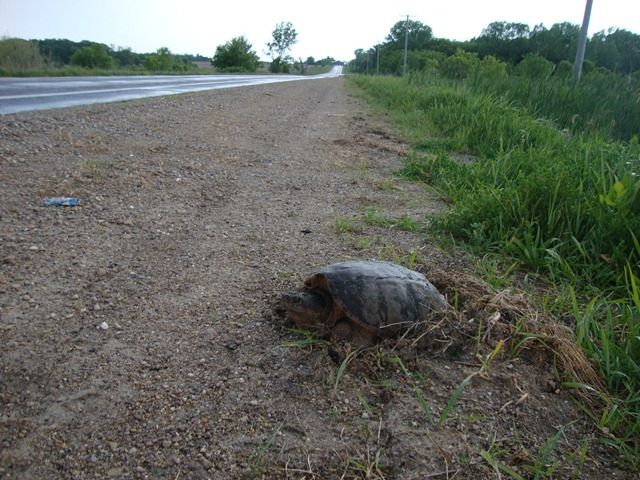
The night he arrived, like a good omen, we found a female snapper (Chelydra serpentina) nesting along the roadside.  Most of the time, turtles along roadsides are of the "pancake" variety.  But not this one.  She was alive and well and in the act of depositing her eggs.  So, we took a picture and moved on, hoping no one would be heartless enough to swerve and hit her.  She was an easy target, and I've seen some very ruthless (or completely unattentive) drivers smack turtles that could have been avoided.....so I was a tad nervous.


The next day, however, we passed by this spot and there was no dead turtle.  I felt much better.

Occassionally, there are flickers of hope for humanity, I suppose....

Anyways....we visited three habitat types during Dave's trip.  I'll talk about each in separate posts, starting with....

The Bog:

I've spent a fair amount of time at this site.  I've taught a weekend field herpetology course at the field station on-site for a number of years....which I'll post about later.  But I knew we could get some amphibian and reptile species there that don't show up (or are rare) in NC.  Plus, Bogs are just neat habitats....with many unique plant species that are found nowhere else.  This site doesn't only contain a bog, however.  There are nice sedge wetlands, grassy meadows, and a beautiful Beech forest that is heavily managed to control Garlic Mustard (Alliaria petiolata).  For those of you not familiar with this nasty little plant, its a particularly prolific invasive that will blanket the understory of woodlands 'round here if allowed to exist unfettered.

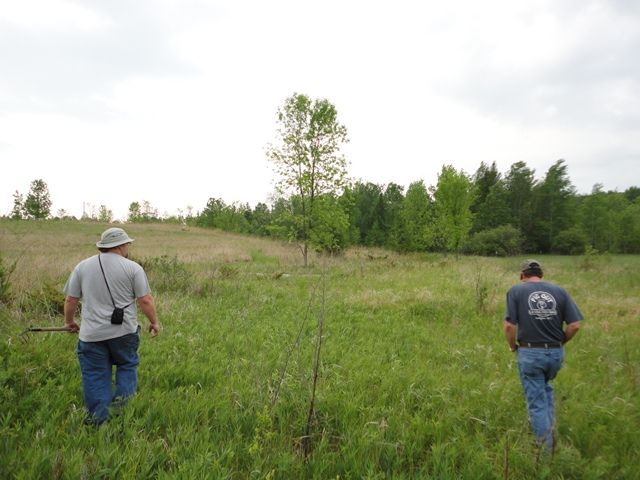
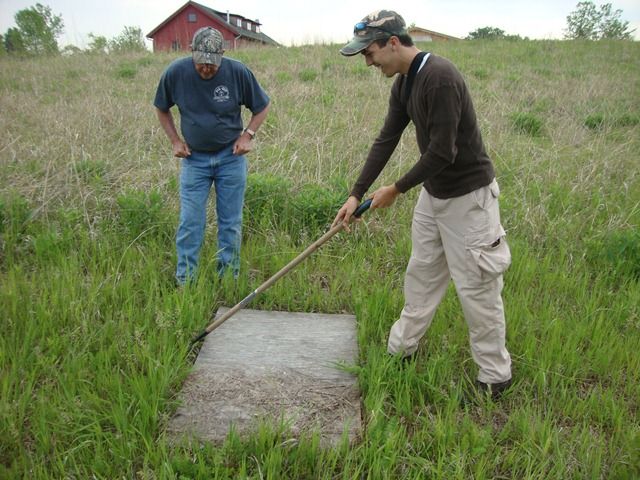
The site also has artificial cover objects (for surveying snakes) that have been in place for many years.  They are all in the grassy meadows and fields adjacent to the open wetland habitat on-site.  Thus, they attract snake species prone to using wetlands or grassland or both.  So...if you're looking for snakes....flipping cover objects on-site is obviously a good place to start!

But first, you've gotta walk out and find them in the long grass......
Photo by D. M.

....then you can flip them....


...and reap the rewards of your effort!
Photo by D. M.

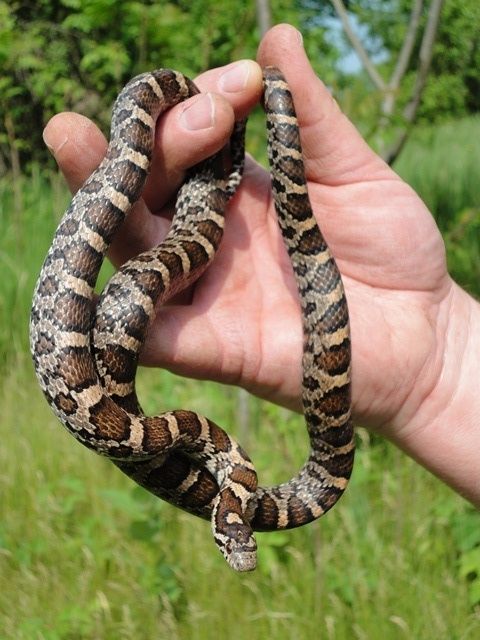
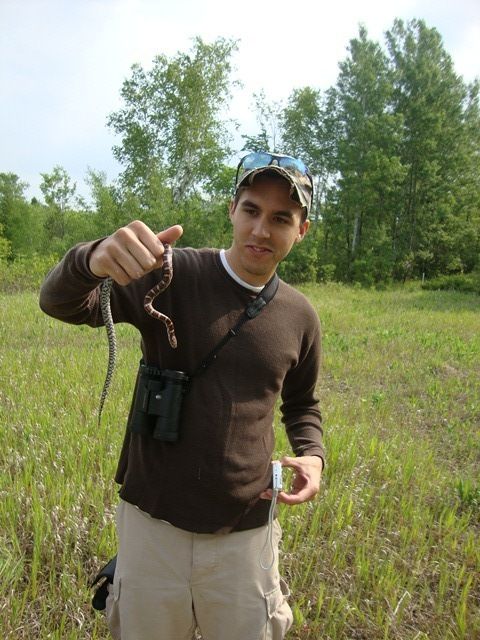
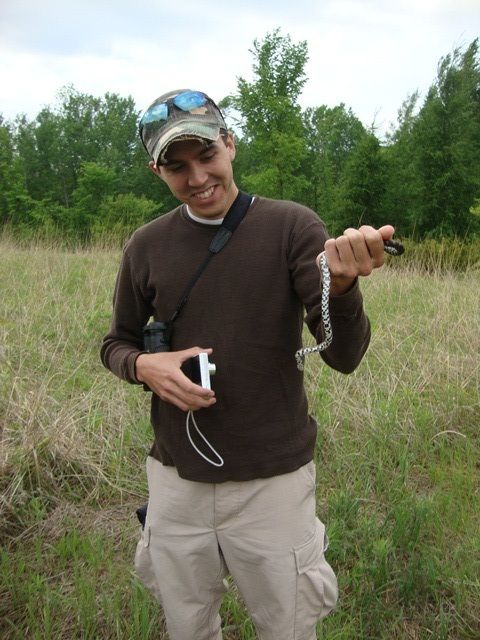
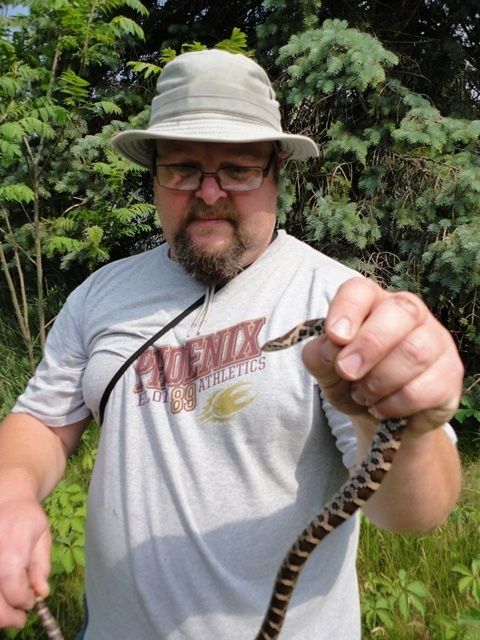
Eastern Milksnakes (Lampropeltis triangulum triangulum) are relatively common on-site, and we found a number of them under the cover objects...
Photo by D. M.

Photo by D. M.

Although eastern Milksnakes were common, also present were a pair of gartersnake species: the Common Gartersnake (Thamnophis sirtalis) and the Butler's Gartersnake (Thamnophis butleri).  More on those species in a later post.

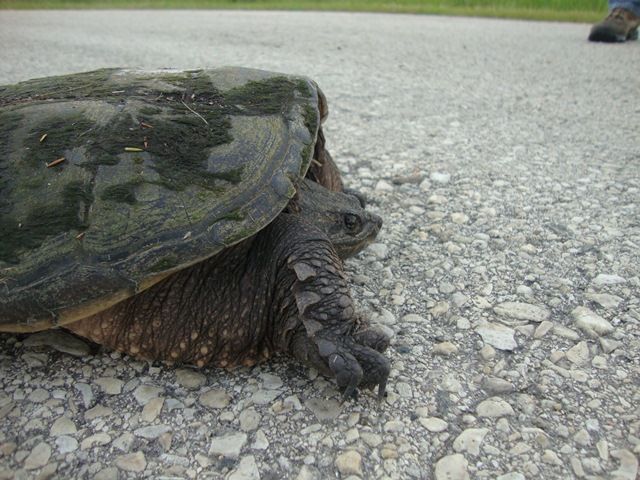
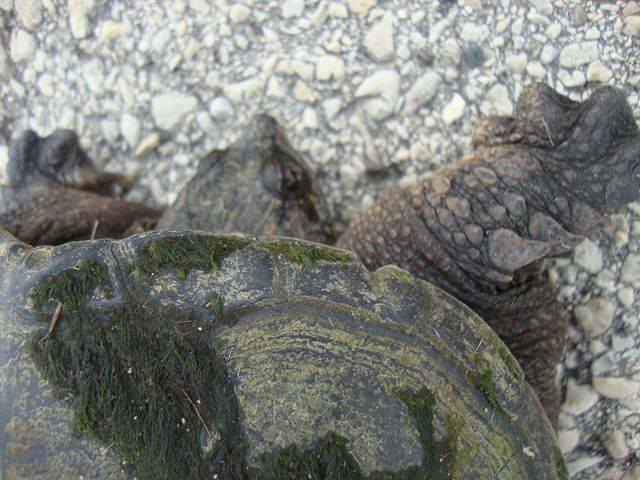
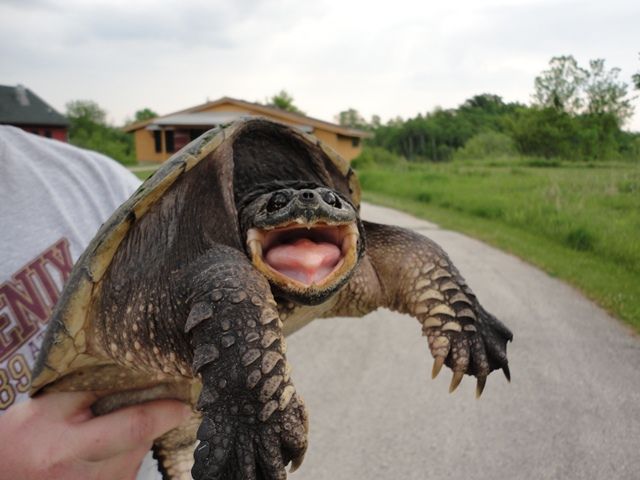
As we conducted a complete circuit of all the coverboards on-site (a few dozen of them), we crossed the driveway into the property.  At that time, we came across a Common Snapping turtle (Chelydra serpentina) thumping her way over the concrete....probably looking for a good nesting location.

Upon closer inspection, I realized this was an individual I had marked #3 via marginal scute notch with a file in June of 2008.  In 2008, I had also found her crossing a road.  Snapping turtles are generall only seen during the nesting season, as the females must come on land to lay eggs.  Otherwise, they have no reason to leave the water.  In fact, most spend their days buried in the bottom of a mucky pond somewhere sucking down anything that strays too close.  While they eat mostly animal material (vertebrates and invertebrates) they are also known to eat a fair amount of vegetation (duckweed, aquatic plant tubers, etc.).

She really didn't appreciate my close inspection, though....
Photo by D. M.

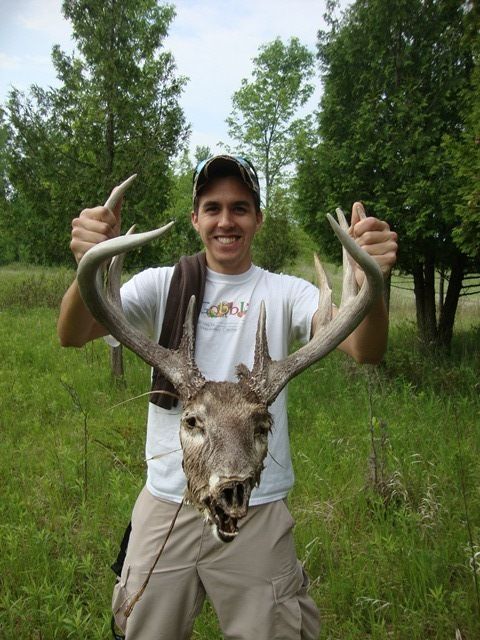
While checking the boards we also came across an incredible carcass, where the board transects bisected a game trail.  As anyone who is interested in wildlife knows, finding a good carcass is about as exciting as finding a good pile of poop (both are awesome finds...usually worth photographing.... and both also make most average folks cringe).

This was a White-tailed Deer (Odocoileus virginianus) carcass...which is normally on the lower end of the "cool scale", seeing how common they are. 

But this one was better than most.....
This was obviously the carcass of a very nice buck.  The base of the antlers were enormous!  What it was doing there, I can't say.   Our location was very near a little-traveled dirt road.....so it's possible the buck was nicked on the road and managed to get as far as this spot before collapsing.  Perhaps it was also winged by a hunter, but was able to make it to this point before it succumbed to its wound.  Most of the bones for the rest of the carcass were intact (not cracked, or crunched...and were mostly articulated).
_________________________________________________________________________

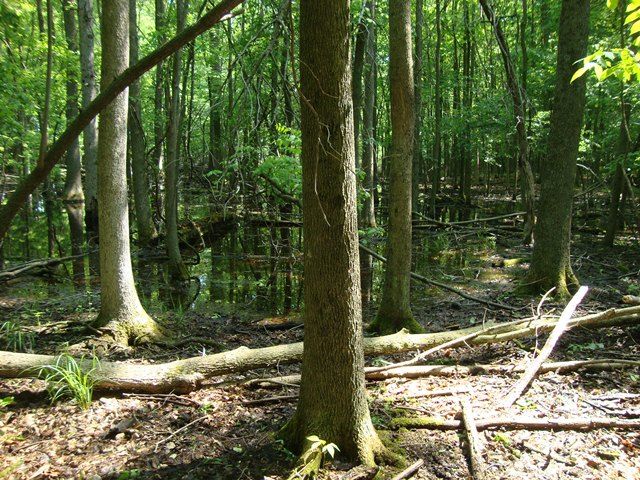
After our success in the meadow, we decided to head deeper into the property to search through the Beech Woods on-site.  You may or may not notice from this picture that there is not a sprig of Garlic Mustard to be seen....and that is no accident.  The staff on-site exert a huge amount of effort in the hand removal of this nasty invasive plant.  The result is obvious, though....and it's a beautiful forest.  With little under-story vegetation, several nice ephemeral wetlands.......
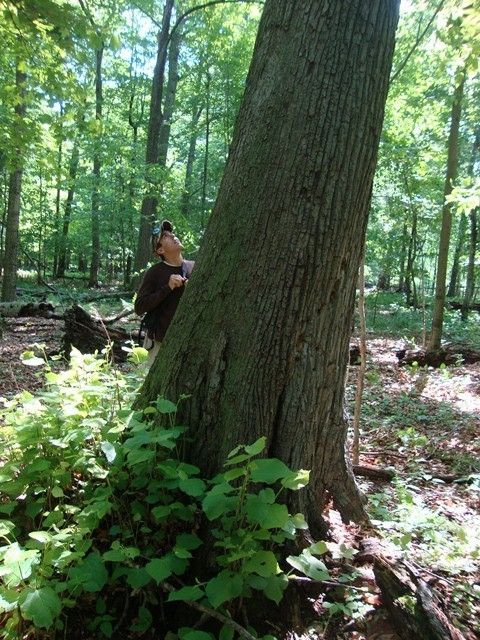
......and some beautiful old trees, such as this giant American Basswood (Tilia americana)!

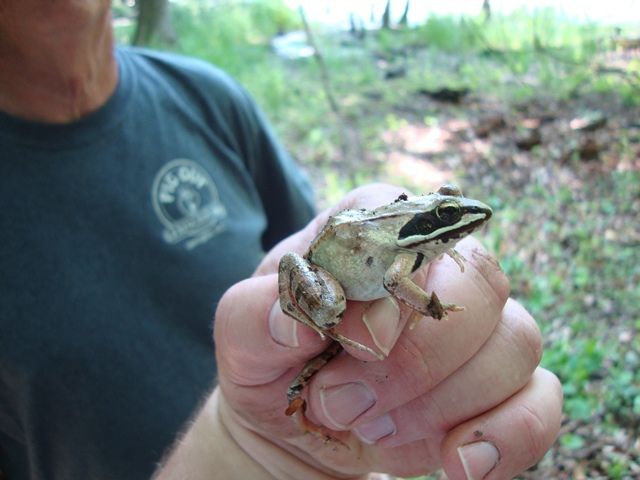
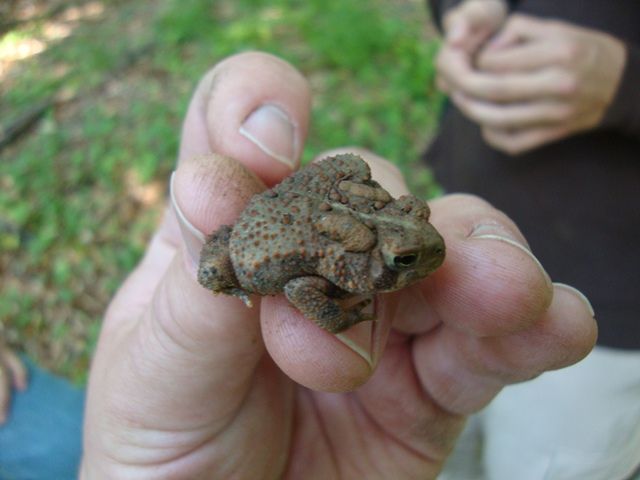
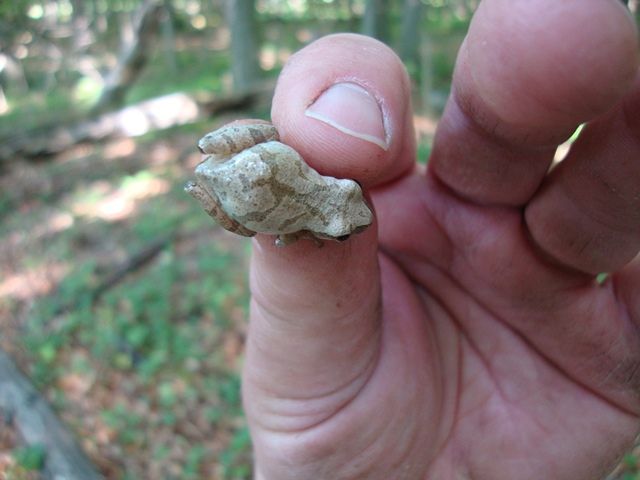
There is also a wealth of amphibians back in the woods.  During our brief visit, we found two frog species, a toad species and a salamander....
First, the Wood Frog (Lithobates sylvatica).  This is a fairly common species on-site.  As the name suggests, it is fond of wooded habitats, and so I frequently find them associated with woodlands that have associated ephemeral wetlands.  Most of the year is spent hopping around the leaf-litter and ground debris looking for invertebrates to snack on and they blend in well with the leaf litter in these habitats.  Basically, one has to almost accidentally step on them before they'll move.....and THEN you'll be lucky enough to actually see one!

The American Toad (Anaxyrus americanus) is another frequently encountered amphibian at this site.  This is a ubiquitous species 'round here, and is tolerant of landscapes that have been disturbed by humans.  They are frequently found in suburban and agricultural settings, so long as there is some available cover and moisture.  This species was the one that I most encountered in my back yard as a kid, and is probably largely responsible for my love of amphibians as an adult.

The Spring Peeper (Pseudacris crucifer).  A beautiful little member of the family Hylidae (the treefrogs).  Very common in woodlands with associated wetlands.  This species often shares habitat with the wood frog and I have encountered many sites where these species are sympatric.

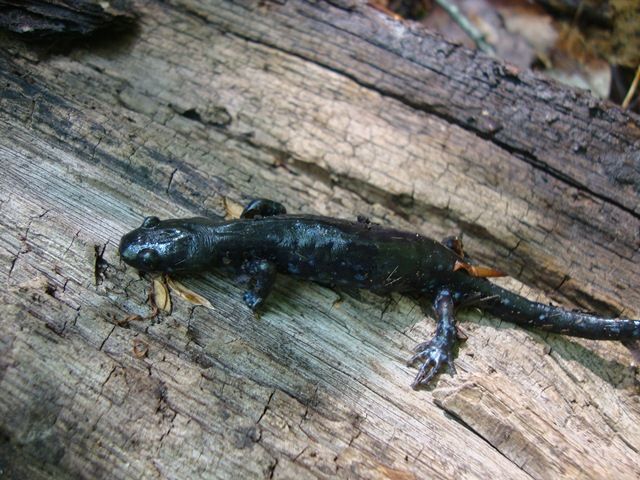
The Blue Spotted Salamander (Ambystoma laterale).  This is one of three salamanders on-site that I've seen.  It is also a species not found in North Carolina, so was a new one for Dave.  The juveniles tend to have much brighter blue spots, and are very pretty.  The adults tend to loose the bright blue spots, and often look more black.  They are smaller and less chunky than the other "mole salamanders" (or members of the Genus Ambystoma) in this area, such as the Tiger Salamander (Ambystoma tigrinum) and the Spotted Salamander (Ambystoma maculatum).
____________________________________________________________________


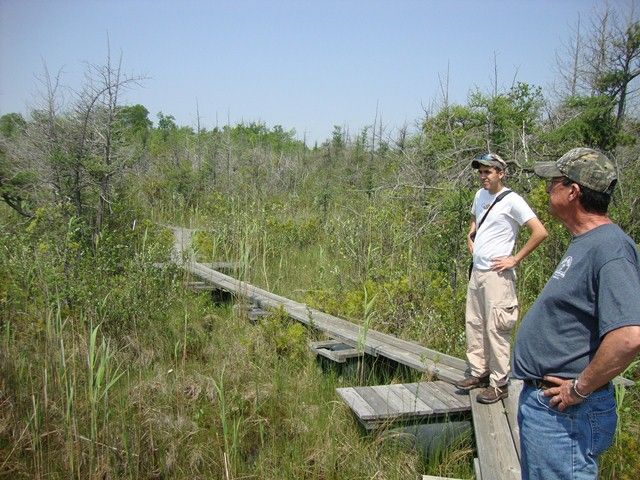
After messing with some amphibians, we decided to take a stroll out on the boardwalk that leads into the actual bog on-site.  Being covered in sphagnum, which one easily punches through while slogging around in a bog, these habitats are very difficult to navigate and walk through.  Luckily, the folks at the field station associated with this bog created an outstanding boardwalk raised above the sphagnum that allows for easy passage.

The boardwalk really allows naturalists to step back and enjoy this interesting habitat, rather than having to worry about sinking into it......
The board walk also grants those seeking passage through the bog the opportunity to spot some of the cool plants that show up in bog habitats.

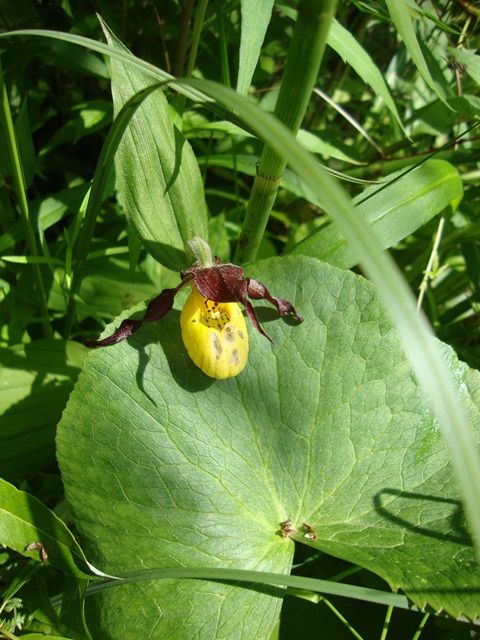
These include the beautiful Yellow Lady's Slipper (Cypripedium parviflorum).  Amazingly, there are a handful of "flower-nuts" out there that illegally collect these from the wild to culture in pots!  It really doesn't make sense to me.  I can see buying a captive-bred orchid variant to keep as a house plant....but I just don't get wild-collecting of stuff like this!  Such a shame to remove them from their natural environment.

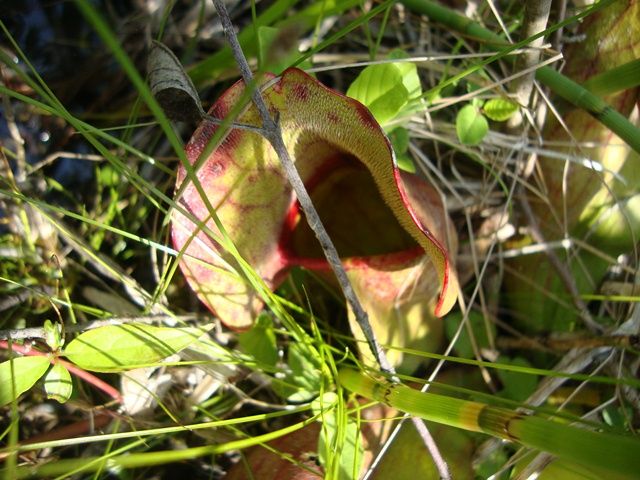
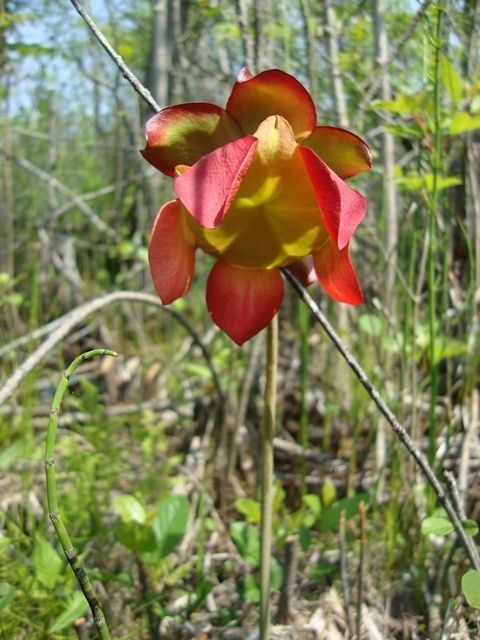
......the carnivorous Pitcher Plant (Sarracenia purpurea).....
...and its wonderful flowering head.....

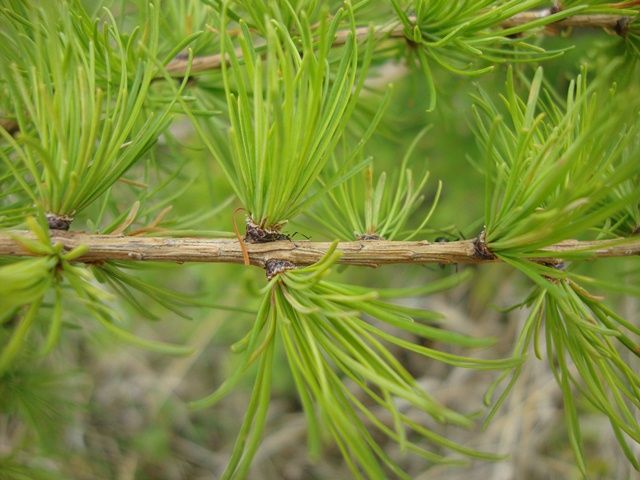
...ALSO...one of my favorites.....the Tamarack (Larix laricina), a deciduous conifer!

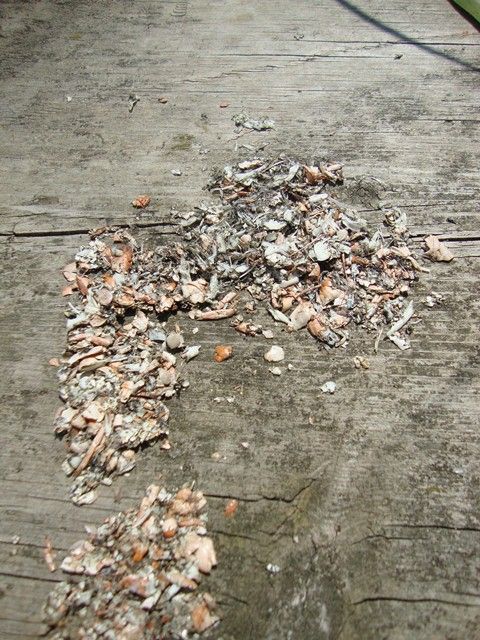
Amphibians and reptiles are very sparse in the bog proper.  Birds are plentiful and mammals are common.  On our walk out into the boardwalk, we happened upon a location where the bog opens up into a sedge marsh that leads to a nearby lake.  Here we saw evidence of Otters (Lontra canadensis).  I've seen Otter scat along this stretch of the boardwalk in the past....so I was not surprised to find their scat here again.
______________________________________________________________________

Our first "herping adventure" during Dave's trip was a success!

I'll soon post about the other two big trips we made during his week-long visit.....