Showing posts with label Whistlepig. Show all posts

Friday, June 29, 2012

Your Weekly Fawn AND MORE Wildlife Babies!

Wildlife babies still abound.  But now they are getting bigger and venturing out on their own a bit.

In addition to the quadruplet Raccoons (Procyon lotor) that I've posted about recently, I've also gotten clips of some other little ones out and about.

The fawns, in particular, are showing up alot.

So, in an effort to keep up with what I started, here's your weekly fawn (or fawns)!


Here's another, slightly bigger fawn from a different site....

This little fella is part of a two-for-one special!


There's is boldness in numbers, and I ended up with about 20 video clips of these two....until something spooks them (check out that leap!).

Yet ANOTHER set of twins at a different site! 

The females must have had alot of resources available to them in the area this year to produce so many twins!  It's been very hot and dry out there lately, so we'll see how long these babies last....

But for now they look happy.

Plus, there are MORE!

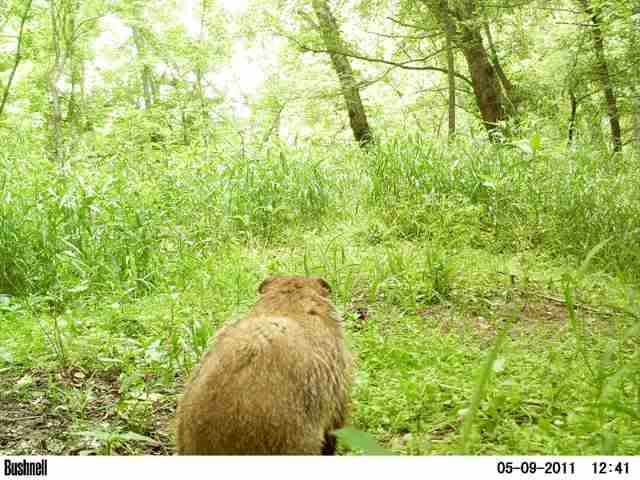
This baby Whistlepig (Marmota monax).

A baby Stiped Skunk (Mephitis mephitis).  This little fella comes back repeatedly and I have many video clips of him (or another one that's the same age).  In every clip he is snuffling about in circles, apparently fascinated by something in front of the camera.  I never see him eating anything, so I am not sure why he keeps returning.  Whatever the reason, he always seems very serious and determined!

There's something I find incredibly endearing about skunks.  Can't place my finger on it....but whatever....the videos of this little critter always give me a chuckle.  He actually could be the ornery little stinker, I've gotten clips of in the past.....

 And finally....a first for me....a Coyote pup!  Don't see many of the pups (even though I knew the adults were on-site).  The parents must keep them well-hidden.

Wednesday, June 6, 2012

Phenology: Wildlife Babies Abound

Things have been crazy as usual around here.

I've got alot of stuff to share with you all, but no time to post it!

Figured I could at least get this quickie post in, as it requires little explanation.

The babies started showing themselves for several species just in the last week 'round these parts.....

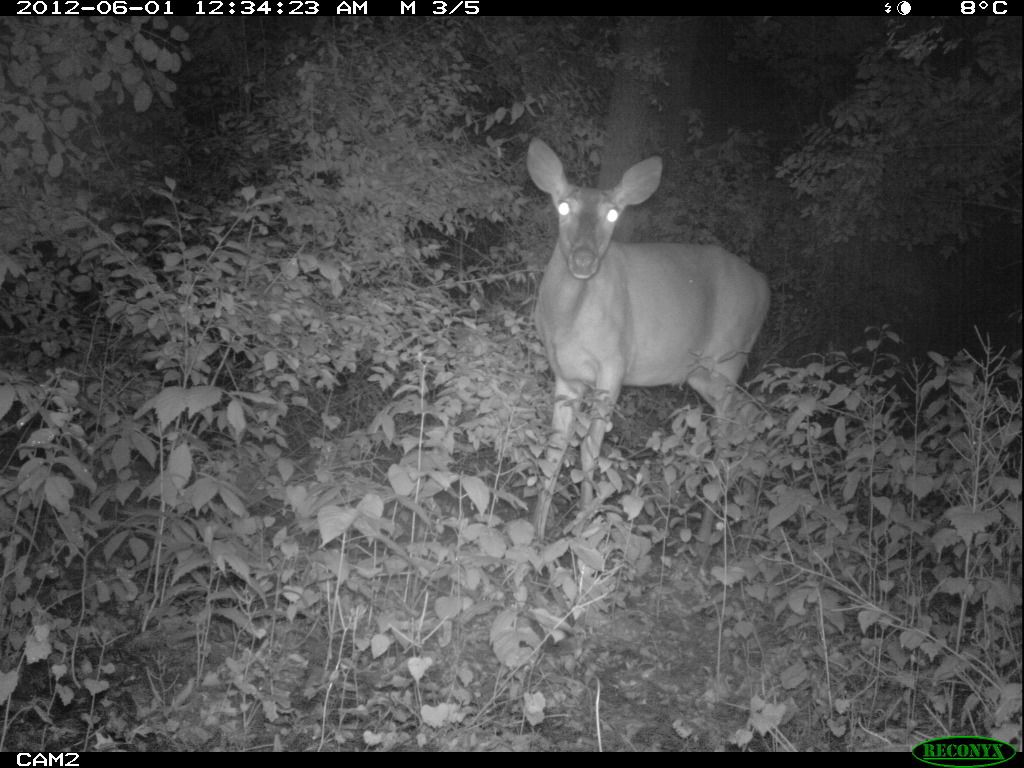
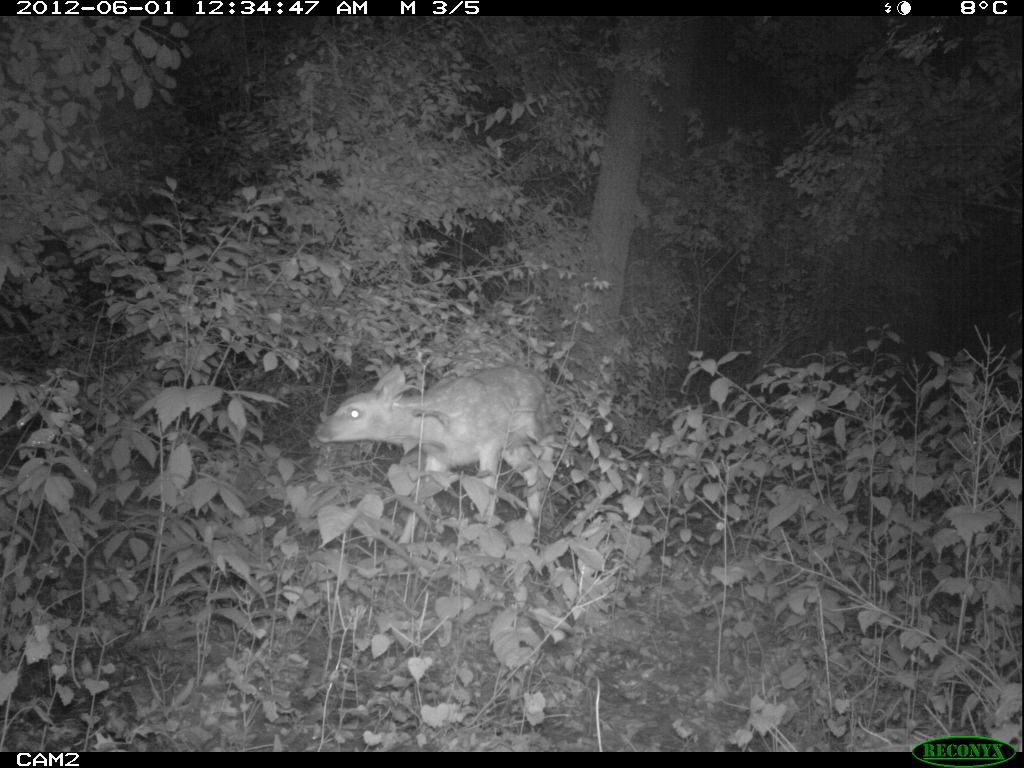
To start things off: my first camera-trapped fawn of 2012.

The momma comes forward with some trepidation.....

...but she's followed closely by junior......

At a completely different site, several species have acted like "proud parents" for the camera.

First a video clip of a Whistlepig (Marmota monax) with two youngsters close behind....  I've actually managed to get pics of baby 'pigs before, back in NC (see here).

...and just this morning.....a momma Racoon (Procyon lotor) with a group of little ones in-tow.....

More to post again soon (hopefully)....as soon as I catch my breath, that is!

Friday, March 2, 2012

Phenology: skunk streaks, whistlepigs, red-winged black birds and sparring bucks

There has been a recent flurry of new spring activity among some of the critters in the area.

On Thursday morning (March 1st), as I took the dog out, I heard Red-Winged Black birds (Agelaius phoeniceus) calling for the first time in the trees along the driveway (there's a wetland nearby).

Also, the camera traps deployed as part of Advanced Ecology lab have been snapping many pictures.  This week the students finally got back on-site to check their cameras (as well as set up a new particularly smelly experiment, that I'll talk about in the future).  It had been three weeks since our last on-site visit and we had plenty of pictures.....although most of these were of white-tailed deer.

But, we did get some other cool shots....

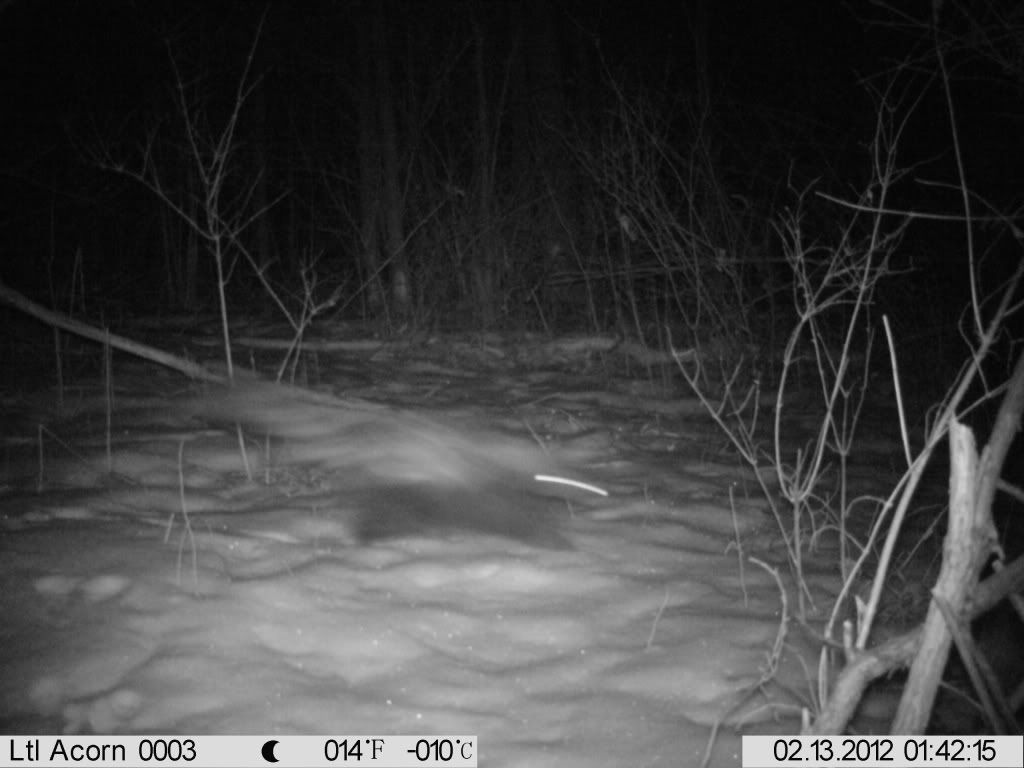
This included numerous pics of skunks (Mephitis mephitis) for the first time this year.  Suddenly in the last two weeks or so, skunks were caught numerous times on three of the six cameras we have out.  Late February through March is the breeding season, so I'm not surprised to see these little fellers out and about now.

None of the pics were particularly great.  In fact, most of them look like streaks....as you can see below.

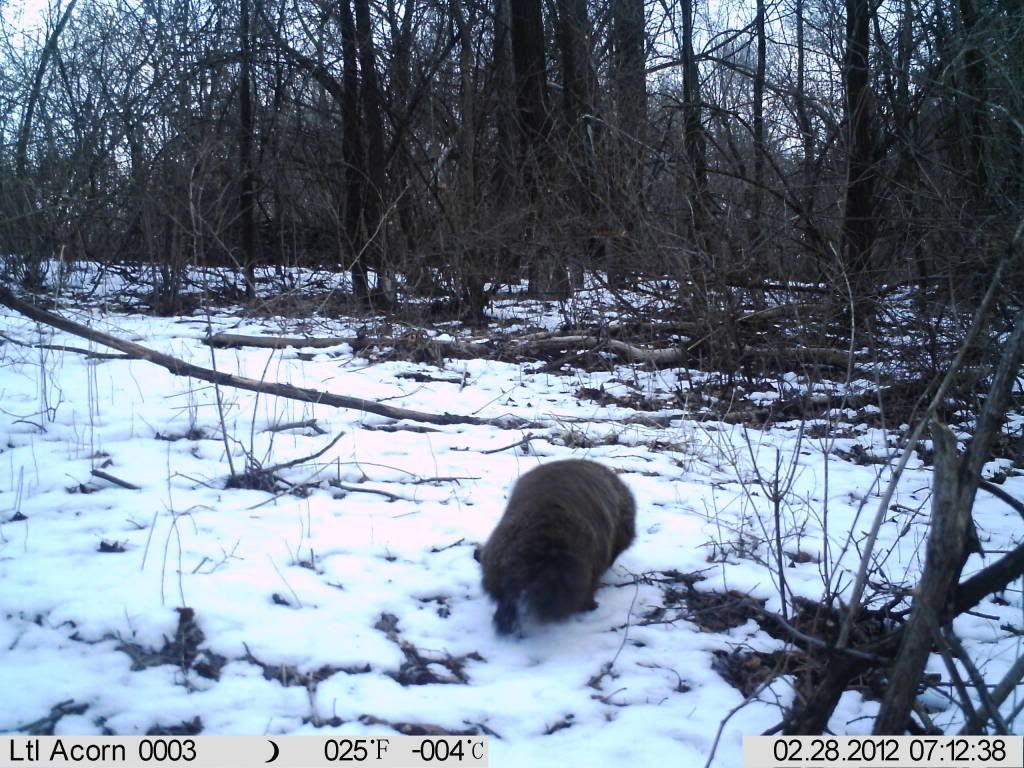
We also nabbed our first shots of a Whistlepig (Marmota monax).  This is alittle early for them, but not unheard of.
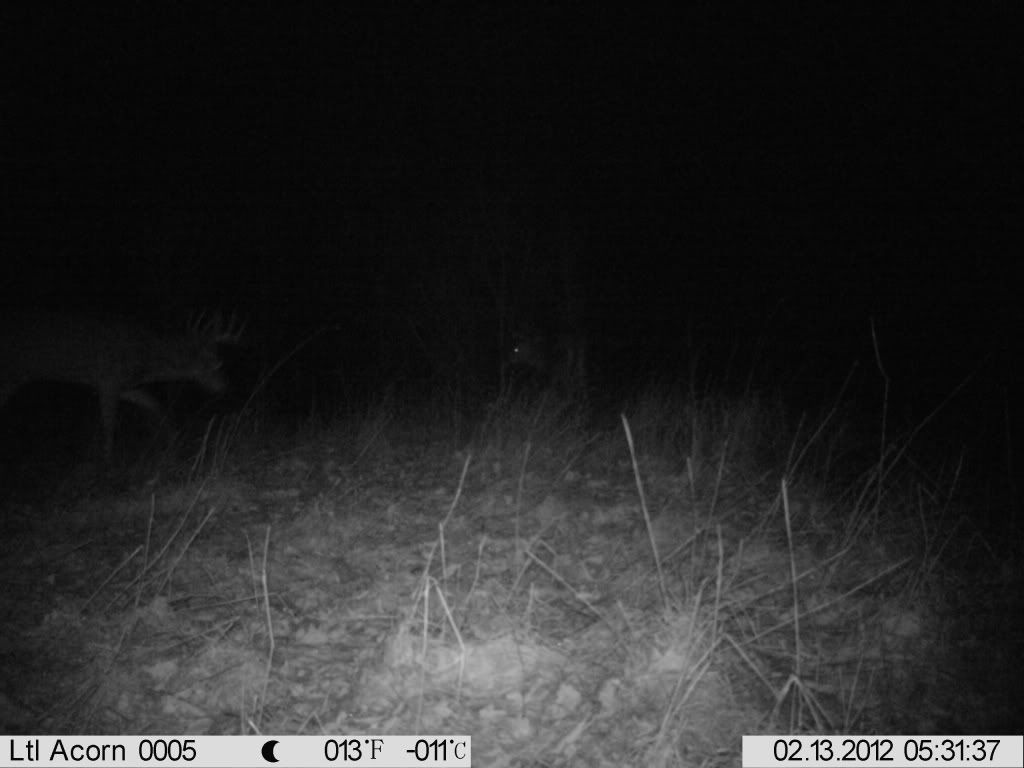
Then...surpisingly....a pair of bucks that really appear to be sparring!  Seems pretty out of season for that, and both have retained their antlers for a while.  This is the same location where I observed pre-hanky panky by a pair of white-tails a few weeks back (see here).  Look close, they are in the background (one of them is the many-pointer that's been hanging around for awhile now).

We also caught racoon, red fox and coyote again....but the pics really weren't anything to write home about.

More results related to our lab to come in the future, hopefully!

Monday, July 4, 2011

Who Skirts the Whistlepig Burrow?

There's nothing like a good river corridor if you want to get pictures on a camera trap.

Especially if that river corridor experiences reduced human disturbance.

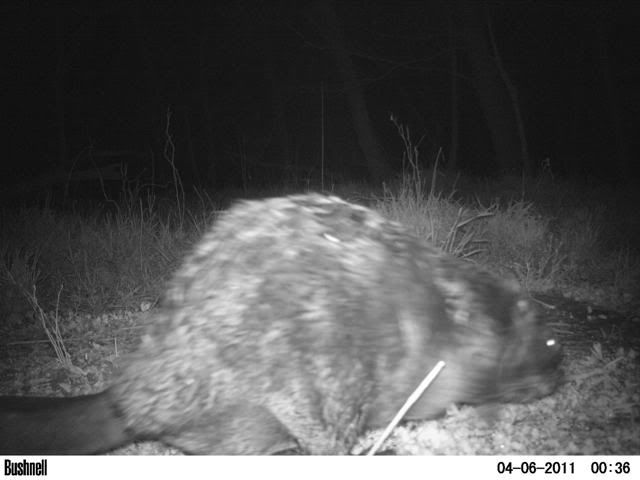
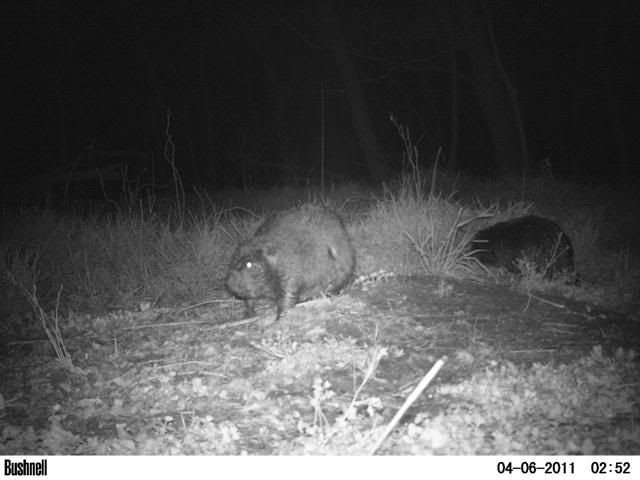
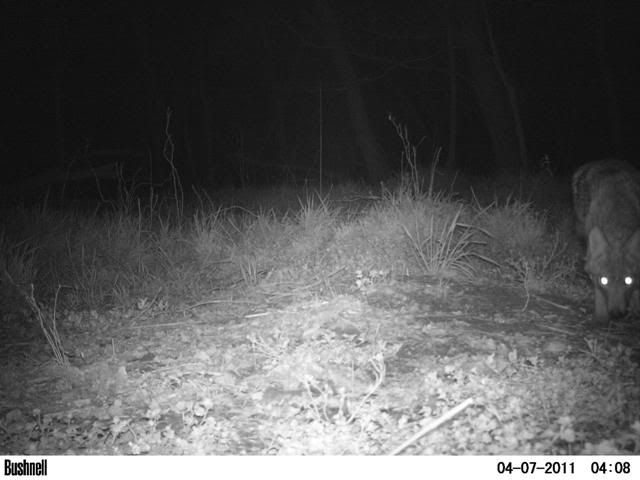
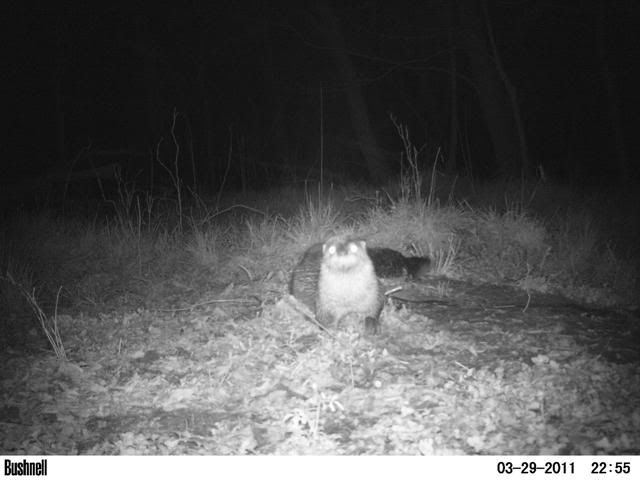
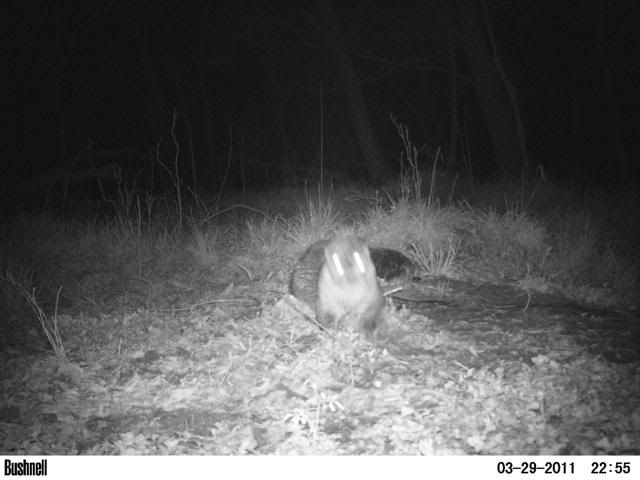
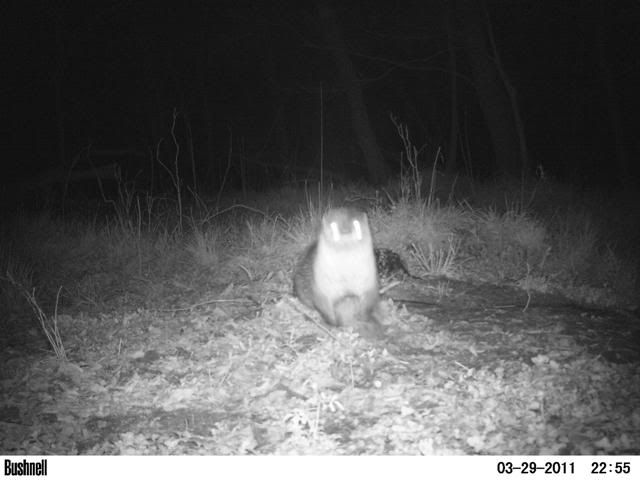
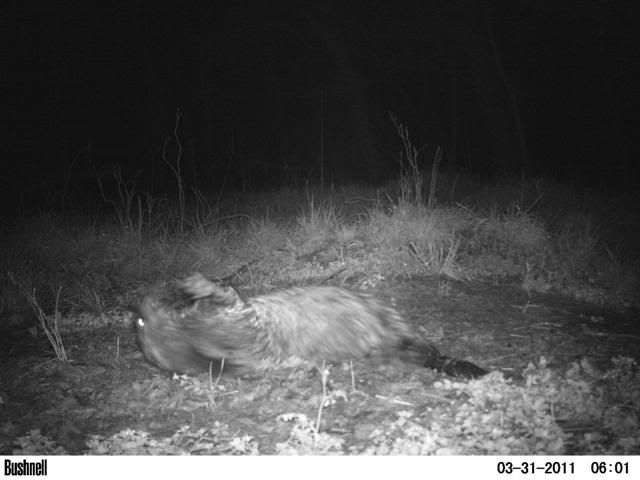
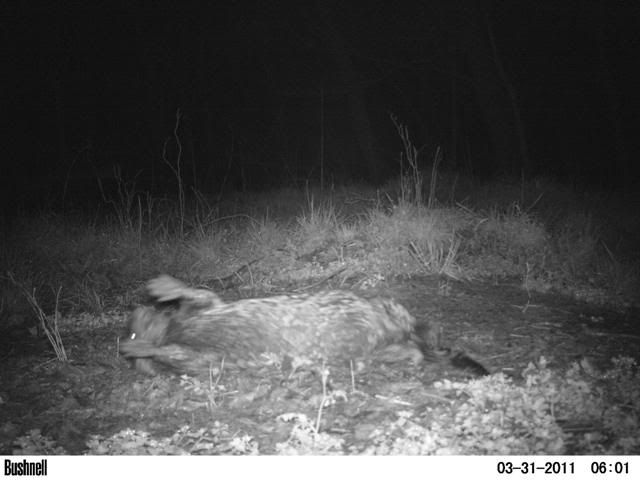
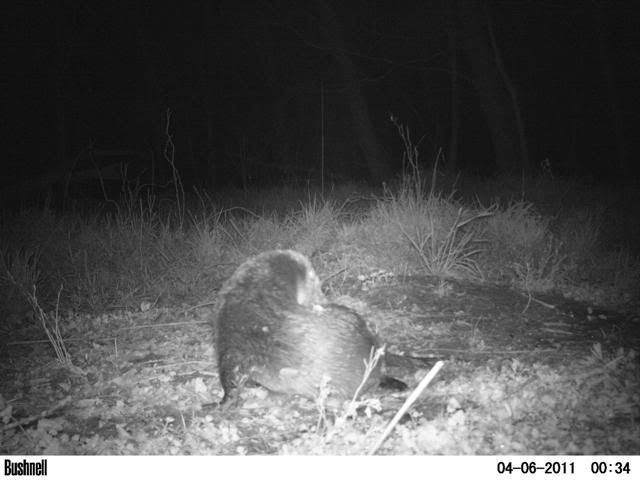
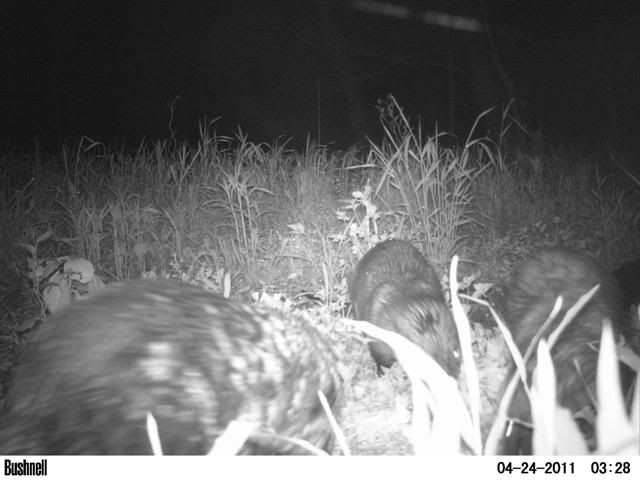
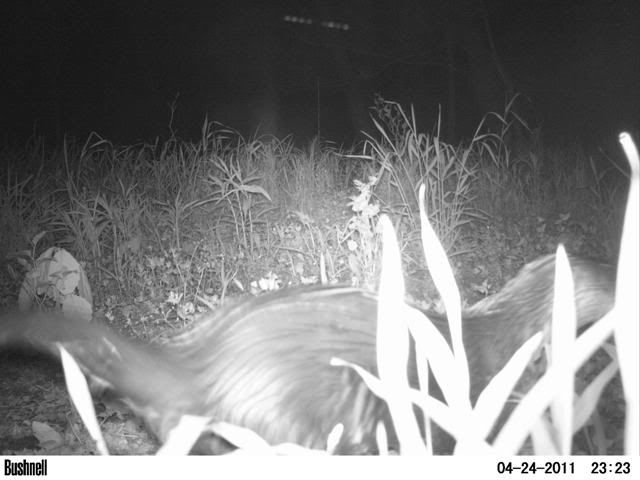
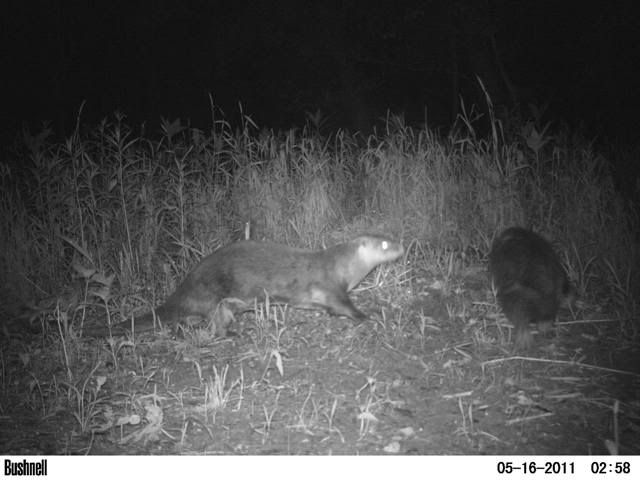
I've posted pictures from this camera set before.  Originally, I was hoping to identify a mystery animal (which I determined was a mink; Neovison vison), and then the goal became to monitor Whistlepig (Marmota monax) activity near their burrow entrance, and I've also reported a nice Coyote picture (Canis latrans).

However, lots of critters skirt the Whistlepig burrow while following the river corridor.

Here are a few more shots from this location, and a summary of everything that passed by.

The Opossum (Didelphis virginiana): Early on in the spring, a 'possum passed the camera just this once.  The picture below was before I repositioned the camera. 

On the day I deployed this cam...as I walked along the river perusing potential camera set locations, I remember having a strange feeling of being watched.  I glanced to my right, and sitting not far away was a 'possum, watching me pass by.  I stopped and looked at him for a second, which prompted him to slowly turn and amble back into the woods. 

I wonder if this picture is of that same 'possum?


Gray Fox (Urocyon cinereoargenteus): A Gray Fox has only wandered by once.  It was about this time that I also had one pass near my Otter Latrine set, which isn't too far away. 

White-tailed Deer (Odocoileus virginianus):  


One of the reasons commercial cameras with white-flash have been slowly taken over by infra-red flash cameras is because it's been promoted that perhaps the white-flash deter deer.  I find this incredibly difficult to believe in alot of situations.  Canines and cats, I'll perhaps buy (although see the recent post over at Camera Trapping Campus).....but even they're smart enough to acclimate to flash.  Regardless, I still don't buy that the white flash really deters many deer.   I suppose that big trophy buck might be wary and not come around as often with a white-flash camera (and this is what many camera owners are most interested in photographing), but I'll bet deer in general couldn't care less.  I have no hard data to back this up.....just some anecdotal observations like the one below. 

The individual in the lower two pictures lays down in front of this camera, and takes that bright flash directly in the face repeatedly for an entire HOUR AND A HALF!  This resulted in 57 pictures of this one deer, and on the Cuddeback (which doesn't take multiple pictures per wildlife pass) this is alot of pics of one individual.

This is just one of at least five similar incidents.  Although during the other such incidents a deer catches the flash right in the face and continues to graze right in front of the camera...they don't hang around as long as this individual (and don't lay down in front of the camera).


Eastern Cottontail (Sylvilagus floridanus): Another common critter at this location. Almost all of the pics from this spot are like the one below (i.e., of a rabbit in mid-leap).  The Cuddeback does have a lightening fast trigger time!

Coyote (Canis latrans): the "talking dog" has floated past more than once (three times, in fact).  I would think the flash would deter them.  It's possible these are all different individuals.  If the same individual...they may have acclimated to the flash, which I've seen them do with Infra Red flash cameras (See Coyote Cams, posted on Feb. 19th, 2011). 


Beaver (Castor canadensis): A Flat-tail ambled by only this once.

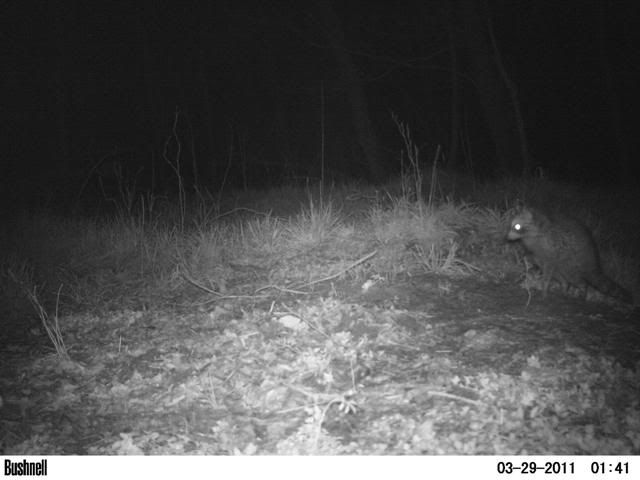
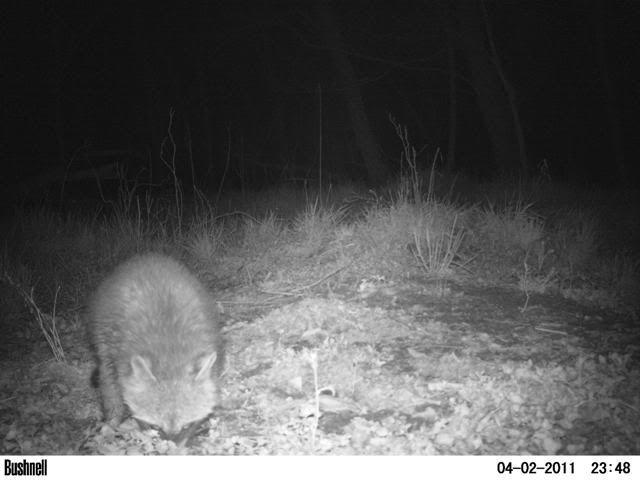
Racoons (Procyon lotor): By far the most commonly captured critter by this camera trap.  Since February 8, 2011, I've had Racoons pass by over 160 times!  See summary below.

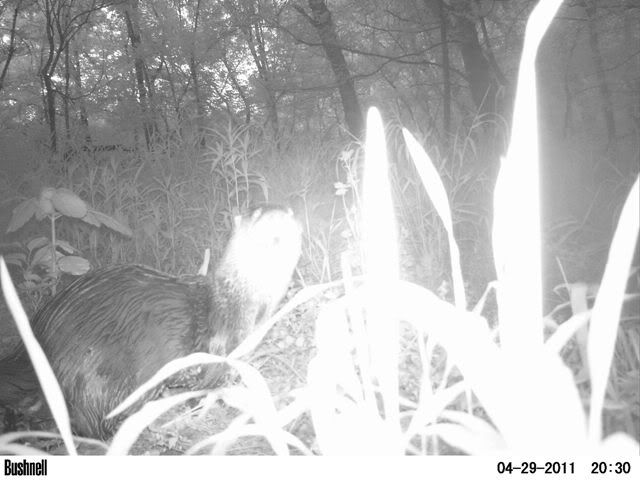
Whistlepig (Marmota monax):  Of course the whistlers are still about!  Check out the claws on the individual in the second picture.  No wonder they are such great diggers! 


Summary of results:

Camera deployed on February 8, 2011 and retrieved on June 27, 2011.

I summarized the number of animal "passes" to-date.  To apply some sort of general criteria to what was considered an individual "pass", if two pictures of the same species appeared on the camera close together in time, I considered them separate "passes" if they were at least two minutes apart.  Within two minutes, it's feasible that the same individual just turned around and came back...but this time criteria is arbitrary.  Obviously, I can't identify individual animals that well, so I may be counting the same individual more than once (as I'm sure I am with the Whistlepigs).  If there were unique marks to identify individuals back-to-back within within 2 minutes of eachother, I only counted it as one "pass".

I wish I wasn't such a dunce and could figure out how to imbed a graph from Excel on my blog, as I think that would be more informative than what I have below.  Unfortunately, I haven't been able to figure it out (without having to get some additional piece of software), so you'll just have to view the results as is.

What I find most interesting is the shift in the number of Racoon, Rabbit and Whistlepig passes as the months advance.

February Totals: A fairly low number of captures, overall.  But, this was the only month of the "mystery animal".  The number of Racoon passes is also respectable.
  • Coyote= 1
  • Beaver= 0
  • Deer = 13
  • Gray Fox= 0
  • Mystery Animal/Mink= 6
  • Opossum = 1
  • Rabbit (eastern cottontail)= 5
  • Racoon= 40
  • Squirrel (eastern gray squirrel)=2
  • Whistlepig = 0
March Totals:  March is the Month of the Racoon and the Rabbit!  Also, the Whistlepig starts to show (but not until late in the month).
  • Coyote= 0
  • Beaver= 1
  • Deer = 14
  • Gray Fox= 1
  • Mystery Animal/Mink= 0
  • Opossum = 0
  • Rabbit (eastern cottontail)= 46
  • Racoon= 94
  • Squirrel (eastern gray squirrel)=3
  • Whistlepig = 14
April Totals:  A month of low activity.  Look at how far the Racoon total has dropped!
  • Coyote= 2
  • Beaver= 0
  • Deer = 2
  • Gray Fox= 0
  • Mystery Animal/Mink= 0
  • Opossum = 0
  • Rabbit (eastern cottontail)= 10
  • Racoon= 13
  • Squirrel (eastern gray squirrel)= 0
  • Whistlepig = 3
May Totals:  May is the Month of the Whistlepig...and the Rabbit is all but a memory.
  • Coyote= 0
  • Beaver= 0
  • Deer = 3
  • Gray Fox= 0
  • Mystery Animal/Mink= 1
  • Opossum = 0
  • Rabbit (eastern cottontail)= 3
  • Racoon= 29
  • Squirrel (eastern gray squirrel)= 3
  • Whistlepig = 48
June Totals:  The Raccoon is now the most abundant again, and the number of Whistlepig passes has decreased substantially.
  • Coyote= 0
  • Beaver= 0
  • Deer = 8
  • Gray Fox= 0
  • Mystery Animal/Mink= 1
  • Opossum = 0
  • Rabbit (eastern cottontail)= 6
  • Racoon= 18
  • Squirrel (eastern gray squirrel)= 0
  • Whistlepig = 10
Overall Totals for this location:
  • Coyote= 3
  • Beaver= 1
  • Deer = 40
  • Gray Fox= 1
  • Mystery Animal/Mink= 8
  • Opossum = 1
  • Rabbit (eastern cottontail)= 76
  • Racoon= 194
  • Squirrel (eastern gray squirrel)= 8
  • Whistlepig = 75

The camera was pulled from this location on June 27, 2011.

It was a fun spot.

Wednesday, June 15, 2011

The Otter Latrine Redux

The Otter latrine site continues to be monitored.  Since I last posted any of my findings from this camera trap set on April 10th, 2011 (see Back to the Otter Latrine), alot has has happened. 

Of course, as I've shown you before, Otters aren't the only critters that like this spot.
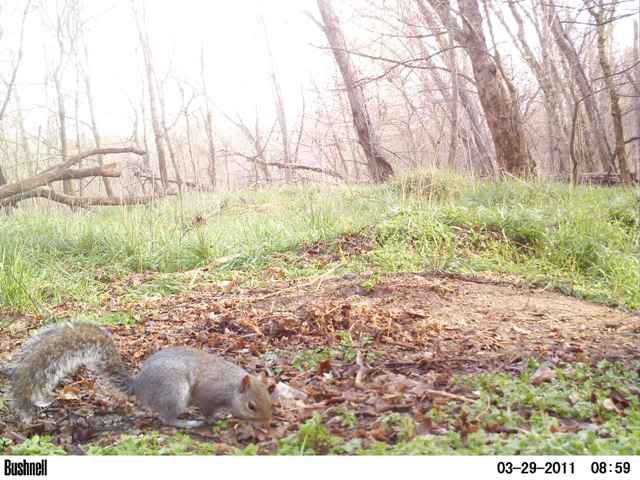
There are eastern gray squirrels (Sciurus carolinensis)....


Once, and only once, some Canada Geese (Branta canadensis) waddled by.....


Also, for a few weeks....Beavers abound!  A pair of flat-tails (Castor canadensis) work the area pretty heavily....this is not far from two other locations where I've camera trapped them at roughly the same time (see Busy Little Beasts posted on March 28, 2011).  They haven't been back since.  Because I like Beavers, I can't help but post one picture from every time they passed.


But, really...Raccoon is the word!  I have hundreds of pictures of these guys from this set.

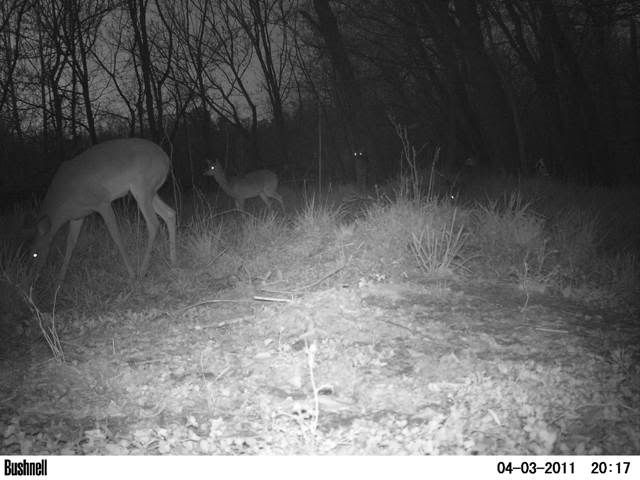
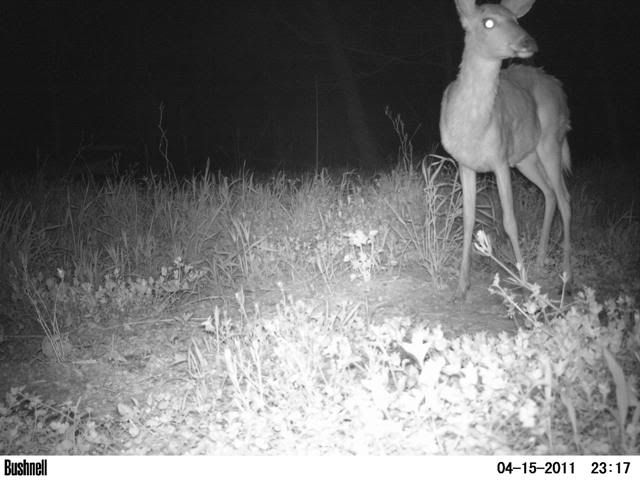
If Raccoon is the word, then deer is the punctuation....ever present and in no short supply.

Even the Whistlepig (Marmota monax) wants in on the action....his camera set is not far away from here either.

Of course, a batch of pictures from this set wouldn't be complete without one of my favorites....Canis latrans.  I really like this picture.

But the critter of the hour is our buddy the Otter (Lontra canadensis).

Below is a great series of three pictures that shows an otter scraping together a mound of debris to deposit scent on....


...a few hours later....someone stops by to inspect the scent mound....

...and the next day something very interesting happens....an otter "scent rolls" in the leavings!  See other posts regarding animals doing a scent-roll in smelly stuff in Gray Fox at the Stink Pole (posted on March 4, 2011).

...then no Otters for a week...until....

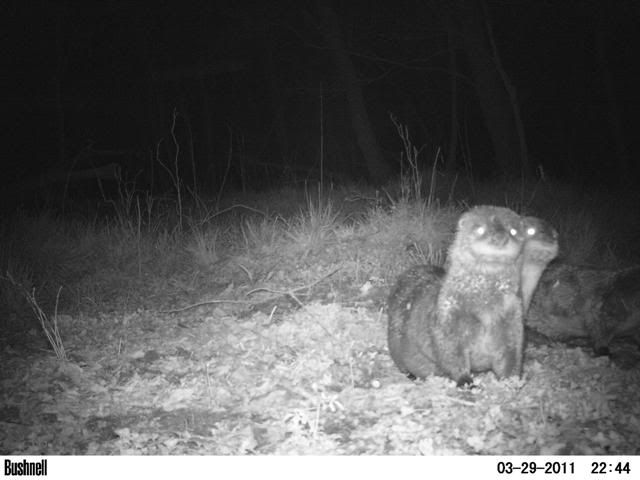
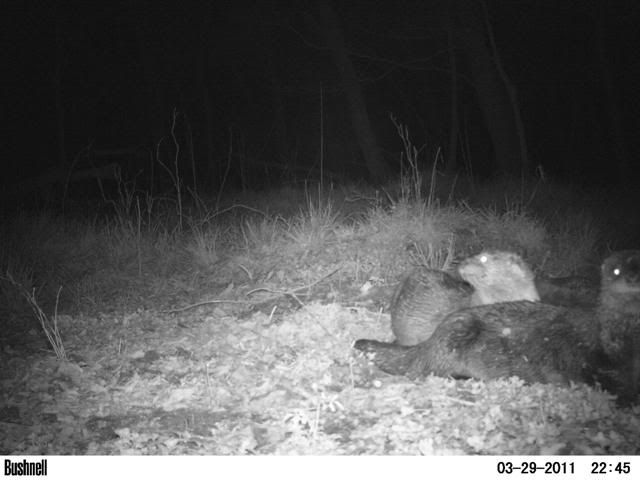
Another long period between visits.  This time the family group is back.

...a solo otter laying down alittle scent about a day later....

Another solo Otter swings by.....

...then again....nothing for weeks.  But these critters will not give up on their favorite dumping spot!

It has now been almost a month since any otters have visited this latrine spot.
___________________________________________________________________________
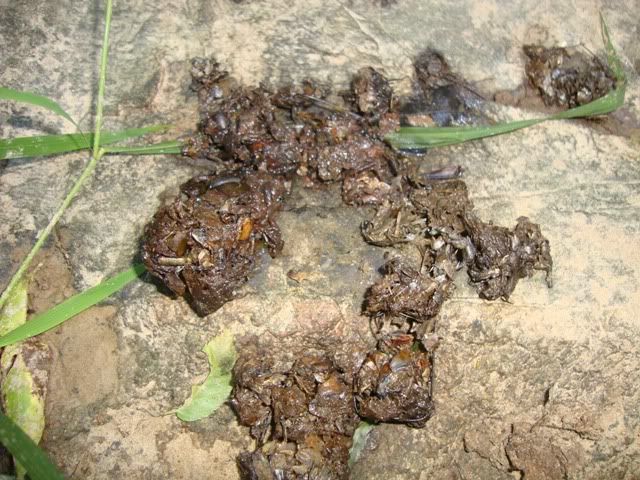
Upon arriving at the latrine site in early May, I noticed a real lack of fresh scat.  This puzzled me, as it would have been the first time this spring that the otters hadn't used this latrine site in between my visits. 
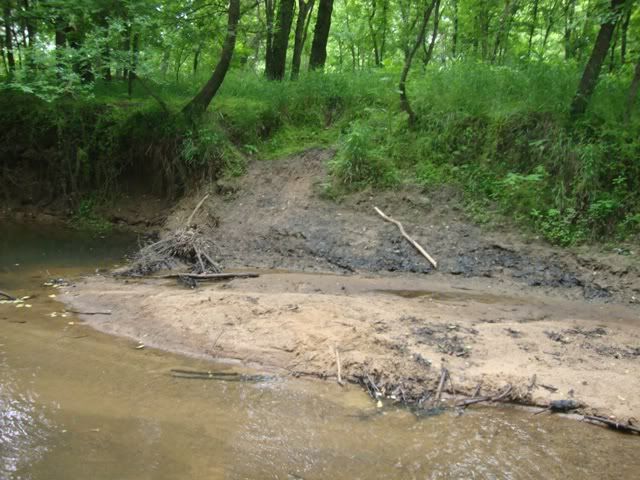
As I was preparing to leave, I happened to glance down the sloping bank towards the stream.  The water was fairly low at that time (and still is today) and an exposed sand bar, as well as several large flat rocks in the streambed, were near the base of the "slide" associated with the latrine I have the camera over.  Even from high up on the bank, where I have the camera, I could clearly see otter scat and tracks on one of the sand bars below.  The otters had abandoned the bank latrine for one in the sand bar/rocks in the streambed.

Above: a photo of the otter slide and sandbar latrine from across the stream.  Note the normal latrine site that the camera is monitoring is up on the bank at roughly the top of the slide in this picture.  This picture and the picture below were taken during the "low-water" period within the last month.


Above: For this picture, I stood parallel to the latrine, pointing the camera down-stream.  That way you can see the relationship the latrine site has to the larger river.  You can also see the exposed flat rock and muddy/sandy bars in the water.

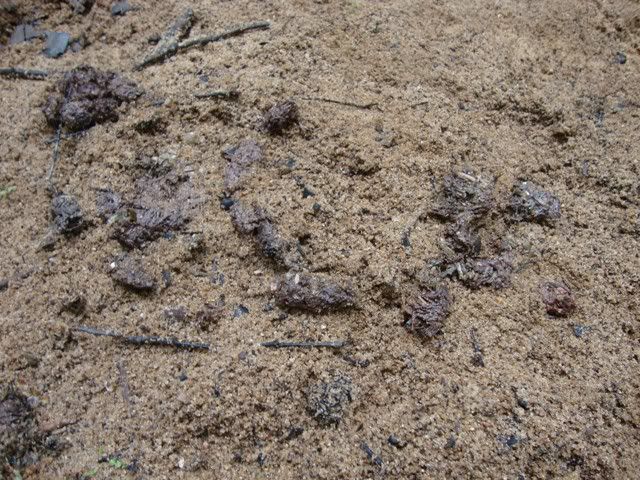
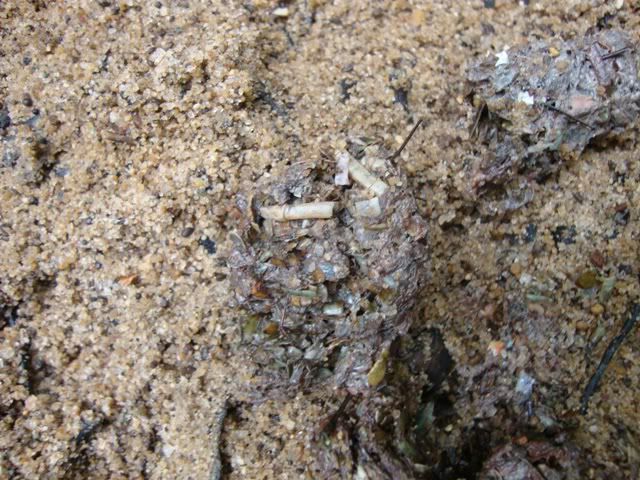
And what post about an otter latrine would be complete without more scat pictures!!
Above three pictures: Example scats deposited on the sandbar below the bank from the normal latrine site (5/12/2011).

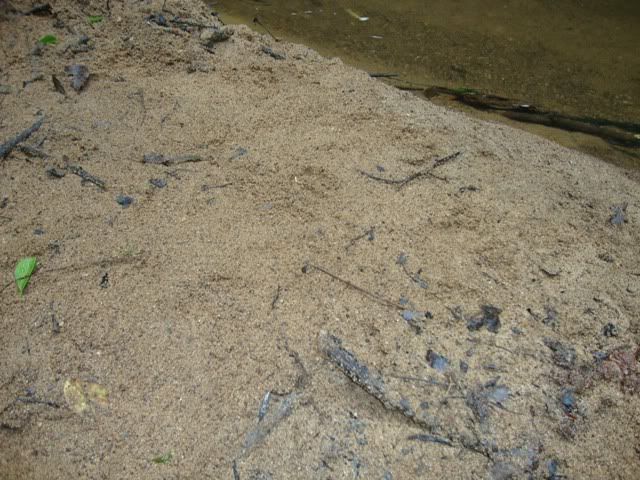
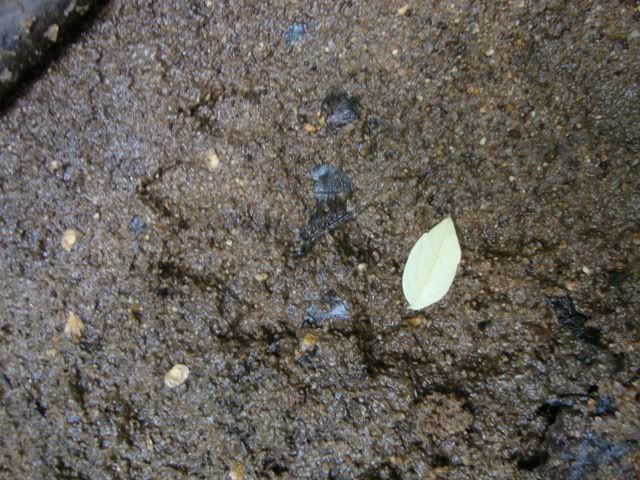
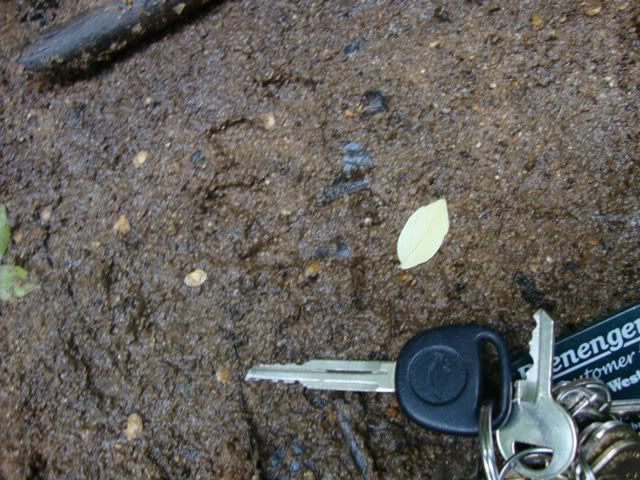
Above: tracks around the sandbar where the "temporary" latrine site had been set up (5/12/2011).
Above Two Pictures: Close ups of the otter tracks (5/12/2011).  Not great pictures.  I had to turn the flash off, as it was washing the tracks out completely in that sand...but any camera shake and the pic ends up blurry without the flash. 

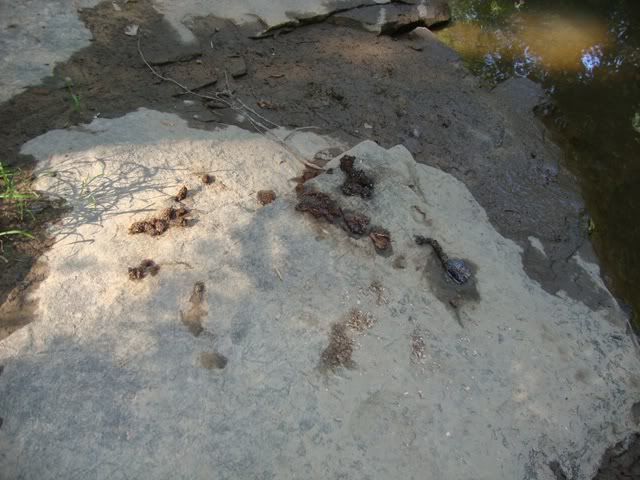
Above Two Pictures: Otter latrine located on flat rocks in the stream just below the camera set on 6/14/2011.  This was very near the latrine location found on 5/12/2011.


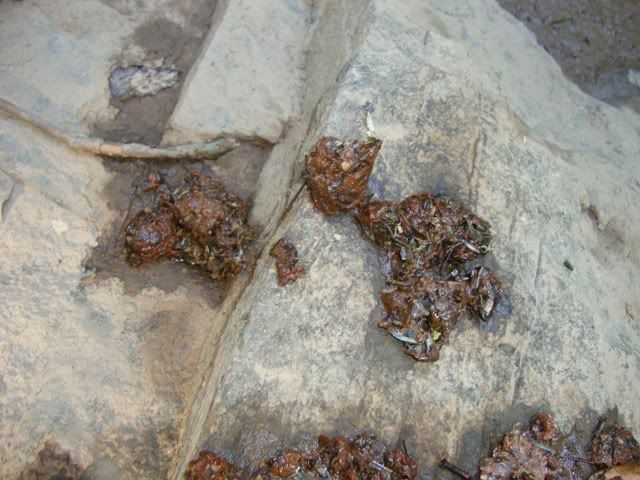
Above Two Pictures: Close-ups of the scat on the latrine found on 6/14/2011.  As usual, full of crayfish.

__________________________________________________________________________

So...what does this minute altitudinal shift in an otter's latrine mean?  All I can think of is that the water's lower....it's more work to climb up the side of the bank than it's worth because the water's so low and so they simply leave their message in the most accessible spot near their normal latrine.

Might be time to move a camera next week!