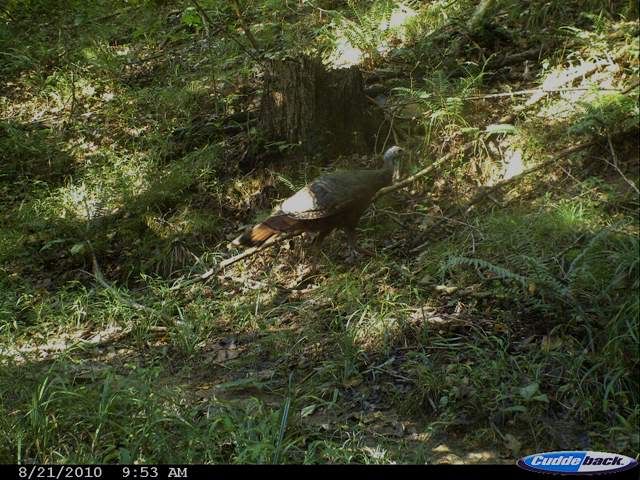
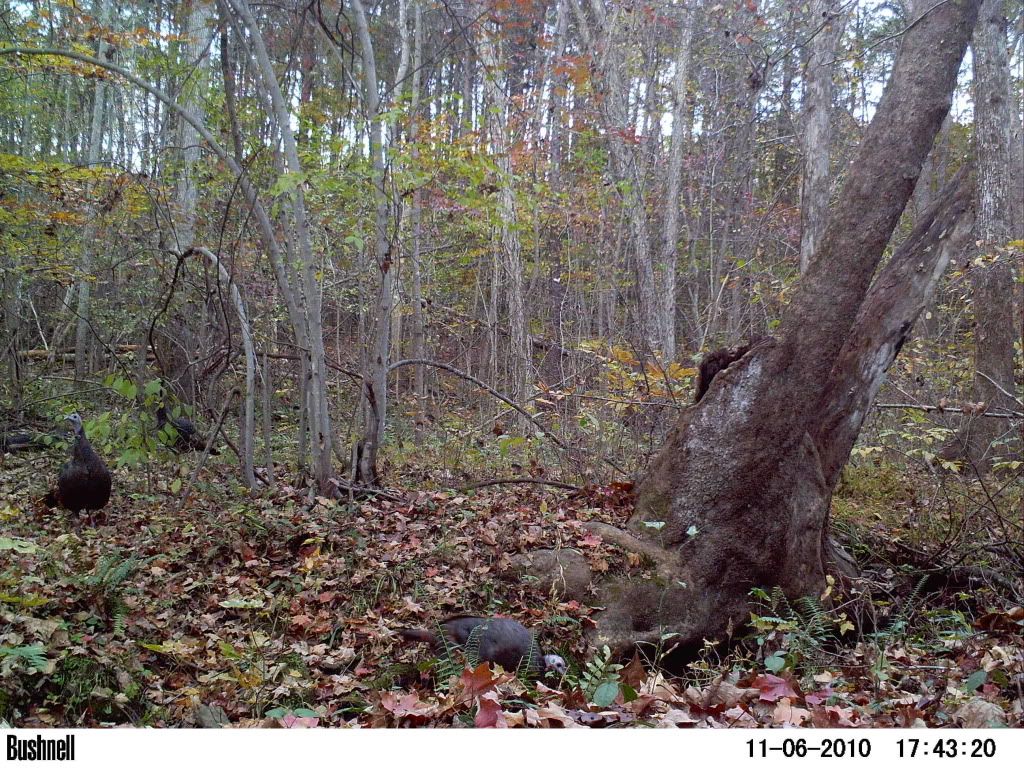
Showing posts with label Turkeys. Show all posts

Sunday, November 24, 2013

Happy Walkin' Bird Day From Your Friendly Neighborhood Trailblazer!


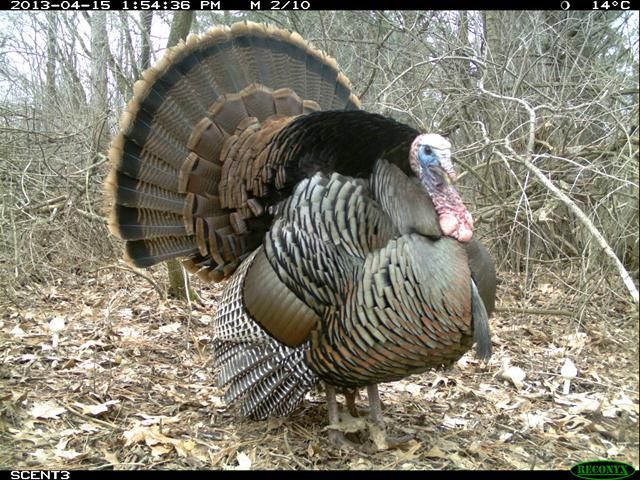
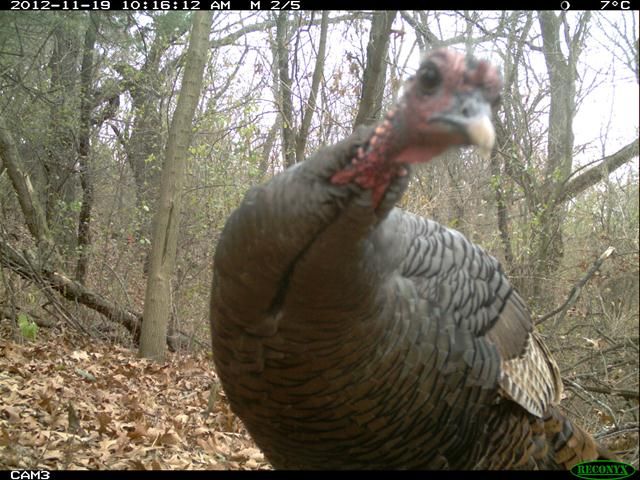
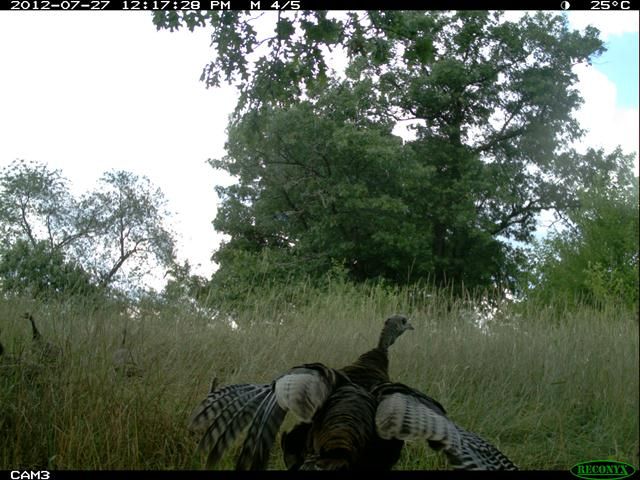
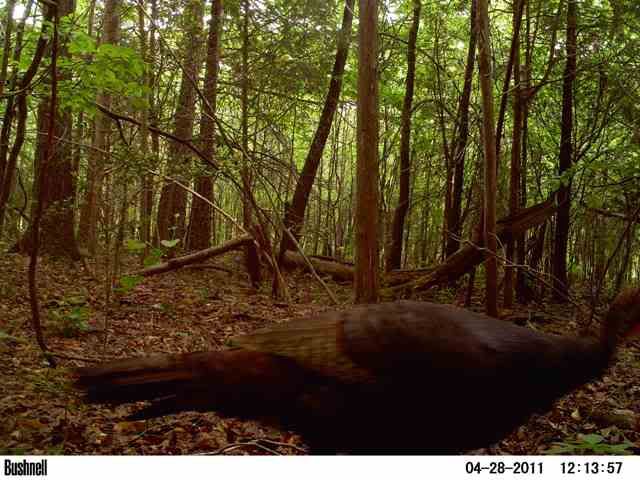
In anticipation of the coming Holiday, I figured I should post the best camera trap picture of a Walkin' Bird (Meleagris gallopavo) that I could ever hope to get.  Some students and I obtained this picture in the spring during a class exercise.  We didn't get any photos of hens on this occasion, so I'm assuming they were behind the camera.  This is the pose one would expect from a Tom on a greeting card for Thanksgiving (which is ironic, seeing that they usually adopt this posture in the spring, during the breeding season, and not in late November).

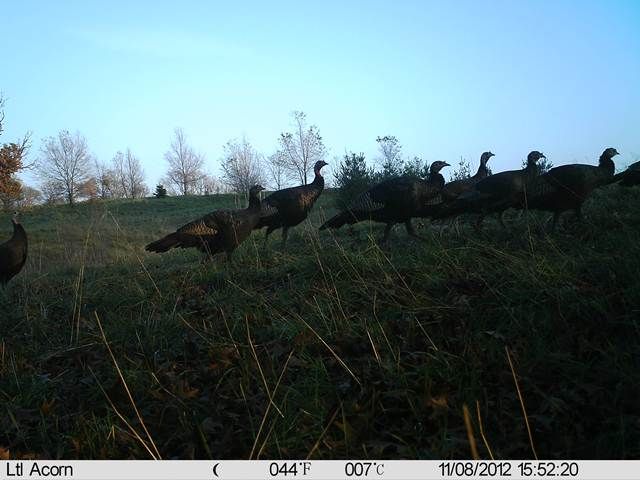
Also...have a look at this rafter (look it up :)  ).

Friday, March 15, 2013

The Fisher-Cat and More Phenology 2013

The student Wolf project finally generated a clip of a Fisher (Martes pennanti) that was worth posting.

This was taken at 7 am on February 18th, 2013.

Given the soft-spot I have for Mustelids.....I thought it was pretty neat to get a Fisher clip, and the students were excited as well.  Fishers are particularly interesting because they are a carnivore that has figured out how to get around that battery of quills protecting the North American Porcupine (Erethizon dorsatum).  The Fisher apparently achieves this by focusing its efforts on the Porcupine's face, where there are no quills, with repeated attacks until the prickly rodent is worn down by blood loss and/or shock.

The history of the Fisher, the Porcupine and overharvesting is particularly interesting, as it starts way back in 19th and early 20th centuries (reviewed by Nowak 2005).  Fishers were heavily harvested by early trappers in North America during this time, which also happened to other furbearing species, such as the Beaver (Castor canadensis, a story I've recounted for you all before).  As a result, the Fisher-Cat was nearly extirpated from the U.S., and with numbers dramatically lowered in Canada.  At this point, it is probably important to appreciate the effect that Fishers can apparently have on Porcupine populations.  An interesting study was published by Earle and Kramm (1982) that compared porcupine populations in two locations:  one with Fishers (due to a re-introduction) and one without.  They estimated Porky population densities of 40 / 100 km-squared in the area with Fishers, and densities of 350 / km-squared in areas without Fishers!  According to Nowak (op. cit.) the loss of the Fisher to excessive trapping lead to a concomitant rise in Porcupine numbers, who proceeded to do "considerable forest damage".  This made the Porcupine unpopular within the timber industry (Roze 2009).  Thus, efforts were made to protect the Fisher in order to control the number of Porcupines.  Such efforts included more stringent laws and closed trapping seasons to help conserve the Fisher.....which were coupled with several successful re-introductions....has lead to the re-bound of Martes pennanti in the U.S.
________________________________________________________________________

Phenology:

The last week (March 10th through the 15th) has also yielded a host of new phenological events for 2013.

On Sunday (March 10th) I saw the first Sandhill Cranes (Grus canadensis) of the year.
Photo source: Wikipedia

On March 10th I also saw the first American Robin (Turdus migratorius) of the season.
Photo source: Wikipedia

Today (March 15th) I observed two other "firsts" for the year: I heard the first Red-winged Blackbirds (Agelaius phoeniceus) calling of 2013, and the first strutting/displaying Tom walkin' birds (Meleagris gallopavo) of the year (THREE Toms displaying amongst a group of 15 birdds near campus).  As an aside, the first Red-winged Blackbird call I heard last year was March 1st.
Photo source: Wikipedia

Things have been chaotic busy!  Hopefully more to post soon!
_______________________________________________________________________

Literature Cited:

Earle, R.D., and K.R. Kramm. 1982. Correlation between fisher and porcupine abundance in upper Michigan. The American Midland Naturalist 107:244-249.

Nowak, R.M. 2005. Walker's Carnivores of the World. Johns Hopkins University Press, Baltimore.

Roze, U. 2009. The North American Porcupine (second edition). Comstock Publishing, Ithaca.

Wednesday, November 21, 2012

Happy Walkin' Bird Day!

I know it's cliche and all that jazz....but why not show some pictures of Walkin' Birds to celebrate how delicious they taste?  AND to celebrate Thanksgiving with family and friends, of course!

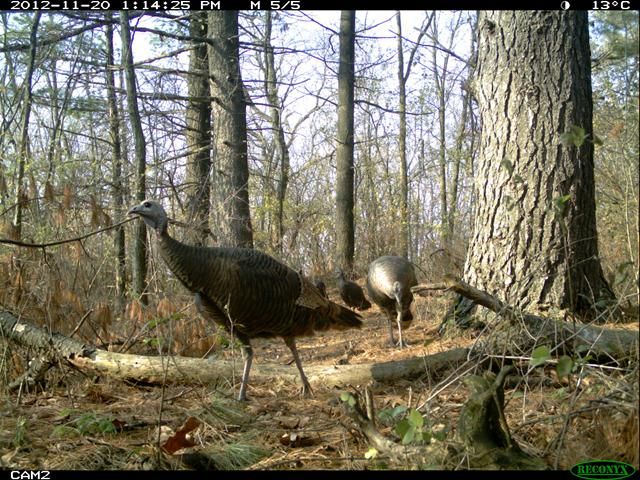
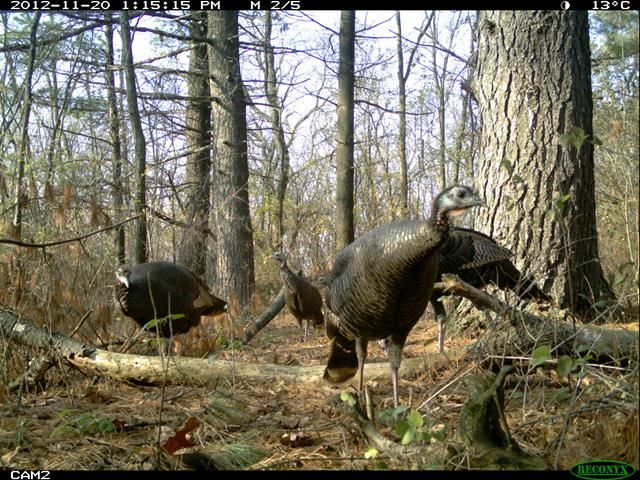
Below are some recent pics of the rafter that's been hanging out behind the house all year.  I'm assuming these are the poults that were hatched on-site this summer (see here).  It's interesting that despite the resident Red Foxes and Coyotes in the area, most of these poults are surviving.


One morning last week, I took the dog outside for one of his daily evacuations and heard the unmistakable sound of turkeys clumsily flying through tree branches.  I looked up and the group of them had been roosting in the pine and oak trees right behind the house the night before. 

I saw the same rafter again this morning as I walked behind the house to check my cameras.

I was able to count 15 of them.


I, personally, can't wait to tuck in to some juicy Walkin' Bird....sweet potato souffle....maple pudding...sunshine corn bread....mashed potatoes....green bean casserole.....rice pudding.....pumpkin pie........and etc.


Happy Walkin' Bird Day (and a Happy Thanksgiving)
to Everyone!!

Friday, August 17, 2012

Your Weekly Fawn AND STILL MORE Wildlife Babies.....

This year's offspring are growing.

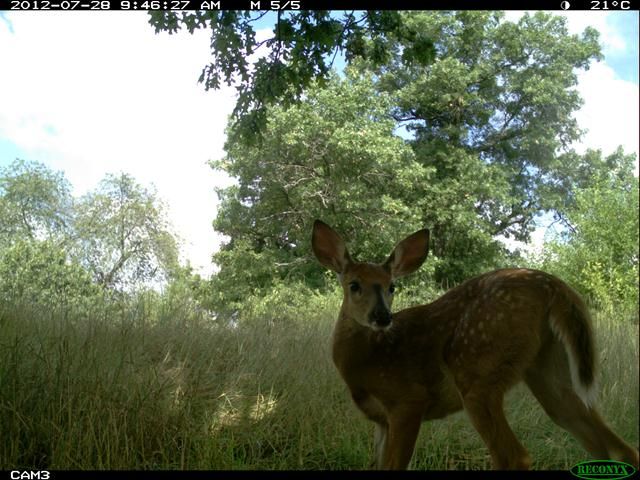
First, one of the many fawns active at my research sites......

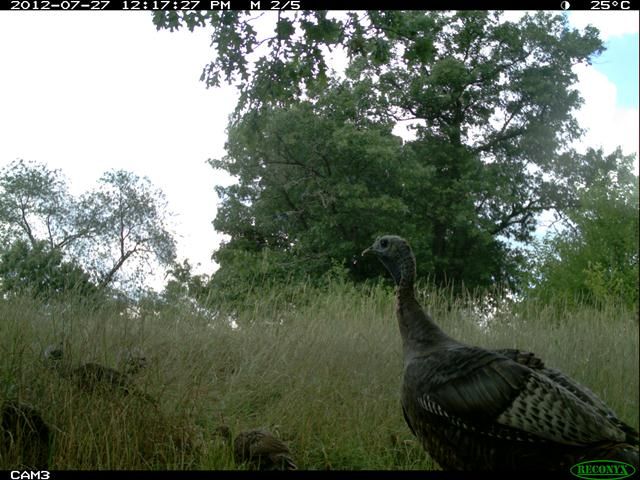
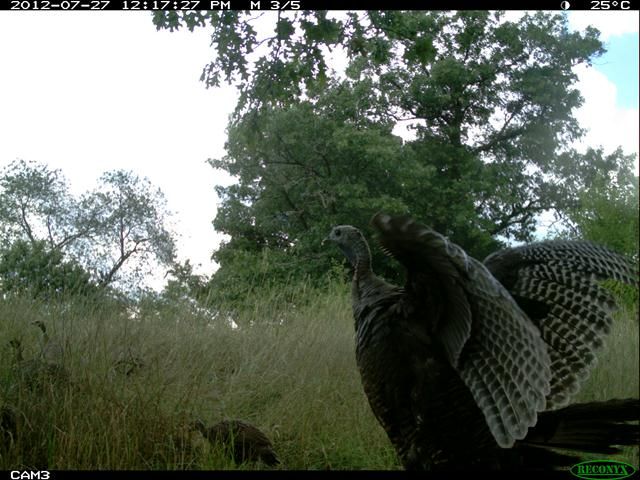
Then, a first for me this year, a picture of a momma walkin' bird with poults....

And...of course....Raccoons.  I know I post alot of clips of Raccoons, but they provide so much entertainment (especially for video footage).  They never sit still, engage in interesting behavior, and are super abundant!

Below, a momma with five juveniles at a completely different site than the one I have posted on before (see here, and here).

....sometimes the youngsters play alittle too rough with momma.....

Friday, March 23, 2012

Advanced Ecology Lab Week 9: The Tod and The Bandit


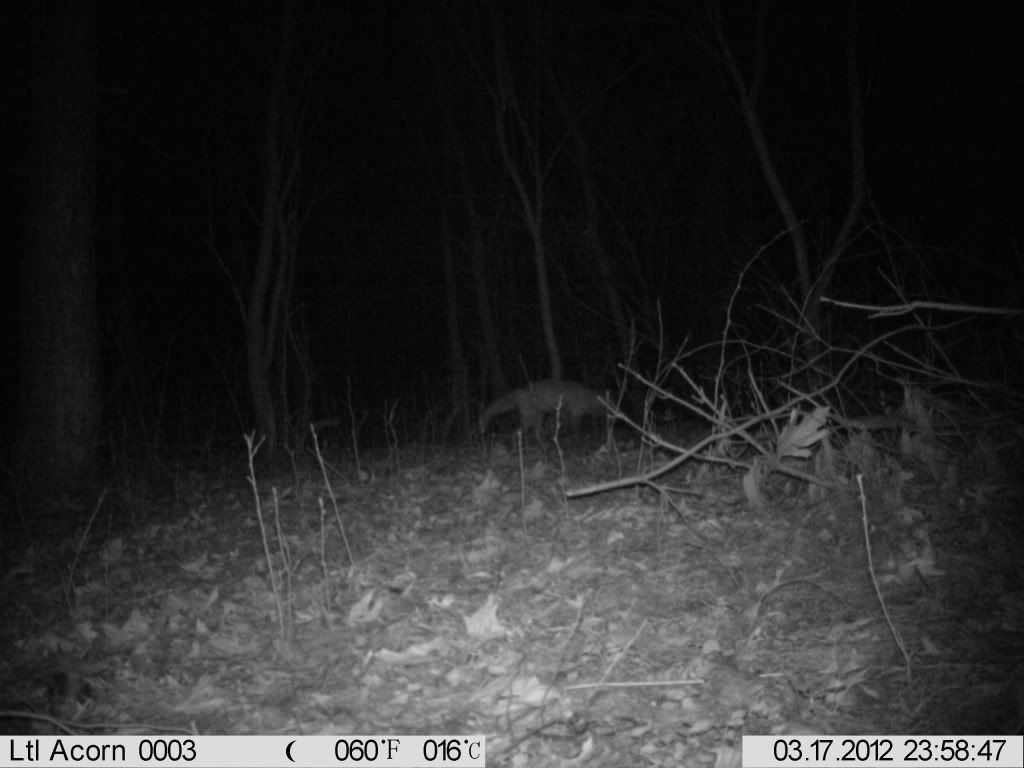
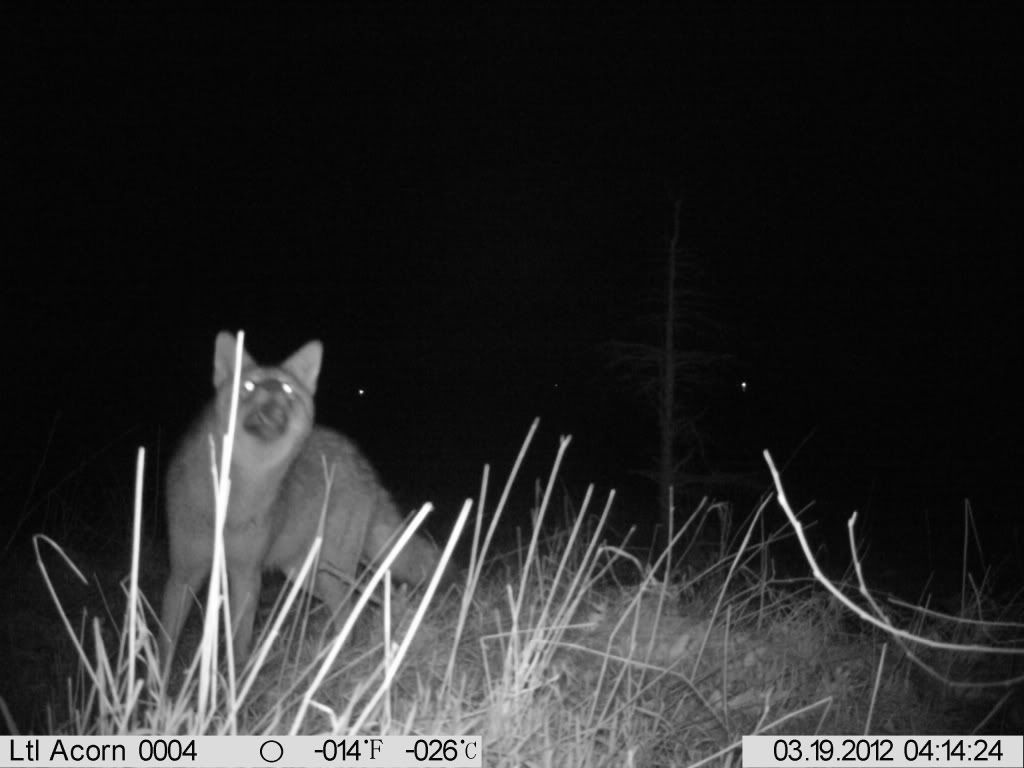
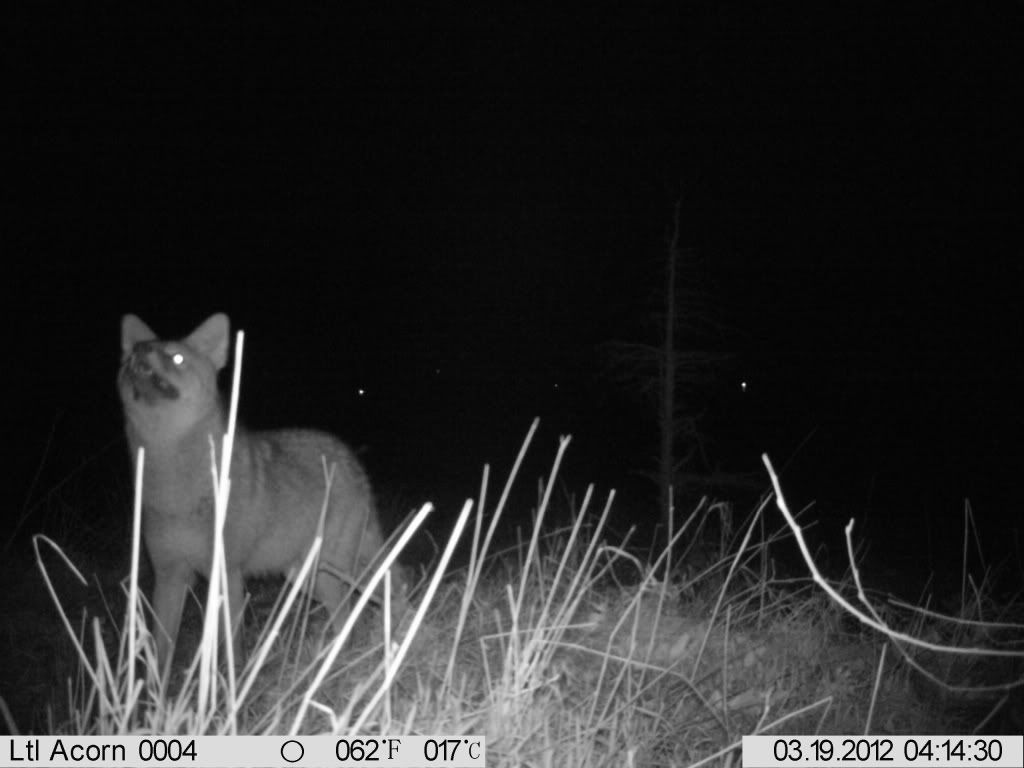
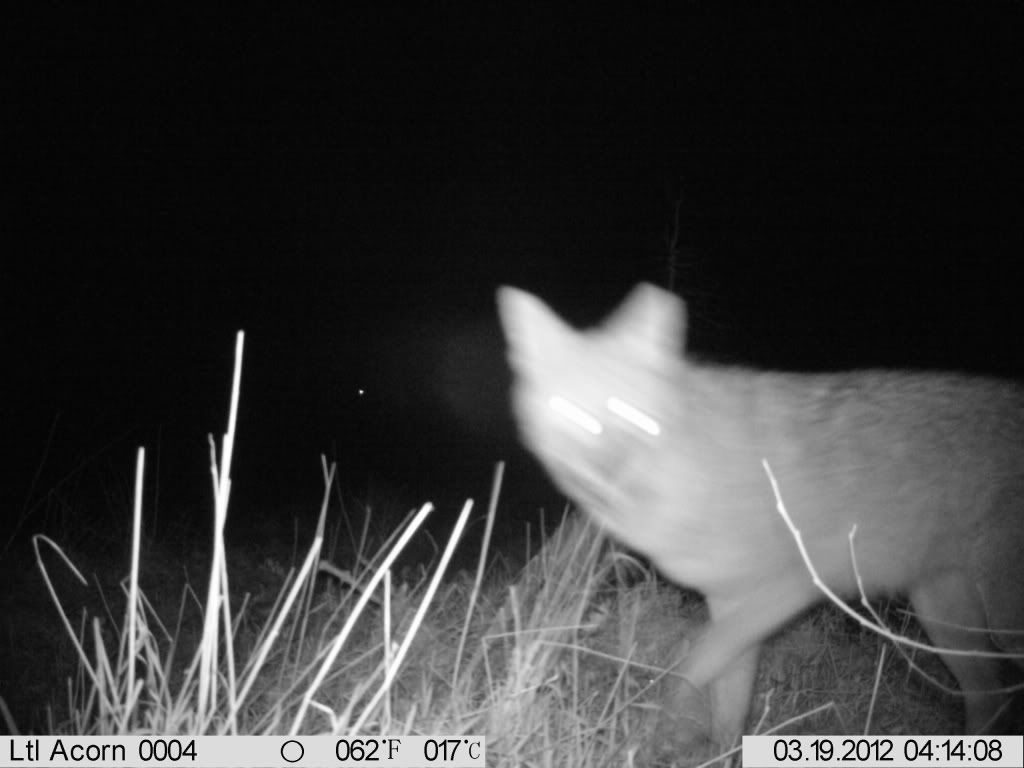
This would be one of my favorite personal camera trap pictures ever, if it weren't so washed out.  But...the Cuddeback at close range can't do much better than this....

This week was basically a repeat of last week.  The goal being to increase the chances of catching critters in the wire cage traps, while allowing the students a chance to further test their skills at setting traps again.... and perform maintenance on other long-term data collection projects.


So, once again the traps went out for two back-to-back days.  This time, we sweetened the bait by mixing dog food, sardines, and drippings from St. Patty's Day Corned Beef and Cabbage.....pulling out all the stops.


The feral cats stayed away, which I was happy for...and we actually caught some wildlife, although not a ton.

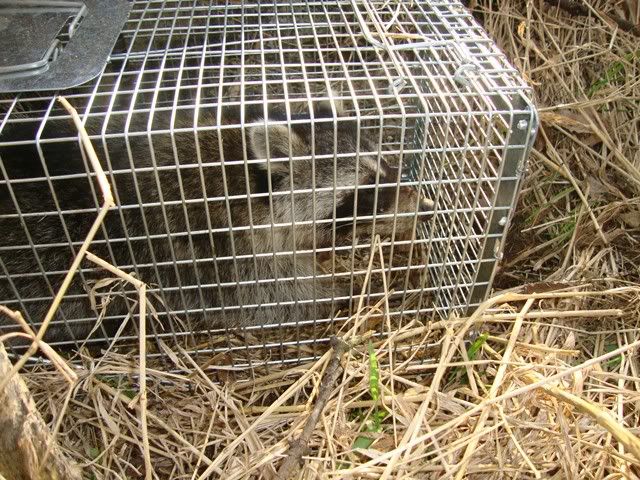
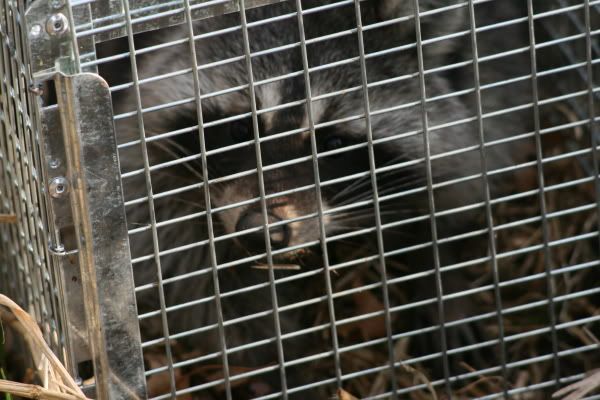
Still, one Raccoon is better than nothing!


Now....a Raccoon in a trap can go either way.  Sometimes you'd think a Looney Toon-style Tazmanian Devil was in the trap. 

Other times, they are as docile as a kitten.
Photo by J. Scherer

This individual was actually fast asleep when we walked up to the trap in the morning, his belly full of dog food and sardines.  I joked with my students that, becuase he was a 'coon living in a suburban/rural mosaic landscape, he probably gets trapped and relocated once a month, so knows the drill.

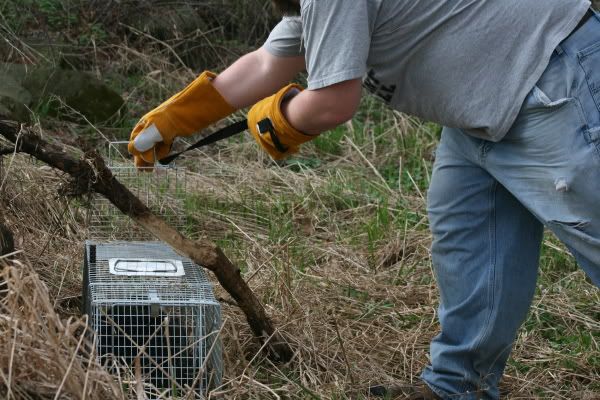
Regardless, approaching with caution is always important (those deft little paws can reach through some pretty tight places).  With the threat of rabies (a serious issue with Raccoons), kevlar gloves are warranted.
Photo by J. Scherer

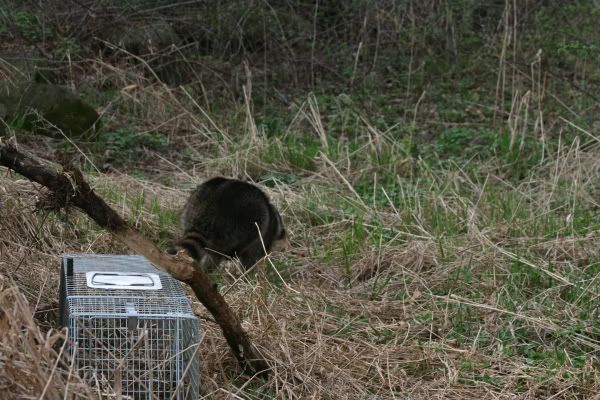
But, if everything goes as planned, the bandit is gone before you have a chance to think about what might happen.....
Photo by J. Scherer


Also, plenty of stuff on the camera traps.  A smattering of examples includes....
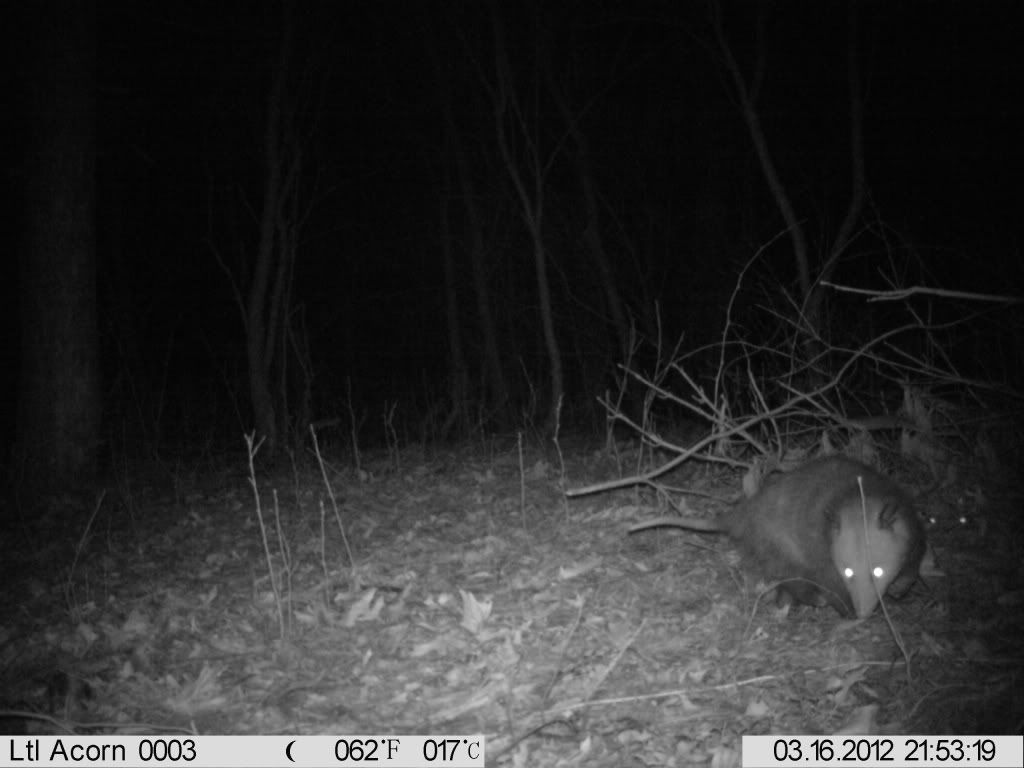
'Possum...


Blue Jay (Cyanocitta cristata)

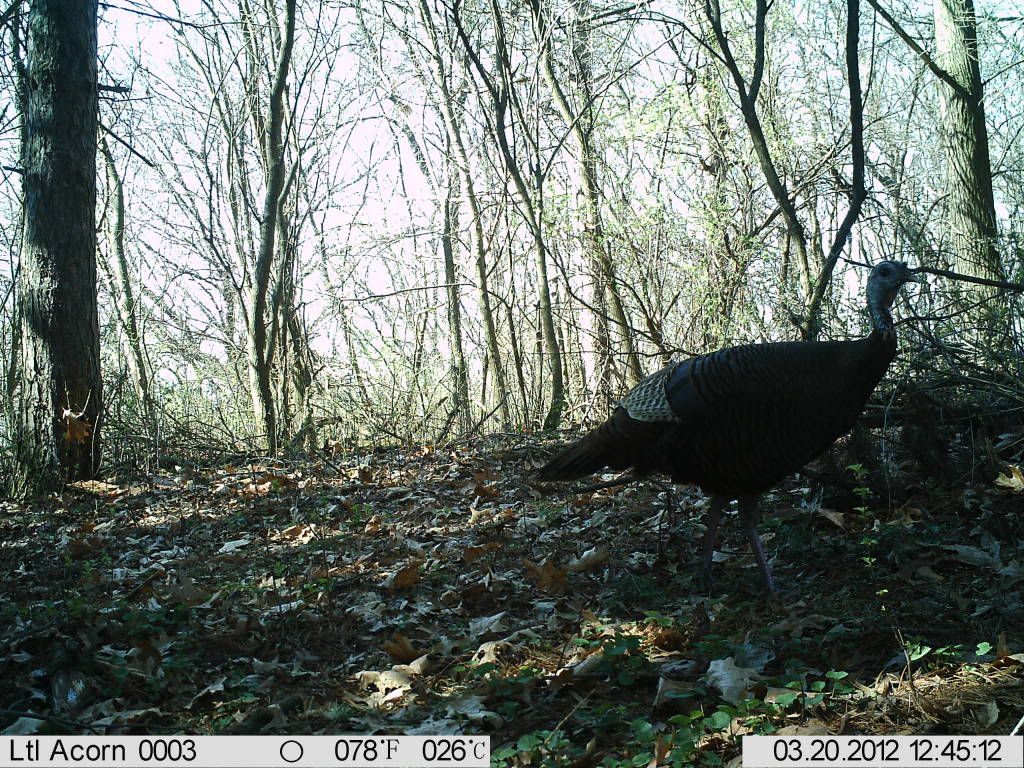
Walkin' Bird (Meleagris gallopavo)

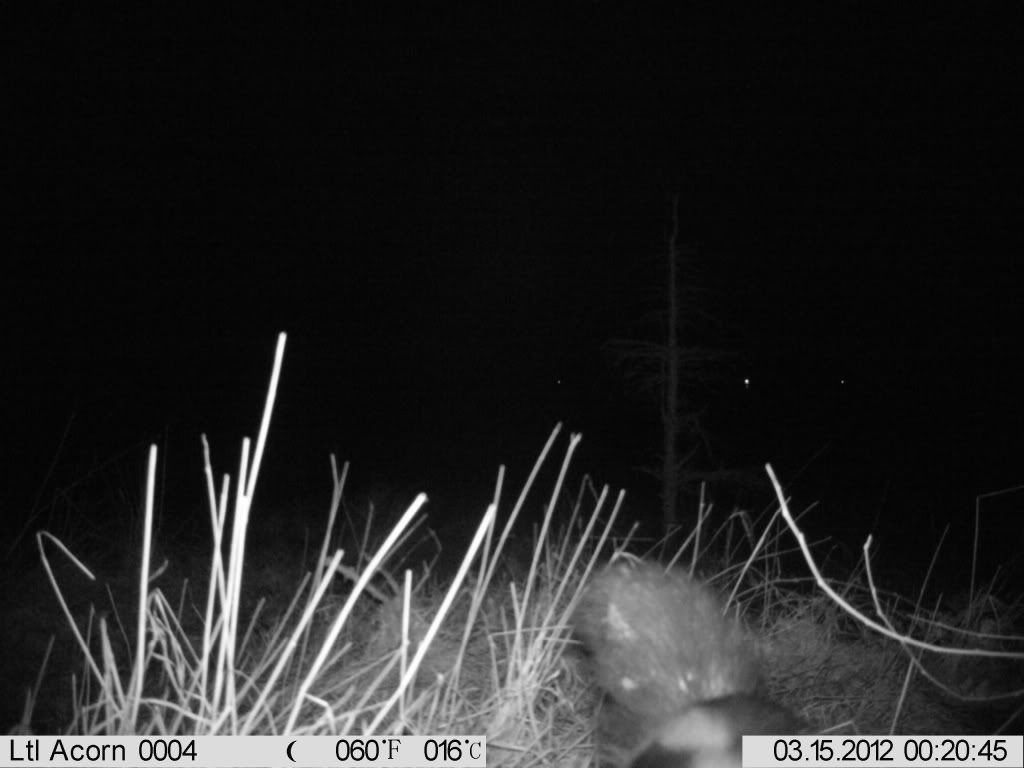
Stinker (Mephitis mephitis)

Deer....

One of the minions of El Diablo....


We also had one of our most productive canine weeks on the camera traps.

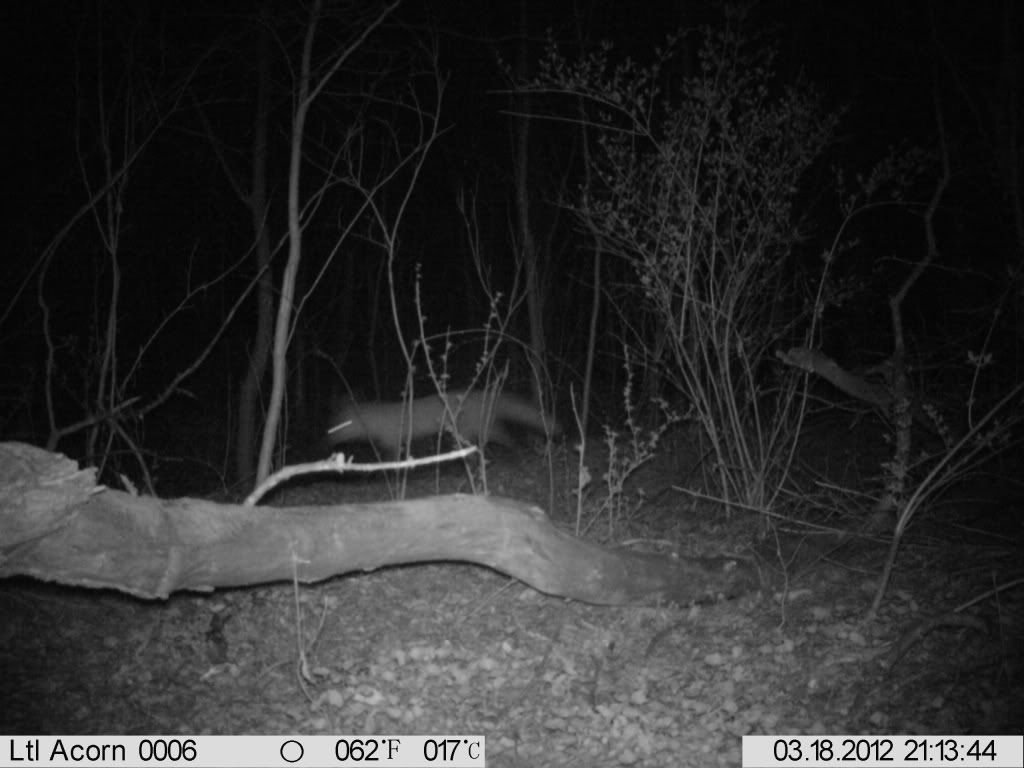
First, The Tod was all over the site (including the picture at the top)....unfortunately, none of these pictures are all that great.  The video clip is sort of cool though.......


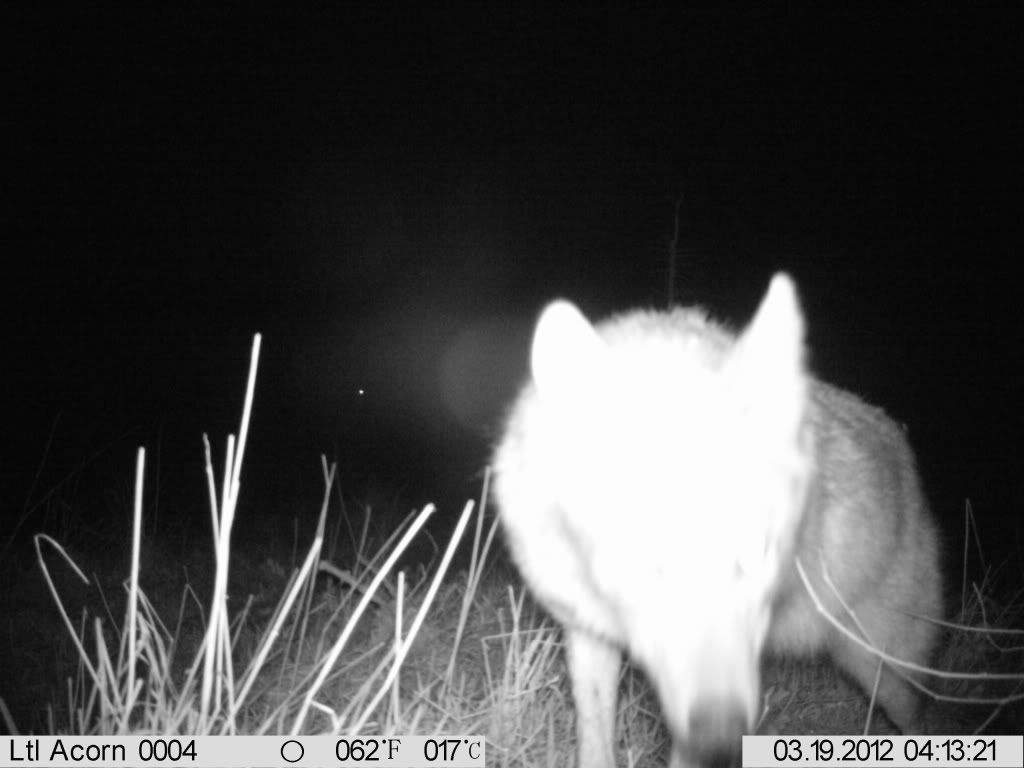
Finally, we got some close up shots of a 'yote on-site.  This camera is the one the students mounted on the tree near the location of the rabbit burrow that had been dug up by a canine of some kind (see here).  This 'yote is attracted to the spot....but the red LED's must give him a start.  As I've posted before, they are incredibly wary of the red LEDs, for some reason.


Then, he puts his nose to work from a slightly safer distance....


The canine pics are often blurry.  They are just too skittish to hold still for very long!


Friday, March 16, 2012

Advanced Ecology Lab Week 8: Medium-Sized Mammal Trapping & More Camera Photos


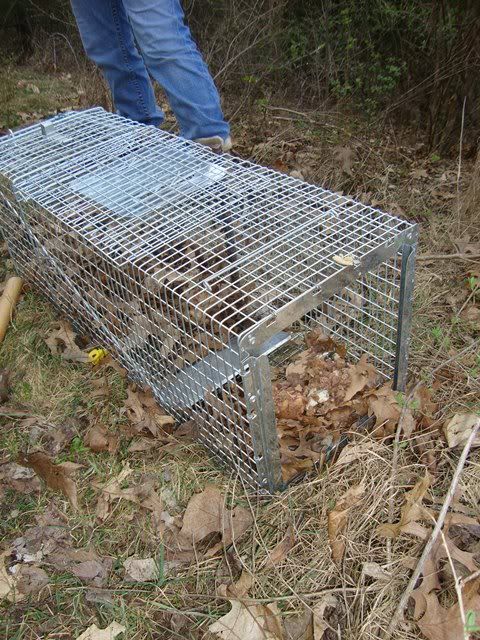
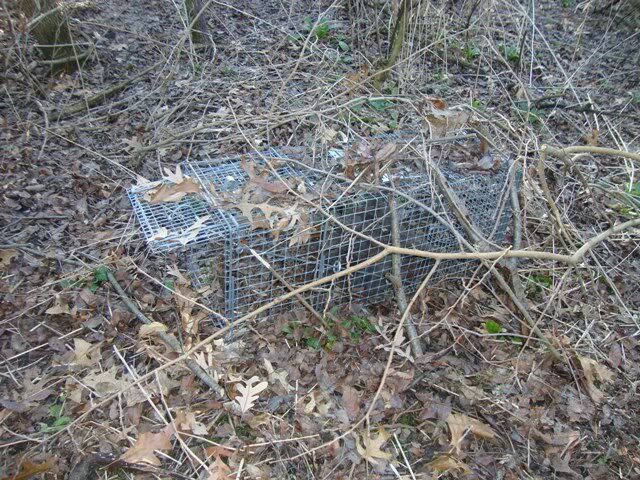
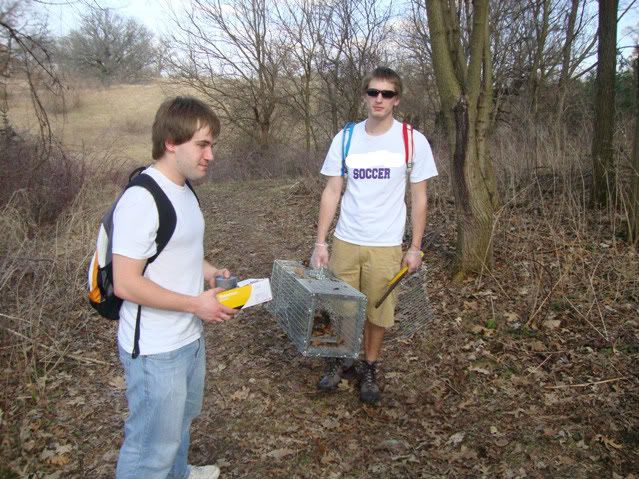
This week in lab, we added another element to our site assessment: mammal trapping with wire cage traps.  Admittedly, wire cage traps are very hit-or-miss in their success.  You typically have to either (a) riddle a site with many traps or (b) get pretty lucky.  Generally speaking, canines are just too dang smart for cage traps.  You really need leg-hold traps to have good success there, but leg-holds require a substantial amount of skill (and equipment) that I just don't have.  They also put students in too close of contact with potentially dangerous/diseased critters at this point in their careers.  As it stands, I had decided I would be the only one releasing animals from the cage traps, despite the fact that this exercise is quite a bit safer than releasing them from leg-holds.

Of course, the success of a cage trap also involves picking good locations.  Using the right bait is another important consideration.  But, the best bait in the world wont matter if the critters don't happen to walk by (which is the reason why lots of traps helps).  Unfortunately, during year 1 of this course, the budget for lots of cage traps was limited by the budget for lots of camera traps.  So, we'll have to add more cages in the future.

As it stood this time, we had four. 

Not great, but every student group got to test their skills at setting them, and they were active for two trap-nights.  With the very high numbers of raccoons, opposums and skunks on-site....I figured we'd get something.

So, we went about setting traps late afternoon on day 1.  Personal scent control helps, but can be difficult to achieve with students....who often come to any and every group function (including lab) fully perfumed and cologned, with hair products to-boot.  At the very least, I make them wear rubber gloves when handling the gear....I tell them not to let the cages touch their legs as they walk, if possible....and mention they should make an effort not to drip sweat in the vacinity of the trap set (a problem that, in truth, only afflicts their overweight professor).  In reality, human scent is probably not a huge deterrent for things like Raccoons and Opossums anyways, but thinking about scent control is a good habit to maintain for trapping.


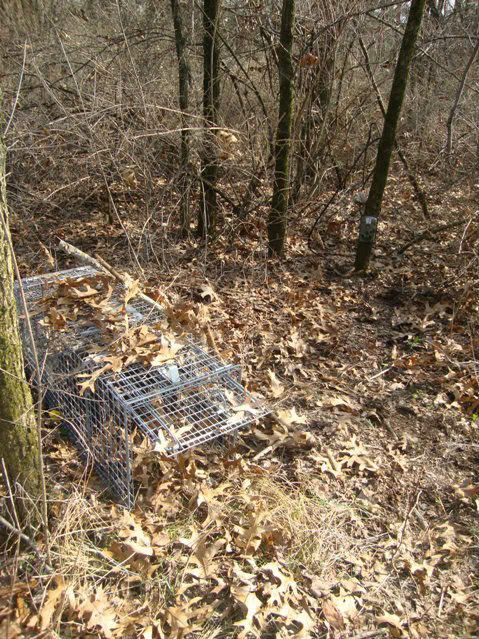
I generally have greater success when I've placed debris along the bottom of the trap, to hide the wire cage.  When critters feel that wire, some of them back-off.  One has to be careful not to allow debris to get under the trip-plate, so the mechanism continues to work.  I'll often place a bit of wool or alpaca fiber on the trip-plate to hide it (and provide insulation for the critter, should it get cold out).  I also like to put some debris (logs, sticks, etc.) around the cage to make it feel more secure, and put it near a natural shelter (a tree, thicket, fallen log, etc.).  This must be done with caution, however.  With all the skunks we've been getting photos of on-site, you have to have a clear path to walk up to the cage with the tarp protecting you.  Having to pull a bunch of logs, etc. off of the cage could upset little Pepe, and result in a face-full of glandular odorant. 

Bait this time was turkey-flavored cat food.  It was cheap and I was in a rush, but that bait may have been a fatal flaw.  Next time I'll go with a sardines and bacon grease mix, if I can find the time to make the concotion.  We also applied a tiny bit of one of two scent lures (one was a shellfish oil based lure, the other a canine gland lure).

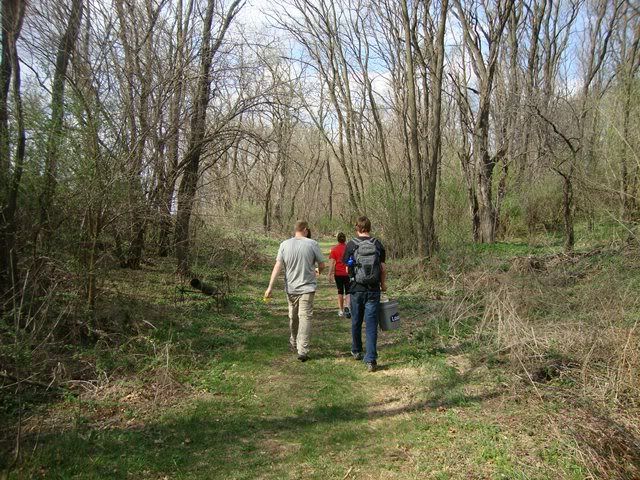
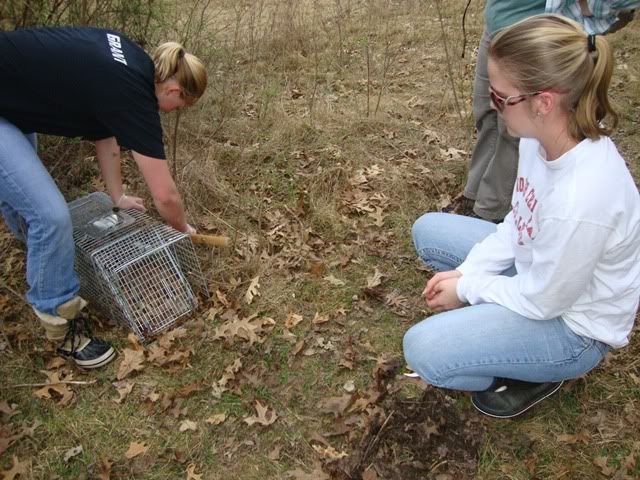
ANYHOO.....the next day, we marched out to the site....kevlar gloves, ketch-all pole and skunk tarp in-hand only to find:

Grrrr..........released with much cursing under my breath at the waste of bait.

The bait in the other traps was undisturbed.

We moved the traps to new locations....but by morning on day 2 we found that not even a feral cat was stirring.  This time, however, just to see if it was lack of passersby OR critters being spooked by the cage, I had put a camera over one of the traps (set to video mode).  During the 24 period anyways, nothing wandered by.

Above: note camera on the tree in the background.

More evidence that a greater number of traps would increase success rate.

Not as riveting as I would have hoped....but, as Sinatra would say:

 "That's life!"
_________________________________________________________________________

Regardless, we did get some cool stuff on our cameras over the past week (you may remember that we moved these about a week ago).

It's the same cast of characters, basically.  But that doesn't keep the students (and myself) from being excited that the locations they picked paid off!

Raccoons are literally everywhere out there now.  We caught pics of them on all of the cameras, I think.

'Possums are less common, but still prevalent.....

Cottontails, too, have become very active (the rather side-long glance this one is giving the camera made me laugh).

Stinkers are in no short supply....

And, of course, there are deer...deer...deer and more deer.  There are now also deer TICKS that have popped out of every crack and crevice in the woods with the warm weather, a minor annoyance during field work.

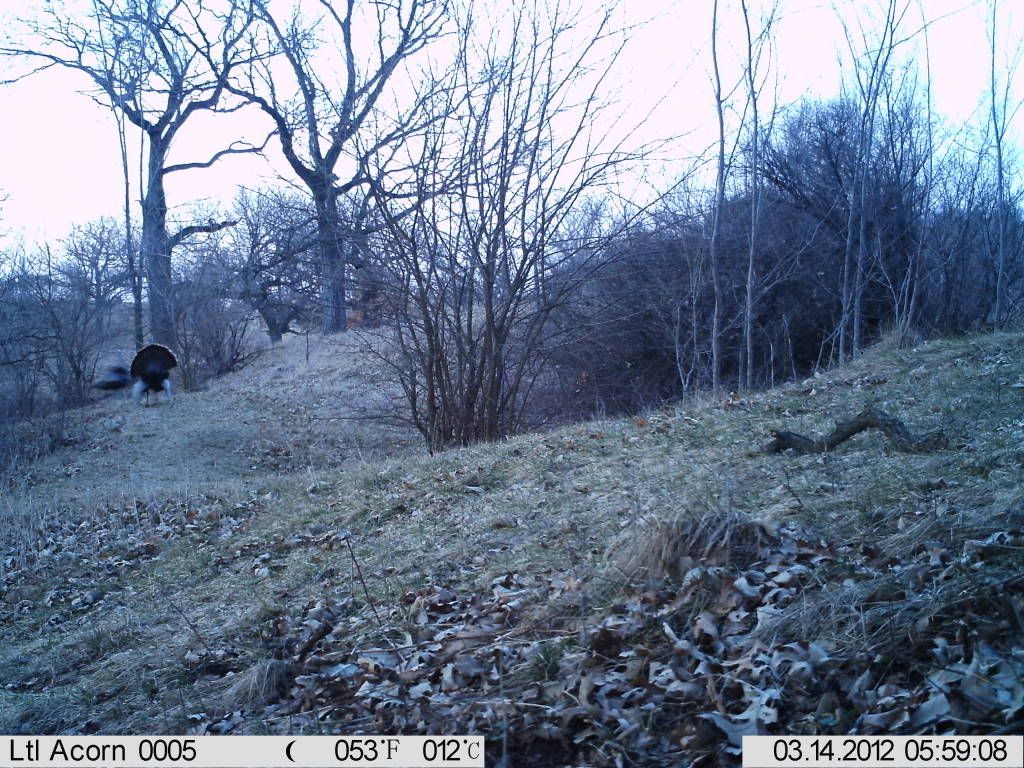
We also got a neat shot of a male walkin' bird showing off the goods to a nearby hen (left side of the frame).

This one puzzled me for a second or two.....

That is, of course, until I saw this picture....

I'll say it again.....Grrrr!
Friday, December 23, 2011

A Rafter of Walking Birds

A fun exercise can be learning the technical terms for animal groups. 

Everyone knows the term "a murder" of crows.  Yet...how many of you knew about an "unkindness" of ravens?  Or that a group of warthogs is called a "sounder"?  A group of rhinos is a "crash"?

Or...my personal favorite.....a group of jellyfish is called a "smack"!
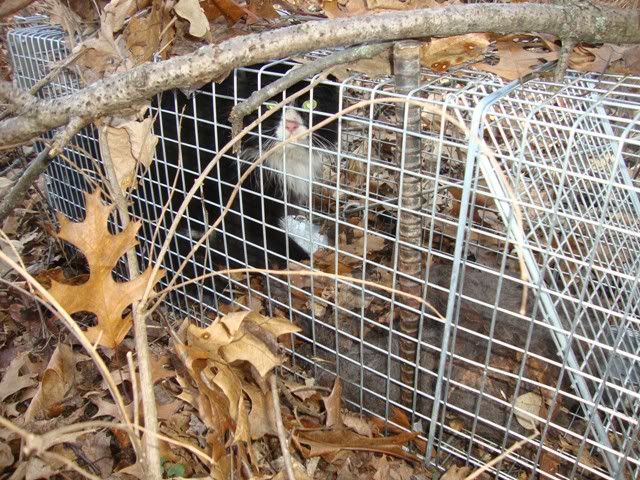
No lie.  Look 'em up, if you don't believe me.

Now, believe it or not....I actually knew all of the examples that I gave you already.  When you teach Zoology, these are the types of questions that students come up with.  BUT, I had no idea what a group of turkeys was called and had to look it up when I started this post.

So, a group of turkeys is, technically, called a "rafter". 

Apparently, calling them a "gang" is also acceptable.  But who are we kidding?  Calling them a "rafter" is much more weird and fun!

____________________________________________________________________________

So, let me take you back in time a few months and also back to North Carolina again.  I don't get to post much from my Reconyx cameras, because....well...they aren't mine.  -sniff-  The university that I used to work for bought them, technically, so they belong to them.  But, it's alright.  Dave is finishing up a project that we started back in March (see here).  The project has been through some road-bumps, the worst of which being some serious camera thievery (see here).  But, not to let some lowlife camera thieves cramp our style, in the midst of us moving cross-country from NC to the midwest, Dave and I worked out a deal with the university and Reconyx to replace the stolen cams (thanks to both of them!!).  We figured out a new site, and Dave went and put the cameras out on his own.  We'll finish the project at the new site...and it will end some time in February.

Recently, Dave sent me a DVD chalk-full of the pictures that these cameras took over the last few months and there were some real gems!

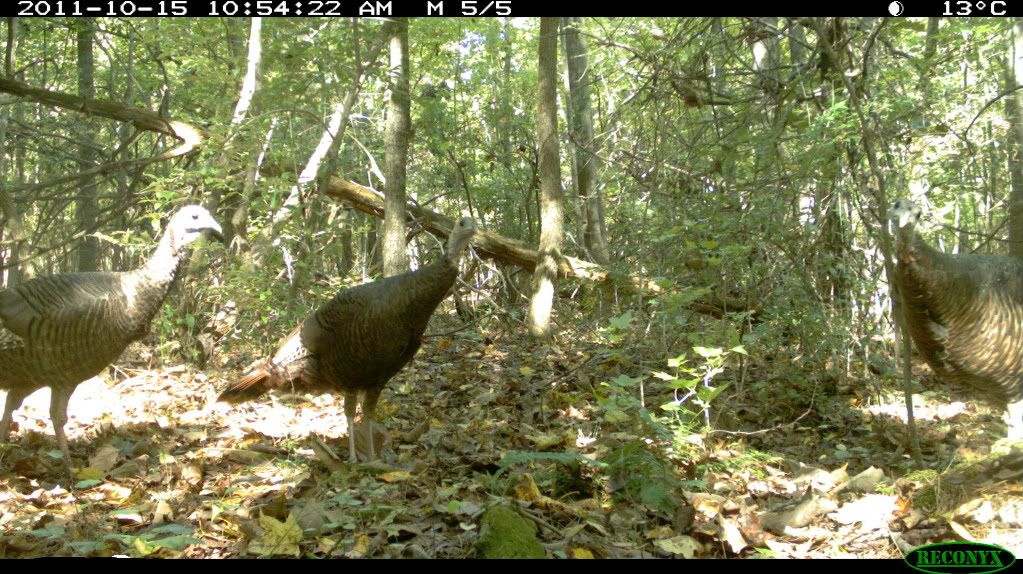
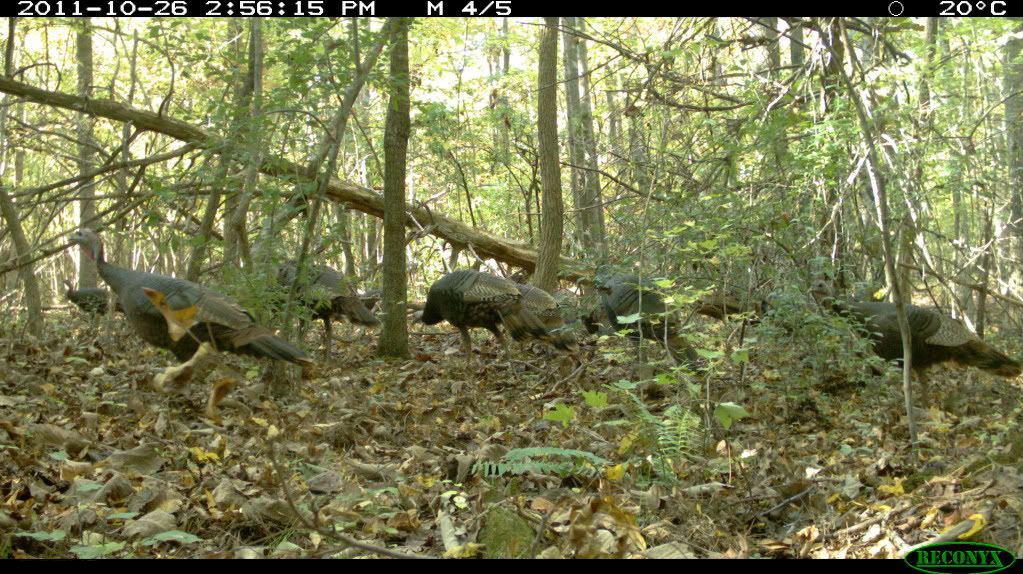
First of all...the turkeys are THICK at this site.  There were pictures of them on all the cameras with alot of consistency.

But at first, it's only a few shy individuals.


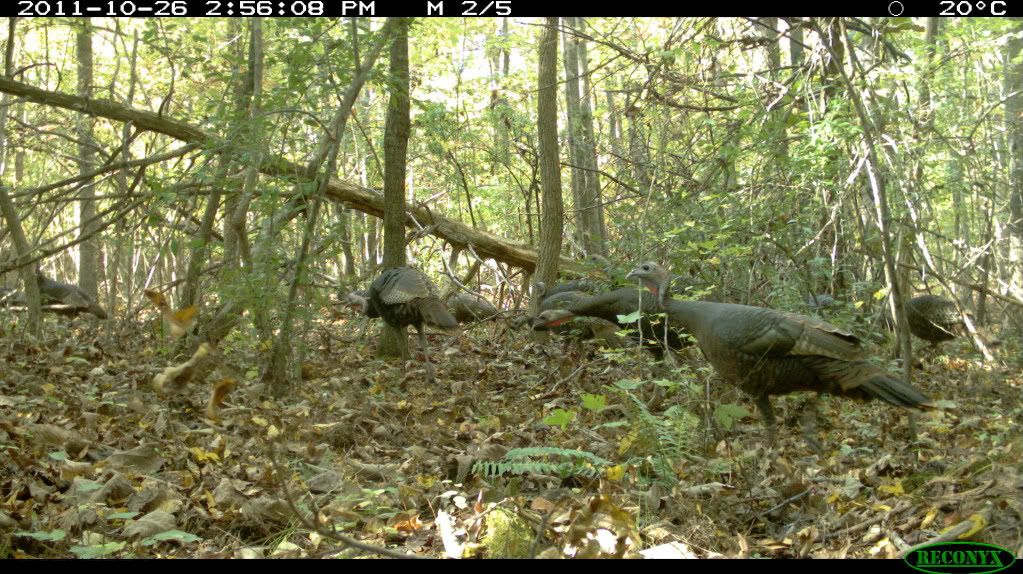
But a few days later....the biggest rafter of walking birds that I've ever gotten a photograph of swaggered through the field of view.

I'm not sure how many are in there.  They start here....


...and keep coming.....

Sunday, June 5, 2011

The Walkin' Bird & Poult


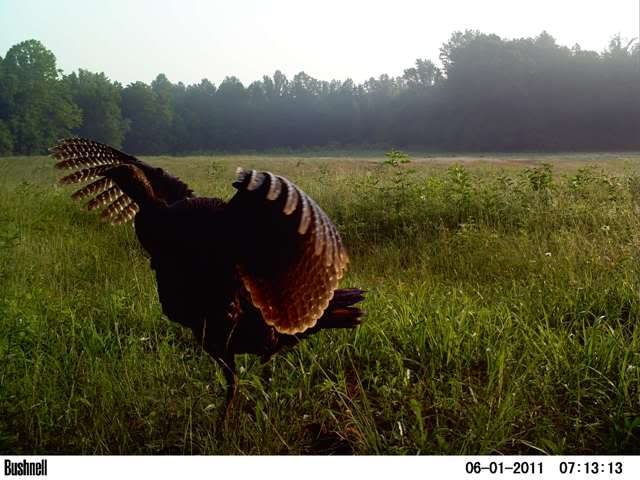
The camera took this picture of a momma Walkin' Bird (Meleagris gallopavo) literally 17 minutes before we came up to it for servicing.  We heard the hen back in the woods chirping an alarm when we arrived, but she wouldn't really leave the area.  We both guessed she had some poults nearby that she didn't want to leave behind (we even thought maybe they were out in the grass somewhere behind us......and we were separating her from them).

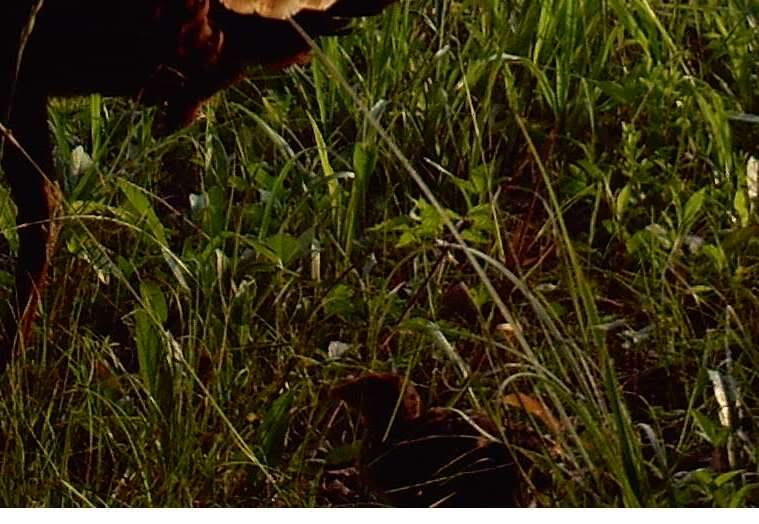
You have to look close, but you can see one of the poults near her feet in the pic above (see cropped version below).


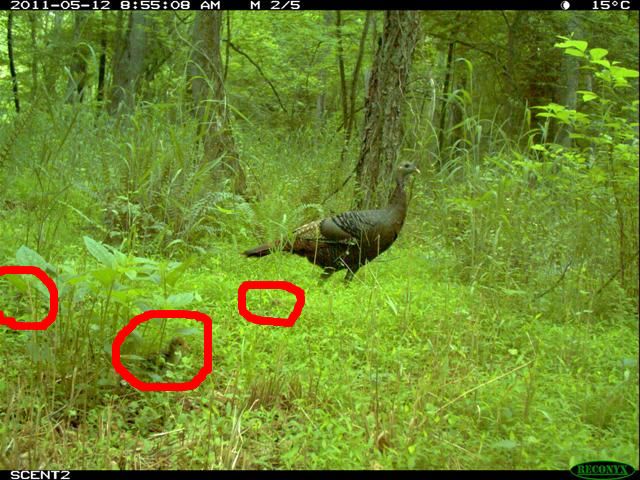
It's that time of year...here are some pics captured by a trap some distance away that is part of a completely different project.  There was a horde of little ones parting the grass around this hen in the series of pictures.  I've circled some of the most obvious ones.


___________________________________________________________________________


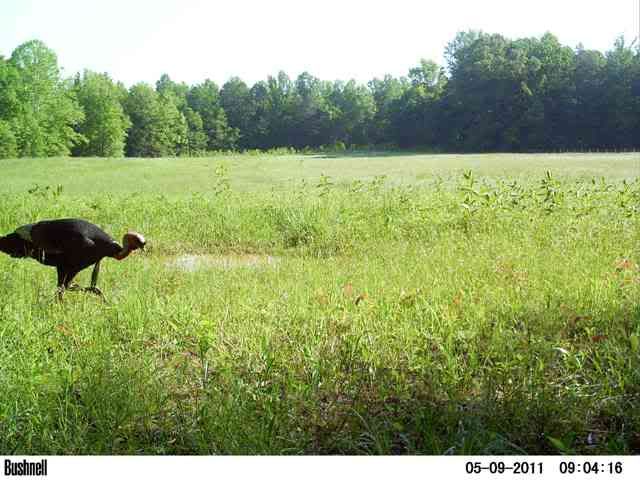
The Walking Birds had been fairly common on the cameras last summer and fall.  Then, in November they just stopped.

I don't really know where they went, but suddenly in late April they started showing up again after their long hiatus.   The most recent picture being the one at the top, but their return to the camera sets was heralded by the three pictures below.


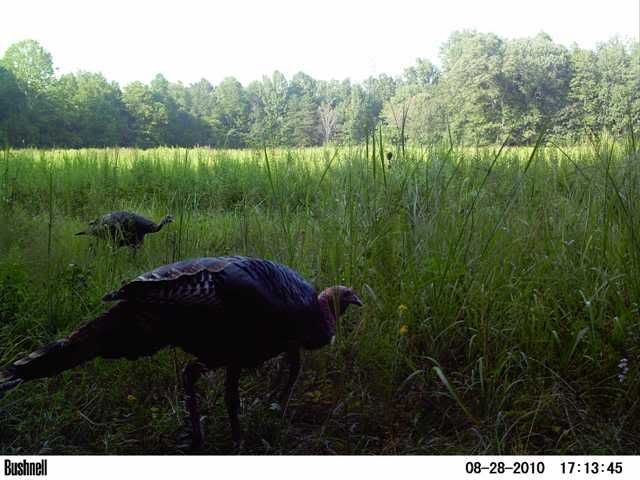
Below are examples of the pictures I got last year...all in late summer/early fall.
Above: this is obviously the same camera location as the picture of the hen and poult at the top of this post.


Above: Three pictures from the same general study site as the hen with poult at the top of this post.  Just a different location I trapped for a about two months.


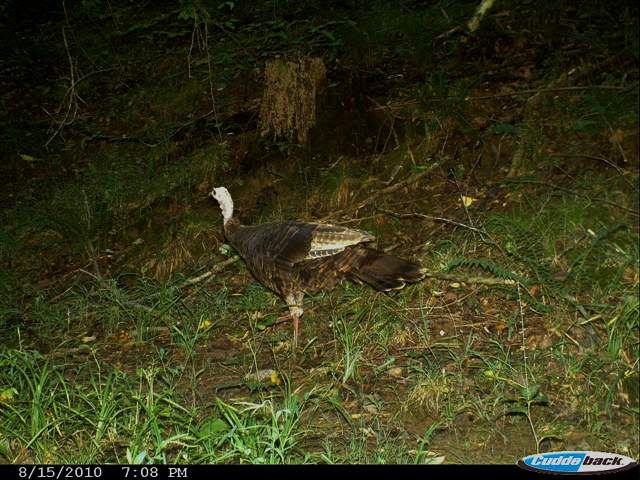
Above: The last picture of Walking Birds that I picked up at any of my sites last year....this was months after most of the pictures occurred (late August, early September).  This camera set was at the same general study site as most of the pictures in this post (just a different location).  I count three of them in there.

The turkeys are pretty common 'round here, so I imagine the pictures of them will keep coming.....