Showing posts with label track casting. Show all posts

Saturday, June 18, 2011

Week's End Survey Round Up IV: Applied Knowledge.


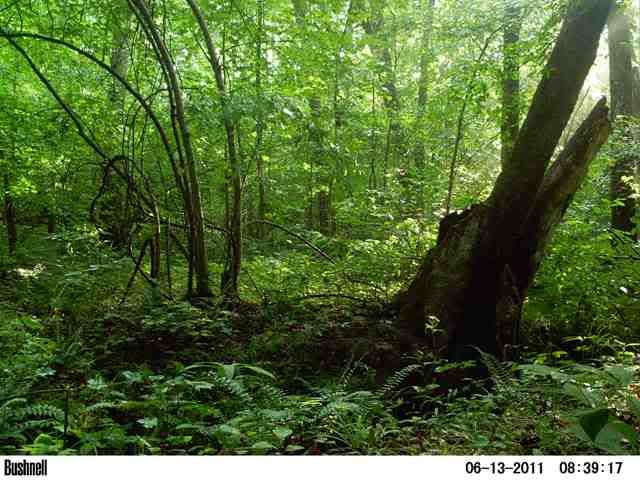
It's rare that a camera trap picks up nice photographs of scenery.  Usually, it requires the camera to take pictures without an animal in-frame...and then it assumes you've chosen a spot for your camera based on it's scenic value (and I never do...I'm choosing based on potential wildlife activity in the area, and the two things never seem to coincide for me).

Anyways, the picture above really struck me for some reason.  The green is so saturated in the picture...everything's lush...the sun barely peeking through in the upper right corner.  It's not a scenic mountain vista or anything, but a simple riparian corridor.

Just looks nice, is all.

___________________________________________________________________________


Well, we've added another stop to our trapping survey circuit every day. 

This one is as much for fun/practice as it is for real data acquisition....you'll see what I mean by this in a second....

Basically, after the Mammal Tracking and Small Vertebrate Survey Workshop that was held at the university (taught by Jim Halfpenny, and myself).....we had left-over Plaster of Paris.  It was technically Jim's.....but he said, rather than trying to ship it home, or lug it on the plane, he'd just give it to us (very nice of him!). 

Dave was a workshop participant.  I co-taught, but focused on surveys with drift fences, coverboards, etc., so I didn't get to do the tracking/casting part of the workshop.  I had done track casting in the past (as a participant in one of Jim's other workshops that the university sponsored last year).  But, I hadn't done it since last year.  So I'm rusty. 

Luckily Dave remembered alot of the rules about mixing the plaster.  It's important to get the plaster to the right consistency, or it wont dry fast enough.
Above: it helps to set up a work station for the mixing, if such a spot is available.  Here, we prep the plaster on a stairway installed for putting canoes into the river.
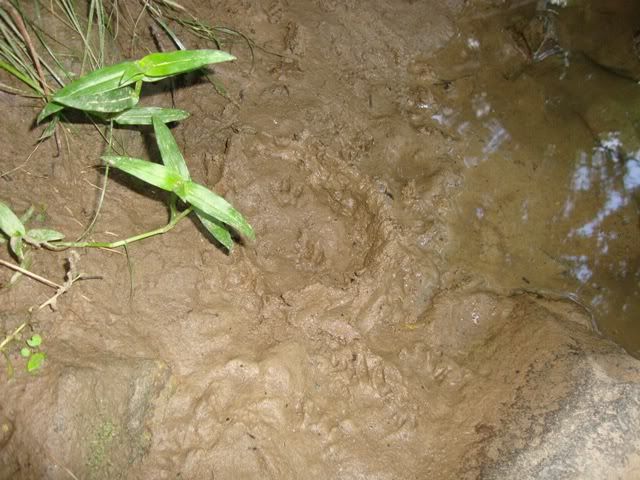

While the plaster is being mixed, someone else builds a wall of dirt around the desired tracks.
Above: prepping the area around a pair of suspected Mink tracks for plaster.
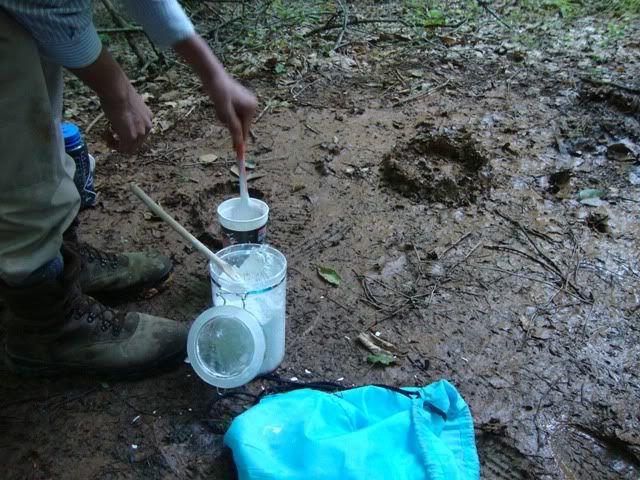
Above:  preparing the mixture for two nice sets of suspected Coyote tracks.  These tracks were not far from the huge pile of 'yote scat I posted about last week.  The location is along an entrance road into a state natural area, where a puddle is often present and the soil is saturated.  Great for tracks!
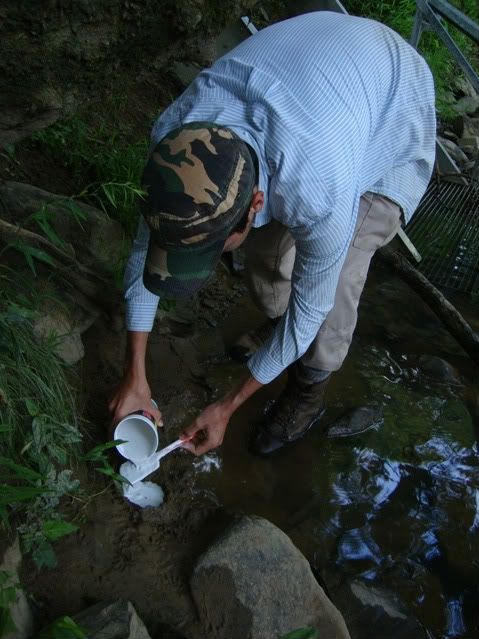

Then, the plaster gets dumped in.
Above: Dave pouring the plaster over some suspected Mink tracks from along the river bank.

And then you wait....
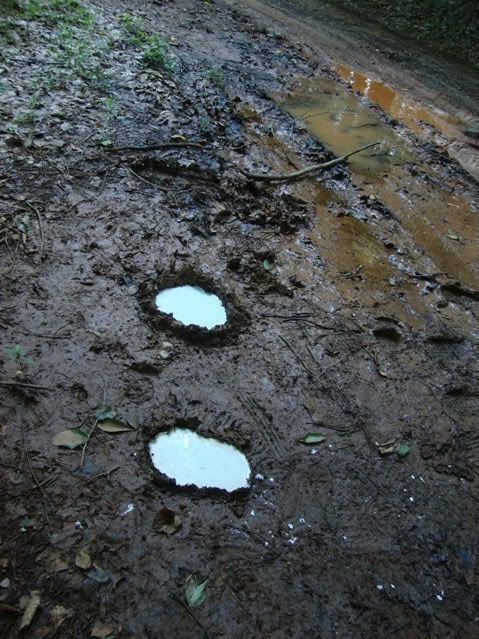
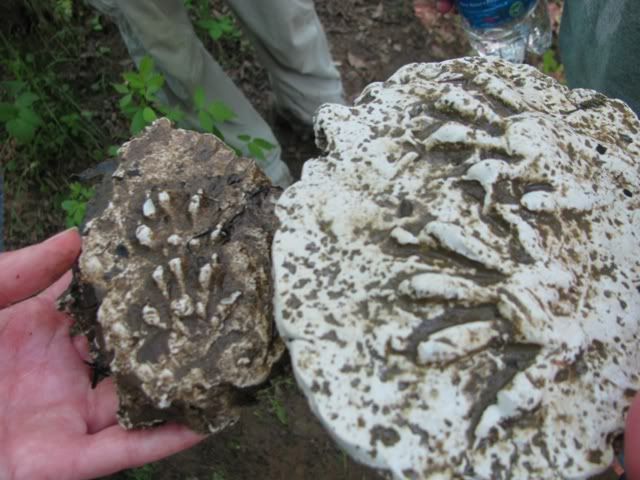
The plaster is such that it dries and solidifies even on saturated soil and mud.  So, after a half hour to 45 minutes.....the plaster is ready to be removed, rinsed and the cast gets dried in the sun for a while....
Above: the pair of suspected coyote tracks with plaster poured on top and waiting to dry.
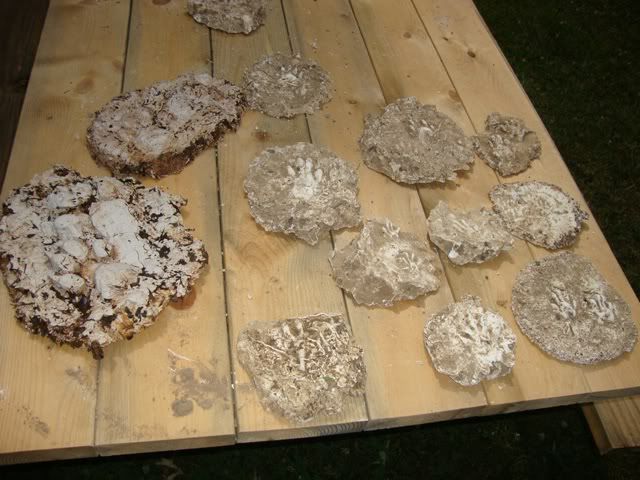
Above: our track-cast library after the first week.

So, to-date we've been making track casts of species we already had evidence of on-site (i.e., Raccoons, Mink, Eastern Gray Squirrel, Coyote).  So, we aren't neccessarily proving anything we didn't already know.

However, being able to cast tracks is a great skill.  You can use it to gain quality evidence of a species' presence on-site, if you don't have camera traps available.  Having the casts on-hand also means that they can be used as a teaching tool in the future.  It's a way for both of us to hone our tracking skills...and apply some knowledge picked up during the worskshop taught by a tracking expert.

It's also fun as hell!  Ironically, Knapperbill over at the Rural Path also had some fun with casting tracks this week.
________________________________________________________________________

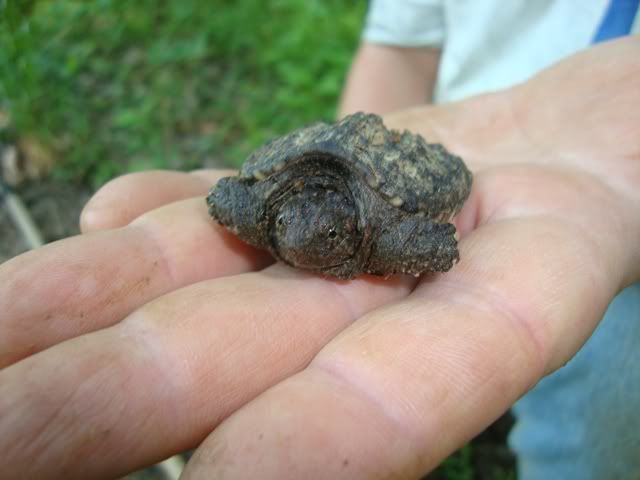
The Common Snapping Turtle (Chelydra serpentina).

This little fella was in the path we were walking along this week.  He was only about 40 yds from the edge of a large old field/grassland, but over 100 yds from the nearest water source (a small feeder stream).

What was a turtle this little doing so far from water?  It's obviously dangerous for a little turtle to leave the water at this age (even a little snapping turtle).  Their shells are pretty soft at this age, and...as you can see...when they are this small, they are completely passive.

One could argue that it's a hatchling, just emerging from the nest...the size is almost correct.  But just a tad big.

It's not completely outside the realm of possibility to assume that this animal was laid in a nest somewhere near the edge of the grassland.  Plenty of sun there to keep the nest warm and the eggs developing.  Female snappers will travel HUGE distances to lay eggs (1.6 km, or nearly one mile, reported for females in Michigan, Congdon et al., 1987).  Thus, travelling over 100 yds from the nearest stream is no problem for a nesting female.

But, most females lay eggs from May 15-June 15 in North America.  The incubation period is 75-95 days...so I wouldn't expect hatchlings to poke out until late August.

Females of some species will "double-clutch" in a year (lay one nest of eggs in the spring/summer and another again in late summer).  These hatchlings may hatch in the nest in fall, but overwinter in the nest and then emerge the following spring.  This phenomena has not been observed often in the Common Snapping Turtle, to my knowledge.

So...I'm alittle stumped on why this little fella was where we found it.

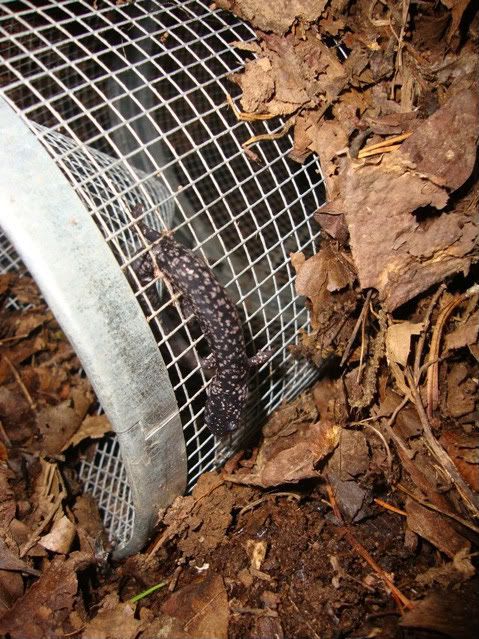
Houdini:  This adult White-spotted Slimy Salamander (Plethodon cylindraceus) caught me by surprise.  I wasn't surprised we caught one (they are our most frequent salamander).  I was surprised by the fact that this one has managed to squeeze itself almost entirely through the mesh of our funnel trap!  How on earth it got its head through is beyond me (the head looks about 20% wider than the mesh apertures to me).  They must be flexible.  Plus, it doesn't hurt to be....well...slimy.

When we came up to the fence, he was caught at the pelvis.  He wasn't stuck too bad, but becuase of the angle I think he just couldn't get enough purchase to pull himself through mesh the rest of the way.

We gently helped him through and he was none-the-worse-for-wear, aside from alittle skin missing from the tail.

The Larval Salamander:  There are several ephemeral wetlands at one of our sites.  "Ephemeral" meaning that they hold water part of the year, but not all year.  Usually, in the summer when it's dry....these wetlands dry up.  In the winter/spring, however, they have water.  This makes them perfect breeding habitat for amphibians.  Primarily due to the fact that, because they are ephemeral, fish cannot live in these wetlands.  Fish eat amphibian larvae and eggs.  So, no fish = good news for amphibians.  The importance of these small ephemeral wetlands cannot be overstated, from a standpoint of biodiversity conservation.

We usually toss a few minnow traps in these little wetlands.  It allows us to see what sort of amphibians are breeding in the ponds.  We've found many tadpoles, mostly Hylids (probably Upland Chorus Frogs and Cope's Gray Treefrogs, as both have been heard breeding around the ponds).

We've also been getting salamander larvae for several months, although the numbers we're catching are smaller these days.  We catch larvae of primarily Ambystomatid salamanders, or salamanders of the Genus Ambystoma.  I'm fairly certain the species is Ambystoma maculatum (the Spotted Salamander).  They are very common in aquatic ecosystems around here, and I captured adults near the ponds this spring (see A Good Day for Herps, posted on March 23, 2011).  It's possible that these are the larvae of Ambystoma opacum (the Marbled Salamander), as we found them hanging around the ponds last fall.

These just sort of look like Spotted Salamander larvae to me.  You can almost see the little dull spots forming on these guys already in the pictures below.

Not very scientific, I know!
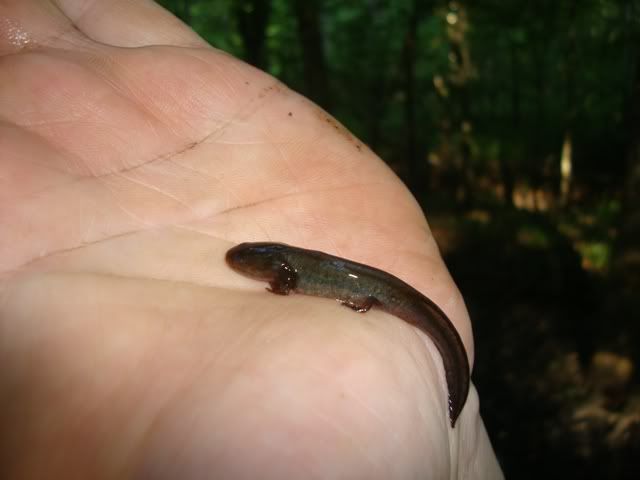

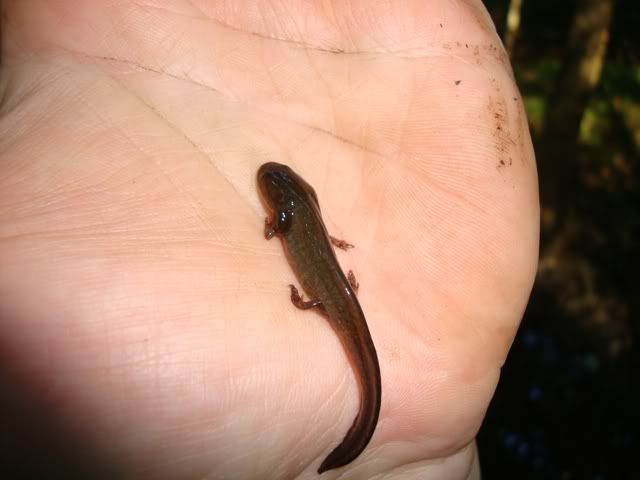
Above: the salamander larvae captured in minnow traps on 6/14/2011.  Note the external gills, which look like fleshy lumps near the neck.  In the water, the gill filaments separate and the gills appear large and bushy.

Literature Cited:

Congdon, et a. 1987. Morphological constraints on egg size: a challenge to optimal egg size theory? Proceedings of the National Academy of Sciences 84:4145-4147.

Saturday, May 7, 2011

Learning to Follow the Trail....

Above: the attendees of the 2011 wildlife tracking and survey workshop.
Photo by M. Schriber

Recently, I organized and helped facilitate professional-level naturalist/ecology workshop through the University.  Workshops such as this offer great learning opportunities for a variety of folks (college students, environmental educators, government employees, etc.).  Also because of said workshops, I have the opportunity to interact with some very cool folks.
______________________________________________________________

Meet Jim Halfpenny, Ph.D.. 

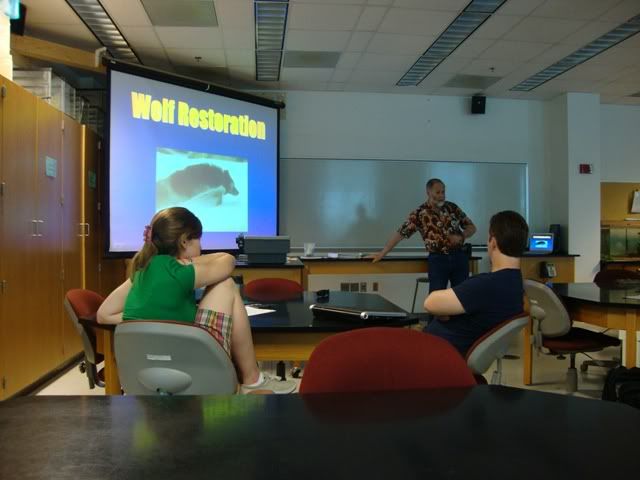
Above: Dr. Jim Halfpenny speaking in-class to students about the wolf restoration project in Yellowstone.

Dr. Halfpenny is a nationally-renowned carnivore ecologist and expert wildlife tracker.  He lives in Montana, and is the president of A Naturalist's World (ANW).  Currently, he conducts a large number of ecological workshops across the western hemisphere through ANW that are designed to educate folks about mammals, ecology, and conservation.  His expertise and research experience includes bears, wolves, cougars and....what he is most famous for...wildlife tracking.  Jim wrote the book (well, several books) on wildlife tracking.   One of my favorite field references is a book written by him in the 1980's called:  A Field Guide to Mammal Tracking in North America.   I refer to it often (and even reached full-blown geek Nirvana when Jim recently signed my original copy of this book).  Jim's written many updated books on tracking since and a search for "Halfpenny" on Amazon.com will result in several great pieces of literature.

Jim is also one of the main "characters" in a non-fictional book called "The Beast in the Garden" by David Barron.  This is an interesting book that focuses on the events surrounding a cougar that kills a high school student in Colorado in the early 1990s.  This was the first time a cougar had killed a person there in many, many years.  The book outlines the events that lead to the unfortunate death of this young man.  In doing so, it provides lessons for wildlife ecologists, wildlife managers, conservationists, and outdoor enthusiasts. 
___________________________________________________________________________

I had my first email correspondence with Jim as a result of The Beast in the Garden.  It's written for the lay-person, and so I have had students in my non-science major Wildlife Conservation class read it and discuss it.  One day I figured it would be cool to see if I could get some thoughts from the folks involved in the events outlined in the book.....just to determine if their feelings have changed over the past twenty years.  I figured this was a complete shot in the dark...but hey...no harm in checking.  Jim responded to my query pretty quickly.  After answering my questions, he mentioned that he conducts educational workshops about cougars and many other topics related to tracking and carnivores all over North America. 

From that first conversation, we ended up hosting one of Jim's Cougar Ecology workshop here last year.  It was well-attended and very successful.  So this year, we decided to do another workshop, but change the topic slightly.  As such we went with a basic tracking skills workshop.  Eventually, we came to the conclusion that, to keep all of the attendees we were hoping to attract busy for the whole two-days...we'd have to split them up.  This meant I'd have to teach half of them some stuff for part of the time, while Jim worked with the other half (then we'd swap student groups).  And...hey...who isn't interested in co-teaching a workshop with Jim Halfpenny?

My contribution involved the basics of small vertebrate survey techniques.  The idea being to give the attendees experience with these techniques in the field.  This inlcuded: drift fences, cover boards, Sherman traps, turtle traps, and hints on visual surveys.  We targeted amphibians, reptiles and small mammals because I already had survey equipment deployed at a site near campus for these critters.  I also showed the students how to use radio telemetry equipment (they tracked the box turtles I have on the air at the same site).

The workshop was jam-packed with "stuff" (both for the instructors and the students).  It was about 50/50 lecture and field work.

The day before the workshop, Jim was nice enough to speak to several of our undergraduate classes at the university.  He discussed the Wolf Resoration project in Yellowstone that he has been a part of.
__________________________________________________________________________

Day 1.

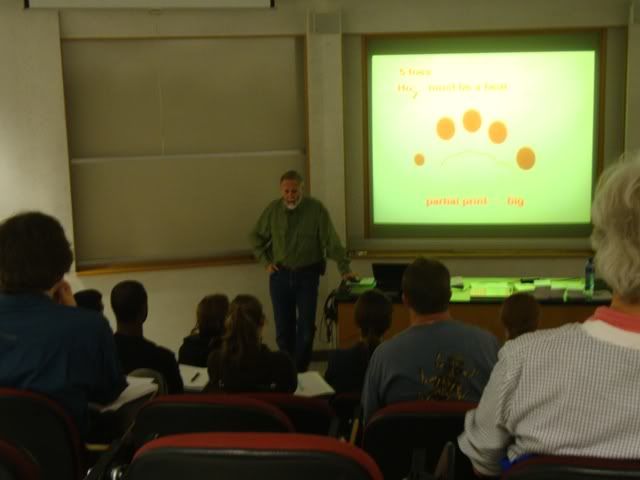
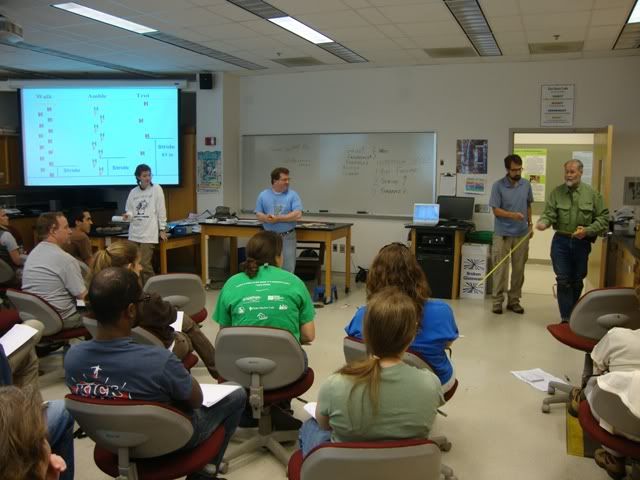
We started in the lecture hall.  It was here that Jim discussed the history of tracking, the anatomy of animal tracks, and ways to identify species by tracks.  I also went over a variety of survey techniques for large, medium and small animals (a very basic overview).  After a morning inside, we went out into the field.


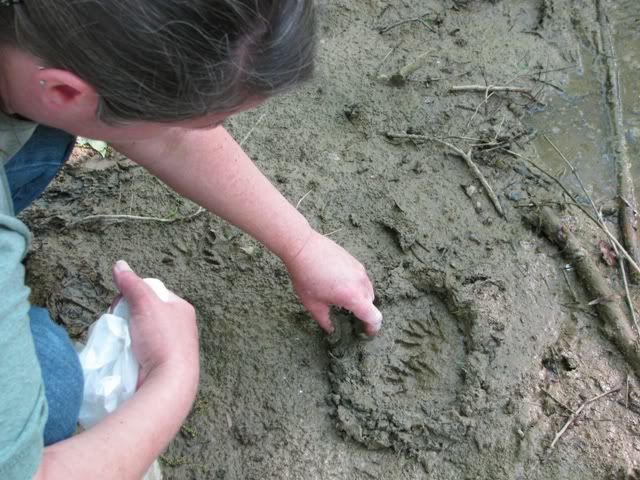
Tracking in the field: There had been a big storm here two nights prior to the workshop.  Thus, the stream beds and dirt trails that are usually riddled with tracks had been wiped clean.  It took alot more work for the students to find tracks then I had hoped, but most seemed to be able to work with this. Jim instructed them on finding tracks, identifying species, and the making of plaster track casts in the field.
Above: preparing the area to create a plaster cast of raccoon tracks.
Photo by V. Vickers.

Above: pouring in the plaster. 
Photo by V. Vickers.

Above: The Final Product!
Photo by V. Vickers.

Above: Group 1 displaying their plaster casts. 
Photo by S. Habel.

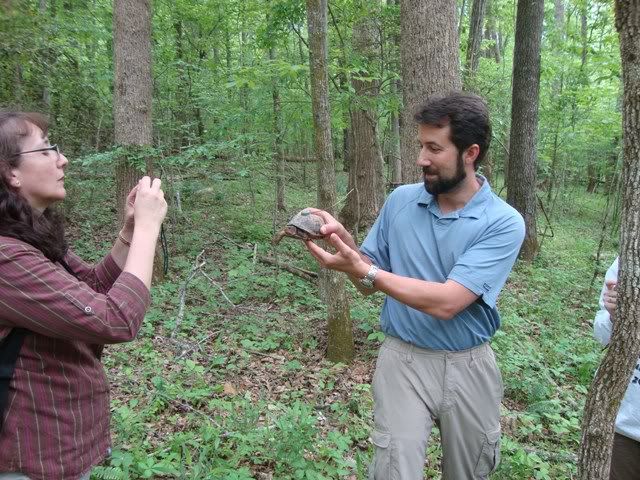
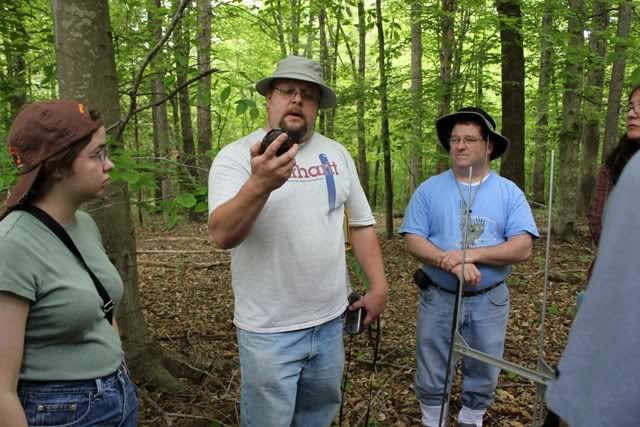
Radio Telemetry:  Workshop attendees were exposed to the basics of radio tracking animals in the field.  Although this involves slightly different skill-sets depeding on whether one is tracking small vertebrates or large vertebrates, the principles are the same.  The class tracked eastern Box turtles (Terrapene carolina) and learned the very basics of what this entails.

Above: Locating a turtle with the telemetry equipment.

Above: Found him!

Above: recording data on a located box turtle.
Photograph by V. Vickers

Above: reviewing marking techniques for turtles.
Photo by M. Schriber

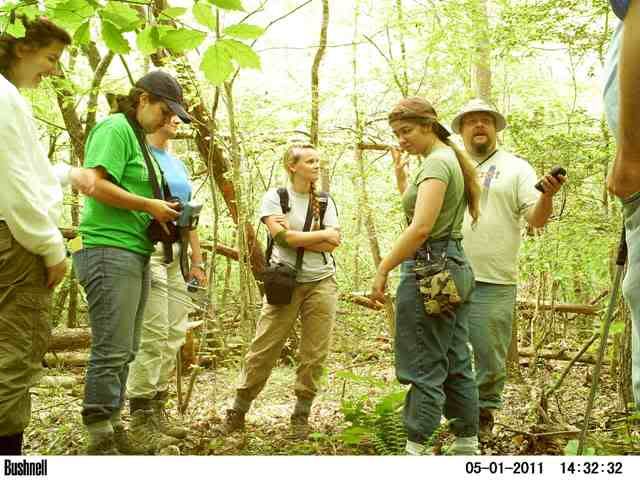
Above: A 200 acre woods to roam in, and one box turtle we tracked decided to hang out directly in front of a camera trap!  As a result, there are a bunch of pictures of the students on this camera!

Day 2.
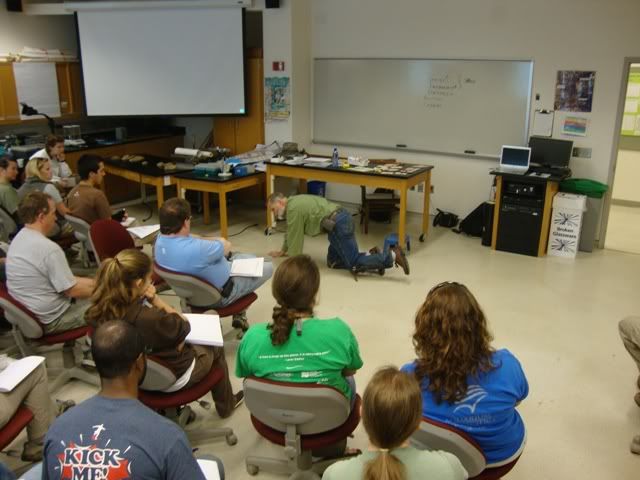
We started the second day off with lecture again.  This time Jim covered specifics about animal gaits, and how to follow and read trails left by wildlife.  This involved Jim actually getting down on his hands and knees with cards that represented front and hind foot prints....these he laid on the floor as he stepped (or crawled) showing  students the relationship between how an animal walks and where the foot prints end up.  This information prepared the students for field exercises.


We took a brief break at the field site for lunch before plunging in to more field work.


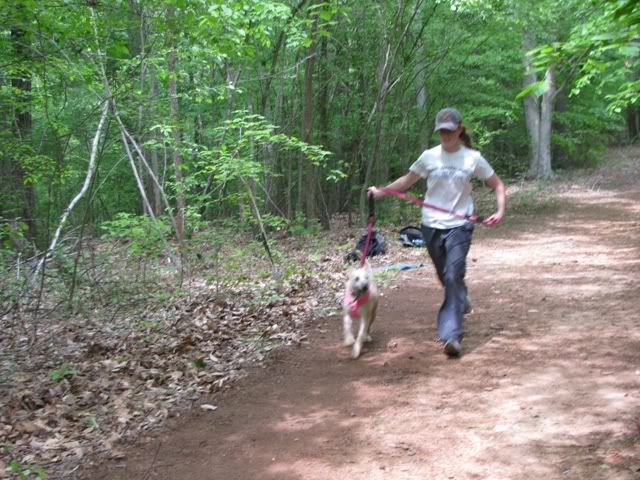
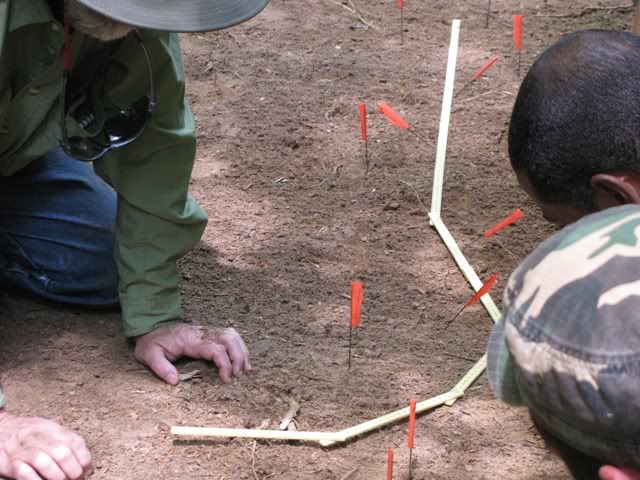
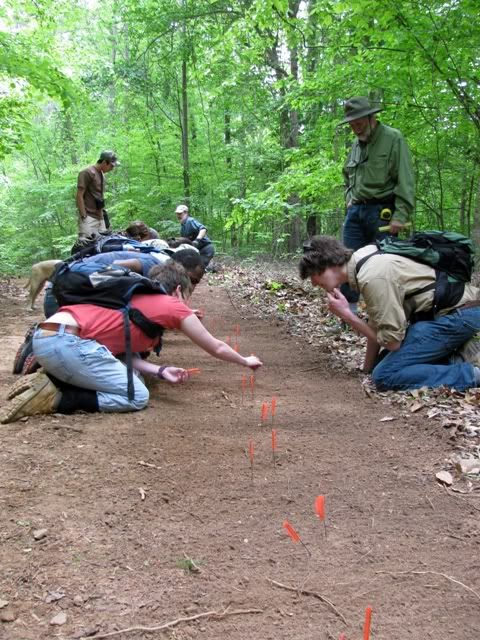
Understanding Gaits and Following Animal Trails in the Field:  Due to the rain storm that occurred right before the workshop, there was a real lack of tracks and trails out at the site.  Therefore, Jim requested that a medium-sized, well-behaved dog be brought to the workshop to simulate wildlife trails for day 2.  Luckily one of the students had just such a pooch!  Thus, the ground was prepared in an area with good soil, and the domestic canine was used to create animal trails for the students to learn from.  The dog was walked, trotted, sprinted, and etc....each of which left a different series of tracks in the dirt to be deciphered.

Above: using a pet dog to create trails in the field
Photo by V. Vickers.

Above: flagging the dog tracks.
Photo by V. Vickers

Photo by V. Vickers

Photo by V. Vickers

Above: students scrutinize the trail left by the domestic canine.
Photo by V. Vickers

Conducting Small Animal Surveys in the Field. Students were exposed to variety of small vertebrate surveys in the field...focused on amphibians, reptiles and small mammals.  We discussed effective incorporation of various pieces of equipment, hints for deployment/installation, the best times to conduct surveys with specific equipment,  the best baits (if applicable) and how to deal with the captured animals.

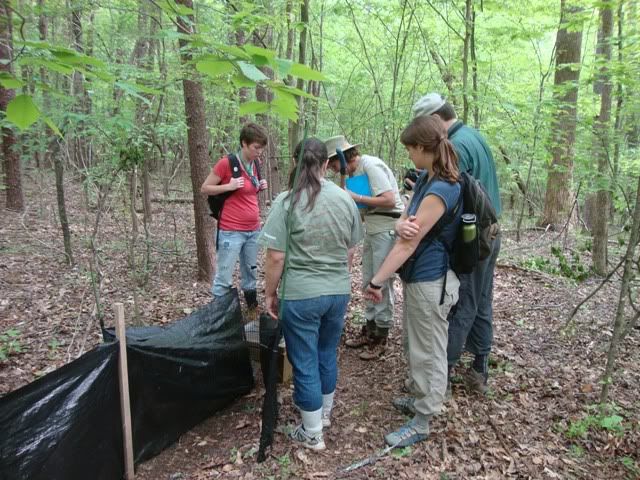
Above: Checking traps along one of the drift fences on-site.

Above: an Eastern ratsnake (Pantherophis alleghaniensis) captured in a drift fence.

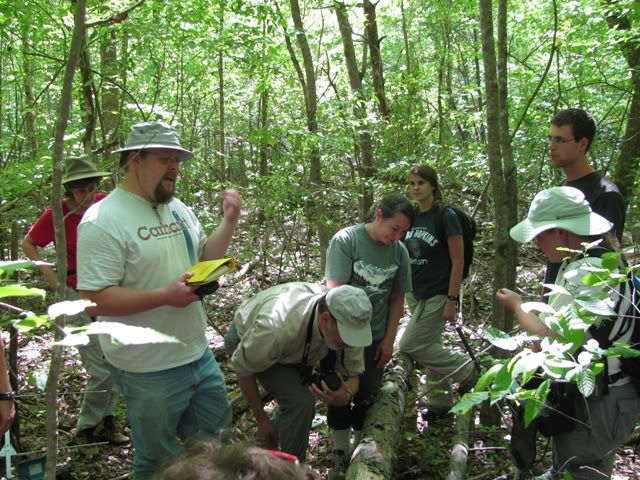
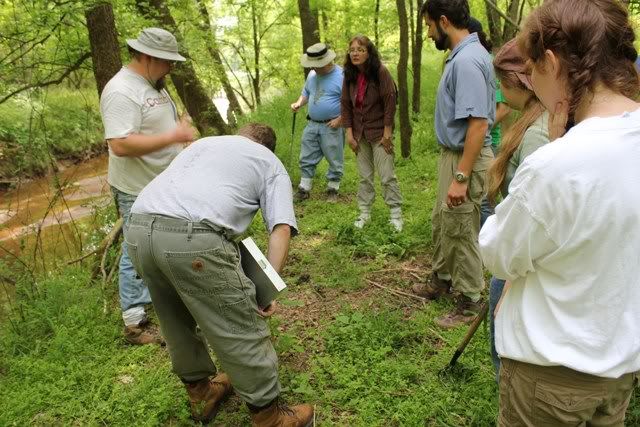
Above: checking out an otter latrine (Lontra canadensis) during visual surveys.
Photo by M. Schriber

A good time was had by all (I think), and the workshop participants got exposed to alot of new skills (I hope).

My only regret is that I didn't get to make plaster casts or do the gait stuff that the students experienced! 

The downside of being a facilitator and co-instructor!