Showing posts with label Sherman Traps. Show all posts

Saturday, April 27, 2013

The 2013 Spring/Summer Field Season Approach-eth.....

....two weeks ago it was the "calm before the storm" and now we are in full-throttle "deployment" and "turnover" mode.

We're also getting to that crazy crunch time in the semester.  A constant string of grading and gearing up for finals.

This summer will be hectic, to say the least.

One camera trap project that has been ongoing for a year will terminate at the beginning of May.  And this will be replaced with a slew of new projects (all involving undergraduate researchers) that I will oversee and have to bounce around in-between all summer.

A second camera trap project will continue for another year.  One of my research students will take this one over for the summer (I usually do it, but it would be perfect for him).

I have one student who will continue wolf research that was started this last winter.

I also have two new herp-related projects starting....

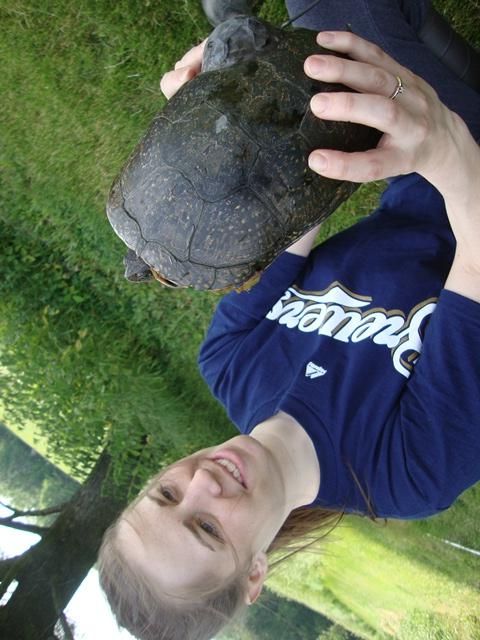
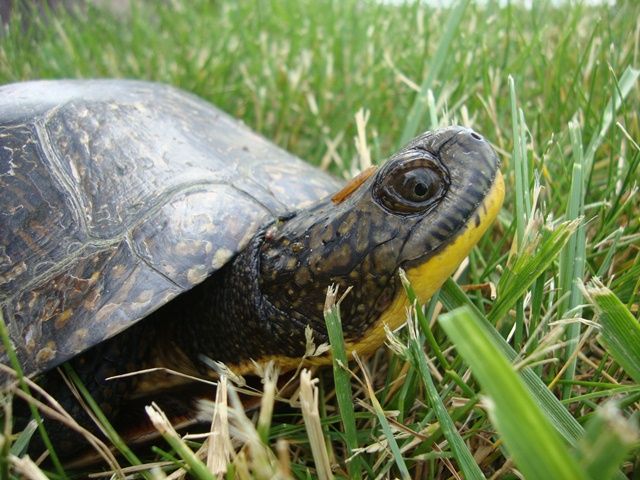
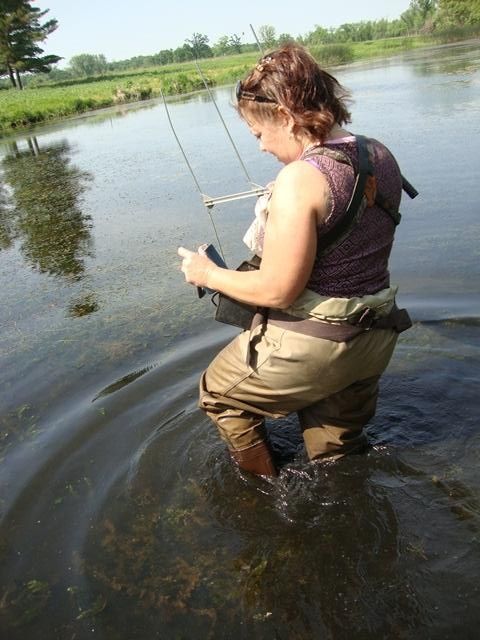
1) A radio telemetry study involving Blanding's Turtles (Emydoidea blandingi)....you can see some photos below from the prep work for this project that started LAST spring.  I have three students involved in that project.
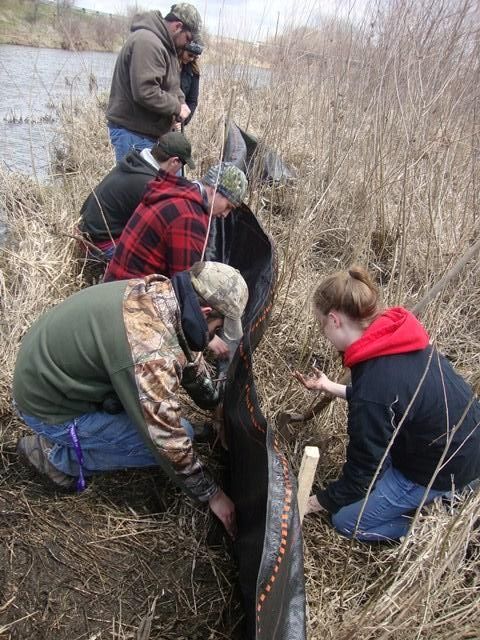
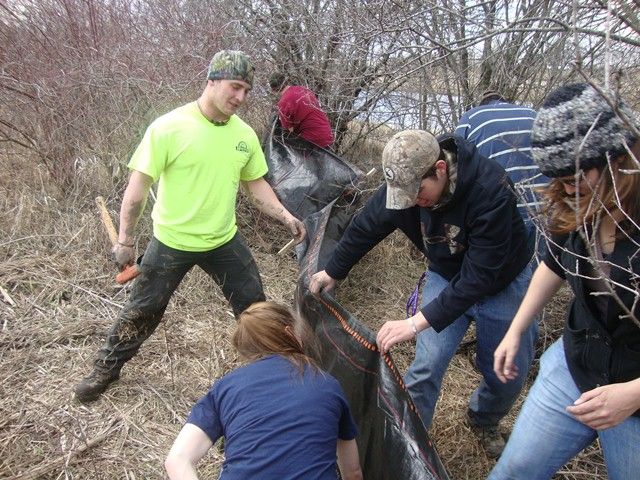
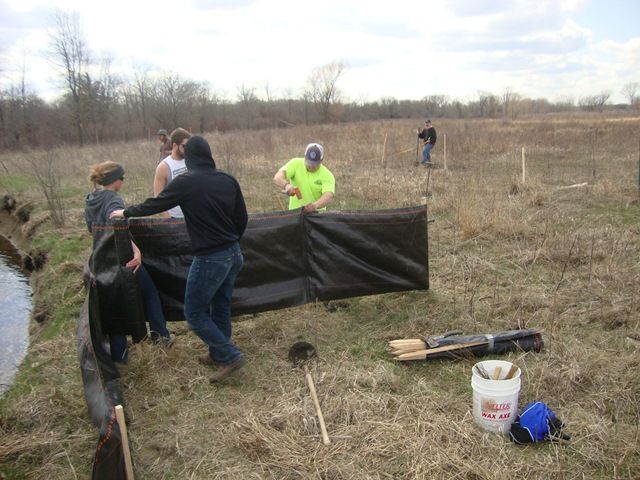
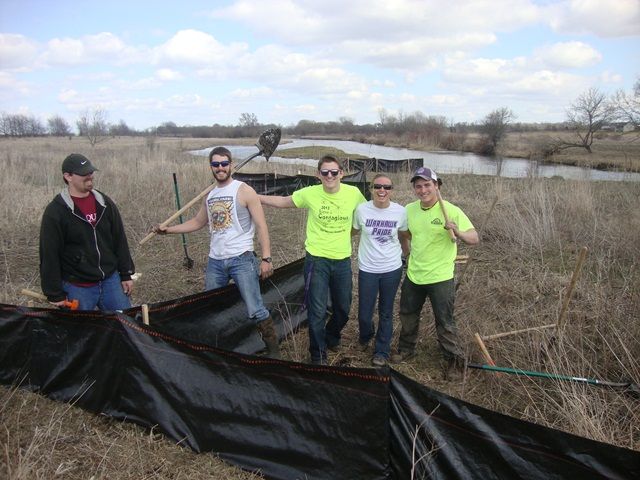
2) a study of riparian snake communities, which requires drift fences.  This week it was finally warm enough to really try and install the fences.  Luckily, I have a cadre of hard-working undergraduate students that I can trust to volunteer and help me with stuff like this.....

As a mentor to budding ecologists, nothing makes me happier than to see them all working hard....no one standing around....and no complaining or whining (which I have a zero-tolerance policy on.... ).  Furthermore, they looked to be enjoying themselves.

In a single afternoon we installed all of the fencing for one of three study sites.  Hopefully we get the other two sites done in the next week and we can start catching "stuff".  :)

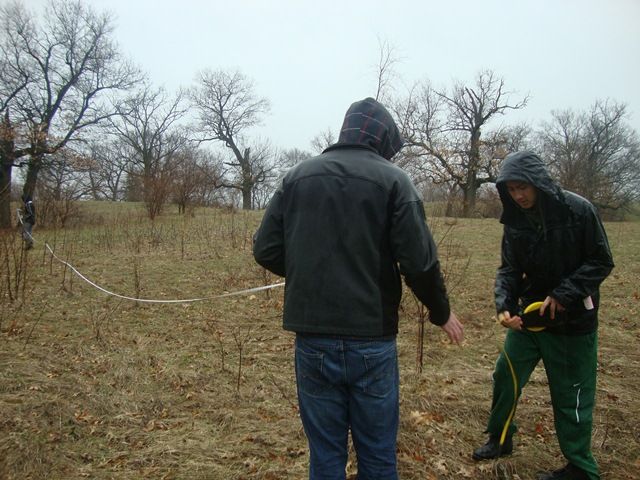
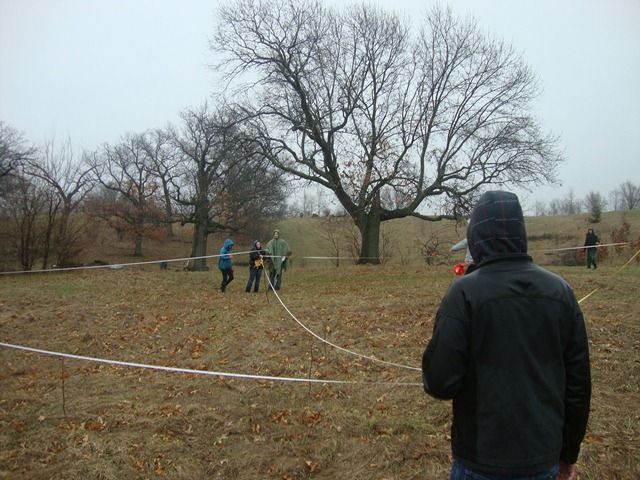
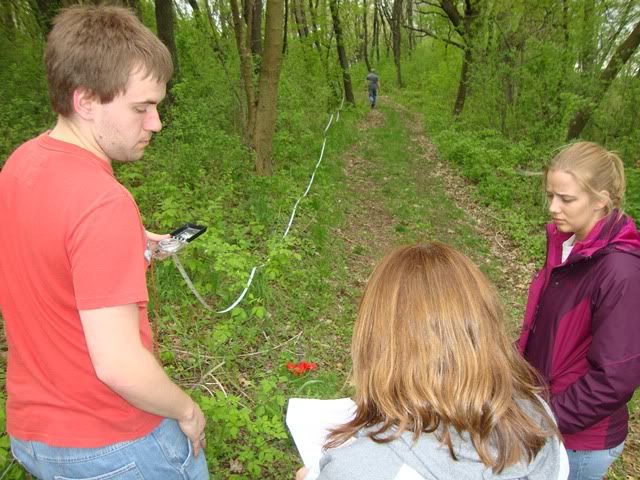
I also was "mean" enough to force my Advanced Ecology students to measure out a small mammal trapping grid as part of a class exercise, just like last year.

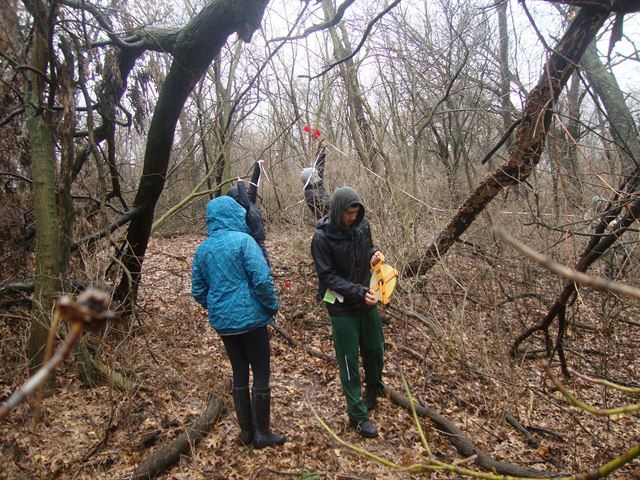
Yet, this year we did our work in the middle of a down-pour......
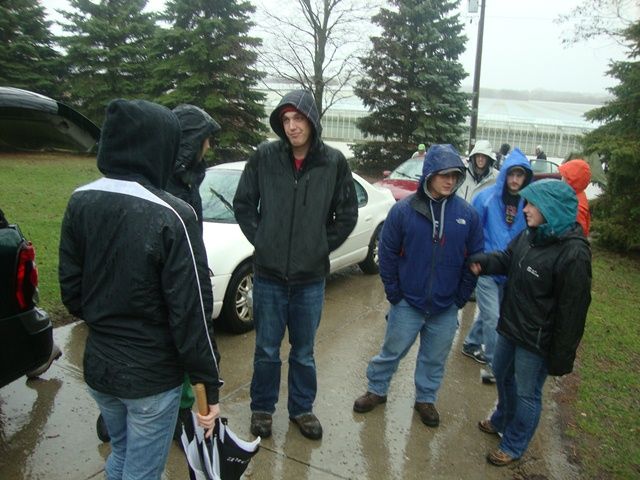
We didn't actually set any Sherman Traps until the following week, when it was not raining and the critters wouldn't be so likely to die due to exposure.  We added a bit of alpaca wool to the traps to help them out (it was in the 30s the evening the traps went out.

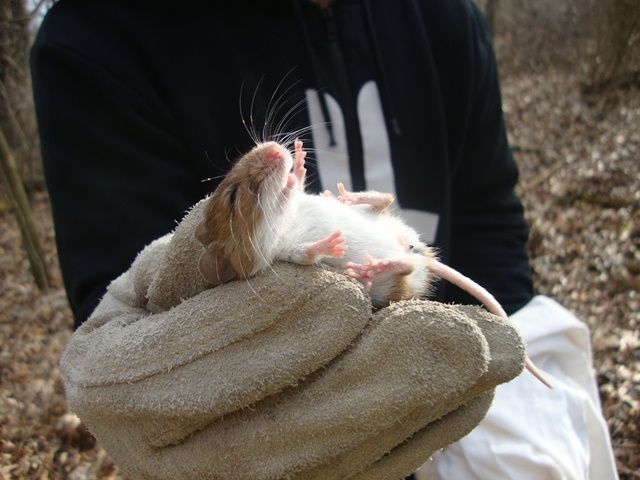
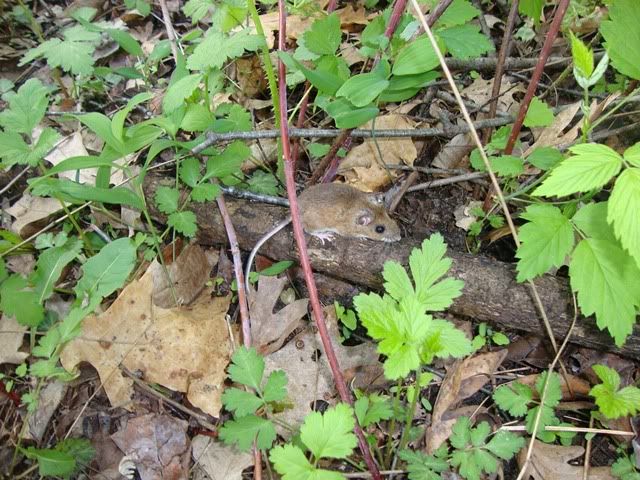
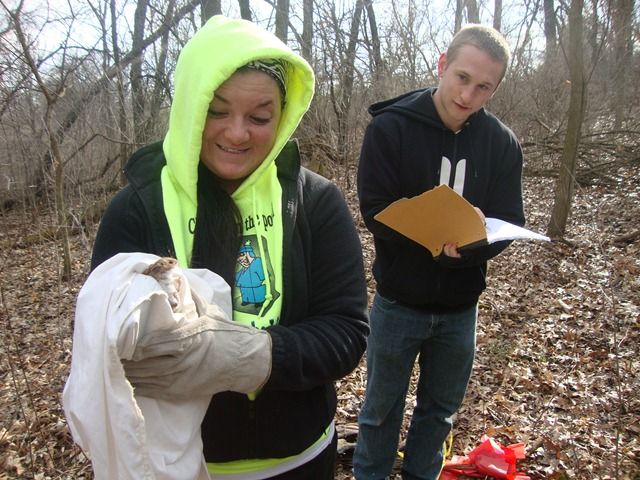
Rodents were more than willing to take advantage of the peanut butter and oats we provided.  These are a Peromyscus sp., I always call them White-Footed Mice (P. leucopus), but they could just as easily be Deer Mice (P. maniculatus).
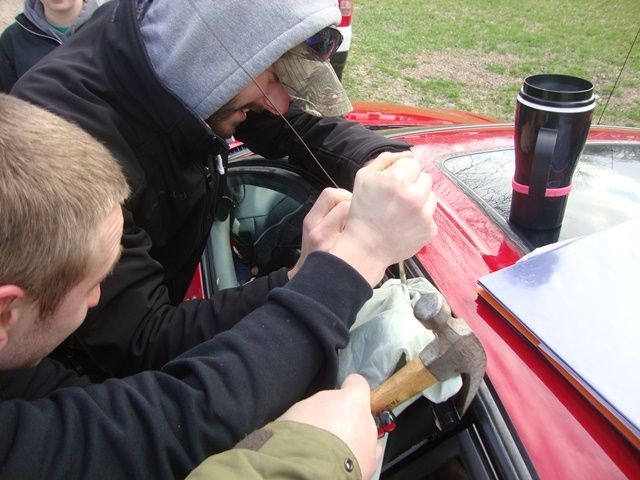
Then...of course....one of the students locked their keys in the car.  Luckily some of the others knew how to solve this problem (because they had locked their own keys in their cars at one point :)  ).
More to come when I get a chance to breathe!

Thursday, April 19, 2012

Advanced Ecology Lab Week 11: The Rodent Box

This week had the students continuing their assessments of the diversity on-site.


They did this by conducting small mammals surveys (basically rodent surveys) with baited live-traps called Sherman Traps, which we placed in both woodland and field/meadow habitats on-site.  Anyone who has ever done field work on rodents knows what a Sherman Trap is.  It's the standard in live traps for these kind of critters, and the basic Sherman trap is a metal box with a trip plate inside that allows a door on a coil to snap shut once the animal is inside.  They are baited with peanut butter and oats...perhaps some seeds for added attraction.

But first....an invisible grid needs to be measured and flagged so that the traps can be deployed in a systematic fashion (actually traps can also be deployed along simple straight-line transects and randomly).  Deploying them in precisely measured grids allows for trapping area and level of effort to be kept constant if one wants to sample across multiple habitats (or even study sites).  

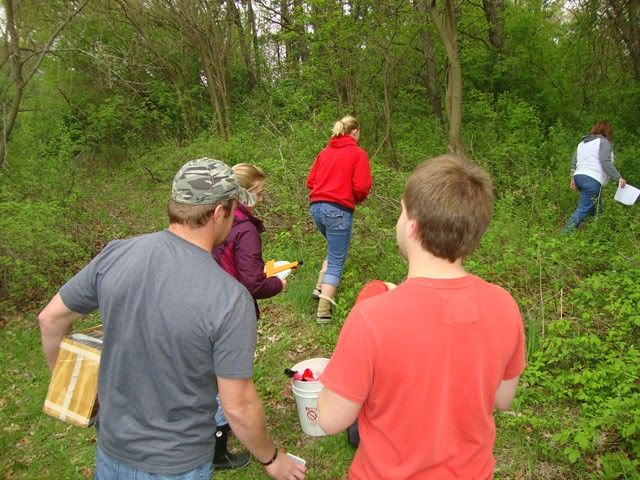
So, off they went to measure their grids.....

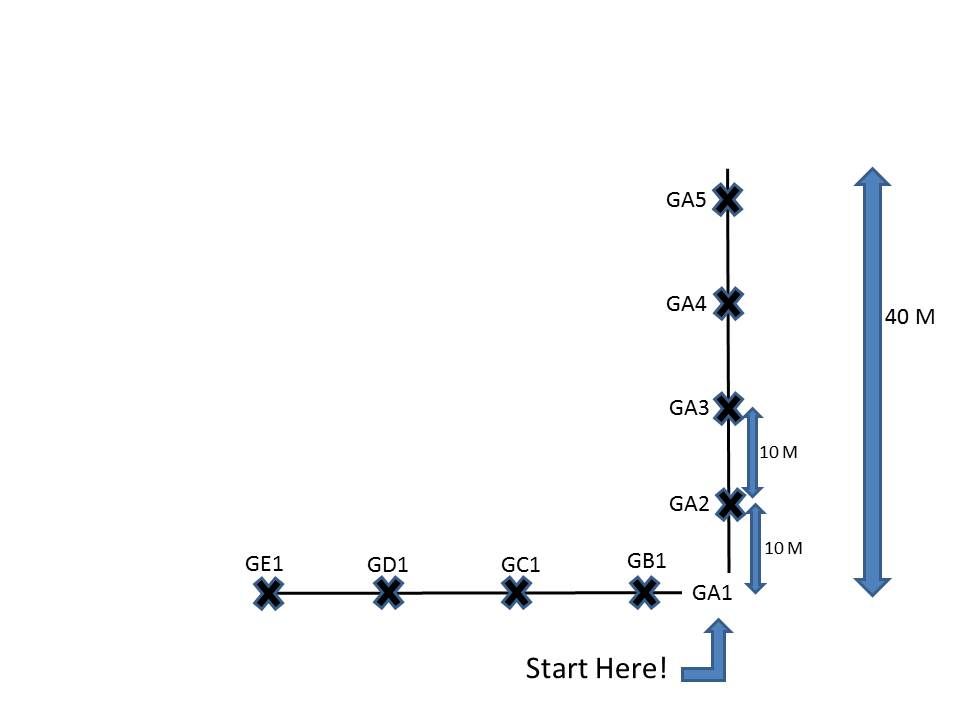
A simple 25 trap grid can be (for example) 40 meters X 40 meters (traps placed at 10 m intervals).  This requires a bit of precision to keep the grid square.  It's best to start by finding a direct North-South line with a compass...then laying a tape measure along that exact bearing, to keep the line straight.


 Once that is complete, laying traps (or putting in flags) every 10 m gives you one side of the grid.  From that original starting point, it's neccessary to then determine an exact west-east bearing....lay a tape measure out, and finally mark off 10 m intervals with flags or traps.

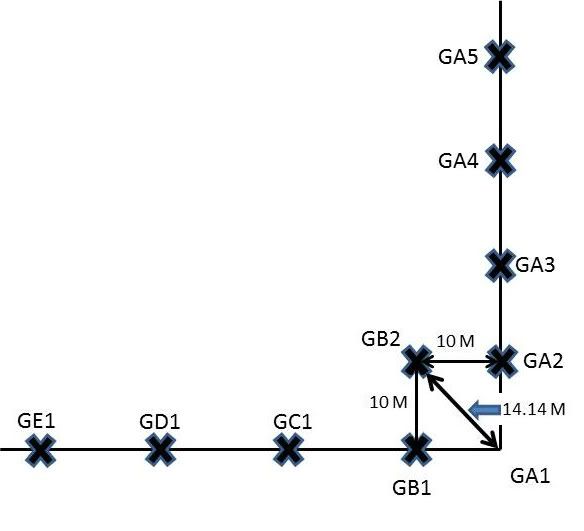
The result might be something like the diagram below:

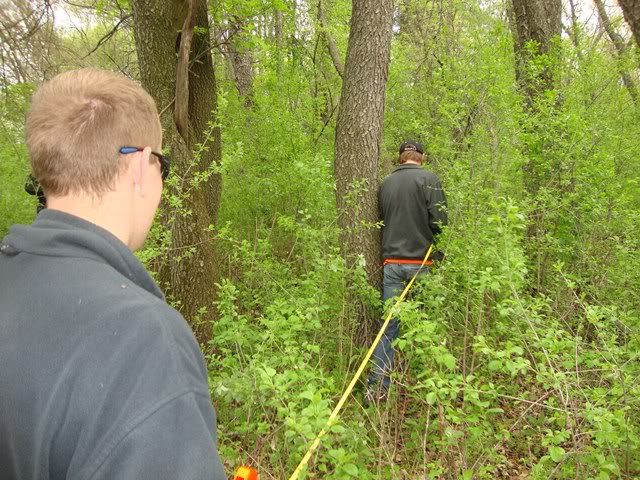
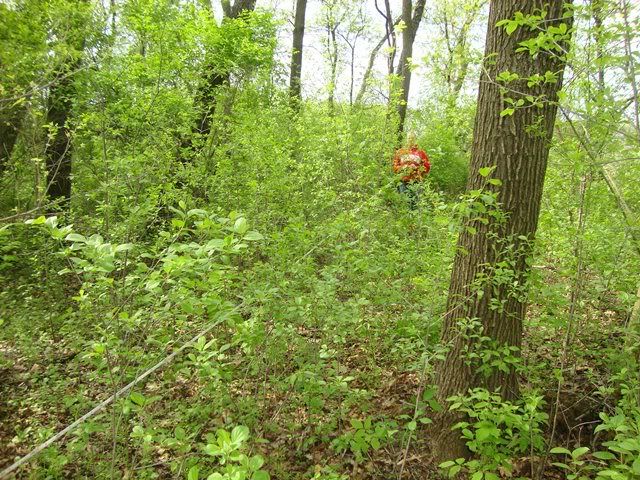
This part is relatively easy when you're in a wide-open space...like a meadow.  But it gets a bit more difficult when working in woodlands. 


Next comes the real tricky part: laying out the rest of the grid.  It's usually easiest to begin in the lower right corner of your grid...and then to start measuring out 10 m X 10 m cells.  To make sure these are correct, one must also measure the diagonal distance across the cell....and when that is correct, you can place your next trap.  See figure below for an example of how to start the grid:


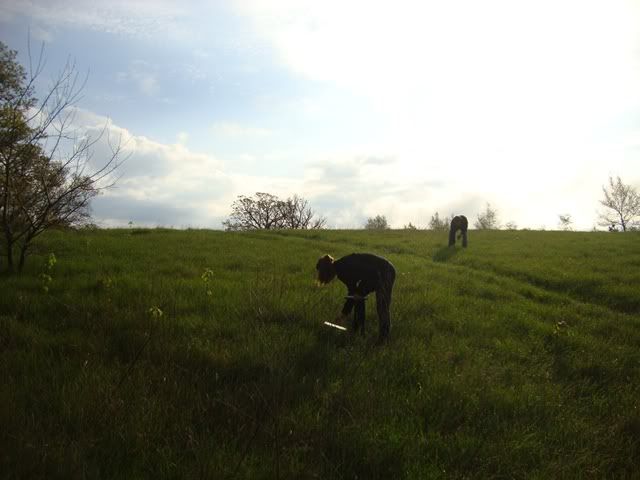
Measuring each cell in your grid is easy when there are no obstacles.  In fact, the students working in the grassland were done in no time.

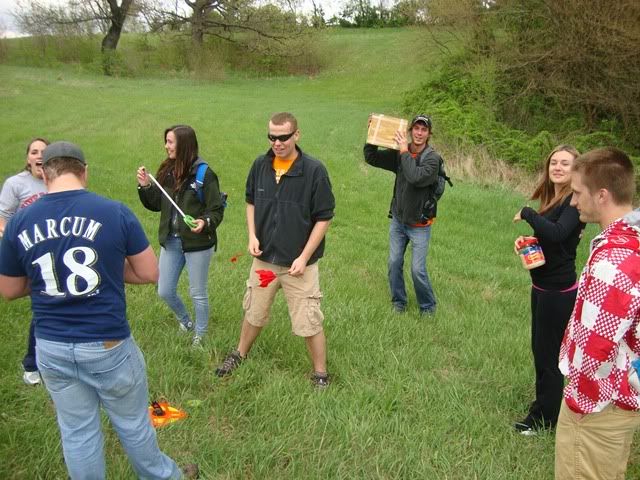
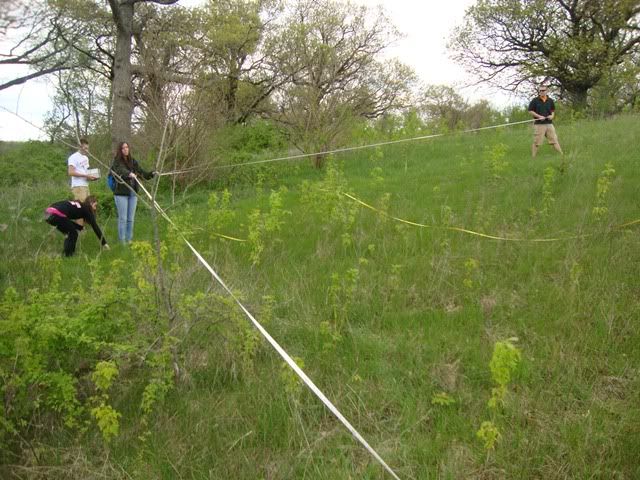
Above: holding two 10 m tapes to find the new grid intersection.  Note the yellow tape measure that will be used to measure the 14.14 M across the diagonal to make the cell square.


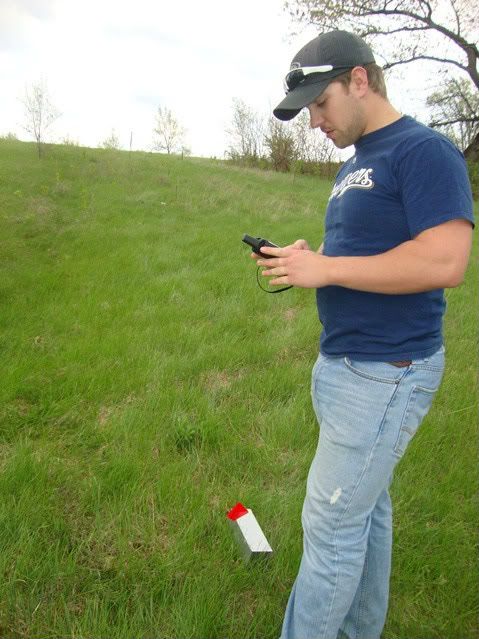
After the traps are baited and set, it's a good idea to get a GPS reading of your grid corners (or one of the corners) to find the traps more easily.  Note the flag and the Sherman Trap at the foot of the student with the GPS unit.

The next morning, bright and early, the traps have to get checked and the captured critters released (which is the fun part). 


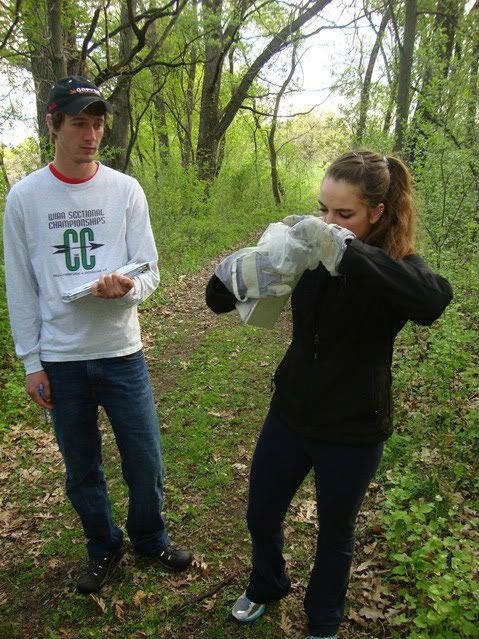
Although we didn't catch a ton (that's what happens with only one night of trapping!), we did catch a few White-Footed Mice (Peromyscus leucopus)....and I can't help but think they're cute little buggers.

We'll do another round of trapping next week.  I'm hoping for some Microtus...and even a Tamias would be fun to wrangle!