Showing posts with label Scat. Show all posts

Monday, February 17, 2014

Winter Wildlife Tracking....and more

Recently, I accompanied my research students into the field.  We are in year two of a project focused on Wolves (Canis lupus), which I've previously posted tidbits from (see here, here, and here).  I haven't been able to get out with them to do fieldwork as much as I would have liked on this project.  However, they are amazingly competent, organized and detail-oriented.....so I haven't felt the need to hover over their shoulders.

Although I haven't needed to be there, I have desperately wanted to go out with them more often.  Circumstance has always intervened, unfortunately.  During their most-recent trip, however, everything fell into place. 

Before I share some of our observations from that trip, allow me to give you a bit of context for what their fieldwork involves.  This project requires that every two weeks, they take a 3 hr car trip north.  Because it's too expensive to stay in hotels, etc., all of their fieldwork must be crammed into one day.  This means a 14-15 hr day, including drive time, assuming everything goes smoothly (if you want to know about some of the 'hiccups', ask them how many times they've gotten a vehicle stuck during these trips :)  ).  The days are shorter up here in the winter.  So, to insure that they have enough daylight to finish their objectives, they leave early (5 am).  This way, they arrive at the first site at alittle after sun-up and valuable light isn't squandered while driving.

Winter fieldwork is the best, in my opinion.  Many folks I know talk about how much they love summer, and given my fondness for herptiles...I understand.  But summer can get just too dang hot.  There are only so many clothes that you can legally take off to deal with the heat of summer and eventually you just have to wallow in your own moisture.  Winter is the opposite: you can always add more clothes.  So long as you are dressed appropriately, winter fieldwork is great.

We needed that appropriate dress at the first site we visited...the sun had barely been up and the air was bitter cold.  Just having the fingers exposed to take pictures with my "fingerless" gloves (with the flip-up mitten tops) set my skin to burnin'!

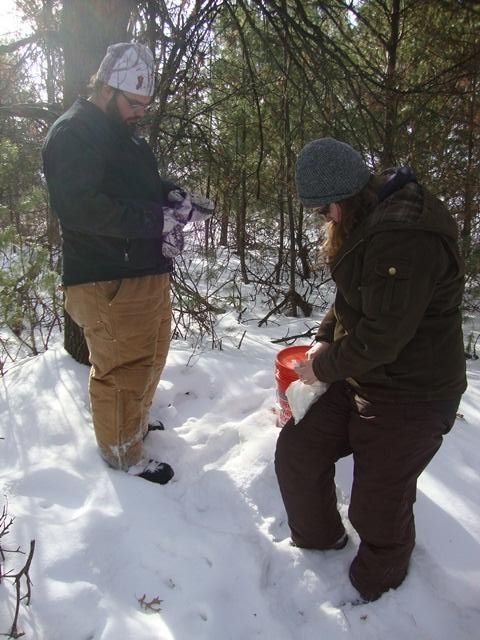
But, the research students (Phil and Sarah) got right down to work, while I got some photos of them in action.
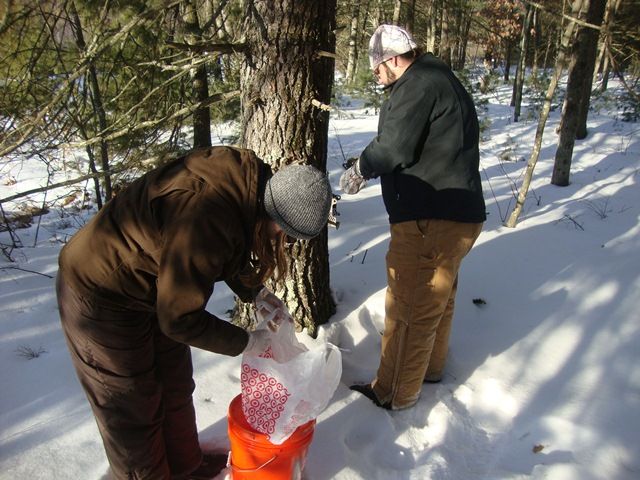
Pretty soon, we were headed back to the vehicle.  It wasn't long before the air started to warm a bit and it was downright pleasant to be working outside.  The amount of time spent at each location isn't too great....although sometimes the walking in and out can take time, depending on the amount of snow.  However, it's the time we spent on-foot that gave us opportunities to observe some very cool stuff!

Wolf packs are in the general vicinity of every study location we stop at.  We obviously don't know where they are.  They could be 50 yds away or 5 miles away, depending on where the pack is within it's territory.  Regardless, we know wolves have probably passed through our immediate area at some point in time.  Thus, there is wolf-sign galore!  We had some great opportunities for photographs....

There was lots of Wolf scat around.  Its fun to try and find some evidence of recent meals by looking at scat.

Take the example below:
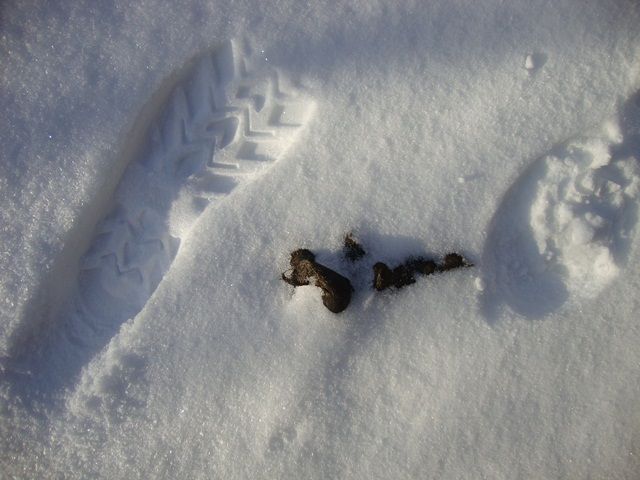
I was an idiot and forgot a ruler....but the print to the left is from my size 12.....

Here's a close-up:
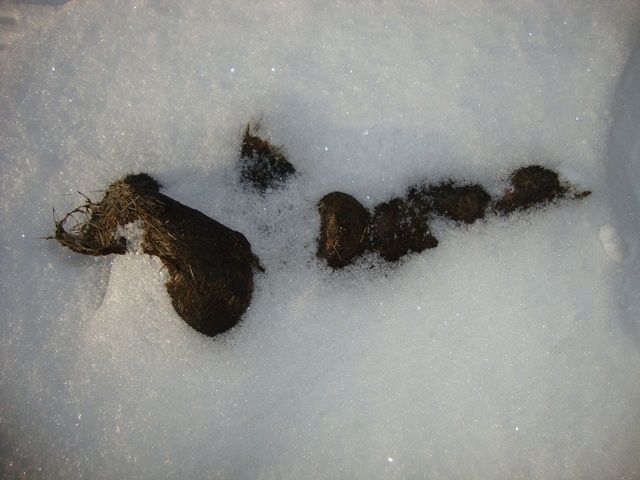
Lots of hair (which a quick inspection appeared to be from White-tailed Deer).  Also note the dark consistency...which would suggest alot of muscle or organ meat was consumed.  This is an important point to remember, especially when viewing other examples of scat we found.

Take a look at another scat below, which was along a different trail.....
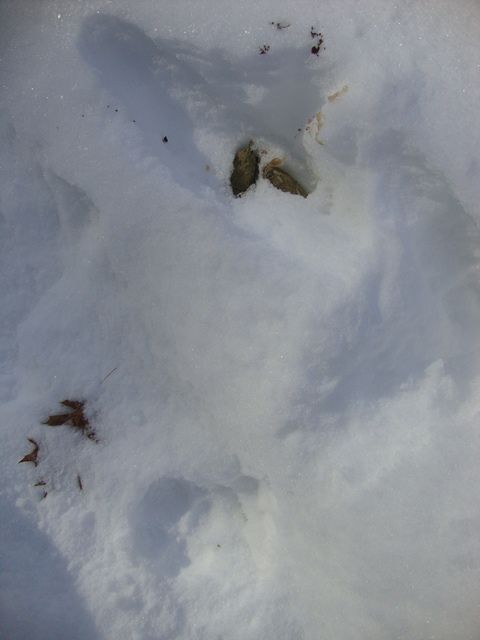
Notice the track at the bottom....scat more towards the top.

Here's a close-up of the scat, itself...
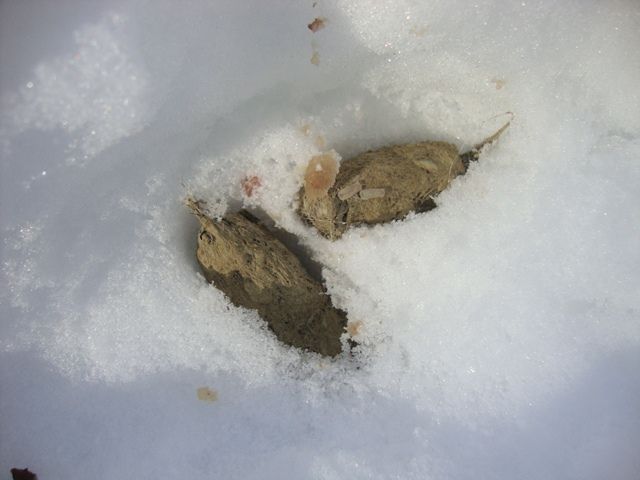
This scat is much lighter in color...a bit more chalky in appearance.  My guess would be that this wolf was consuming less meat and more bone.  Perhaps this individual was scavenging on an old-carcass...crunching up bones, etc.  In fact, there appears to be some bone fragments visible in there.

What's really interesting about this particular scat is that there appears to be a bit of blood (just above the excrement in the picture below).
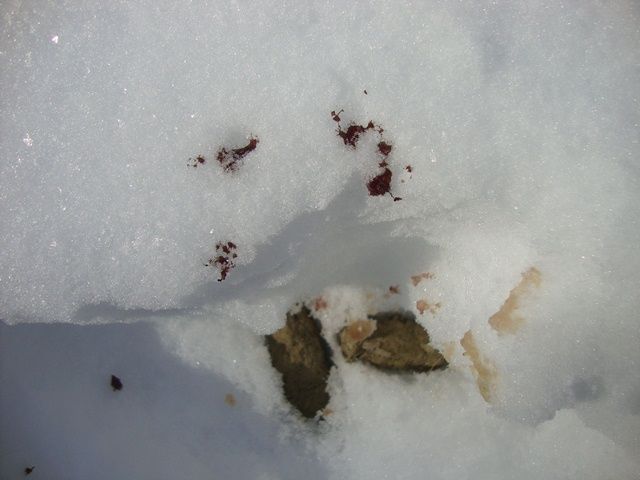
 It looks more black in the picture than it did in real life.  On the snow it was a dark red.  So, is this blood due to a bit of scraping from the wolf passing that scat with the bone chunks?  Possible.  Another explanation is that the blood came from a female in estrus.  In this area, we found lots of urine marks.  Perhaps this spot represents a location where a female in estrus dribbled a bit of urine and also defecated.

We are currently in the wolf breeding season (January through April), so females could be in estrus.  Interestingly, females are apparently in estrus for a short period of time (1 to 2 weeks).   Wolves are "monestrous", meaning they have one estrous cycle annually, which occurs at roughly the same time of year.

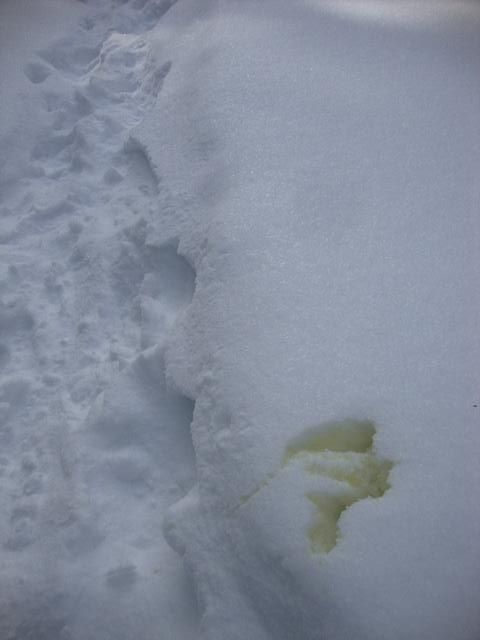
Speaking of urine...like many canids, wolves mark their territories with urine.  Such territorial markings can be referred to as a "raised leg urination", or RLU. 

Because wolves often travel along roads, a good way to quickly assess for the presence of wolf activity is to watch for RLUs from a slowly moving vehicle.  This is relatively easy to do, as the urine really sticks out against the white snow.
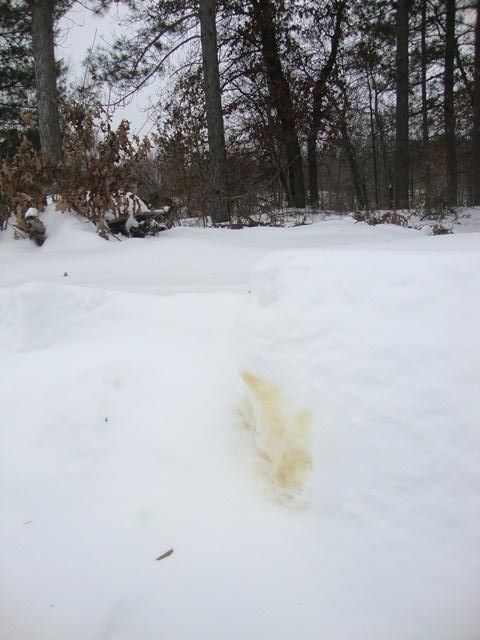
After you see an RLU, its important to get out and assess the area to find more evidence of wolves.  Obviously, folks walk their dogs along roads too, or bring dogs into remote areas for hunting, so you have to check things out a bit to confirm wolf activity.  Tracks, for example, or the height of the RLU can be good bits of evidence in support of wolves being present.

In another location we found beautifully pristine wolf trails along old tire tracks in the snow.  These were along a little-traveled snowmobile path and there were many associated RLUs.  Thus, the RLUs we found here were very likely to be from wolves and not dogs.

Here are two examples:
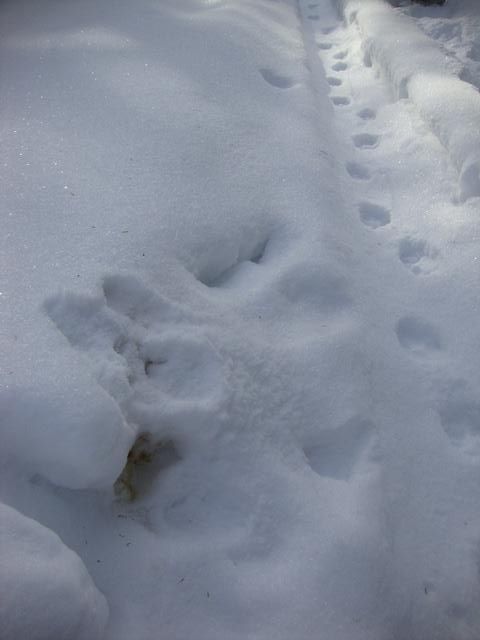
 
Finally, and as you probably already guessed, there are a plethora of tracks and trails!

There were so many wolf trails on the route in the picture below, it was sometimes hard to tell how many wolves were present.
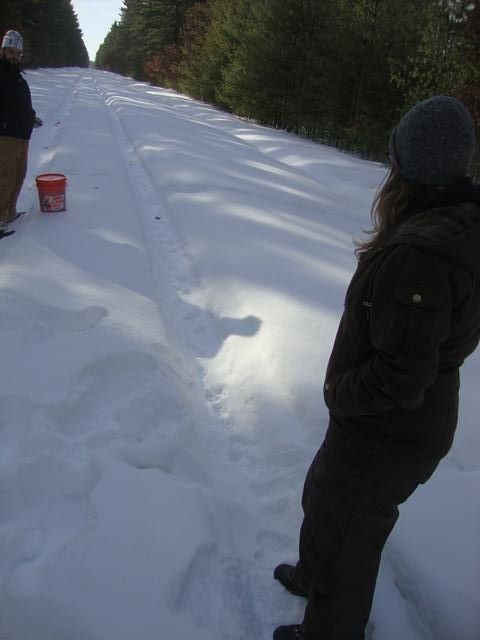
From the picture above, you can also see how deep the snow was by looking at it in relation to Sarah and Phil, whom are standing in a single set of tire tracks on this trail.  Also, note the wolf tracks leading away from us in the tire impression.

Some of these tracks were perfect imprints (and I wish we had brought some snow track-casting gear).
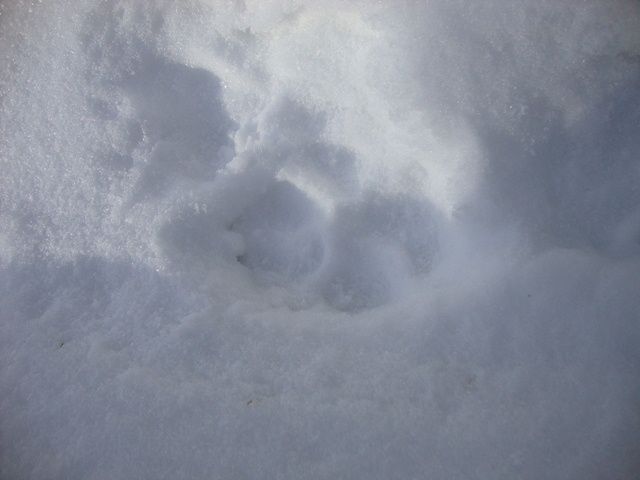


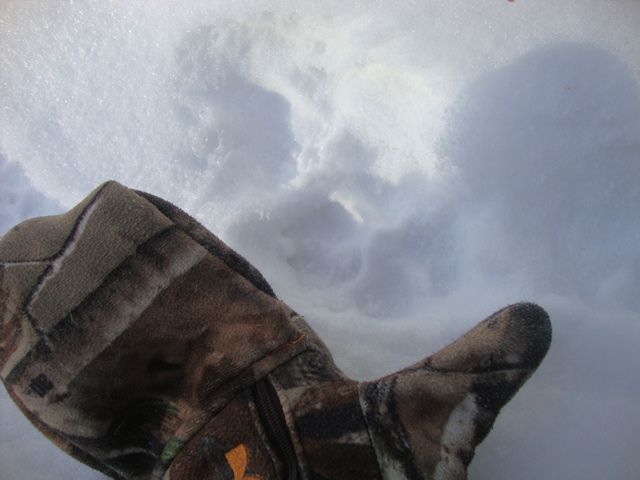
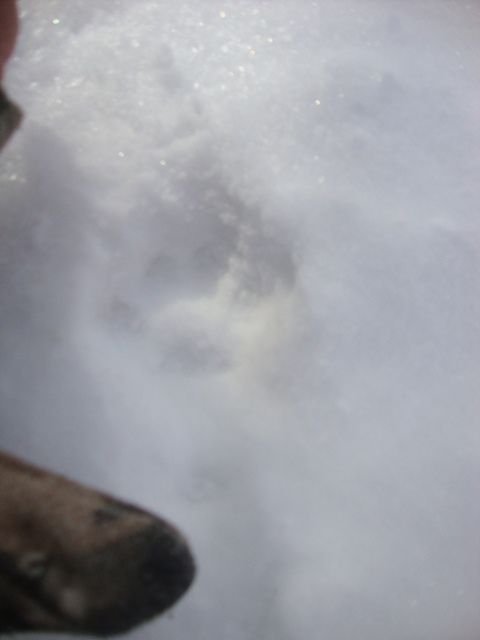
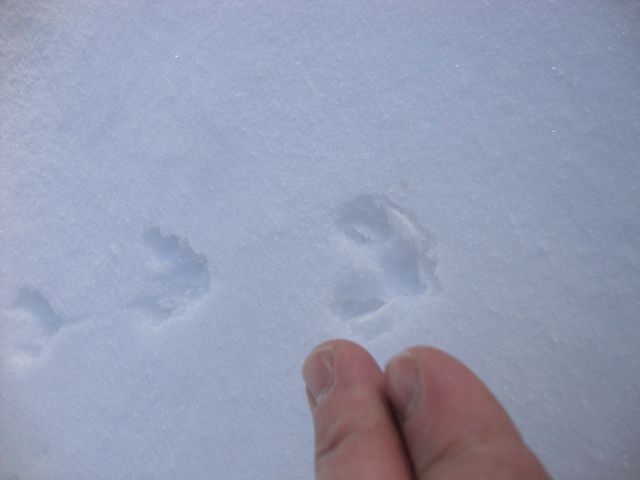
Below is a picture of a domestic dog print, for comparison.  Although my hand is meant to provide scale, this obviously isn't perfect.  The distance of my hand from the track, etc. can confound things, but it will give some you idea of the size relationship.
Wolves weren't the only critter we saw evidence of on our trip....

Rodent trails were abundant, and some areas looked as like a criss-crossing highway of rodent tracks.
...more (and bigger) rodents to come!

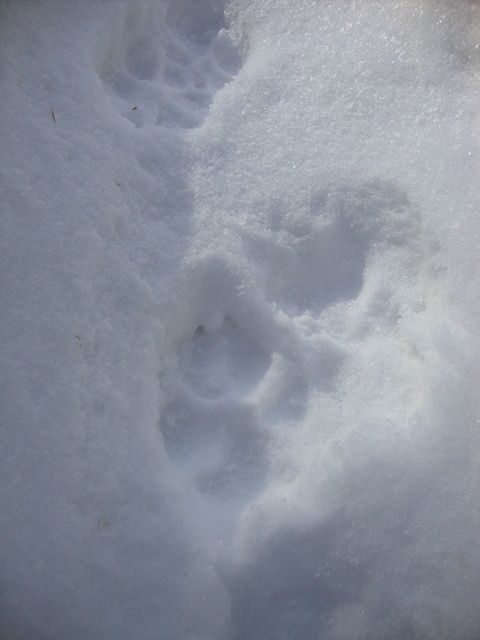
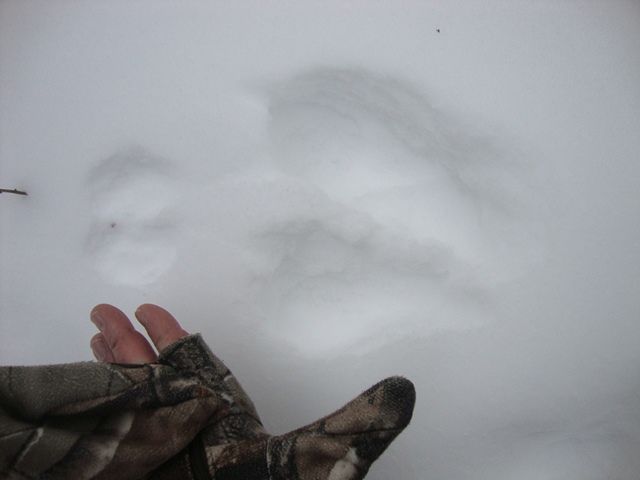
Lagomorphs were also easy to observe. One of my favorites from those we saw were the tracks of the Snowshoe Hare (Lepus americanus).
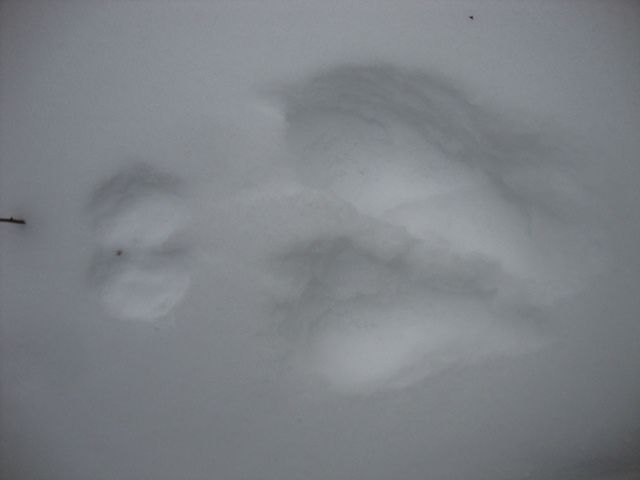
In these pictures, the front feet are obviously on the left, and back feet on the right.

Just check out the size of those kickers!!
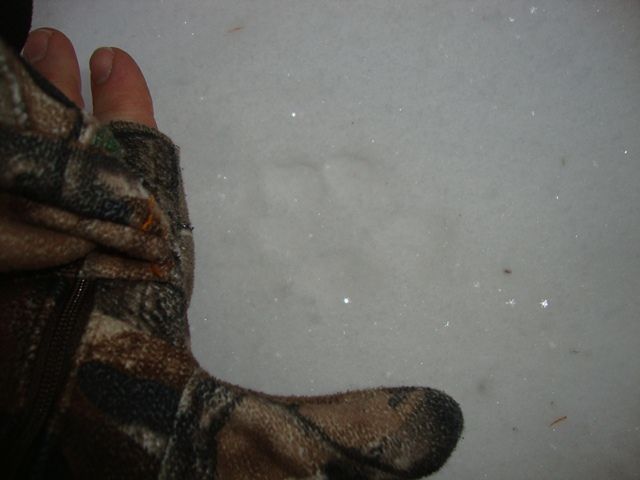
There were other carnivore tracks at some of the sites.  Sarah found the tracks below in the road.  I stepped right over them, as I was watching a little Red Squirrel (Tamiasciurus hudsonicus) moving through the underbrush next to the vehicle.  Thank goodness she was paying attention!

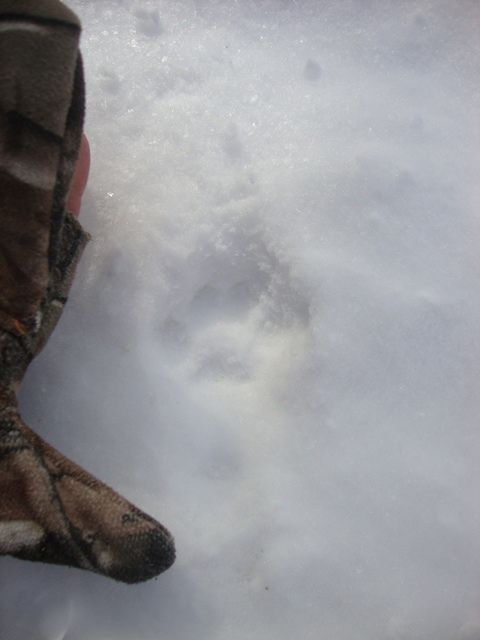
A Bobcat (Lynx rufus) had wandered around along the road very near where we parked.
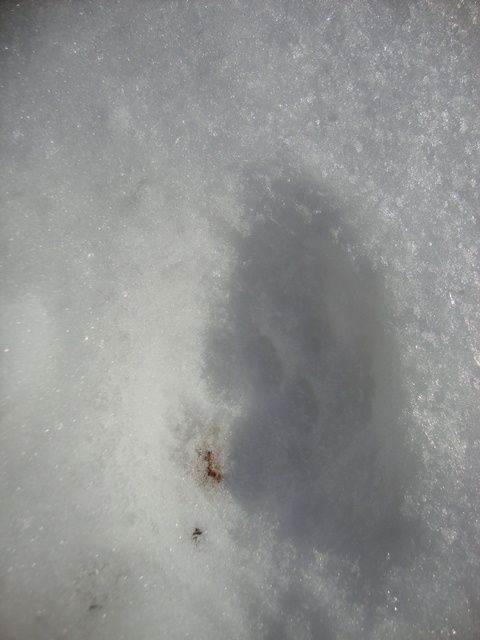
The diminutive size of their tracks always amazes me...
 

The day was coming to a close.  We made our way to the last of the sites we needed to visit.  On the way, we stopped by a dead-end road where Phil and Sarah had seen lots of Bobcat tracks in the past.  There was a very small culvert just off of the road.  They had found a high concentration of 'cat activity near the culvert on a recent trip.  This suggested that the culvert was perhaps a winter refuge spot for the 'cat.  We thought we'd see if we could get some more track photos, so we took a quick detour to check things out.

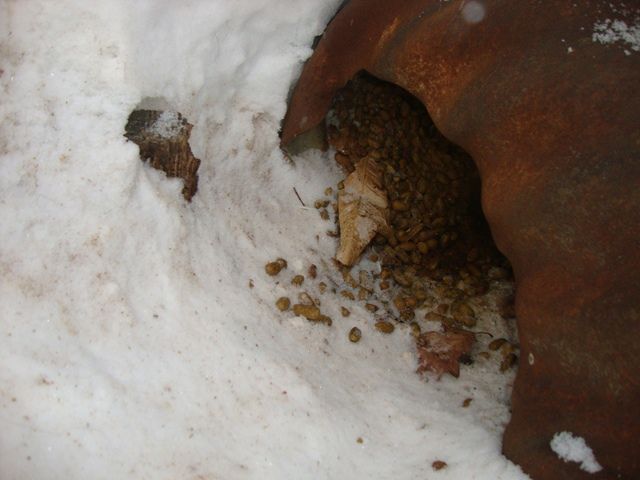
We pulled up and I hopped out to peek at the culvert.  The snow was very deep (up to my knees, right off of the road), and it took me a second to clumsily lumber over to the culvert.  From about three feet away, I could tell something had been moving around near the entrance.  There was some brown particulate matter on the snow, and I saw a few recently shed hairs.
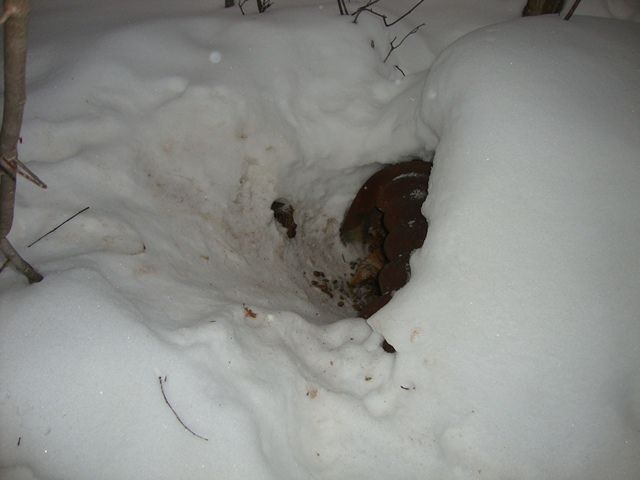
However, I didn't see any obvious 'cat tracks.  I moved to my left a bit, so that I could see the culvert entrance, without being too close.  From that vantage point, I noticed several large pellets in the snow and my first thought went to a Lagomorph (cottontails and hares) of some kind. 

 
Yet, when I leaned over and saw that the it wasn't just a few pellets, but lots of pellets lining the culvert floor, it instantly triggered memories of a picture in the book "Tracking and the Art of Seeing", written by Paul Rezendes in 1992.  This picture depicts a Porcupine's (Erethizon dorsatum) winter den, and shows a pile of pellets exactly like what I was seeing.
 
I craned my neck slightly....and there was Porky.....
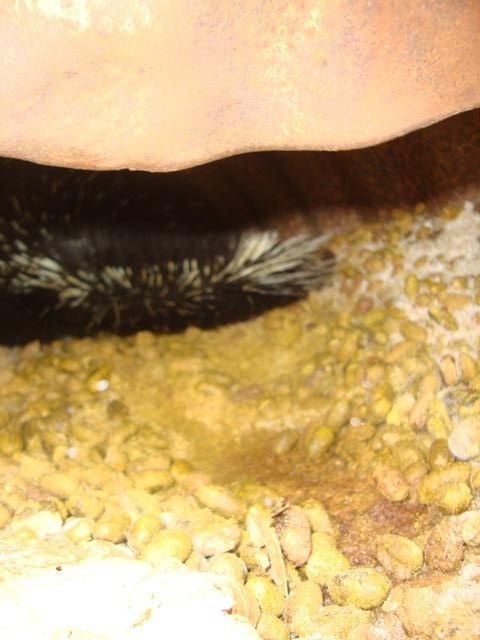
 
I was able to stick my camera in front of the culvert and snap a picture.  It's not an outstanding shot, but I also didn't want to disturb him too much by taking lots of photos.
 
It's amazing...who would have thought to look in this small, unobtrusive opening in the snow? 
 
Just to show you how unobtrusive it is, below is Sarah taking a picture of the outside.  The opening is just to her right.
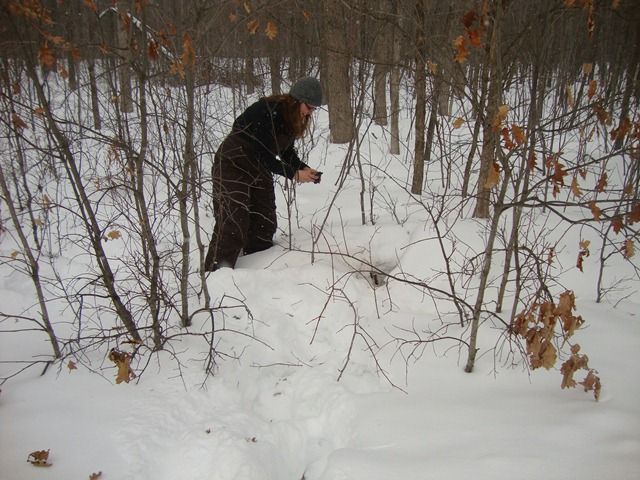
 
 
Ultimately, what more could we ask for from a single 14 hour field day?  It's days like this that remind me how much I love my chosen profession.


Thursday, July 11, 2013

Wildlife Trackin' and Some Scat To-Boot!

We often observe lots and lots of random mammal sign when going about our daily field activities.

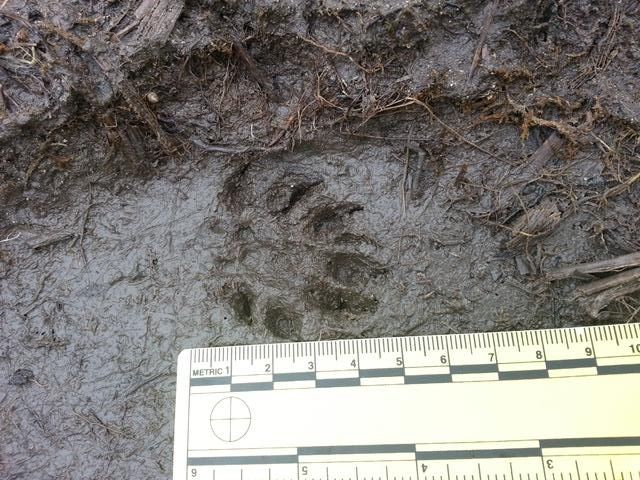
At one of the sites where we have drift fences installed...there's a beaten down path that we follow back to the fence arrays.  This path is often muddy and can be a great place for tracks.  This week we found some rather nice Mink (Neovison vison) tracks.

The tracks below are a double-register (where the back foot lands almost directly on top of where the front foot had been), which is why there appears to be so many toes in this track.

Photo by K. Rutzen
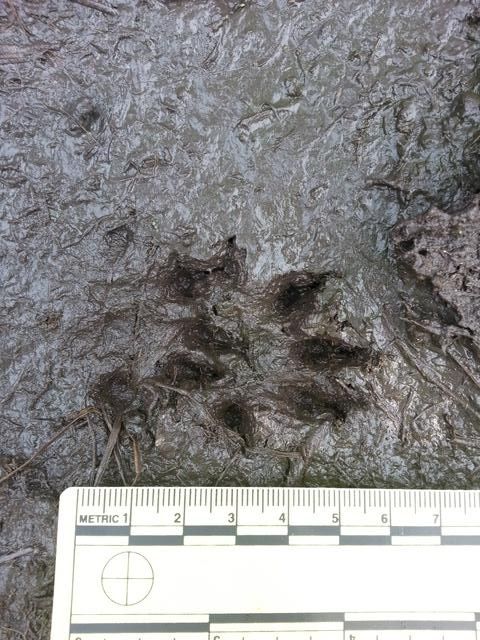
The tracks below show the front and back foot with better separation. Here you can pretty clearly see the five toes from each foot, which helps identify the tracks as belonging to a Mustelid (weasel/mink/otter family).

Photo by K. Rutzen
Other critters have five toes....such as the very common Raccoon (Procyon lotor).  Yet, Raccoon toes tend to be (proportionally) much longer than the toes of Mustelids.  Raccoons also have plantigrade locomotion/stance, where the entire podials and metapodials (basically the entire soles of their feet) come into contact with the ground at each step.  This creates a long flat impression, compared to the Mink above.

See an example of a plantigrade stance below (the squirrel is the example here).  Also note the digitigrade stance of the canines (basically standing on their toes, or digits, which is often associated with speed and maneuverability) and the unguligrade stance of the deer (standing on the nails, or tips of the toes) which futher increases the length of stride for super-fast running! 

Source: Animal Diversity Web (http://www.arlis.org)
Mink have more of a digitigrade stance, which is particularly obvious when compared to a Squirrell or Raccoon.

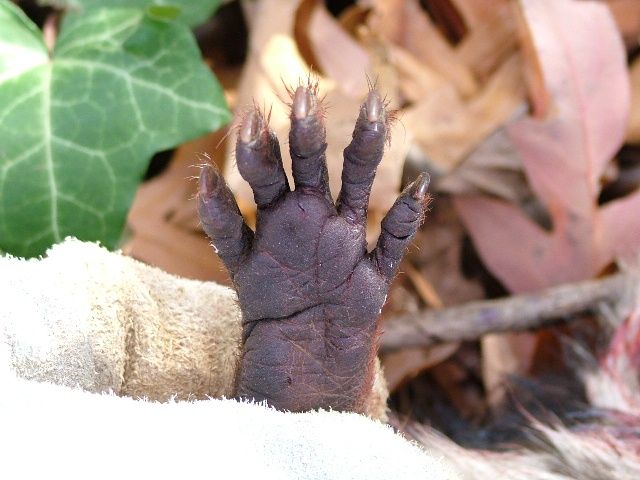
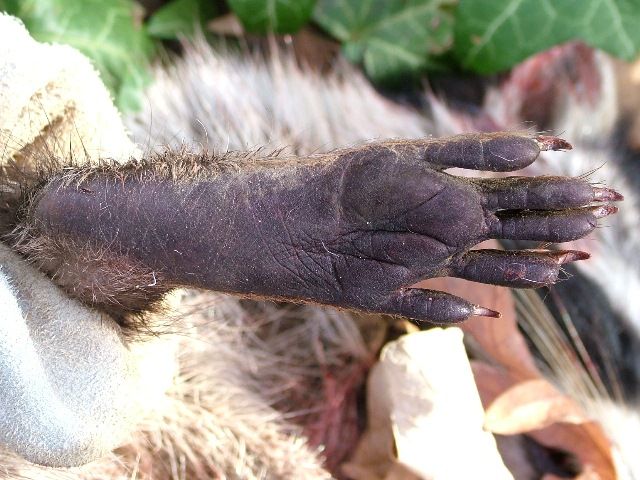
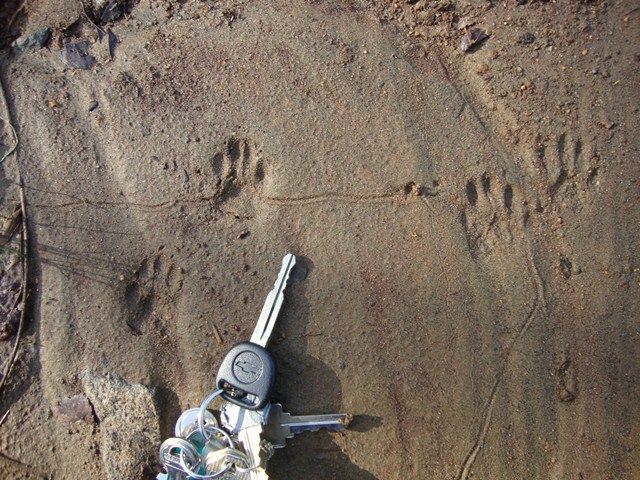
In fact...see the pictures (below) of a Raccoon hind foot from a roadkilled individual I happened across back in North Carolina several years ago.  Note how these feet have long fingers and very long "soles".....  You can also see the types of imprints Raccoons make in the third picture below.  See the long toes and long foot impression (the key in the picture is almost exactly 3 inches)?


Raccoon forefoot

Raccoon hindfoot


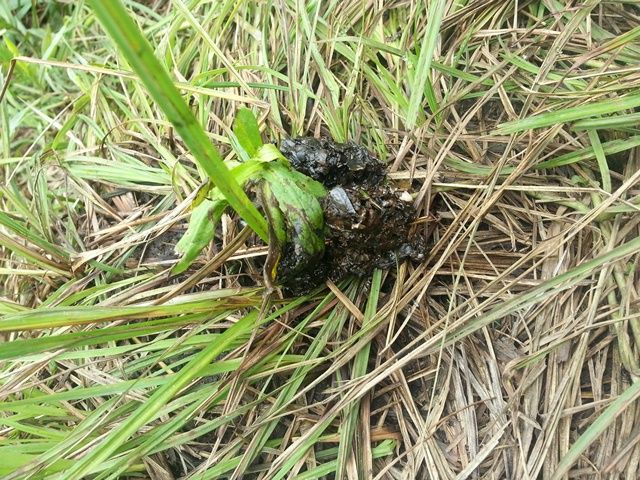
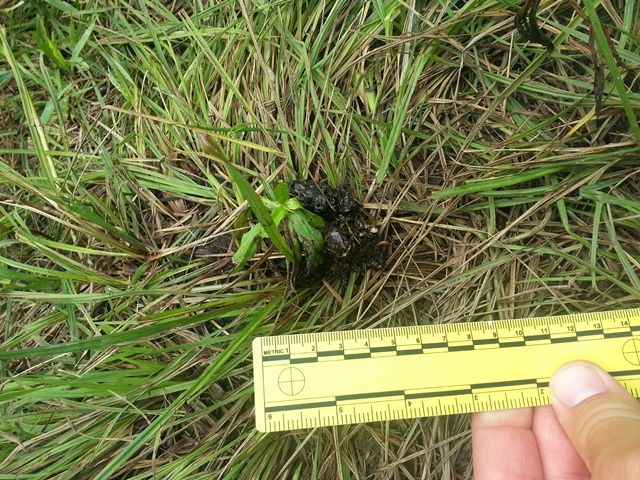
As we reached the banks of the stream we have to cross during our trek, we came across a possible Mink scat (likely from our little friend whom left the tracks).  Note the bits of crayfish and possibly some snailshells in there.  Seemed too small for Otter scat to me.  Couple this with the nearby tracks, and I'm leaning towards Mink on the ID for the scat.

Photo by K. Rutzen
Photo by K. Rutzen
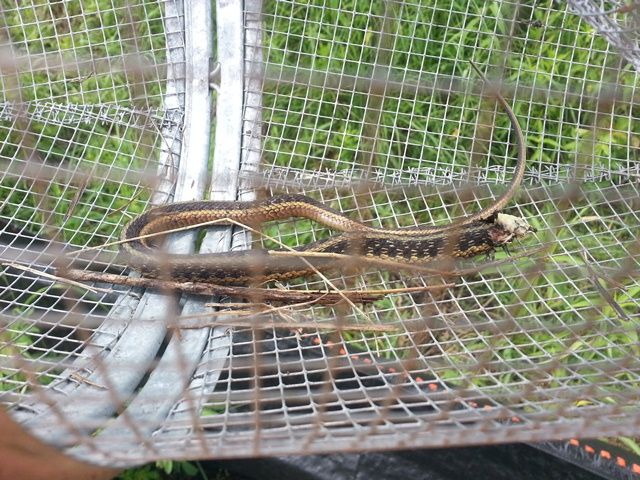
Of course, these fuzzy cutesy critters can also be a wee bit O' trouble.  Something ate half of a snake captured in our drift fence trap the day we found the tracks.  I'm hoping a Raccoon, just because I don't want to have to blame the Mink, which I have such a soft-spot for :) .....but regardless, this could become a problem.

Photo by K. Rutzen
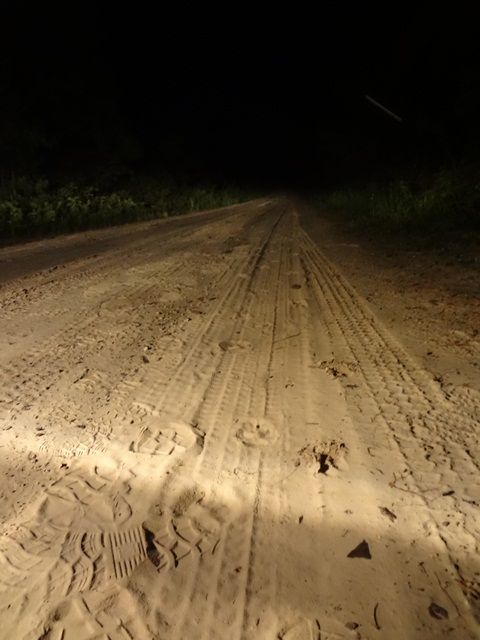
The students working on the Wolf Project also see lots and lots of cool tracks when up north.  The soils up there are very sandy, which can be great for tracking.

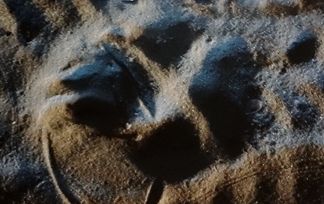
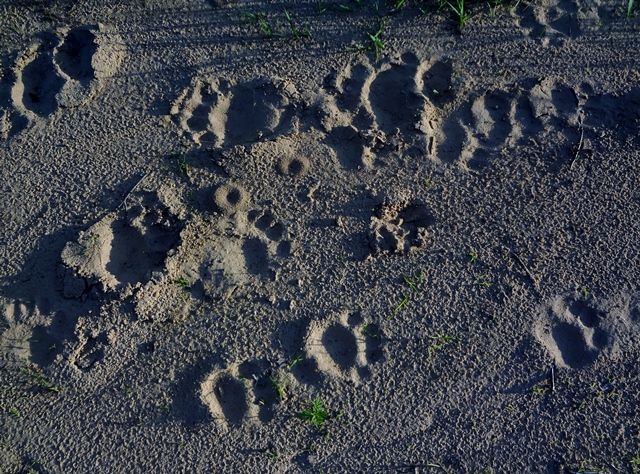
They see the tracks of Wolves (Canis lupus).  The ones below were apparently freshly laid over their tire tracks when they returned to the campsite after an evening of field work.  The thing I really like about this picture is it clearly shows the obvious "X" (between the toes and inter-digital pad) that is indicative of canine tracks.


Photo by S. Wyrick

Photo by S. Wyrick
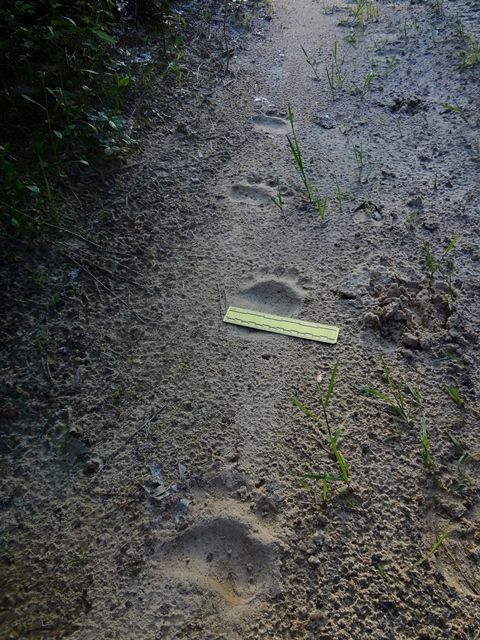
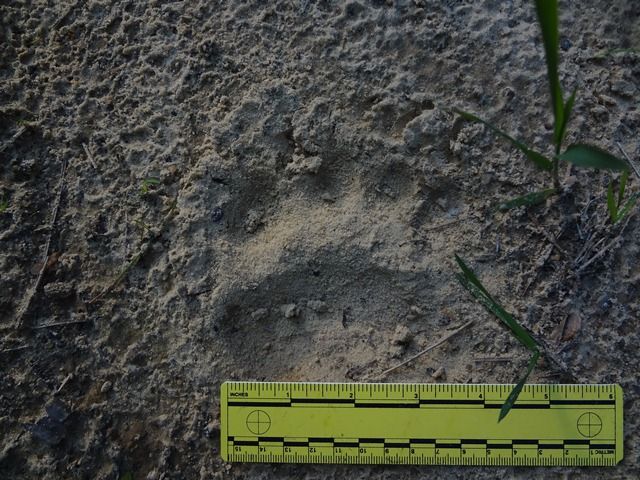
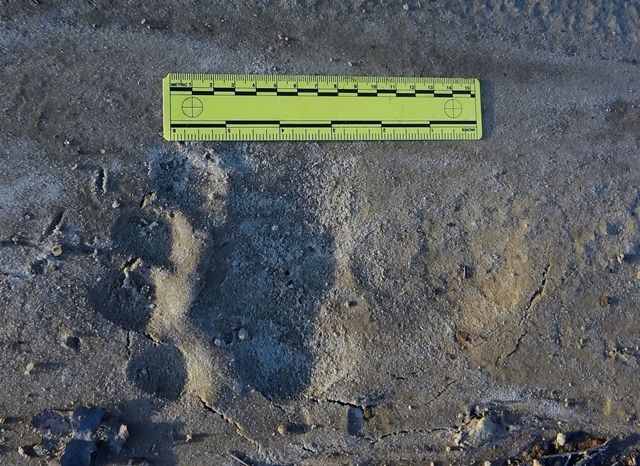
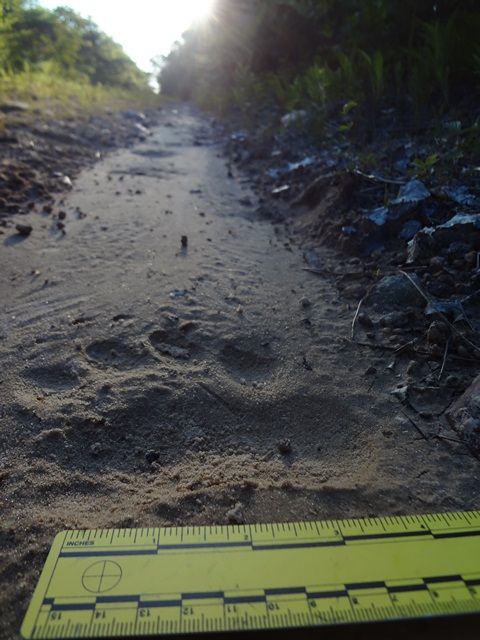
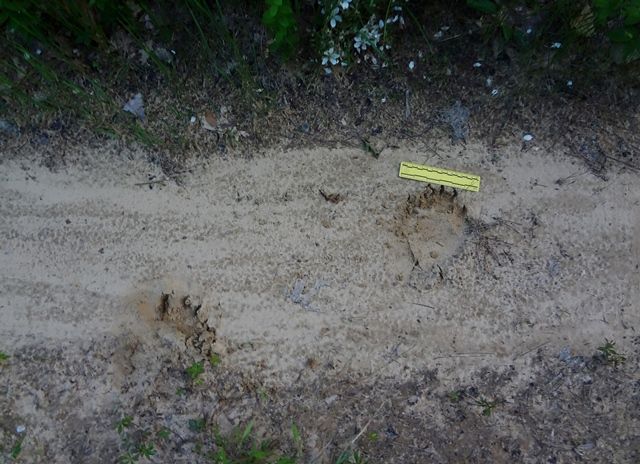
They also see lots and lots of nice Black Bear tracks (Ursus americanus).  Bear tracks are fairly obvious and easy to identify.  They are big, first of all....and sort of pigeon-toed.  There's nothing like them at that size in our neck o' the woods.

Photo by S. Wyrick
Photo by S. Wyrick
Photo by S. Wyrick
Photo by S. Wyrick
 
Photo by S. Wyrick
 
Photo by S. Wyrick
 
Photo by S. Wyrick
Photo by S. Wyrick
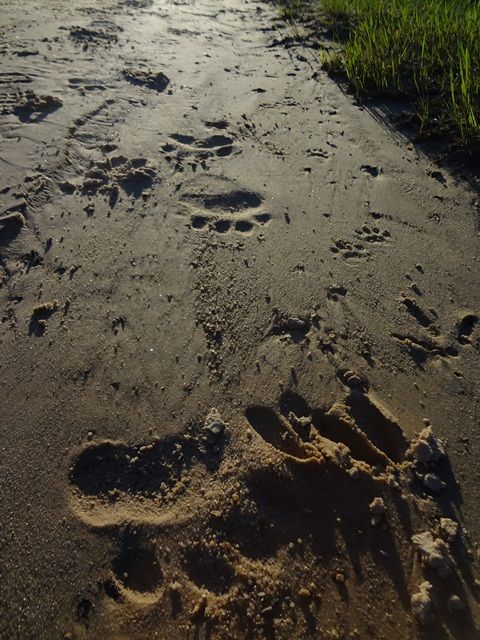
This last picture above is great.  There are a few different critters in there.  The Bear and White-tailed Deer are obvious.  There is also a bird (to the right), that could be a Wild Turkey, a Sandhill Crane....or perhaps a Great Blue Heron.  There are also some smaller tracks that are hard to identify, but Bobcat is not out of the question.  The tracks are comparable to Bobcat tracks, although there is barely a hint of maybe a fifth toe (and the Bobcat has only four toes).  Yet, the gait could be what Paul Rezendes shows as a "fast walk" for the Bobcat on Figure 7.15 (1999, Tracking and the Art of Seeing; Harper Collins Publishing).

Another mystery!  Any thoughts on ID of those tracks are welcome!

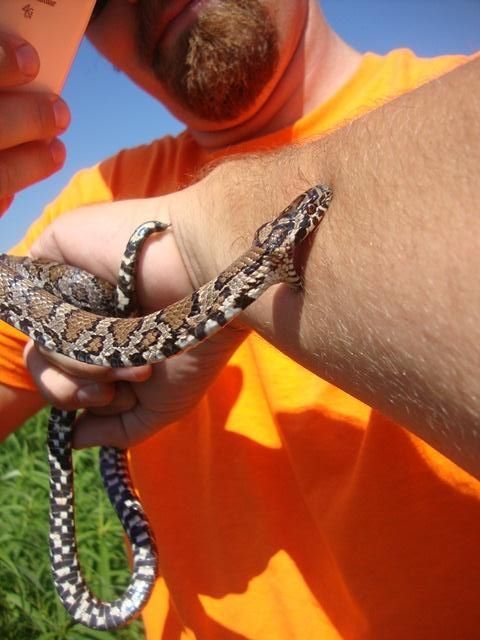
Oh yeah....and just for the heck of it....thought I'd tell you that we caught an Eastern Milksnake (Lampropeltis triangulum triangulum) in the drift fences today. 

I also thought you'd enjoy knowing how much it appreciated being caught.

Wednesday, February 27, 2013

Phenology 2013: Skunks about and students in "lab"

During the week February 20th, we saw evidence of active Striped Skunks (Mephitis mephitis) for the first time since December.

For example, while out and about with my advanced ecology students, I found some nice tracks.

 
These are some of the better skunk tracks I've come across.  As Halfpenny and Biesiot (1988)mention, skunks have a plantigrade print.  In other words, as they walk, their flat foot (heel and all) comes entirely into contact with the ground.  Contrast this with the digitigrade tracks of canines, whom basically walk on their toes (or digits....see the fox prints below and elsewhere on this blog).  Skunk tracks can be fairly easy to identify, if you get a good print, due to the chunky-looking pads on the heel and ball of the foot (which are clearly separated from eachother).  Yet, Halfpenny and Biesiot also also state that skunk tracks are often "indistinct due to the sloppy walking and long hairs on the feet".

So, I felt fortunate to find such nice prints.

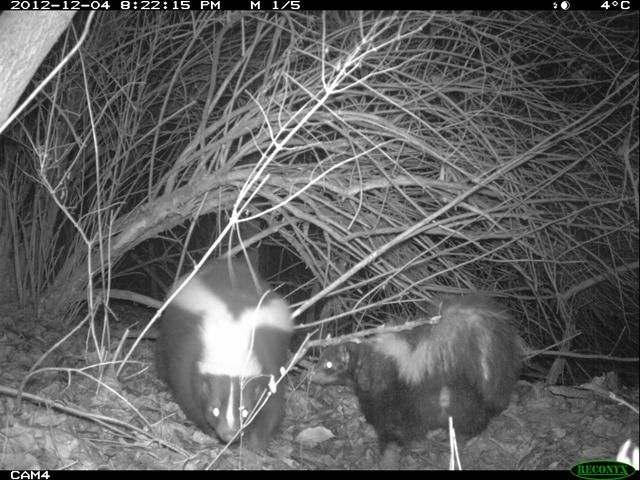
The last good evidence of active skunks on-site was a brief glimpse during our first snow-storm of the winter (seen below investingating an old burrow) back in late December. 
 
Prior to that, it was early December.  This was an also during an uncharacteristically warm beginning to the winter.

But...now they are on the prowl again.  February can be an important breeding period for them 'round here.  Interestingly, it is also the same time (within a couple of days) that I first got pics of them active in 2012 at this site (see here).

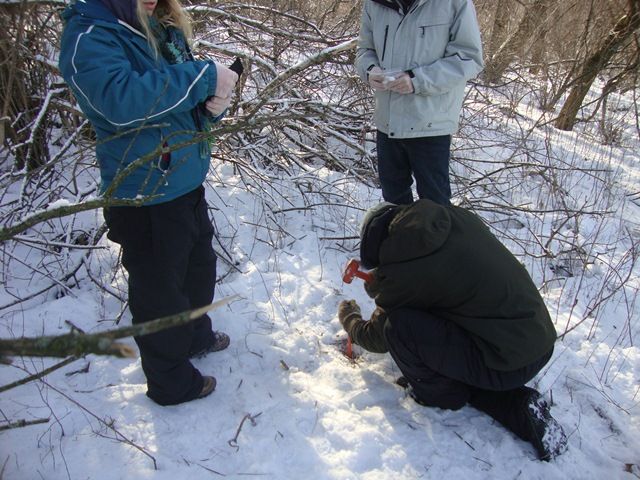
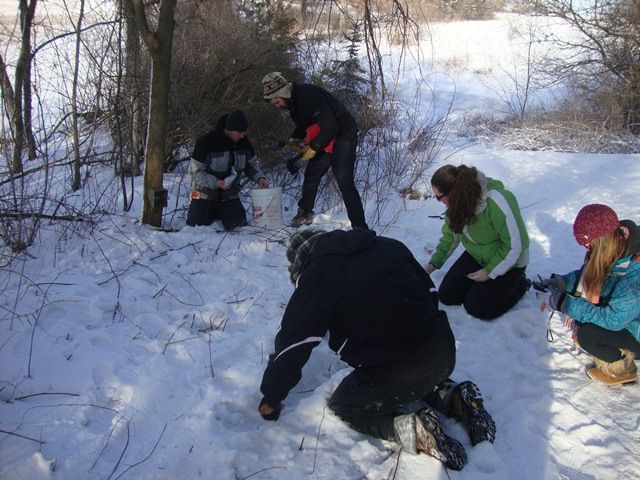
The students were also setting up some scent stations last week during "lab" (outdoor lab, that is....indoor labs give me a case of the BORINGS! :)  ).  This is similar to the experiment we set up last year.

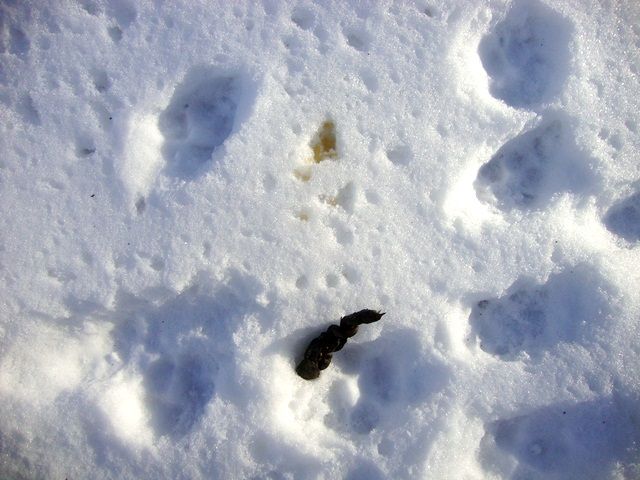
A good indication that you've found a decent spot is the presence of scat....tracks....or a urine mark.  So, how about all three?!
I'd say that if a Red Fox (Vulpes vulpes) decides to leave that much sign around, it's a good spot for a camera set and scent station.  An interesting thing to note: look at how small that urine spot is?  Probably not alot of urine deposited when marking that location.  Do you y'all think that might give a good indication of how much scent one should put down to attract fox?

This year, unlike last year, frozen ground was a force to be reckoned with.
But they managed...

Now we wait to see who meanders by.....