Showing posts with label population estimations. Show all posts

Sunday, February 5, 2012

Advanced Ecology Lab Week 1: Deploying Camera Traps


Students enrolled in Advanced Ecology this semester are sort of guinea pigs.

Teaching this class for the first time in the spring has resulted in many challenges already (and we're only in the first few weeks of the semester)....although none have been insurmountable so far.

The biggest challenge is: what does one do with college students enrolled in a spring-semester ecology course for their laboratory exercises?  This course has traditionally not been taught in the spring here, due to the cold and snow, which makes outdoor laboartories alittle challenging.  Well, there are a variety of indoor labs related to ecological concepts that have been designed  (grabbing different sized bolts and screws to demonstrate optimal foraging theory and etc.)....all of which work well, I'm told, and are pretty fun. Yet...these types of labs are not really my style (not saying they aren't probably cool, though).  So, I thought and thought about this whole thing for a long time.  Do I have them do some relatively safe indoor labs, that will probably be informative....or do a risk outdoor labs in the winter with unpredictable weather, and mostly new untested lab exercises....but with the potential to give the students some very cool applied field experiences?  Finally, I came to the realization that I'm a field biologist. As such, it just wouldn't feel right if I wasn't dragging these kids through the cold and snow.

So, that's what we're doing.

We have been given access to a bit of property not far from campus, and the students have been charged with a task associated with a hypothetical situation.  The hypothetical is as follows:  landowners would like to develop the property we are working on. However, due to its proximity to a protected natural area, our state regulatory agency is requiring some assessments be done prior to granting development of the site.  Therefore, the students have been "hired" to conduct a battery of ecological assessments of this property and write a thorough report of their findings that will be submitted to the regulatory agency (i.e. me).  Included in their report must be recommendations on whether the land is valuable both (a) as its own entity and (b) in the context of the landscape.

Will everything I have planned work throughout the semester?  I dunno...  In theory, yes. 

But, if these assessments don't all work....well....that's field work, and also a great lesson.  It's a great bit of reality for young ecologists to experience adversity.  In fact, overcoming adversity and learning to roll with it when things DON'T work is probably as important a skill for young field ecologists to learn as anything!

Week 1:  Site Reconnaisance and Camera Deployment. 

Due to the cold weather and potential for snow, we have to focus on mammals early in the semester.  So...we eased into things with a relatively simple task: a reconnaisance of the site we'd be working and student groups selecting sties to deploy camera traps. 

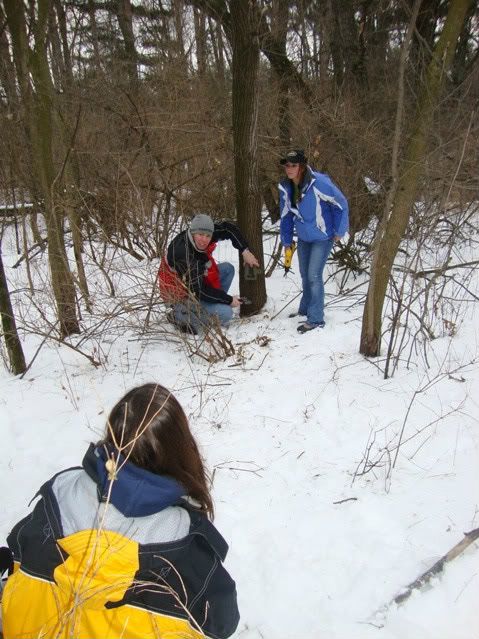
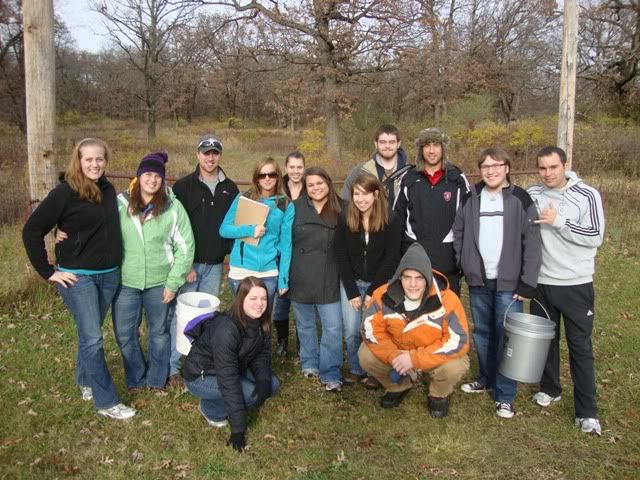
Three groups of students each chose locations for two cameras......so six cameras total.

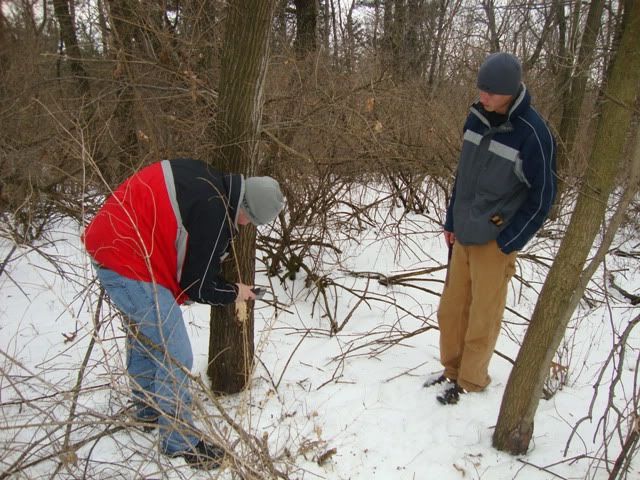
One of their locations had to be in a woodland ......
....and one in the "grassland" or savannah on-site.
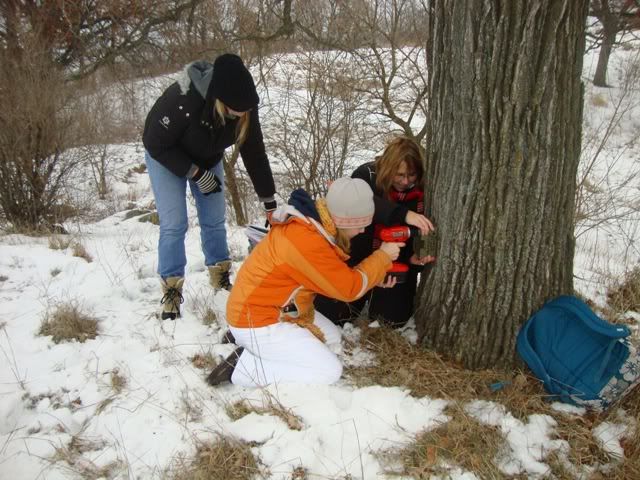
Then, they grabbed a GPS reading of the location.....
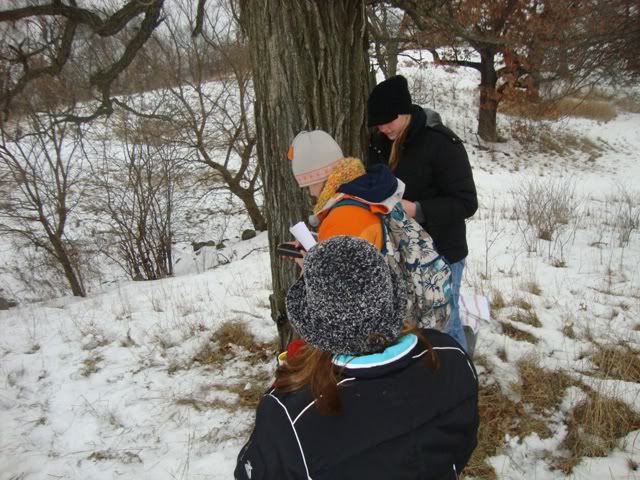
So, the cameras will be checked every week for a couple of months in addition to the other lab exercises the students will have to complete.  I'll hopefully post some hard data from our results in the future. 

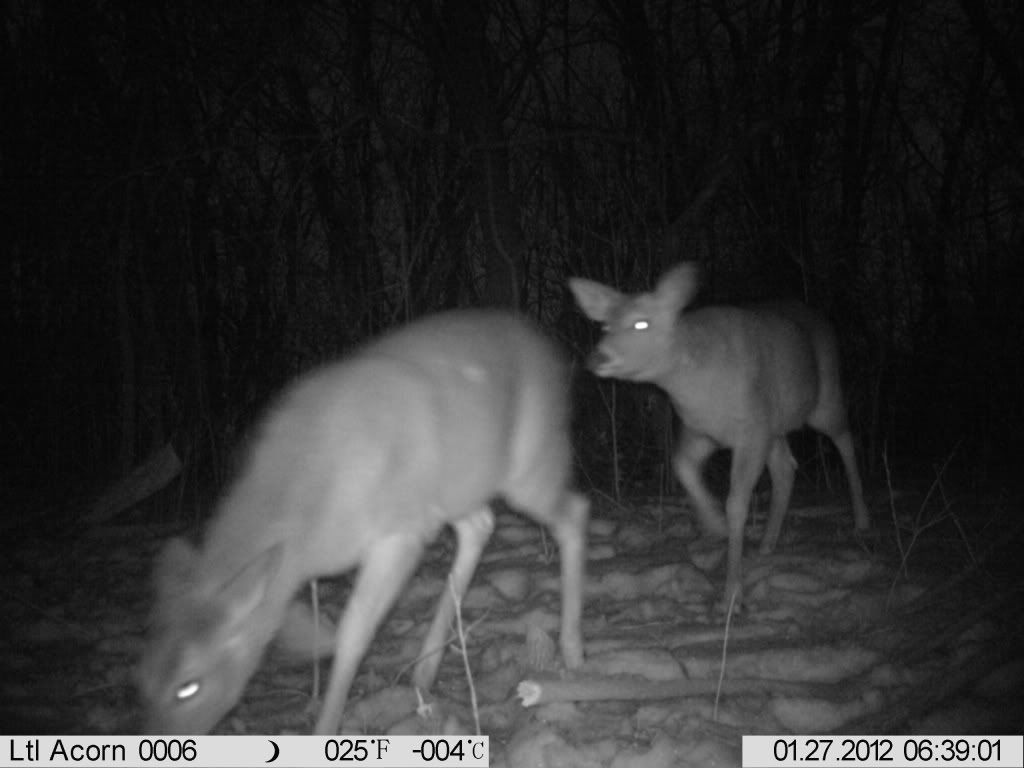
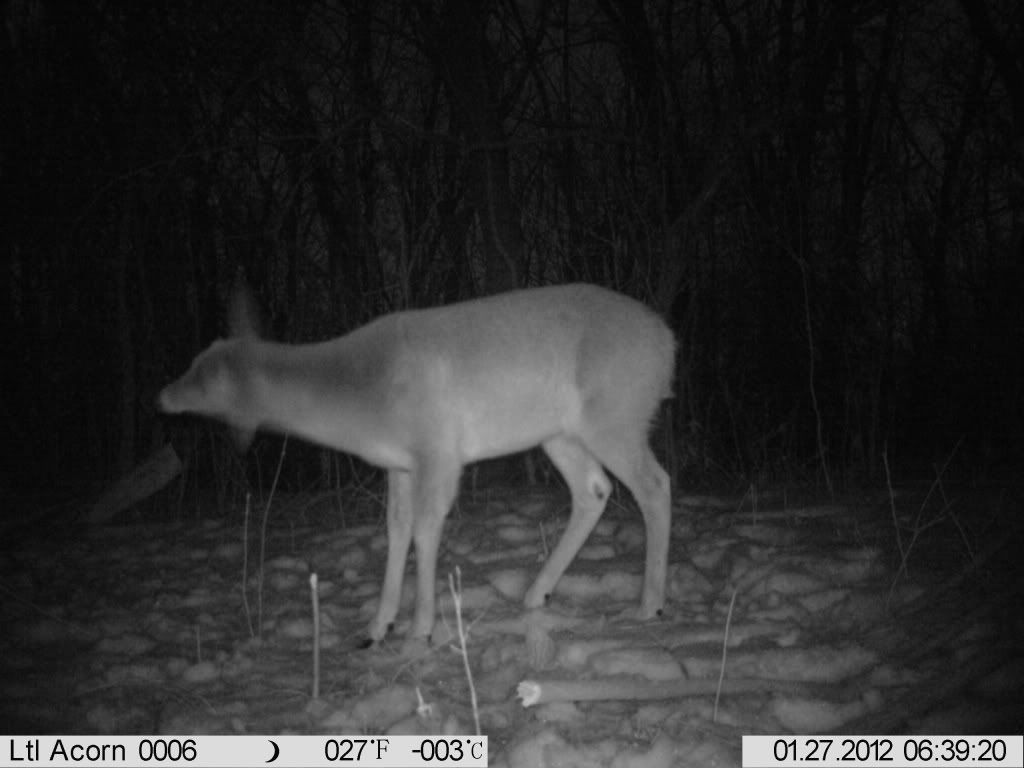
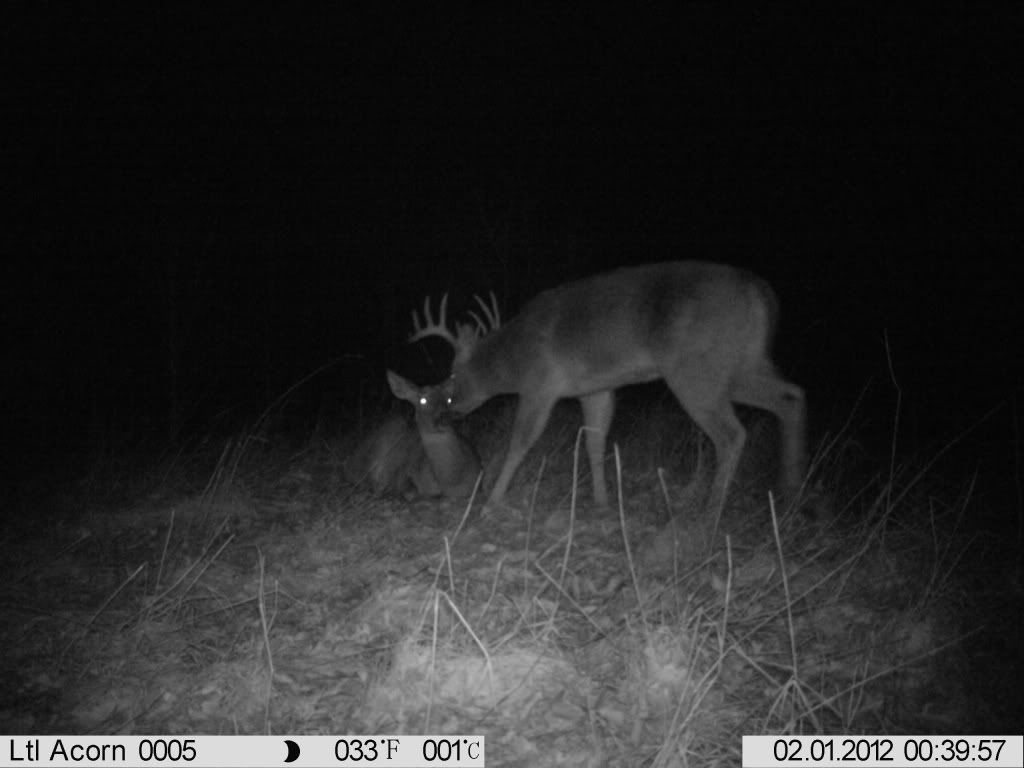
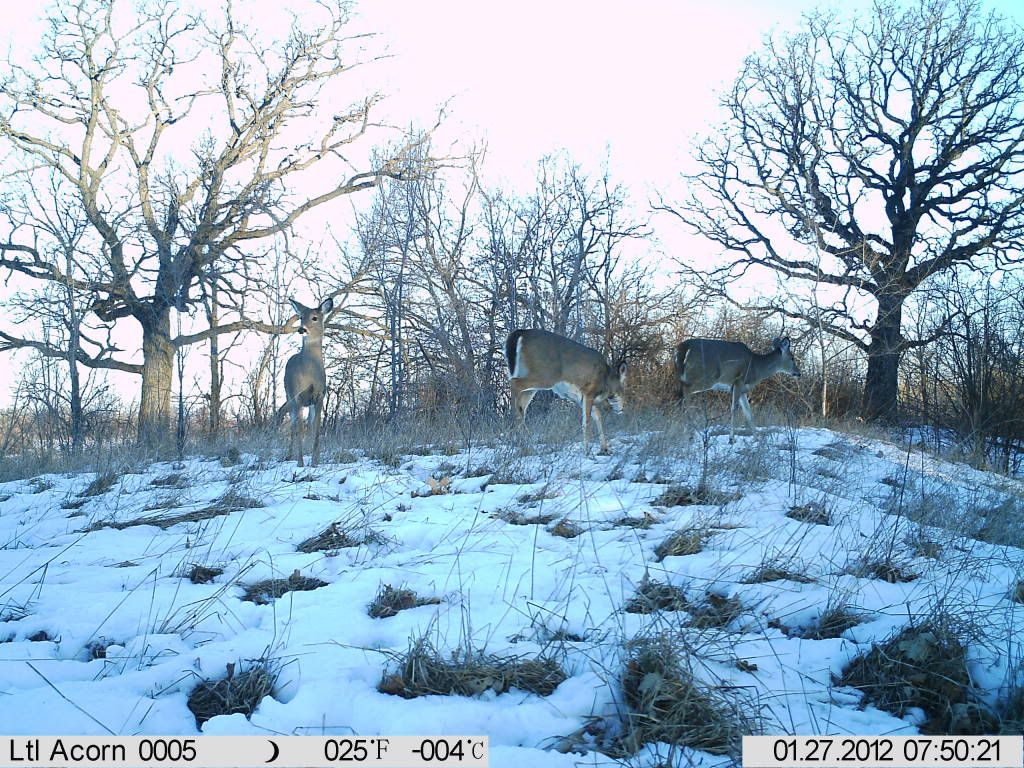
But..I'll post cool pictures here and there.....we did get a few neat shots during the first week already (although they are basically all of White-tailed Deer).

Anyways, here's a smattering of examples, such as......

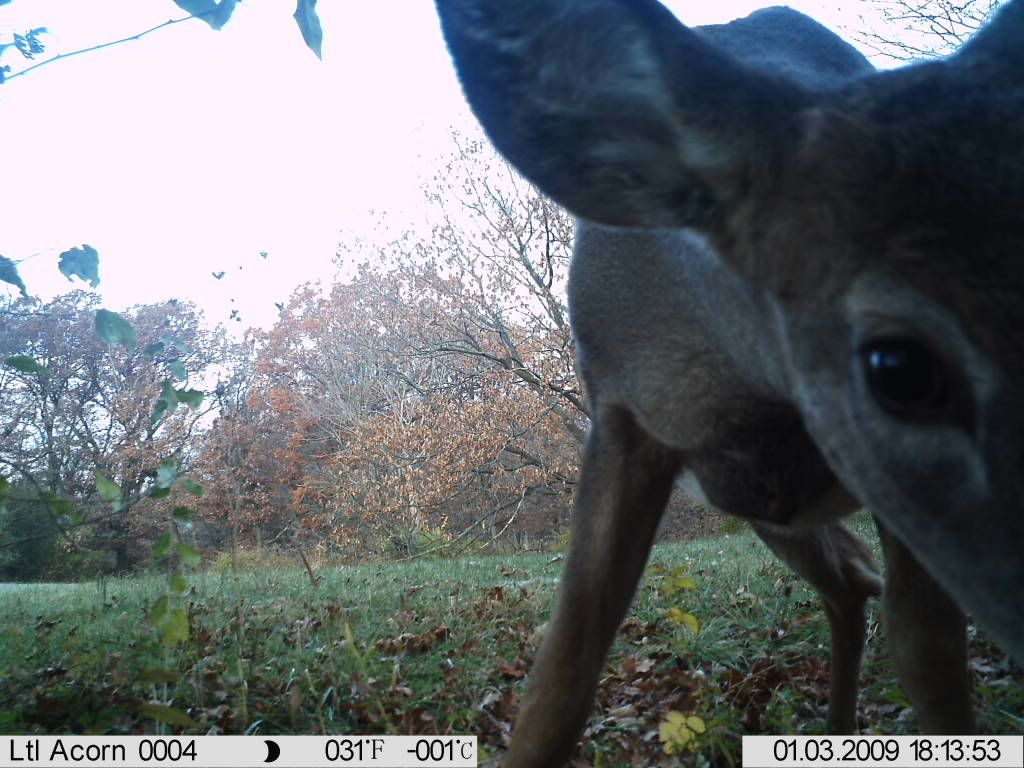
The close-up....


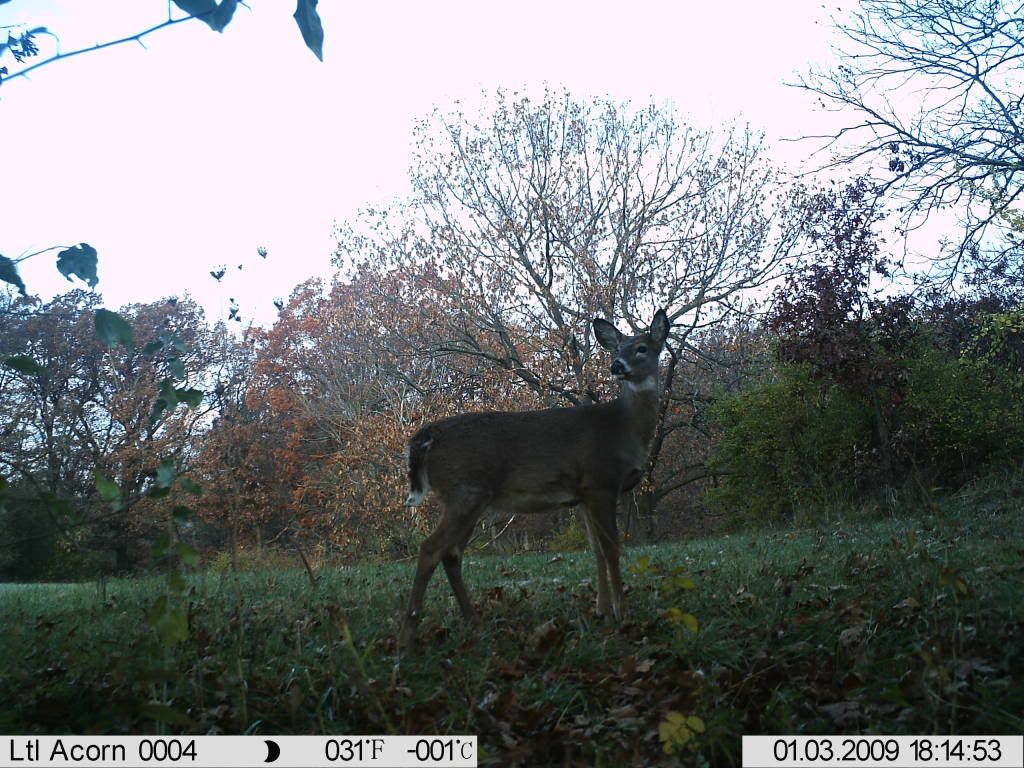
The follow-up....

The Shake....

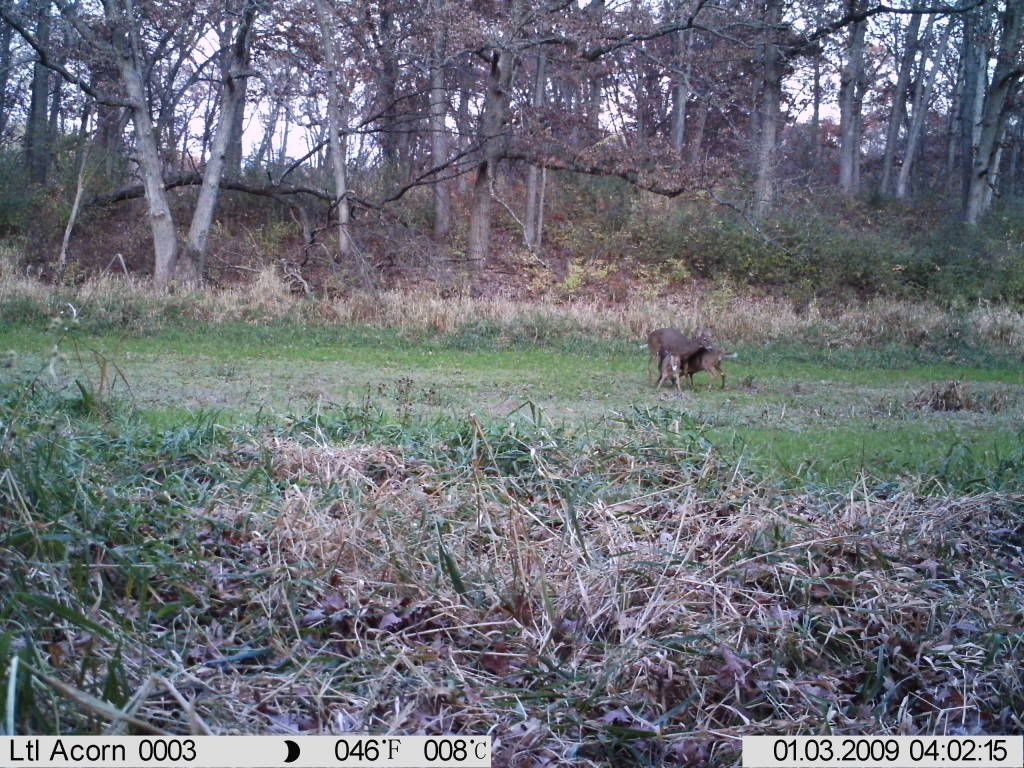
The "move"....

The swinging hang-out spot....
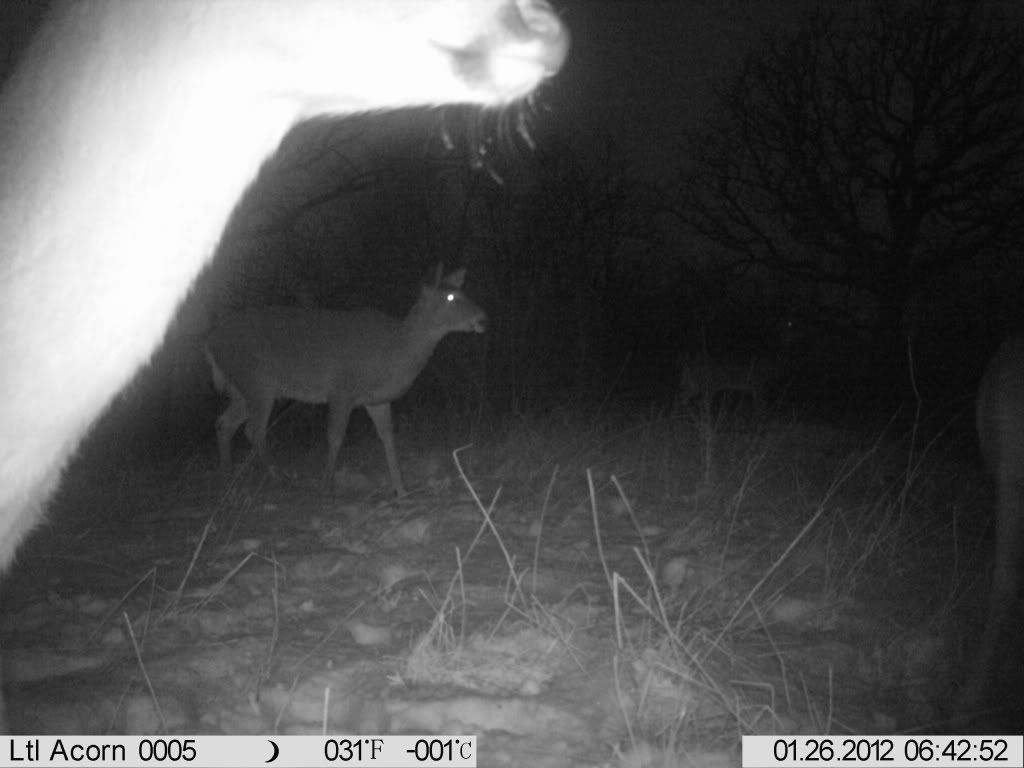
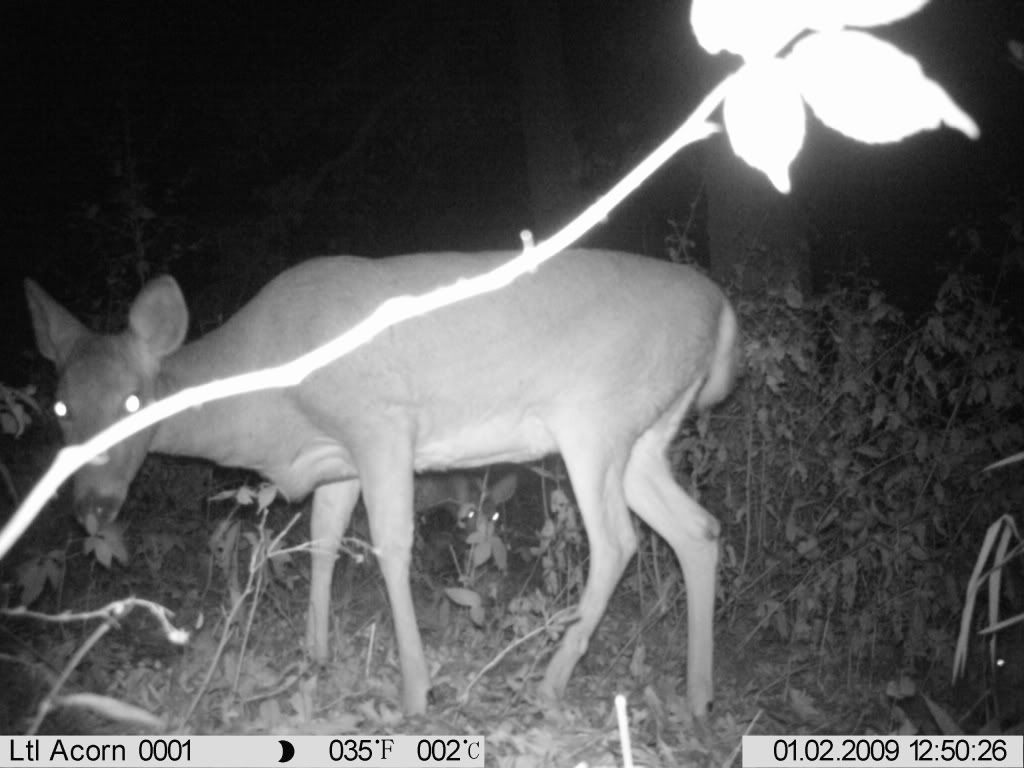
And....El Diablo....

Also got Red Fox, Coyote and Raccoon passes, but the pictures weren't good enough quality to post them.

Sunday, November 6, 2011

Field Laboratory I: Camera Traps & Population Estimates

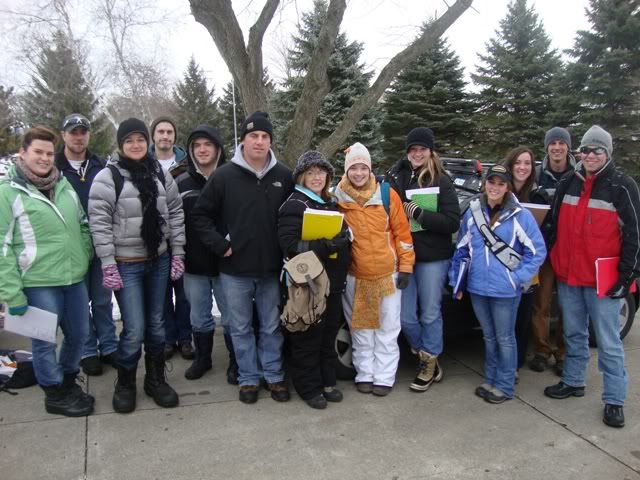
Above: advanced Ecology students, fall 2011, prepared to go out and check their camera traps!

Traditional methods used to estimate wildlife abundance/population size typically involve some sort of capture/mark/recapture technique.  In other words, you go out one day....catch a bunch of animals in traps...give them a unique mark (i.e. an ear tag, etc.)....release them and then on day two see how many marked animals from the previous day that you recapture.  The calculation involves a comparison of the ratio of marked to unmarked animals caught during the two days, and this allows you to estimate the population size.

With camera traps, these traditional capture/mark/recapture methods can be difficult to use.  Some species allow researchers to identify individuals via unique natural marks/patterns (ocelots, jaguars, tigers, etc.).  Identification of individuals via natural markings is alittle more tricky with the critters in the upper Midwest.  Most raccoons and white-tailed deer are hard to distinguish from one another.  If, for example, you obtain three pictures of coyotes over three days (1 coyote during each day), it's pretty hard to tell if this is the same individual on three occasions...or three different individuals.  Of course, one could trap them and put ear tags on them, etc...but to do this creates a laundry-list of other issues (not the least of which being acquisition of proper permits).

There is, however, a model that allows for researchers to estimate animal abundance with capture-only data (i.e. no recapture data of marked individuals).  It's called the Royle-Nichols Model (Royle & Nichols, 2003), and is perfect for analyzing the type of data frequently generated by camera traps (i.e., pictures where it can be difficult to tell individuals apart over time).  This model assumes that the probability of capturing an animal is a function of how abundant that animal is on-site.  In other words, an animal that is captured frequently by camera traps probably has a high abundance, and the model can calculate this abundance for you.   

So between learning the application of this abundance-estimate model and getting to work with camera traps in the field.....the field ecology students involved in this exercise are gaining some great applied skills.  

So it was that our advanced ecology students found themselves wandering through the woods at large woodland restoration site about 1/2 hr from campus.

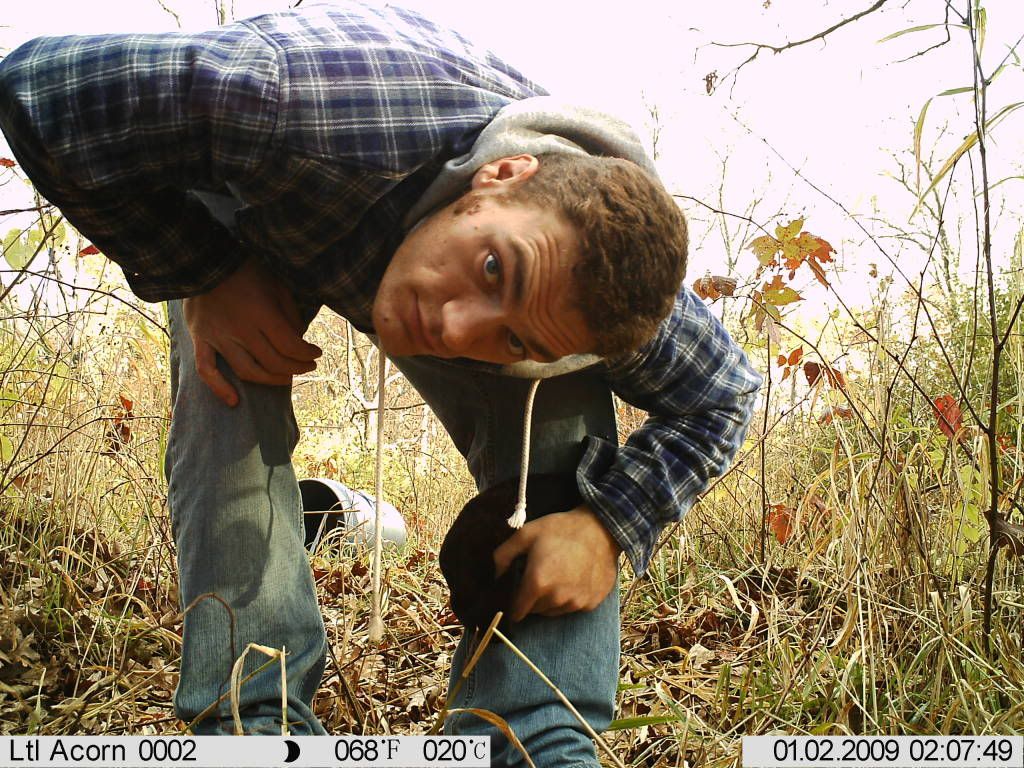
Note: ignore the date and time stamps on the pics below.  I'm not sure if these are programming issues or malfunctions, but we obviously were not out there in January of 2009!

____________________________________________________________________

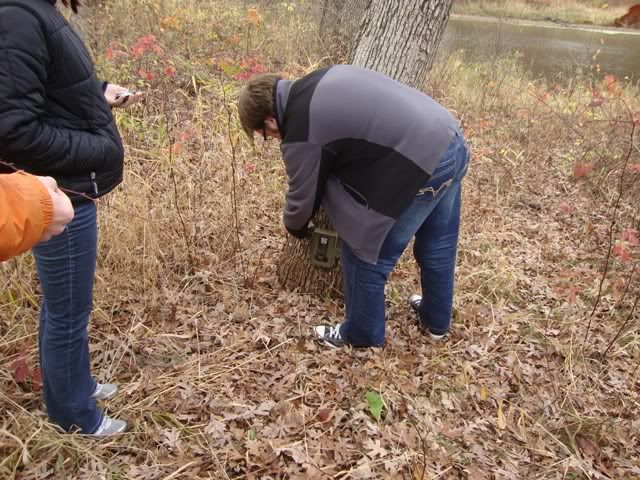
The students and I started off by deploying the cameras.....


...next we carefully checked them to make sure they were on.....

...of course, in our absence, the critters were nice enough to do the same.....


Then....after a week.......we returned.

We pulled the cameras and checked the pictures back in the lab.  As it turned out, we had three species to work with for our exercise in estimating population size with capture-only data.

The ubiquitous White-tailed Deer (Odocoileus virginianus)

The wily Racoon (Procyon lotor)

And the Fox Squirrel (Sciurus niger)....at first I had just written this off as an Eastern Gray Squirrel (it's too easy to resort to calling any squirrel an eastern gray 'round here!)...but was luckily set straight by JVN over at Backyard Beasts!

Every camera caught pictures of something....and even got some pretty neat shots (I'll hopefully post more of these later as well).

A rather nicely posed doe....

Another shot of a doe, who is apparently still nursing a pair of twins!

...see cropped and zoomed in version of this picture below....you can almost feel why she appears to be wincing!

...and a nice 8-pointer...

So we came back and the students compiled their data for all three species.  This included four survey locations (cameras) over seven survey periods (days).  At the end, the Royle-Nichols model gives us the following information:

  • Abundance (with confidence intervals)
  • Average Abundance / Survey Location
  • Detection Probability

The confidence intervals and the detection probability estimate provide means by which we can assess how strong our estimates of abundance are.

Could I provide you with our results?  Sure.

But....why cheat you out of the opportunity to learn how to do this for yourselves?

(Really...the students haven't turned in their abundance estimates yet, which was part of their homework assignment.  I don't want the answers freely available on the internet, should they HAPPEN to see my blog).  :)

Literature Cited:
Royle, J.A., and J.D. Nichols. 2003. Estimating abundance from repeated presence-absence data or point counts. Ecology 84:777-790.


Thursday, July 14, 2011

The Turtle Dogs!

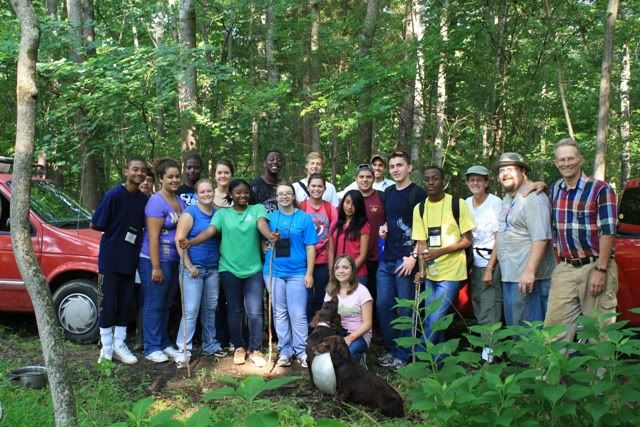
Above: the students, the teachers, the turtle dogs and the turtle dog master!
Photo courtesy of T. Tomasek

_________________________________________________________________________

Well, this week it was hot.  Hot!  Hot!!  And humid.  Sticky, wet, humid.

Heat indices of over 100 on several days....and in the upper 90s every other day.

The worst is that humidity.  Air so thick ya feel like yer swimmin'!  You just can't cool off.  Especially when one is an over-weight male of Germanic/Irish descent (like me :)  )  the humidity is brutal.

Anyhoo, that really did a number on how many critters we caught this week during our normal drift fence and coverboard surveys.  The total captures were down from the last two weeks.

So, that should result in a boring survey round up for this week right?

WRONG!

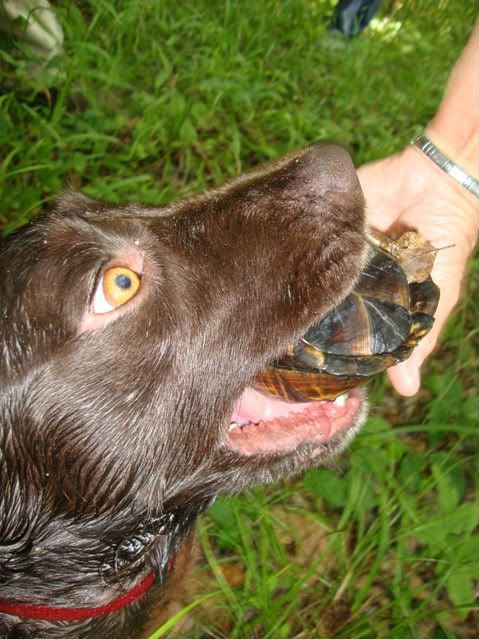
This week we got to take part in one of the coolest things I've been involved with in years.....the use of "turtle dogs" to survey for Eastern Box Turtles (Terrapene carolina) at one of our survey sites.

__________________________________________________________________________

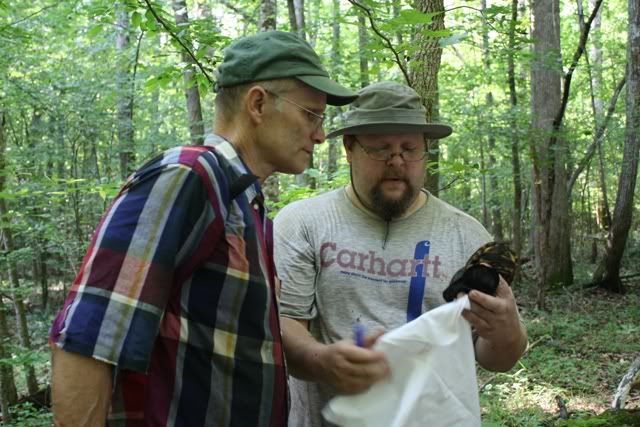
A colleague here at the university has a doctorate in Science Education.  Luckily for me, she also likes amphibians and reptiles!  She created a summer herpetology class for high school students who are interested in going to college. She recently wrote a successful grant to help design and fund this curricula..... and with some of that money she wanted to expose her students to doing surveys with turtle dogs.

Lucky for me, she also wanted to use one of my study sites (which is great, 'cause as much as I wanted to experience turtle-dog surveys....I have not got any money!).

Meet John Rucker (below):  box turtle enthusiast, naturalist, outdoorsman, and turtle dog master!!


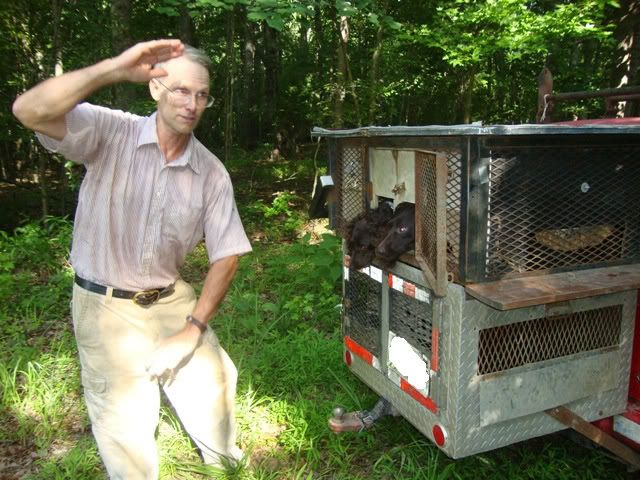
Above: John preparing to release the dogs from their holding crates on the back of his van.

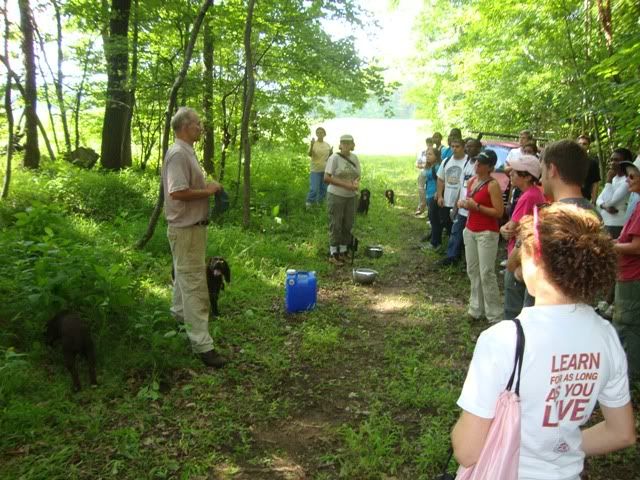
Above: John explaining the process to some students.

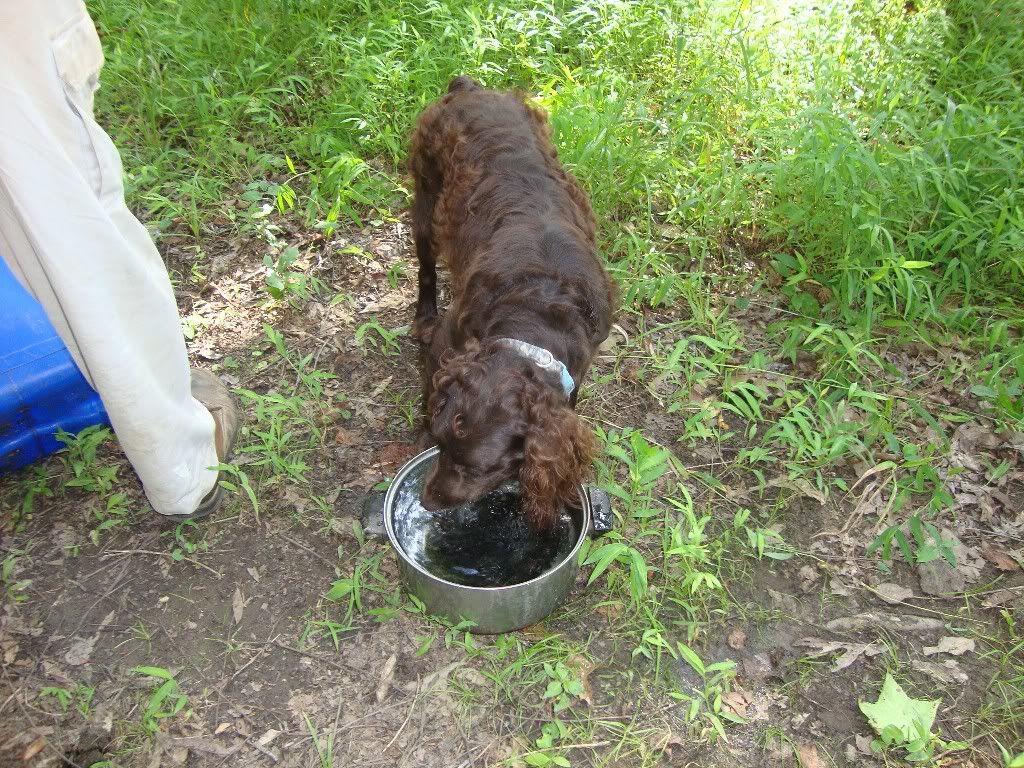
Above: one of the Boykin spaniels who ran turtles for us.  I can't remember this one's name.  Although John brought 8, we worked most closely with three: Mink, Greta, and Ginny Ray.


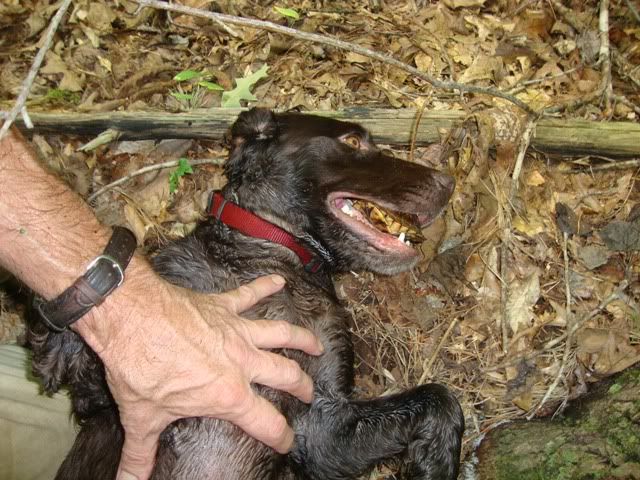
John drove from Tennessee with his fine pack of 8 Boykin Spaniels.  With noses like these canines have...they can sniff out whatever you teach them to find.  Some folks teach their spaniels to retrieve waterfowl they've shot.....some teach theirs to flush quail or pheasant.....John taught his to find turtles!   John charges a very reasonable price for his services, and because of this has done work all over the U.S.

Above: although we only ran a few dogs a day, the others got to be let out of their crates and staked to the ground with a lead to stretch their legs and get some water.


Not only can they find turtles, but they can do it while still thinking for themselves.....and surviving.

John told a story about a little gal of his named Greta that brought this point home brilliantly.  He was in the Badlands of South Dakota...working for a group that was having his dogs look for Ornate Box Turtles (Terrapene ornata).  At one point, Greta caught the scent of a Pronghorn and was gone.....John said they were specks on the horizon before he even realized it.  He waited (his dogs usually come back), and looked for hours....no Greta.  He slept in his van out at the spot he last saw her, hoping she'd return....no Greta.  He figured she had been taken by the land, some Coyotes....or perhaps a Cougar.  But just in case, John had his girlfriend place an ad in the local paper and hoped for the best.

Fourteen days later, he gets a phone call.  The dog had showed up on a rancher's property some 30 miles away.

Now, this work was conducted in an area where a lot of feral dogs run.  The rancher apparently has a policy that any feral dog that comes on his land is shot just as fast as he can get to his pistol.  But serendipity worked in Greta's favor.  The back door of their house happened to be open.  Apparently, the rancher's wife was working at the laundry machine when she felt something nudge the back of her leg.  She turned around and there was sweet little Greta.  Face covered in ticks....ears sticking straight out from all the cockle-burrs....alittle skinny and dehydrated....but alive.

The rancher announced he was going for his gun, but his wife told him to wait.....there was just something different about this dog.  Not a few hours later the rancher's neighbor happened to have seen the ad in the paper about the missing Boykin Spaniel and happened to call the rancher to let him know about it.

And that's how Greta survived her 14 day solo tour of the Badlands.

_______________________________________________________________________

We had John and his dogs come to our study site for two back-to-back days.  During both days, we ran the same number of dogs, through the same area, for the same amount of time and let them catch as many turtles as they could find.

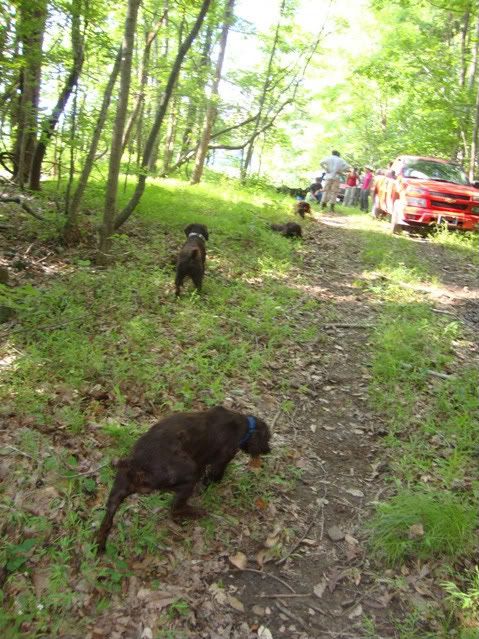
We started each day by taking the dogs to the area we wanted them to search (so they wouldn't become distracted with other scents).  Once we were to the right spot, the dogs went to work...and boy did they work!  The remainder of our time in the morning of both days was spent following and encouraging the dogs....letting them catch stuff...while we followed as fast as we could, flagging the site and bagging the turtles for processing.


Above: walking the dogs down to where the official surveys started.
Photo courtesy of T. Tomasek.

Above: the dogs at work!

Above: Success!

Above: more success!!

Above: Bagging a breeding pair of turtles that one of the girls found.
Photo courtesy of T. Tomasek
__________________________________________________________________________

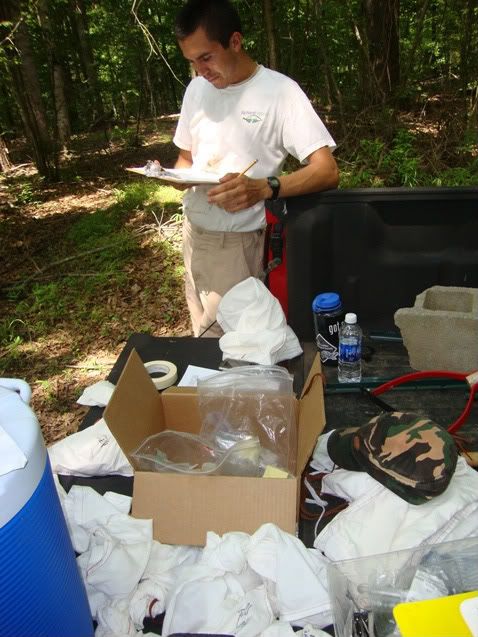
After a few hours of that (in brutal heat, I'll mention again)....the turtles were brought to a central location and important morphological data was recorded.  After the turtles were weight and measured, we gave each a unique mark so they could be identified in the future.  We ended by walking each turtle back to its original capture location using a GPS and looking for the appropriate flagging.

Above: My undergraduate research assistant, Dave, processing the turtles

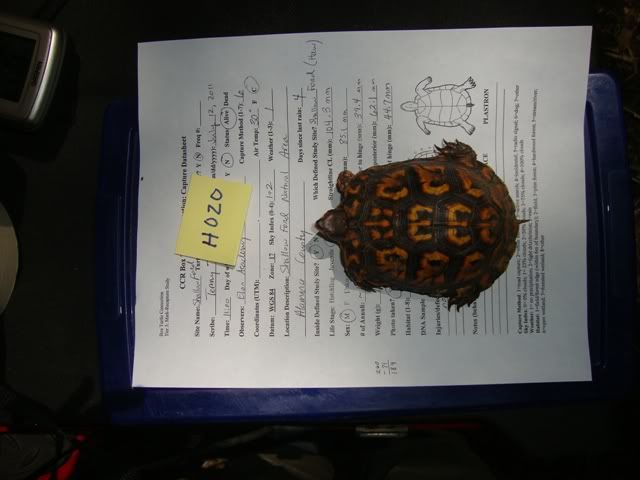
Above: a turtle with standard data sheet.

By the end of that...usually anywhere from 1:30-2 pm...we were all tired and soaking wet with sweat....but did we ever have fun!

So let me put this into perspective for you:  from last August (2010) until this Monday...between myself, Dave, and all of my Wildlife Ecology students last fall....putting in a total of over 300 person hours on this property....have found about 22 Eastern Box Turtles.

In a total of 3 hrs over two days....these dogs found 25!  This includes 5 juveniles (of which I think I've seen ONE previously).

You know what I say to that?   Who's a good dog!?  Who's a good doggie? 


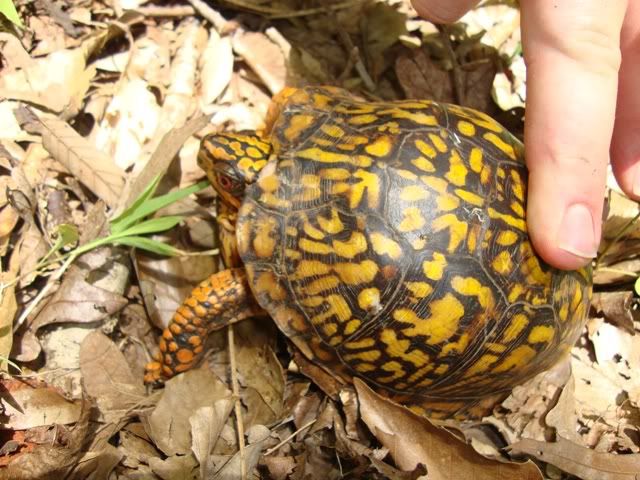
Above: Turtle number H023.  One of the turtles originally captured on day one, who was recaptured during day two of the surveys.