Showing posts with label Squirrel. Show all posts

Thursday, August 9, 2012

The Mad Sciurus

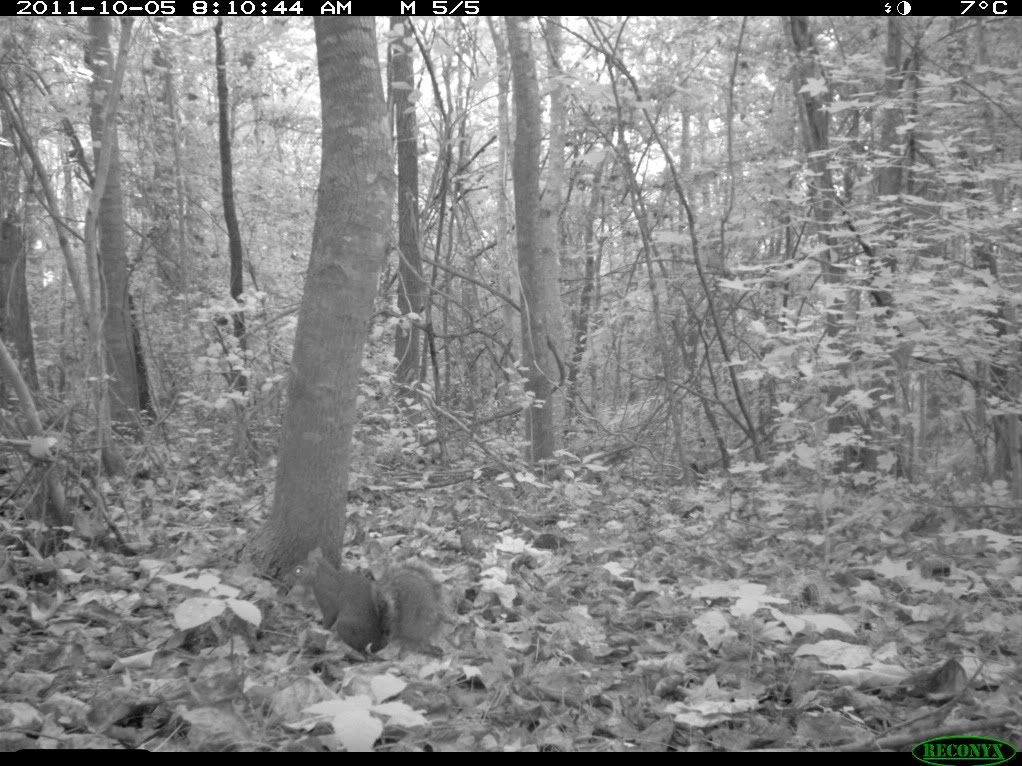
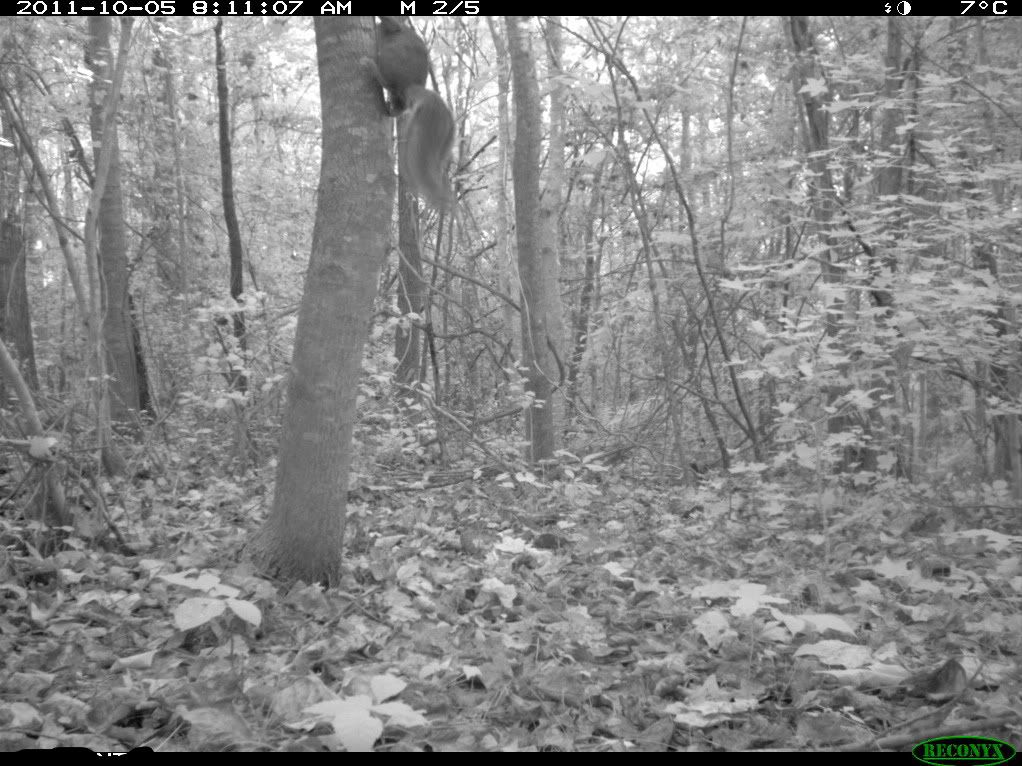
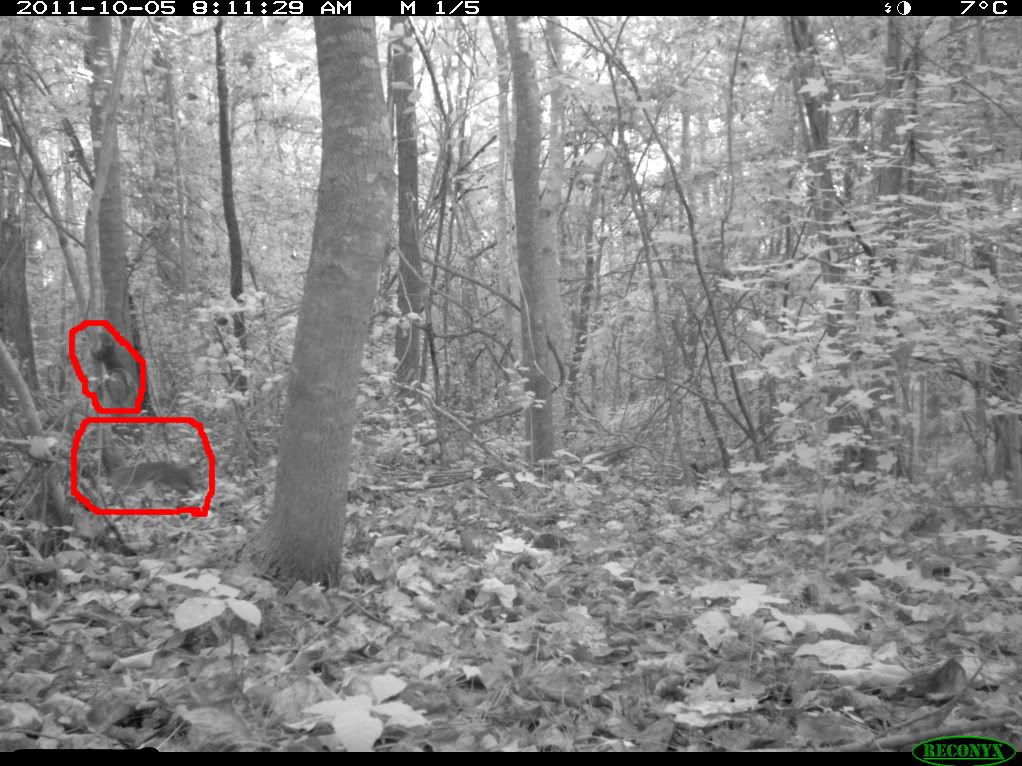
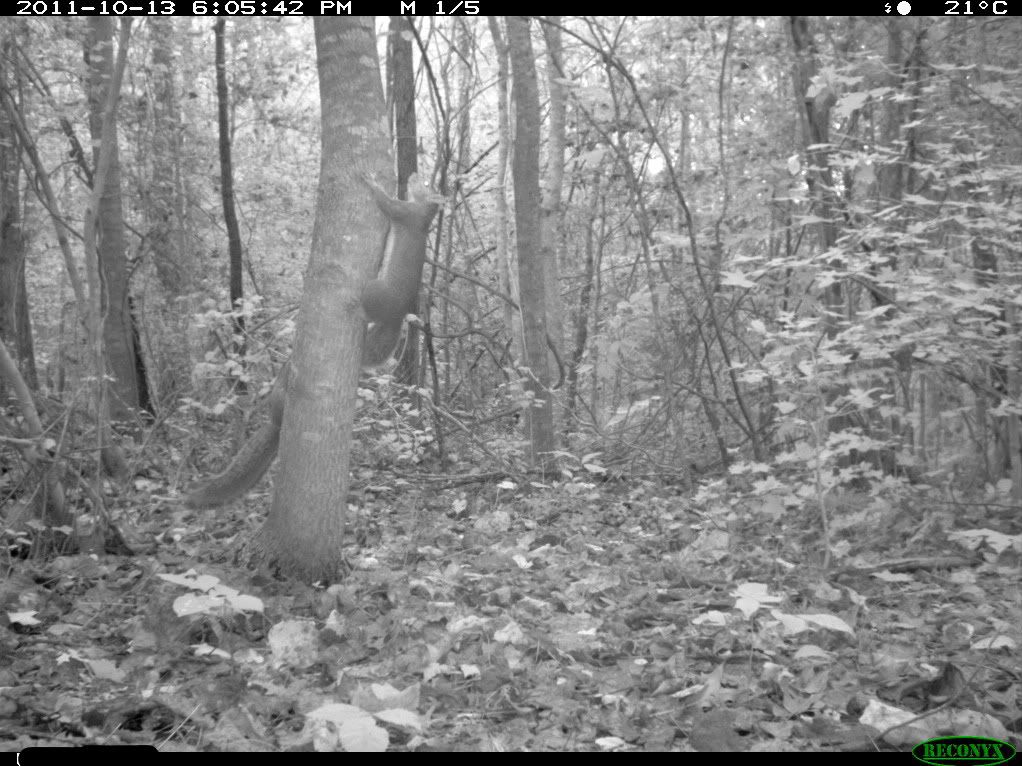
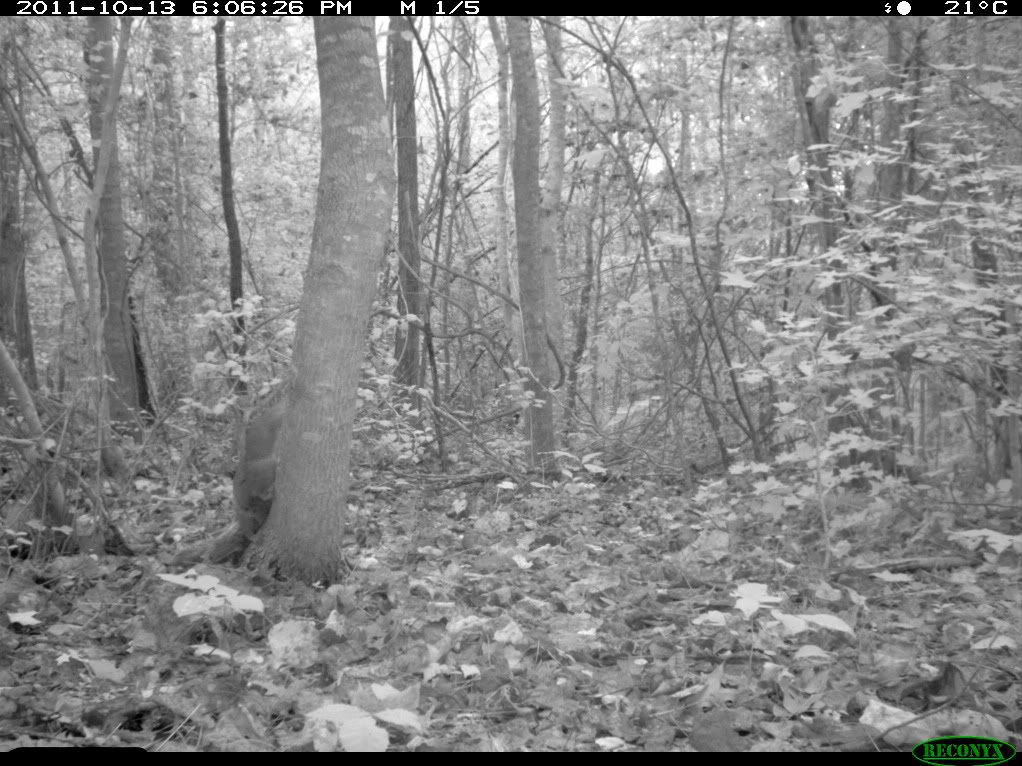
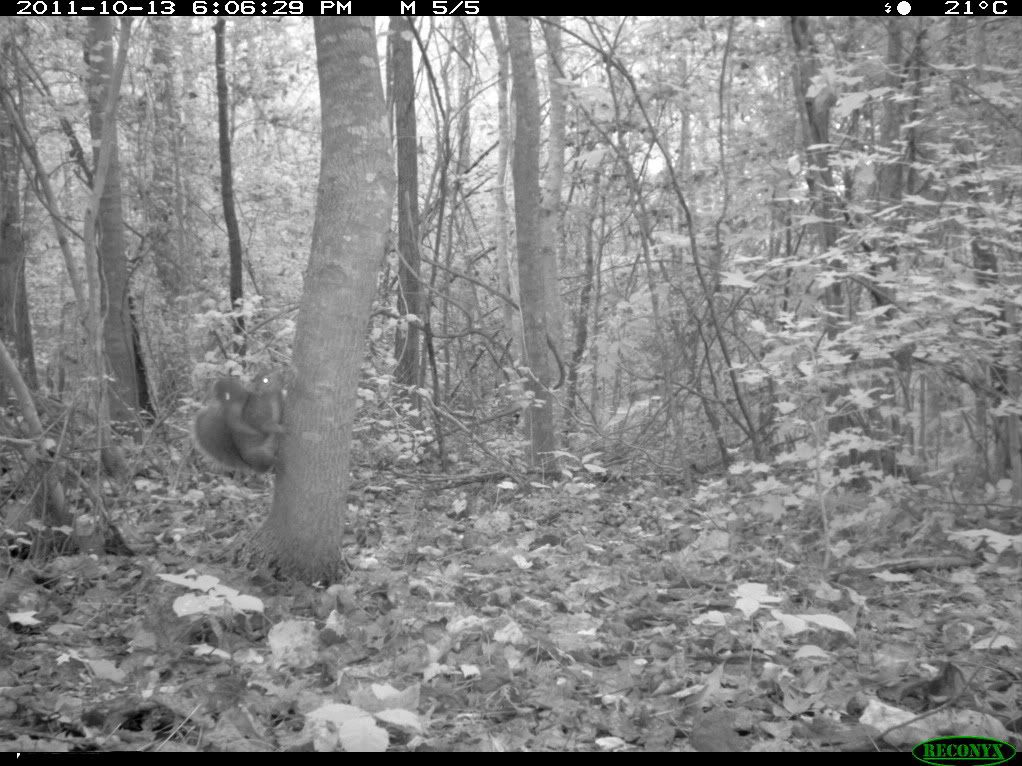
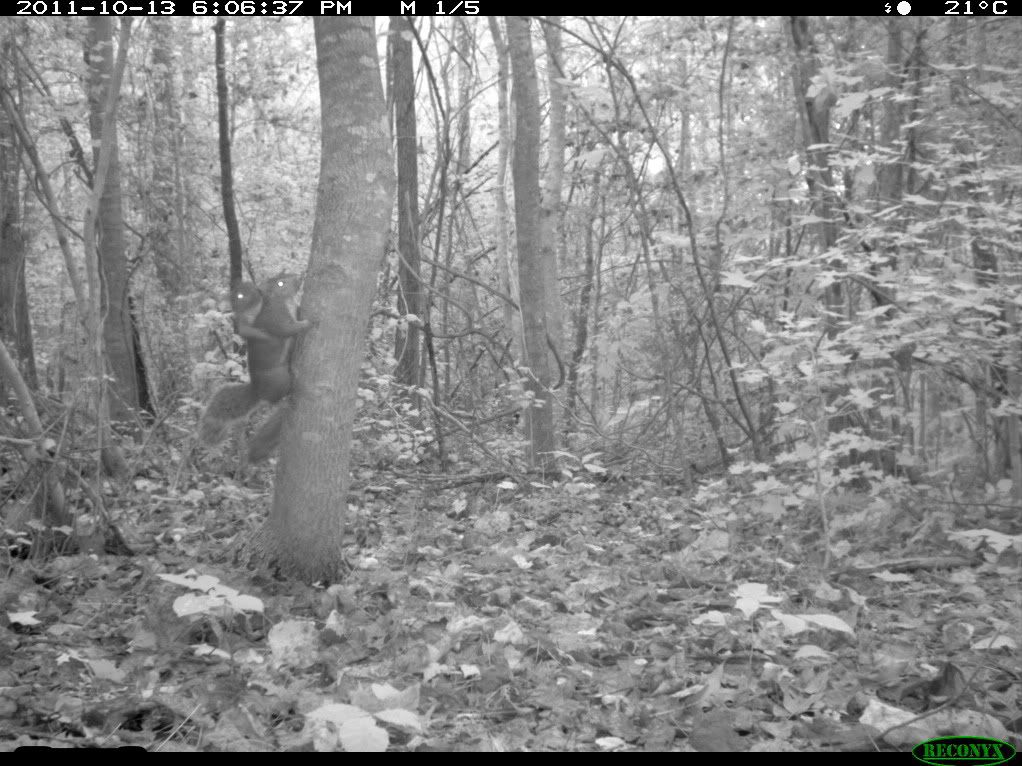
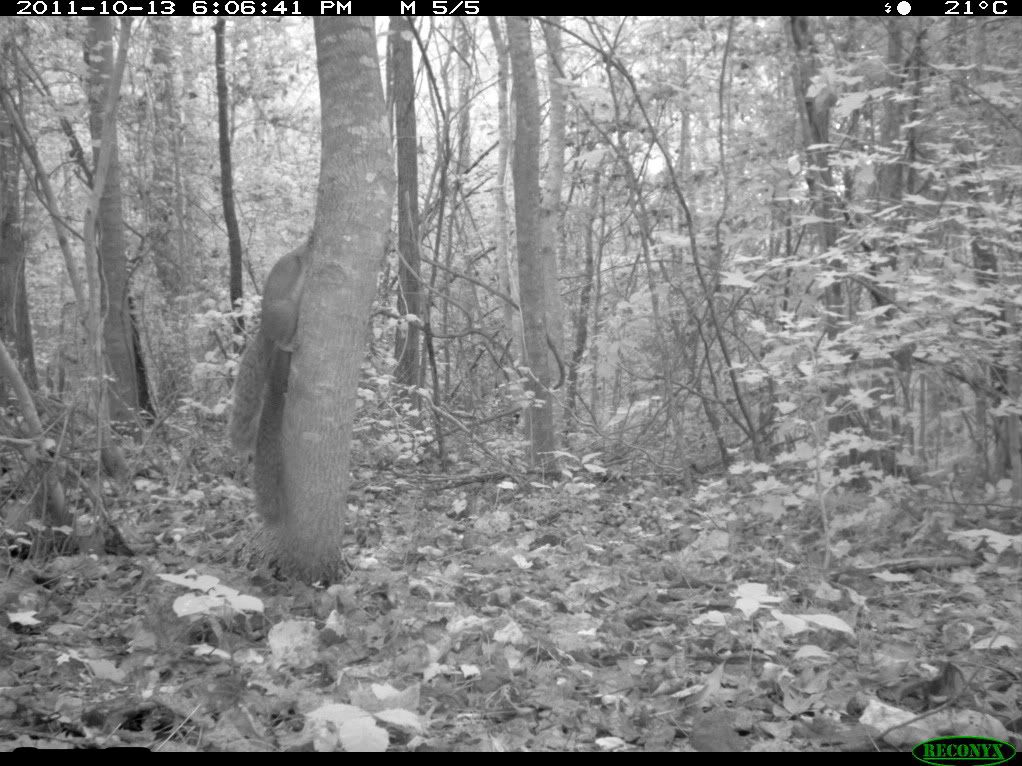
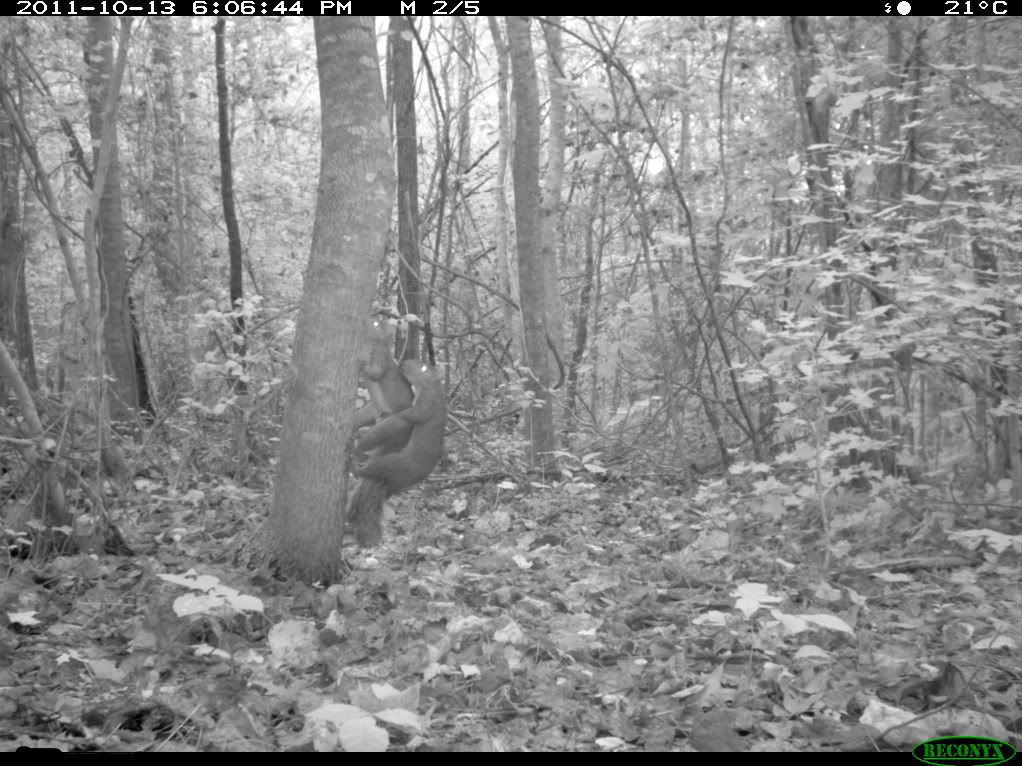
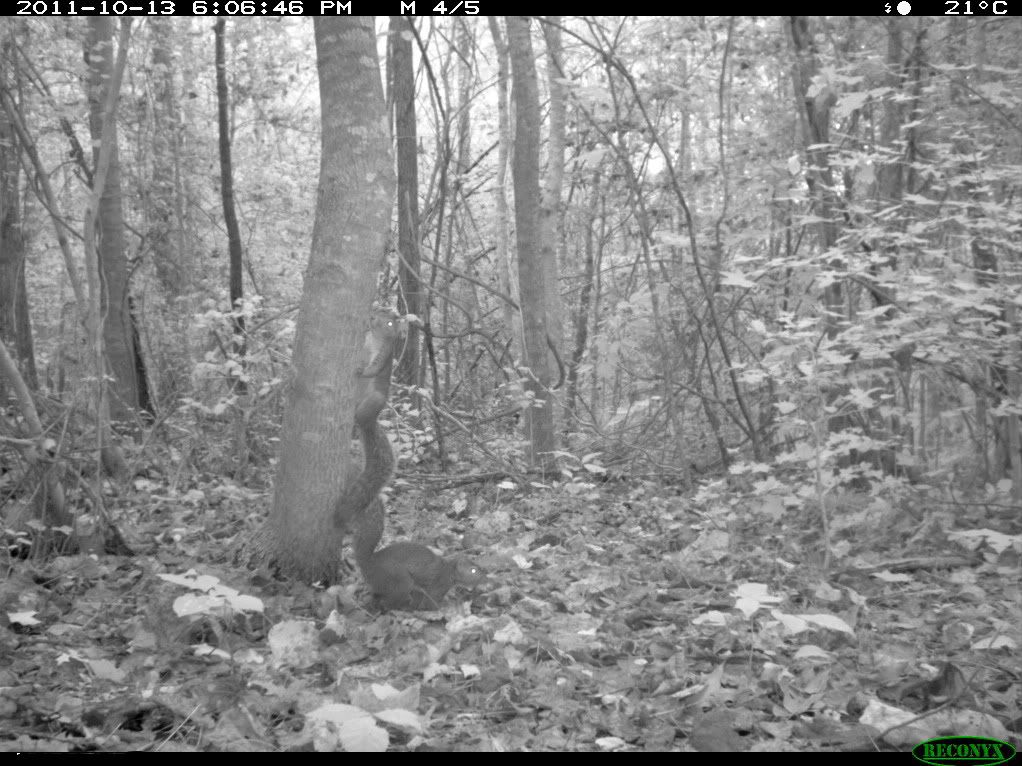
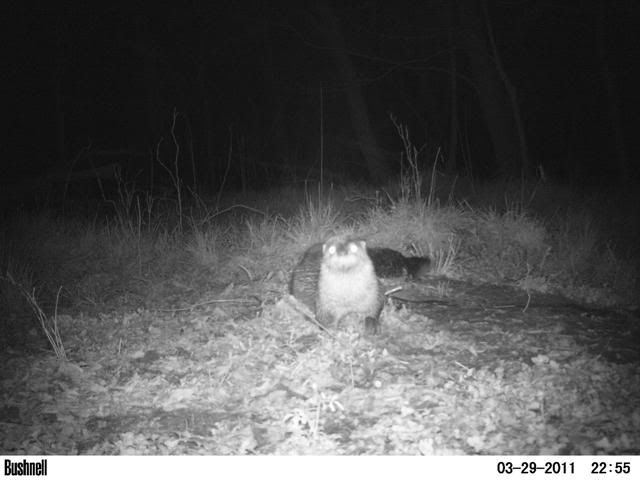
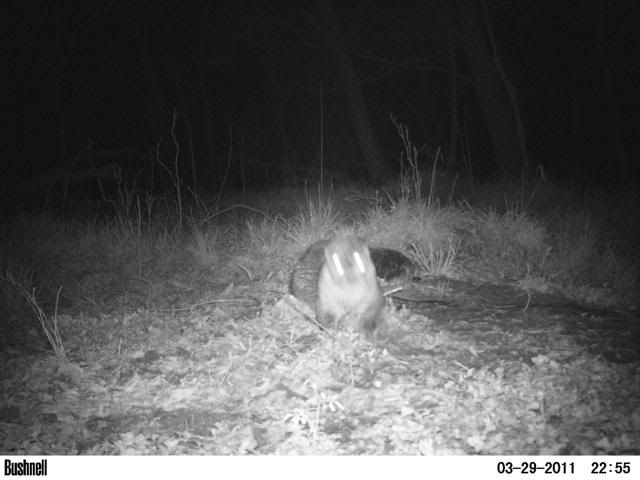
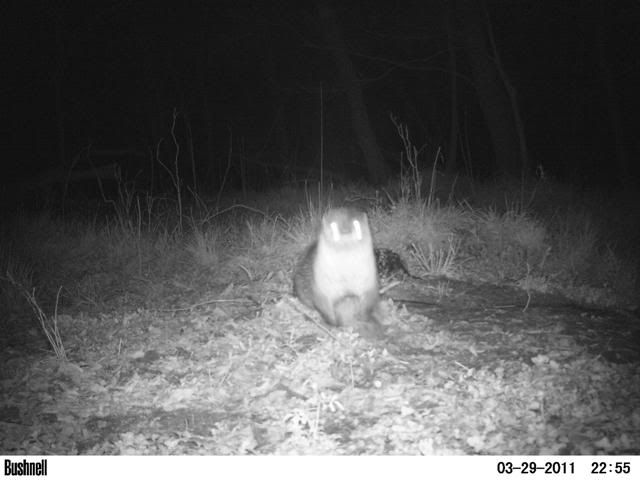
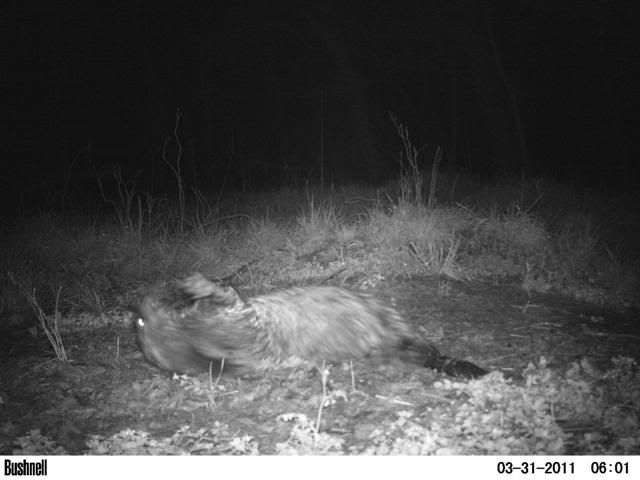
I have no idea what's going on with the demented behavior of this Fox Squirrel (Sciurus niger).  Obviously, its trying to get at something....but what could be so absolutely essential to your survival that you'd act like this to get it?

Can someone please explain?


Catching bizarre or unique behaviors like this is one of my favorite things about camera trapping!

Monday, February 27, 2012

Riparian Walkers

I had almost forgotten about this camera set.  The pictures below were part of a monitoring project I ran on property owned by the North Carolina Zoo.  From February 2010 to July 2011, we conducted a vertebrate invenotry on this property, which included drift fences and coverboards for small vertebrates, radio telemetry on Eastern Box Turtles (Terrapene carolina carolina) and, of course, camera traps for the big guys.

The camera that took most of the pictures below was placed along a nice riparian corridor for a few months during this period (Feb 17 to April 19, 2011) to see who was hanging around.  This was one of several cameras  deployed at various locations throughout the property.  Unfortunately, most of our camera trap captures on the site were of White-tailed Deer (Odocoileus virginianus).

The Riparian corridor provided our best variety.  It also represents my only venture into the realm of ScoutGuard cameras.  I can't even remember what model it was (the SG550?).  Anyways, I have to admit that I was at first very impressed....but this waned after a series of malfunctions, returns and straight-up inconveniences on the part of the camera (including an external remote..which you had to bring into the field with you and plug into the camera to program it).

Anyhoo....some neat pictures were captured near this heavily wooded stream crossing.

A juvenile Red-Shouldered Hawk (Buteo lineatus) flew down to the stream on back-to-back days for a drink?  Trying to grab a frog?  With alittle help from my buddy Bill over at The Future Of Birds, I was able to definitively identify this species!  They like woodlands associated with water, so it makes sense to see them here.
Above: Find the Buteo!  See the lower left-hand corner of the pic....

Above: Find the Buteo II!  In the background, standing in the water again.

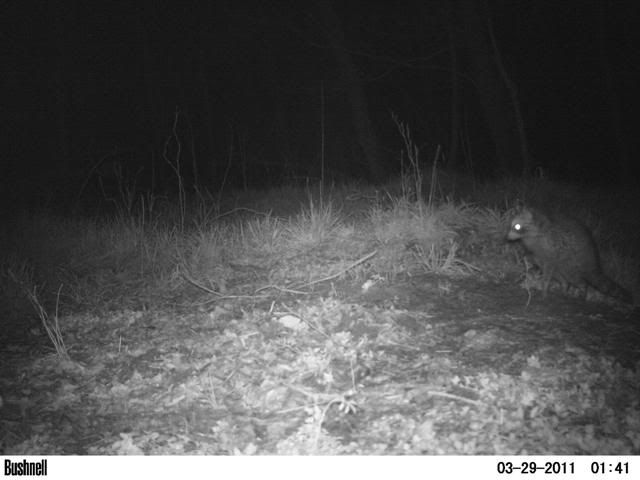
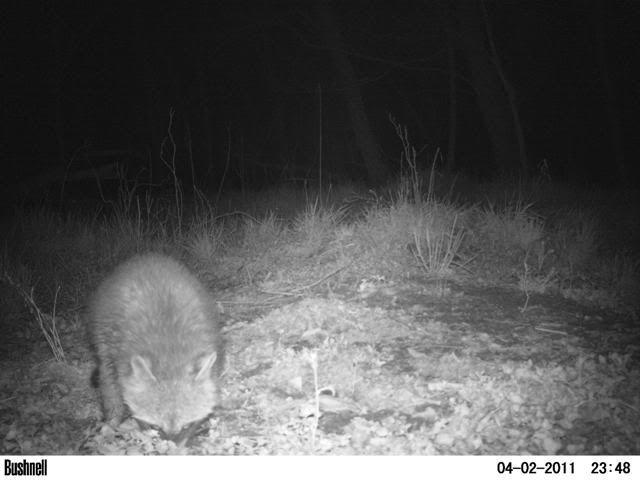
The red-shouldered was by far the most unique thing captured by this camera.  Although, there were some neat pics of Racoons (Procyon lotor) wading around for frogs and fish.


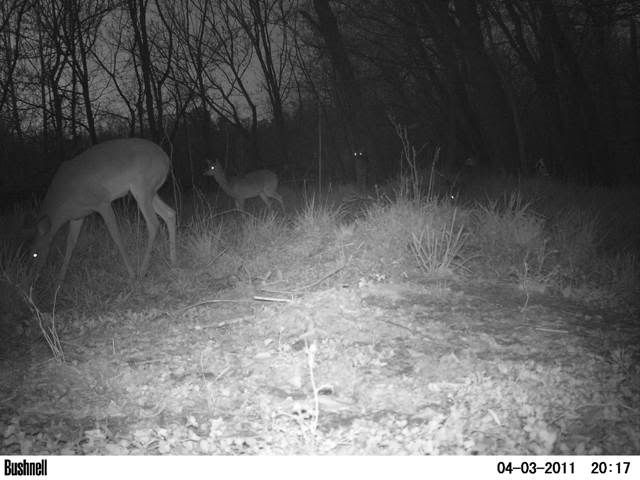
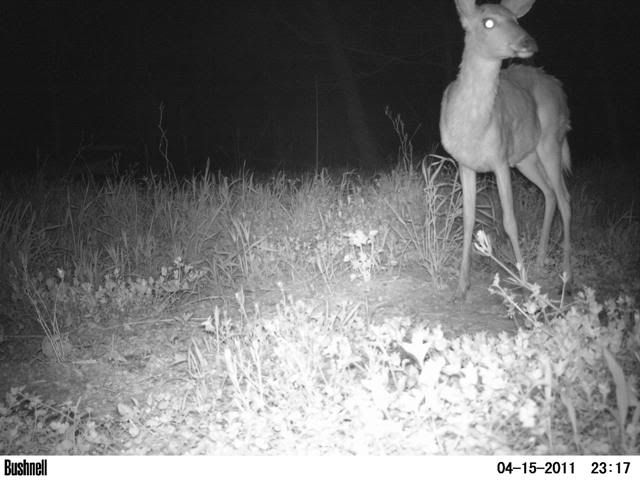
And, of course, what series of pictures from a set in North Carolina would be complete without White-tailed Deer?  I quite liked the one below....with the reflection on the water......

Was also neat to get a shot of an American Crow (Corvus brachyrhynchos) coming down for a sip.....

Throw in a ubiquitous Eastern Gray Squirrel (Sciurus carolinensis).......

...and a feral puddy tat....

...and that about 'rounds it out for this camera set (and, in fact, for the site).  Although we did get pics of two other species from other locations at this site, they weren't some of the riparian walkers.

There were a few precious shots of "talking dogs" (Canis latrans).....


...also one lonely Gray Fox photo (Urocyon cinereoargenteus) at a scent station.....

And....so long as I'm posting pics of feral puddy tats.....I might as well show a 'coon hound, that had to belong to a tresspassing hunter.  He stopped by for a sniff at the scent station I put out at this spot.  Although there are stray dogs on-site, there's no way that a stray has a reflective collar with a GPS unit strapped to his neck......

Thursday, December 29, 2011

Squirrel Love

I love Reconyx cams.  Because of their lightning-fast triggers, and the ability to take up to 10 pics in rapid succession per trigger event....they can catch interesting wildlife behavior.  My Reconyx have snapped a series of fighting and breeding raccoons (see here), big rafters of turkeys passing by (see here) and shots of a coyote caching a recent meal (see here).

To add to the list of neat behavior captured by a Reconyx, see the below pictures of squirrels mating.  Eastern Gray Squirrels (Sciurus carolinensis) typically breed twice per year: once in the late fall/winter and again in the late spring/summer.  The attempts below are alittle on the early side from what I've read......but who knows if they were really an earnest attempt or not.

First attempt:


Apparent failure!


Second Attempt:


So close!


Third Attempt:

Apparent success...


I guess male squirrels have to develop a quick pick-up move, if they want to succeed!

Monday, July 4, 2011

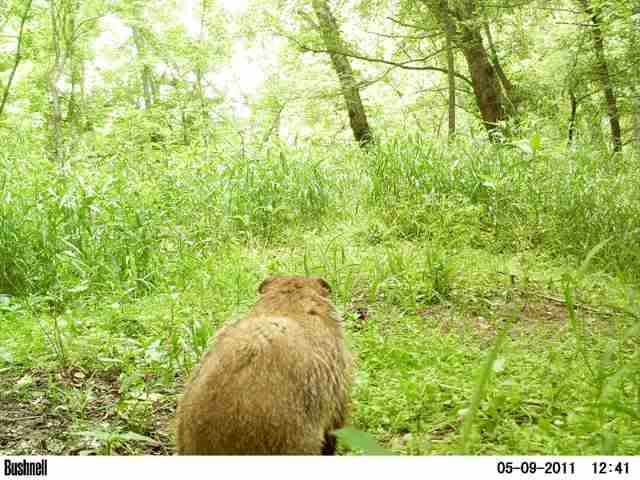
Who Skirts the Whistlepig Burrow?

There's nothing like a good river corridor if you want to get pictures on a camera trap.

Especially if that river corridor experiences reduced human disturbance.

I've posted pictures from this camera set before.  Originally, I was hoping to identify a mystery animal (which I determined was a mink; Neovison vison), and then the goal became to monitor Whistlepig (Marmota monax) activity near their burrow entrance, and I've also reported a nice Coyote picture (Canis latrans).

However, lots of critters skirt the Whistlepig burrow while following the river corridor.

Here are a few more shots from this location, and a summary of everything that passed by.

The Opossum (Didelphis virginiana): Early on in the spring, a 'possum passed the camera just this once.  The picture below was before I repositioned the camera. 

On the day I deployed this cam...as I walked along the river perusing potential camera set locations, I remember having a strange feeling of being watched.  I glanced to my right, and sitting not far away was a 'possum, watching me pass by.  I stopped and looked at him for a second, which prompted him to slowly turn and amble back into the woods. 

I wonder if this picture is of that same 'possum?


Gray Fox (Urocyon cinereoargenteus): A Gray Fox has only wandered by once.  It was about this time that I also had one pass near my Otter Latrine set, which isn't too far away. 

White-tailed Deer (Odocoileus virginianus):  


One of the reasons commercial cameras with white-flash have been slowly taken over by infra-red flash cameras is because it's been promoted that perhaps the white-flash deter deer.  I find this incredibly difficult to believe in alot of situations.  Canines and cats, I'll perhaps buy (although see the recent post over at Camera Trapping Campus).....but even they're smart enough to acclimate to flash.  Regardless, I still don't buy that the white flash really deters many deer.   I suppose that big trophy buck might be wary and not come around as often with a white-flash camera (and this is what many camera owners are most interested in photographing), but I'll bet deer in general couldn't care less.  I have no hard data to back this up.....just some anecdotal observations like the one below. 

The individual in the lower two pictures lays down in front of this camera, and takes that bright flash directly in the face repeatedly for an entire HOUR AND A HALF!  This resulted in 57 pictures of this one deer, and on the Cuddeback (which doesn't take multiple pictures per wildlife pass) this is alot of pics of one individual.

This is just one of at least five similar incidents.  Although during the other such incidents a deer catches the flash right in the face and continues to graze right in front of the camera...they don't hang around as long as this individual (and don't lay down in front of the camera).


Eastern Cottontail (Sylvilagus floridanus): Another common critter at this location. Almost all of the pics from this spot are like the one below (i.e., of a rabbit in mid-leap).  The Cuddeback does have a lightening fast trigger time!

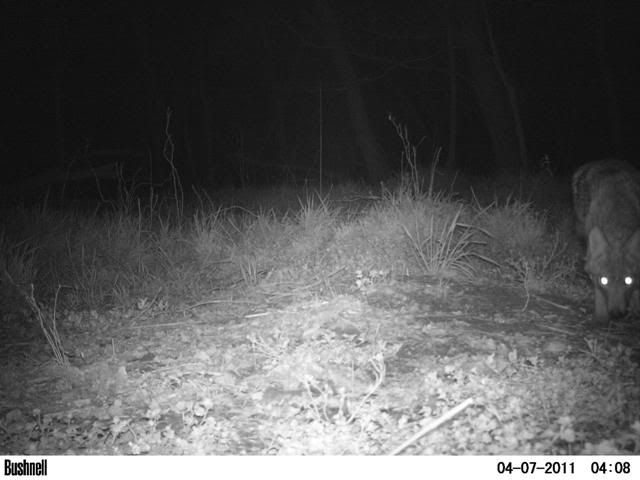
Coyote (Canis latrans): the "talking dog" has floated past more than once (three times, in fact).  I would think the flash would deter them.  It's possible these are all different individuals.  If the same individual...they may have acclimated to the flash, which I've seen them do with Infra Red flash cameras (See Coyote Cams, posted on Feb. 19th, 2011). 


Beaver (Castor canadensis): A Flat-tail ambled by only this once.

Racoons (Procyon lotor): By far the most commonly captured critter by this camera trap.  Since February 8, 2011, I've had Racoons pass by over 160 times!  See summary below.

Whistlepig (Marmota monax):  Of course the whistlers are still about!  Check out the claws on the individual in the second picture.  No wonder they are such great diggers! 


Summary of results:

Camera deployed on February 8, 2011 and retrieved on June 27, 2011.

I summarized the number of animal "passes" to-date.  To apply some sort of general criteria to what was considered an individual "pass", if two pictures of the same species appeared on the camera close together in time, I considered them separate "passes" if they were at least two minutes apart.  Within two minutes, it's feasible that the same individual just turned around and came back...but this time criteria is arbitrary.  Obviously, I can't identify individual animals that well, so I may be counting the same individual more than once (as I'm sure I am with the Whistlepigs).  If there were unique marks to identify individuals back-to-back within within 2 minutes of eachother, I only counted it as one "pass".

I wish I wasn't such a dunce and could figure out how to imbed a graph from Excel on my blog, as I think that would be more informative than what I have below.  Unfortunately, I haven't been able to figure it out (without having to get some additional piece of software), so you'll just have to view the results as is.

What I find most interesting is the shift in the number of Racoon, Rabbit and Whistlepig passes as the months advance.

February Totals: A fairly low number of captures, overall.  But, this was the only month of the "mystery animal".  The number of Racoon passes is also respectable.
  • Coyote= 1
  • Beaver= 0
  • Deer = 13
  • Gray Fox= 0
  • Mystery Animal/Mink= 6
  • Opossum = 1
  • Rabbit (eastern cottontail)= 5
  • Racoon= 40
  • Squirrel (eastern gray squirrel)=2
  • Whistlepig = 0
March Totals:  March is the Month of the Racoon and the Rabbit!  Also, the Whistlepig starts to show (but not until late in the month).
  • Coyote= 0
  • Beaver= 1
  • Deer = 14
  • Gray Fox= 1
  • Mystery Animal/Mink= 0
  • Opossum = 0
  • Rabbit (eastern cottontail)= 46
  • Racoon= 94
  • Squirrel (eastern gray squirrel)=3
  • Whistlepig = 14
April Totals:  A month of low activity.  Look at how far the Racoon total has dropped!
  • Coyote= 2
  • Beaver= 0
  • Deer = 2
  • Gray Fox= 0
  • Mystery Animal/Mink= 0
  • Opossum = 0
  • Rabbit (eastern cottontail)= 10
  • Racoon= 13
  • Squirrel (eastern gray squirrel)= 0
  • Whistlepig = 3
May Totals:  May is the Month of the Whistlepig...and the Rabbit is all but a memory.
  • Coyote= 0
  • Beaver= 0
  • Deer = 3
  • Gray Fox= 0
  • Mystery Animal/Mink= 1
  • Opossum = 0
  • Rabbit (eastern cottontail)= 3
  • Racoon= 29
  • Squirrel (eastern gray squirrel)= 3
  • Whistlepig = 48
June Totals:  The Raccoon is now the most abundant again, and the number of Whistlepig passes has decreased substantially.
  • Coyote= 0
  • Beaver= 0
  • Deer = 8
  • Gray Fox= 0
  • Mystery Animal/Mink= 1
  • Opossum = 0
  • Rabbit (eastern cottontail)= 6
  • Racoon= 18
  • Squirrel (eastern gray squirrel)= 0
  • Whistlepig = 10
Overall Totals for this location:
  • Coyote= 3
  • Beaver= 1
  • Deer = 40
  • Gray Fox= 1
  • Mystery Animal/Mink= 8
  • Opossum = 1
  • Rabbit (eastern cottontail)= 76
  • Racoon= 194
  • Squirrel (eastern gray squirrel)= 8
  • Whistlepig = 75

The camera was pulled from this location on June 27, 2011.

It was a fun spot.

Wednesday, June 15, 2011

The Otter Latrine Redux

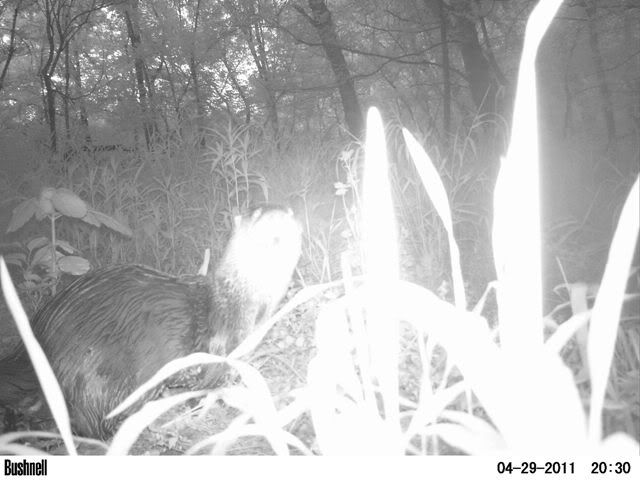
The Otter latrine site continues to be monitored.  Since I last posted any of my findings from this camera trap set on April 10th, 2011 (see Back to the Otter Latrine), alot has has happened. 

Of course, as I've shown you before, Otters aren't the only critters that like this spot.

There are eastern gray squirrels (Sciurus carolinensis)....


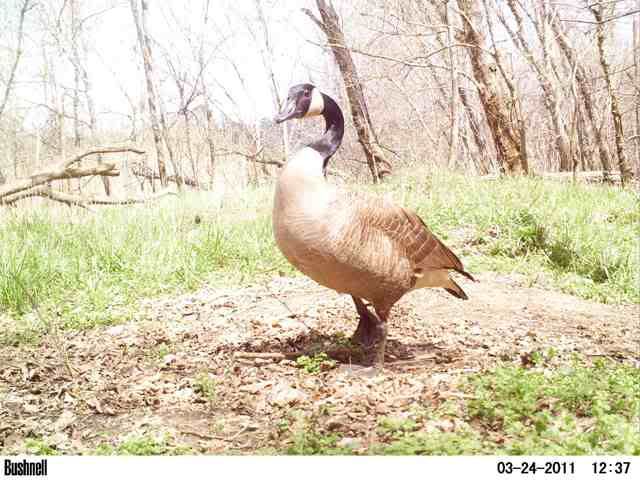
Once, and only once, some Canada Geese (Branta canadensis) waddled by.....


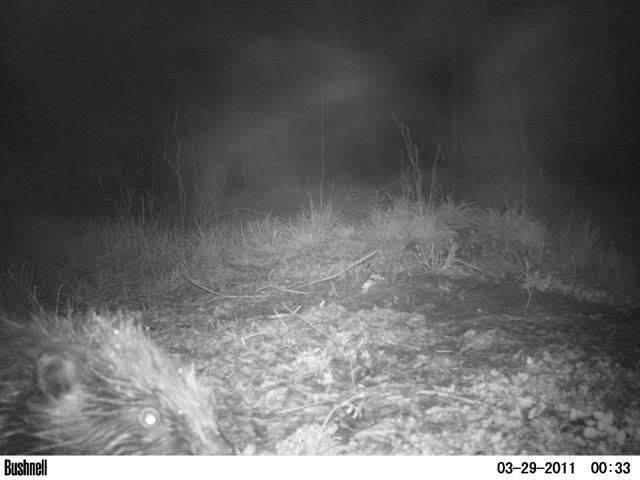
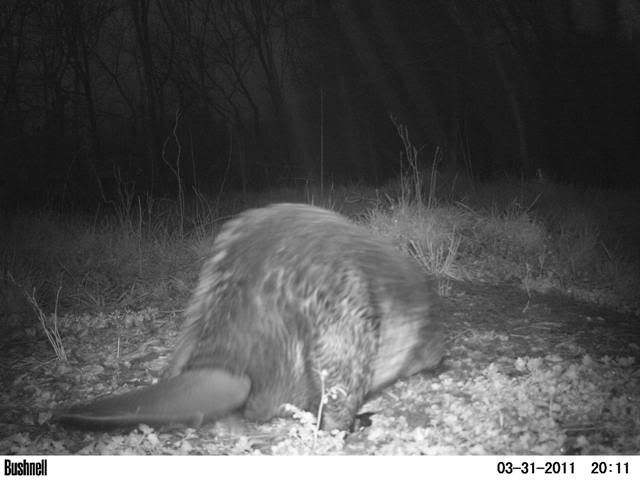
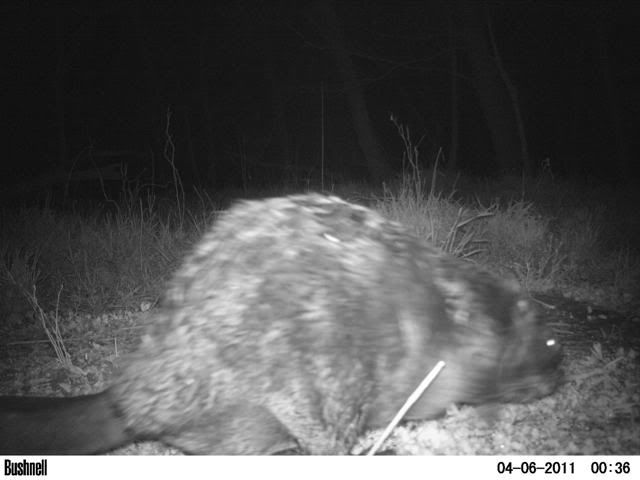
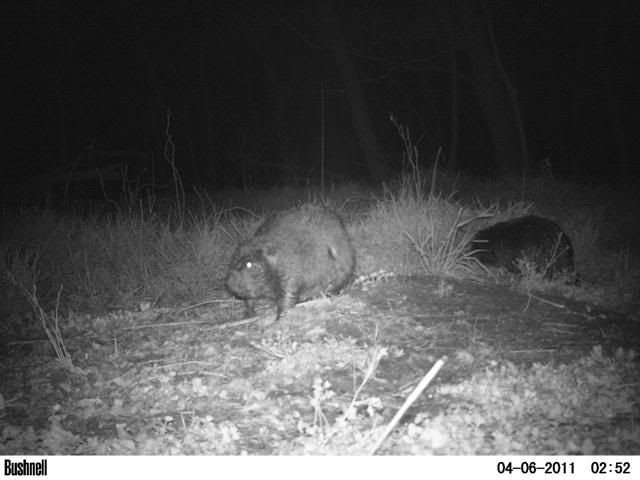
Also, for a few weeks....Beavers abound!  A pair of flat-tails (Castor canadensis) work the area pretty heavily....this is not far from two other locations where I've camera trapped them at roughly the same time (see Busy Little Beasts posted on March 28, 2011).  They haven't been back since.  Because I like Beavers, I can't help but post one picture from every time they passed.


But, really...Raccoon is the word!  I have hundreds of pictures of these guys from this set.

If Raccoon is the word, then deer is the punctuation....ever present and in no short supply.

Even the Whistlepig (Marmota monax) wants in on the action....his camera set is not far away from here either.

Of course, a batch of pictures from this set wouldn't be complete without one of my favorites....Canis latrans.  I really like this picture.

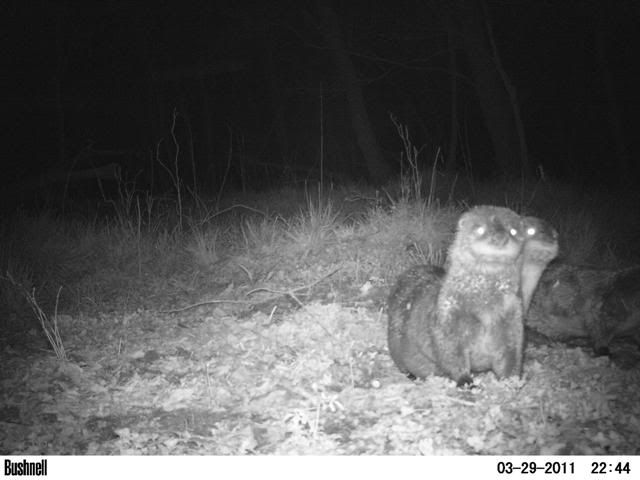
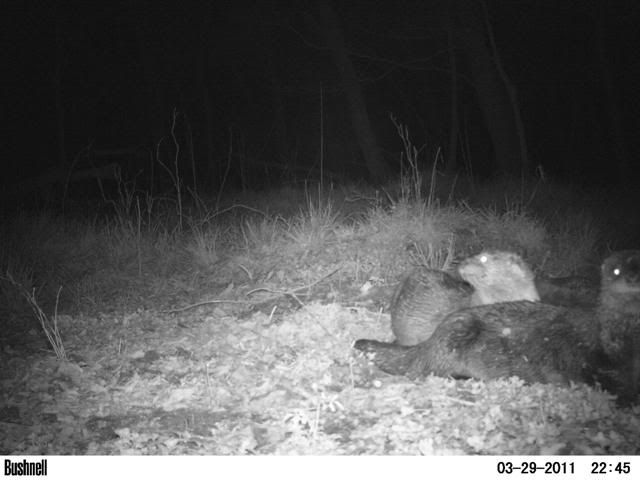
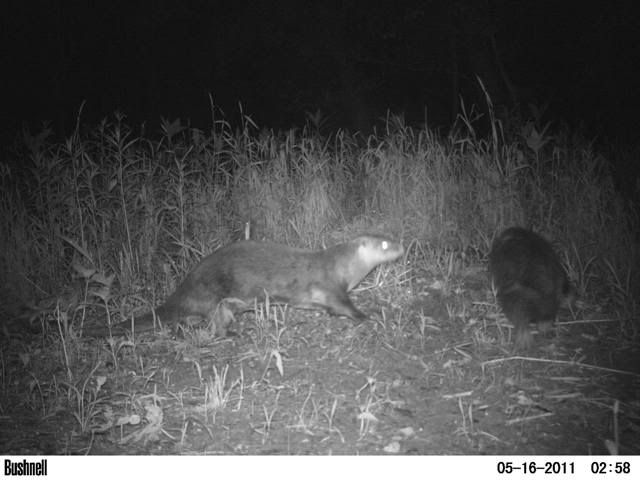
But the critter of the hour is our buddy the Otter (Lontra canadensis).

Below is a great series of three pictures that shows an otter scraping together a mound of debris to deposit scent on....


...a few hours later....someone stops by to inspect the scent mound....

...and the next day something very interesting happens....an otter "scent rolls" in the leavings!  See other posts regarding animals doing a scent-roll in smelly stuff in Gray Fox at the Stink Pole (posted on March 4, 2011).

...then no Otters for a week...until....

Another long period between visits.  This time the family group is back.

...a solo otter laying down alittle scent about a day later....

Another solo Otter swings by.....

...then again....nothing for weeks.  But these critters will not give up on their favorite dumping spot!

It has now been almost a month since any otters have visited this latrine spot.
___________________________________________________________________________
Upon arriving at the latrine site in early May, I noticed a real lack of fresh scat.  This puzzled me, as it would have been the first time this spring that the otters hadn't used this latrine site in between my visits. 
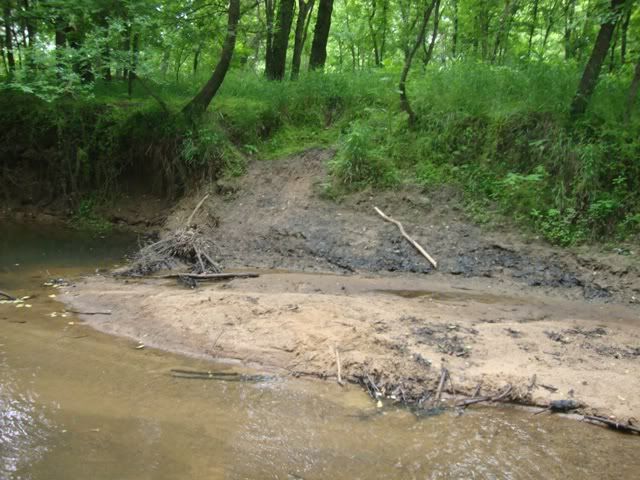
As I was preparing to leave, I happened to glance down the sloping bank towards the stream.  The water was fairly low at that time (and still is today) and an exposed sand bar, as well as several large flat rocks in the streambed, were near the base of the "slide" associated with the latrine I have the camera over.  Even from high up on the bank, where I have the camera, I could clearly see otter scat and tracks on one of the sand bars below.  The otters had abandoned the bank latrine for one in the sand bar/rocks in the streambed.

Above: a photo of the otter slide and sandbar latrine from across the stream.  Note the normal latrine site that the camera is monitoring is up on the bank at roughly the top of the slide in this picture.  This picture and the picture below were taken during the "low-water" period within the last month.


Above: For this picture, I stood parallel to the latrine, pointing the camera down-stream.  That way you can see the relationship the latrine site has to the larger river.  You can also see the exposed flat rock and muddy/sandy bars in the water.

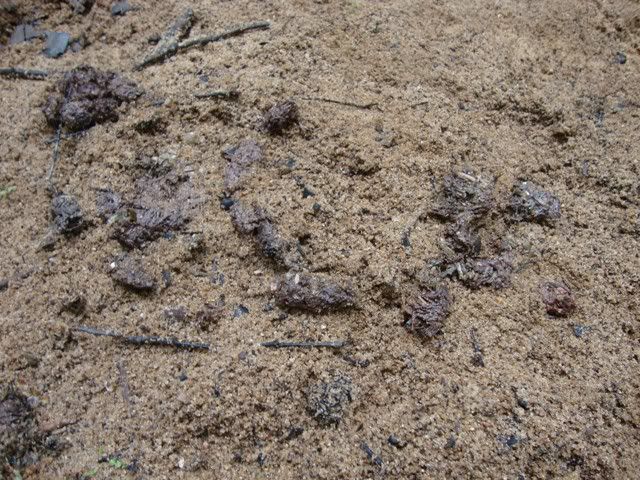
And what post about an otter latrine would be complete without more scat pictures!!
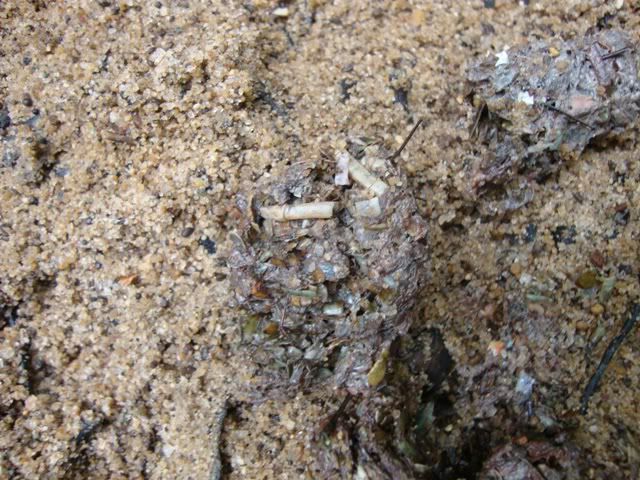
Above three pictures: Example scats deposited on the sandbar below the bank from the normal latrine site (5/12/2011).

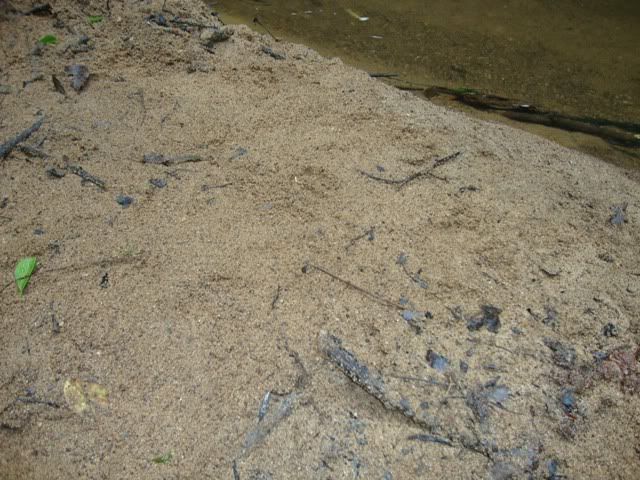
Above: tracks around the sandbar where the "temporary" latrine site had been set up (5/12/2011).
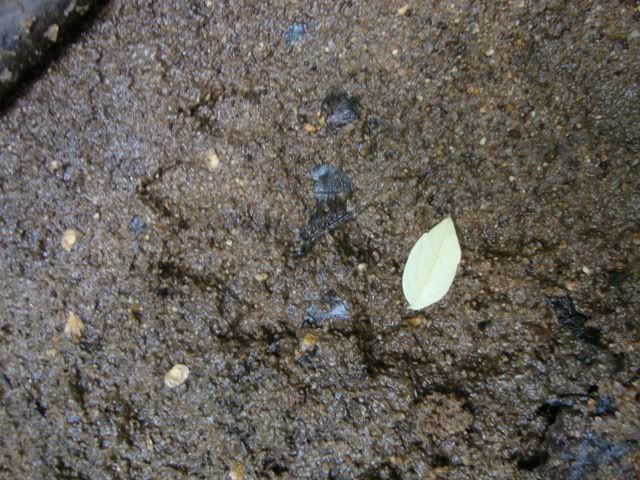
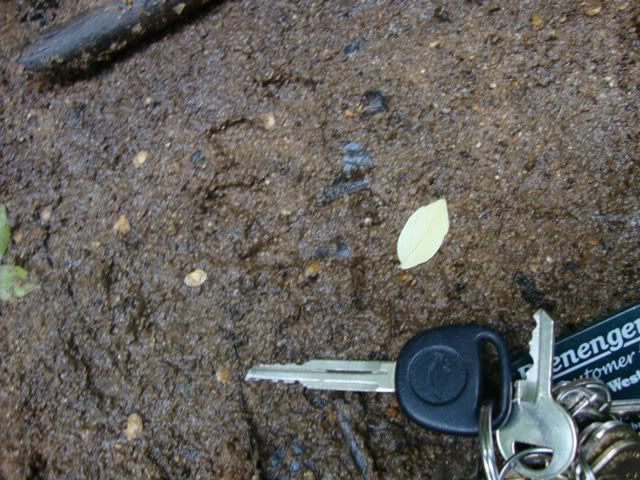
Above Two Pictures: Close ups of the otter tracks (5/12/2011).  Not great pictures.  I had to turn the flash off, as it was washing the tracks out completely in that sand...but any camera shake and the pic ends up blurry without the flash. 

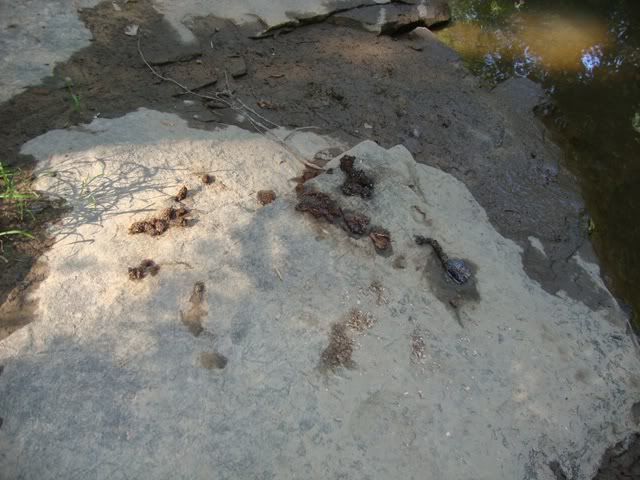
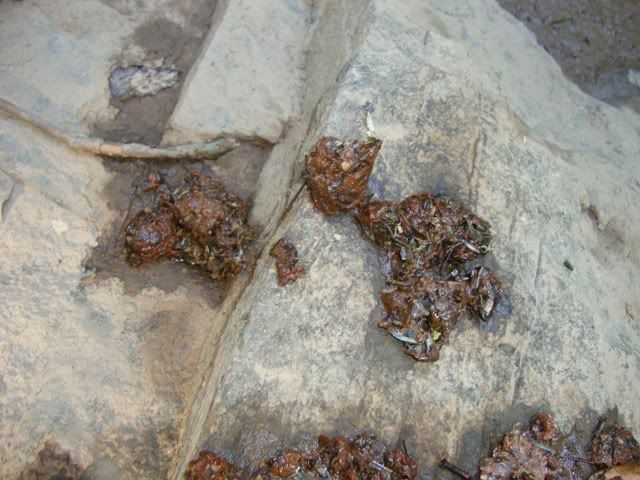
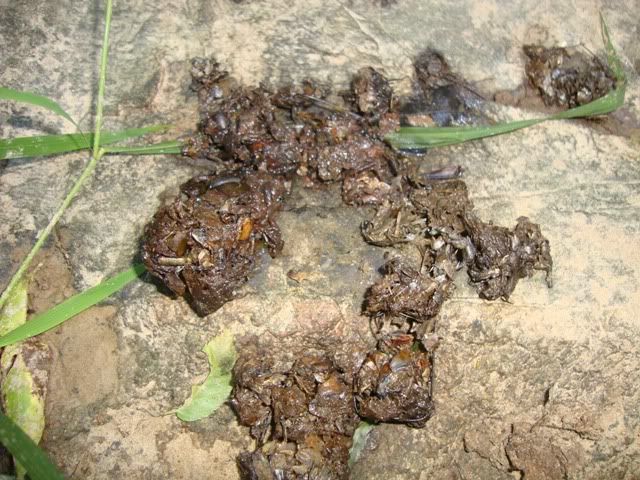
Above Two Pictures: Otter latrine located on flat rocks in the stream just below the camera set on 6/14/2011.  This was very near the latrine location found on 5/12/2011.


Above Two Pictures: Close-ups of the scat on the latrine found on 6/14/2011.  As usual, full of crayfish.

__________________________________________________________________________

So...what does this minute altitudinal shift in an otter's latrine mean?  All I can think of is that the water's lower....it's more work to climb up the side of the bank than it's worth because the water's so low and so they simply leave their message in the most accessible spot near their normal latrine.

Might be time to move a camera next week!