Showing posts with label Turtle traps. Show all posts

Sunday, September 22, 2013

The End of the 2013 Herp Season Approach-eth....but there are still TURTLES!

The beginning of the semester sort of stinks.....

The collision of the field season and the school season means there isn't a free second.  We have three projects still in the active data-collection phase, which we are trying to coordinate schedules for....and everyone has class (students) or teaching/grading (me).

All of that will change sooner than we think, though.  We are in that time of the year when weather becomes highly variable.  Last week, for example, we had a high of 90 deg. F on Tuesday, and a high of 63 deg F on Friday.  This week we had two days in the mid-80s, while today it was in the mid-60s over the weekend.

That means Fall is coming, which also means the cold-blooded critters will be going down for the winter very soon.

So....thought I'd share some late-season "herpstuff".  Mostly a random conglomeration of neat things seen over the last few weeks.

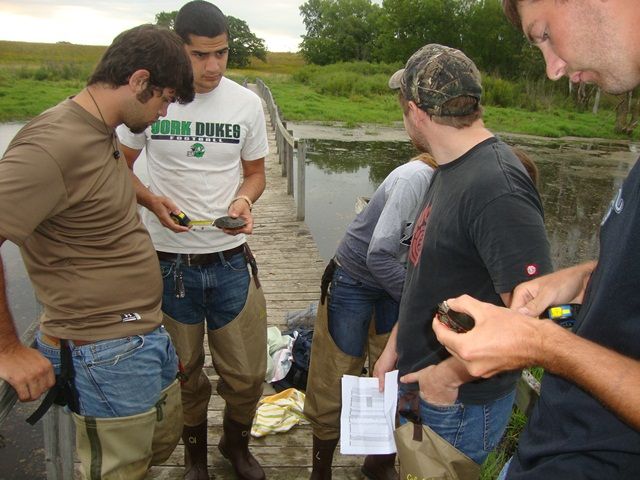
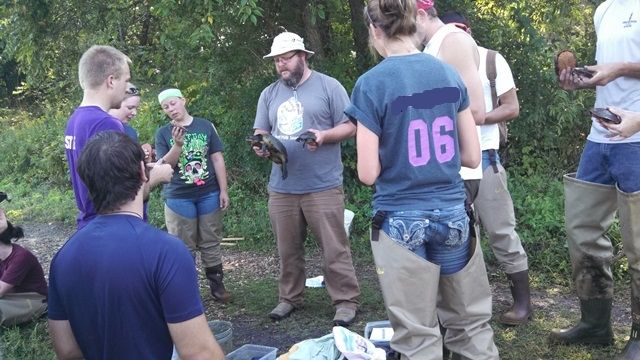
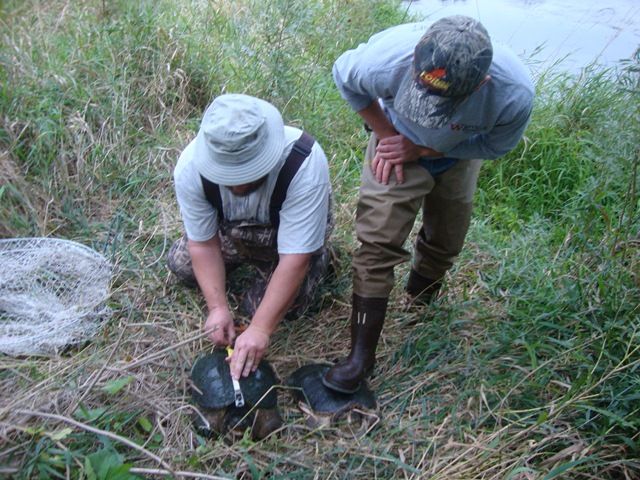
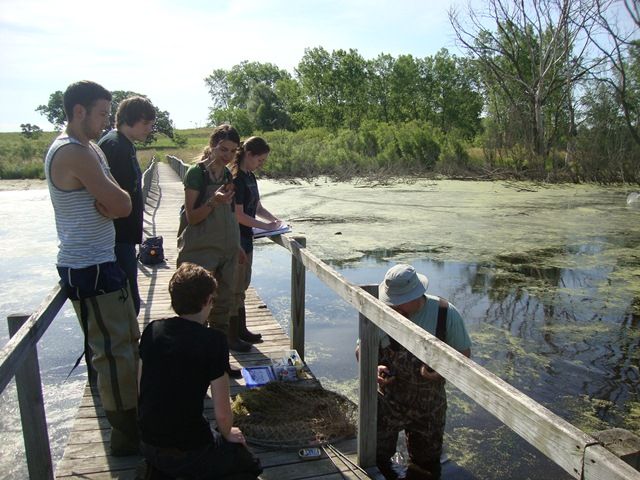
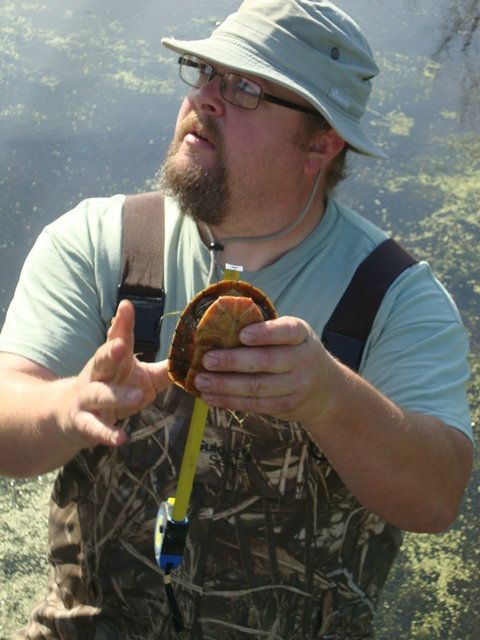
Our 200-level Field Methods in Ecology class had their annual day of turtle trapping and marking (see here for last year's haul).  This year was another great one.  By luck, we got to take advantage of the last few good days left for trapping before the turtles started to focus on hibernation (and, thus, aren't as attracted to bait). 


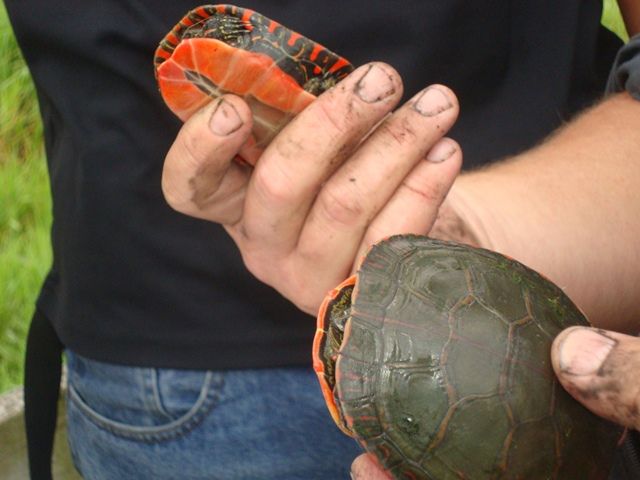
We set traps out for two days straight.  Day 1 yielded some nice little Painted Turtles (Chrysemys picta)........

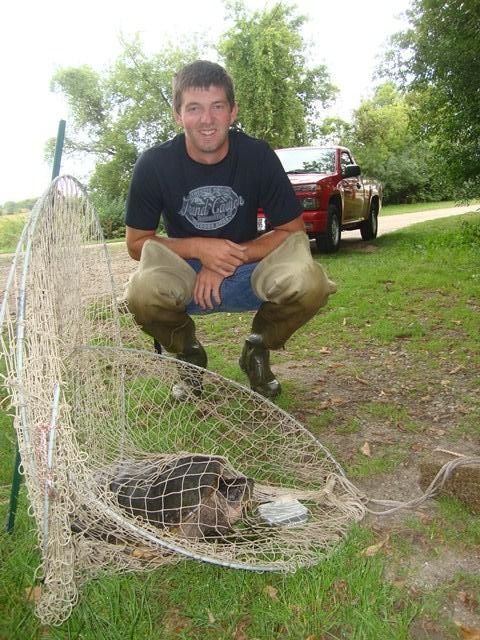
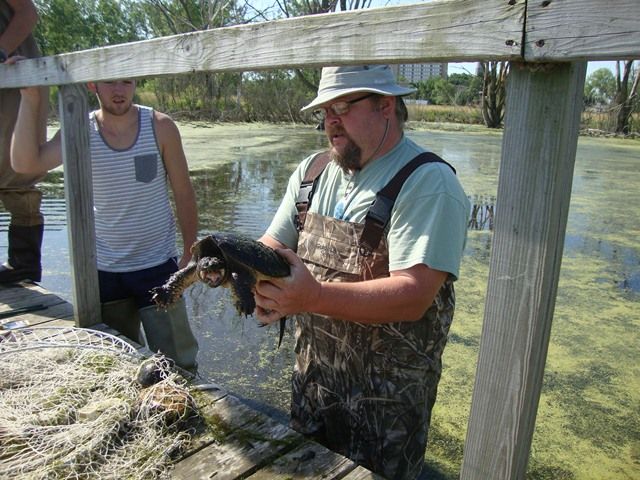
........ and of course some nice Common (northern) Snapping Turtles (Chelydra serpentina).


On Day 2, however, our traps were nearly exploding with turtles! 

A ton more Paints....

.....no Snaps (suprisingly)...BUT...a much rarer find: a Blanding's Turtle! (Emydoidea blandingii). 
Photo courtesy of T. Gotrik
In three years of trapping this location, we've never caught a Blanding's Turtle before.....

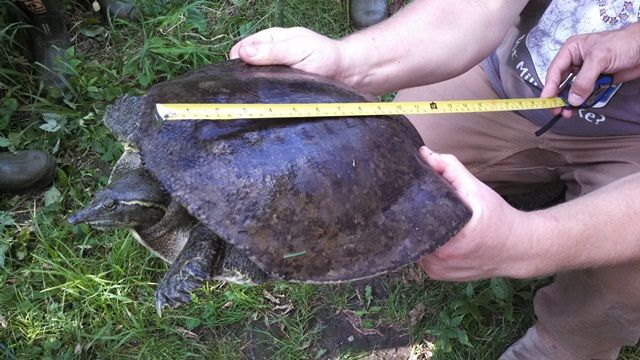
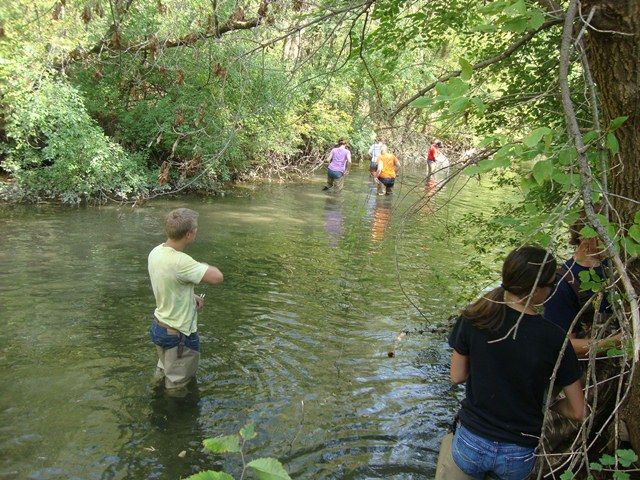
We also trap the nearby creek...and this year got another first: a Spiny Softshell Turtle (Apolone spinifera).
Photo courtesy of T. Gotrik

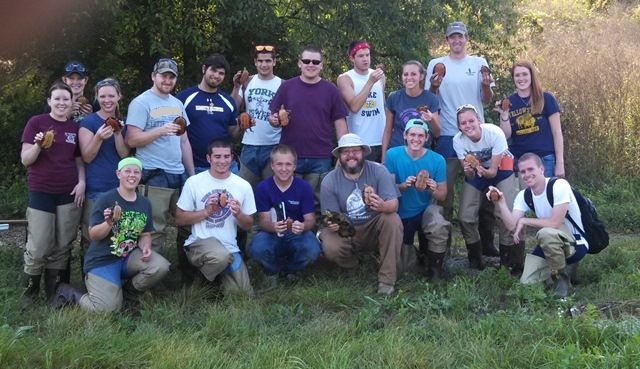
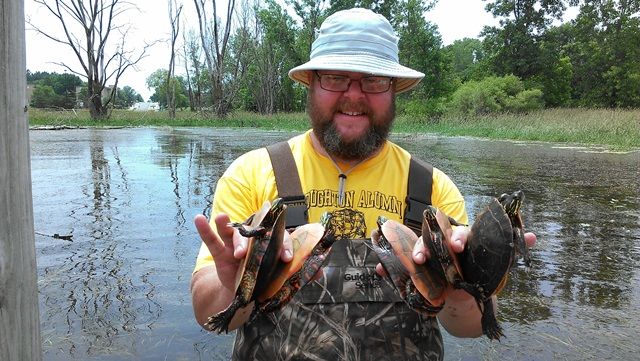
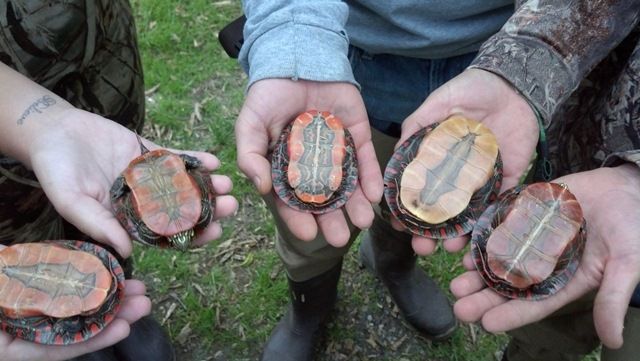
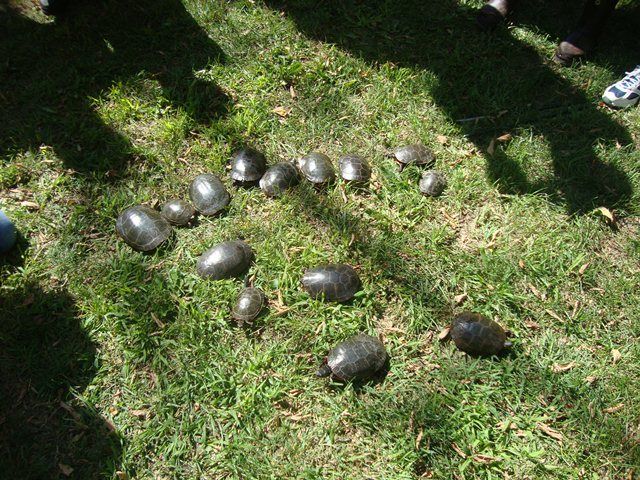
The students were pretty excited (and so was I).  In the end, we caught 26 Paints, 2 Snaps, 1 Blanding's Turtle and 1 Spiny Softshell.

Enough turtles for everybody to be able hold at least one in a group photo!
Photo courtesy of T. Gotrik

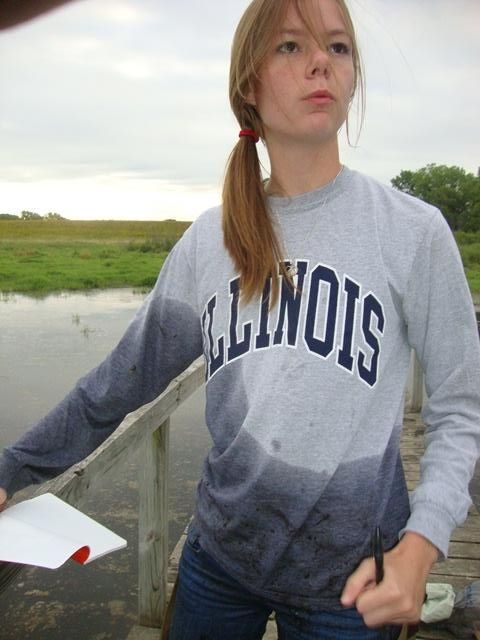
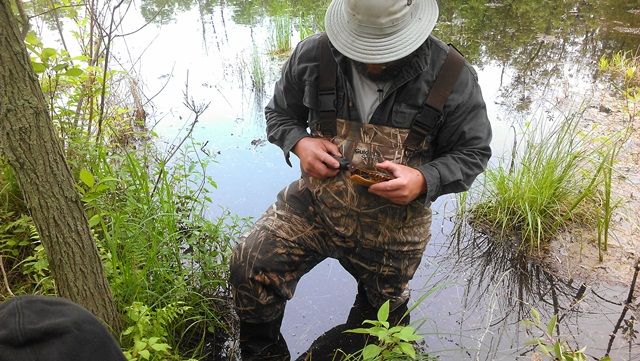
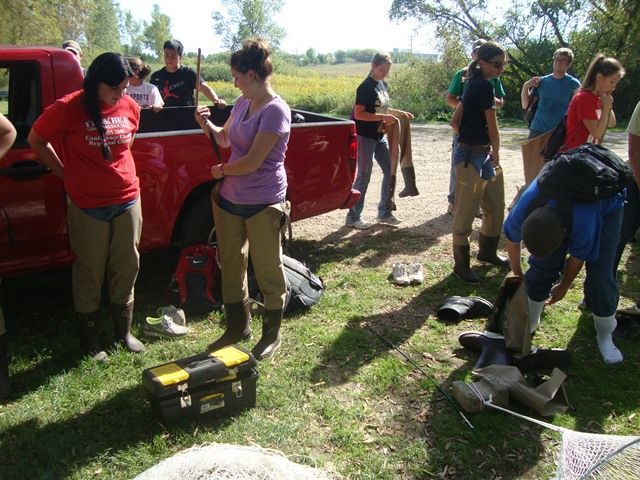
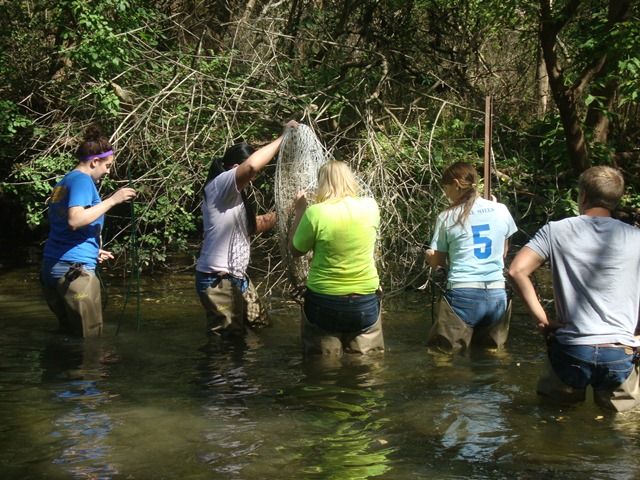
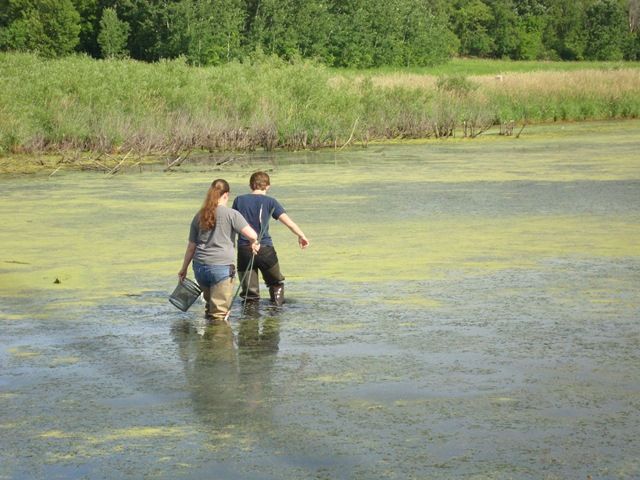
The students worked hard and enjoyed themselves....even when hip waders weren't quite enough to keep them dry....


OH...and it's the time of year when salamanders are migrating from their summer ponds, to where they will spend the winter.

As we found out when checking our drift fences recently.....
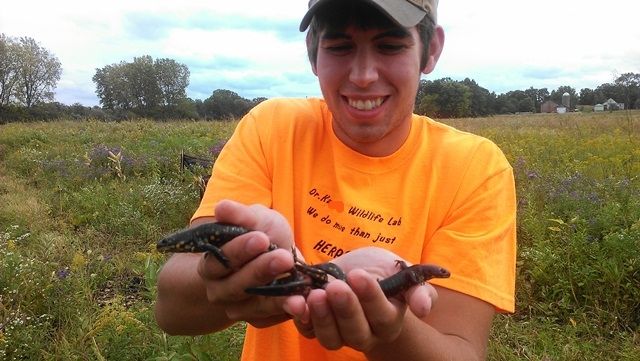
Tiger Salamanders (Ambystoma tigrinum).
Photo courtesy of N. Rudolph


Blue-spotted Salamanders (Ambystoma laterale)
Photo courtesy of N. Rudolph

Friday, June 28, 2013

The Beaten Bear, Poor Ol' Slim, and a Size-13 Snapper!

A random conglomeration of stuff from recent happenings during summer field work.  There's been alot of things going on.  There's so much to share that I can't fit it into a blog post in any type of logical order.

We've been running the drift fences surveys since the beginning of May, which has resulted in many excellent captures (one of which is below).

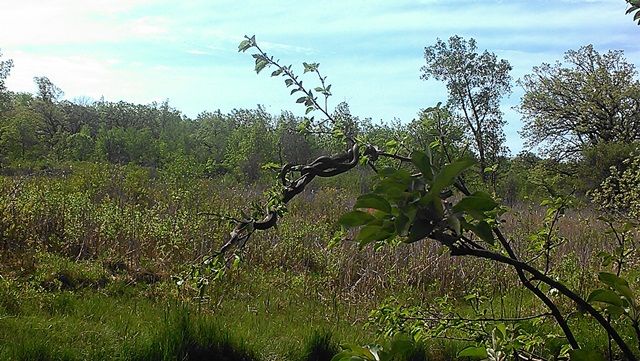
Yet, we also see cool stuff while we are walking out to our fences.  For example, there's an old gnarled tree that overhangs the creek near one of our fences.  Every day there are multiple Northern Watersnakes (Nerodia sipedon) hanging on the branches catching some rays.

Photo by N. Rudolph

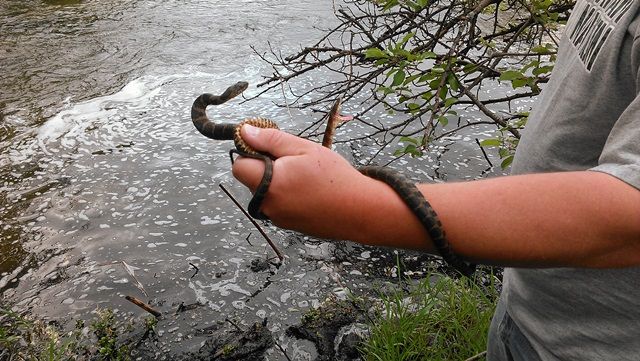
They never really appreciate my grabbing them...and the result is usually a bit of drawn blood (as you can see on my hand below).  The bite looks much worse than it is, however.  They are non-venomous, and their teeth feel like nothing more than tiny pin-pricks.
Photo by N. Rudolph

The poor watersnake frequently suffers greatly at the hands of humans.  When the average person sees a snake near the water with a body pattern that is NOT similar to a gartersnake, they often think: "cottonmouth!" or "water moccasin!" and the snake is killed.  There are NO cottonmouths or moccasins in the upper Midwest, unless one inlcudes southern Illinois (and I don't think they do?). 

Amazingly, folks often argue with me about this!  Here are example responses I get to telling them it wasn't a cottonmouth they saw: "Nope, I saw a cottonmouth on that canoe trip.  There's nothing else it could have been." ...or..... "Well, I'm pretty sure that it was a moccasin that swam along the bank next to me while I was fishing." 

But, let me re-iterate: the snakes in my hand above are NOT cottonmouths/moccasins!  We do not have said venomous species 'round these parts.

BUT....none of this is even the point of my current post!  So, I'll get on with it....

_________________________________________________________________________

The Beaten Bear:

Below is an impressive and "battle worn" Black Bear (Ursus americanus) that the wolf researchers captured on one of the camera traps.

Take a look at the lip on the left side of his face (right at the beginning of the clip).  It looks to be torn....and his ears have clearly seen better days.  He must be a wily sort to have avoided the hunters all these years.

I wonder whom he had a run-in with to have acquired all of that damage?  Males compete for breeding rights, and perhaps his
I wonder whom he had a run-in with to have acquired all of that damage?  Males compete for breeding opportunities and perhaps this was from another male Black Bear?  They certainly run afoul of wolves, which may be particularly problematic when wolves have pups in the den. Hunting dogs are another possibility, I suppose.  But all of that damage is to the face and head.  Is this type of damage typical of such encounters?  Could the torn up ears be where identifying ear tags were yanked out?

I love a natural history mystery!
________________________________________________________________________

Poor Ol' Slim:

Poor Slim.....the unfortunate Short-tailed Weasel (Mustela erminea) that I found dead on the road not far from my house.  I caught a glimpse of it while my daughter and I were driving home one day....and I thought it looked like a weasel, so we had to turn around so I could pull over and snap a picture (it wasn't in good enough condition to turn into much of a specimen).

Slim is either a juvenile Long-Tailed Weasel (Mustela frenata) or an adult Short-Tailed Weasel (M. erminea), based on the size and the black tip on the tail.  The other weasel in our state...the Least Weasel (M. nivalis) has no black tail tip. 

Adult Long-Tailed Weasels attain average sizes (13-16 inches) and this individual is not that large.  Yet, this could be a juvenile Long-tailed Weasel....which would also make sense, seeing that the Long-Tailed Weasel is more common in the southern part of the state (where I am located) than the Short-tailed.  But the tail on this specimen looks to be particularly short. 

Hmmm.....

Another good mystery!

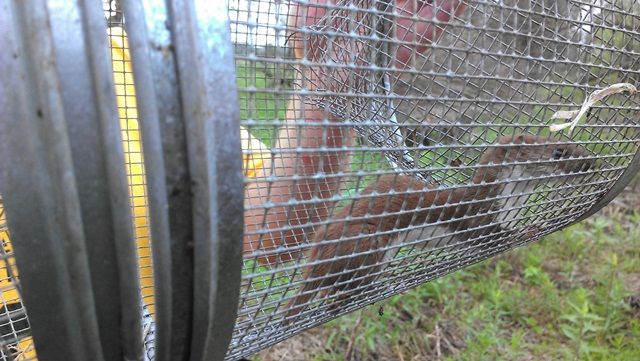
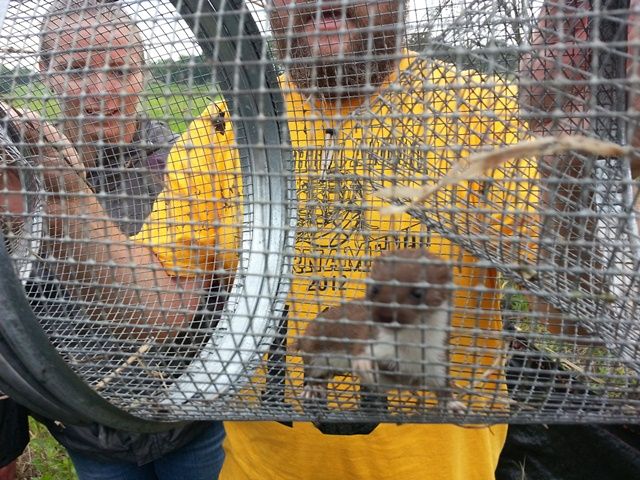
Fortunately, the summer hasn't been only negative encounters with weasels.  Below are pictures of a little Least Weasel my students and I captured in a drift fence a few weeks ago (note the lack of black-tip on the tail).  The drift fences are primarily for amphibians and reptiles, but we get just as many small mammals.  In fact, the hidden secret of this herpetological technique: it's probably just as effective and less work day-in and day-out for small mammals as Sherman Traps.  Although the fence takes alot of effort to install initially, there isn't the hassle of setting and re-baiting traps all the time.  Plus, we get many intectivores (Shrews) and the occassional weasel, which Sherman Traps aren't effective at catching.

I imagine these little carnivores are attracted to the fence due to the smell of vole, which we catch many of.  According to King and Powell (2007, The Natural History of Weasels and Stoats, Oxford University Press) the Least Weasel is the weasel that is the most narrow in its dietary preferences....eating almost exclusively on rodents and then focused primarily on voles (especially Microtus sp.).  I've caught Least Weasels on several occassions in drift fences in years past, so I wasn't totally shocked.  This is also not my first weasel post in the last year (see here).

But that doesn't mean I wasn't incredibly excited to see one!  The Least Weasel, in particular, is rare 'round here....so it was quite a treat!  Holding still is not the strong-suit of these frenetic little carnivores....so forgive the blurry pics (these were the best of about 30 attempts).
Photo by N. Rudolph

Photo by K. Rutzen
 
Photo by K. Rutzen
I love me some Mustelids.....

A Size-13 Snapper:

Mid-summer is when I often do most of my turtle trapping.  As part of survey work this summer, I've been trapping in wetlands with the hopes of catching some Blanding's Turtles (Emydoidea blandingii).  I've caught a few (as you can see)....

We also catch many, many Painted Turtles (Chrysemys picta)....

Photo by N. Rudolph
Frequently these are given a unique mark.  This is done by notching the edge of their shells in a certain order with a file or dremel tool so that we can identify the turtles in the future.
Photo by N. Rudolph
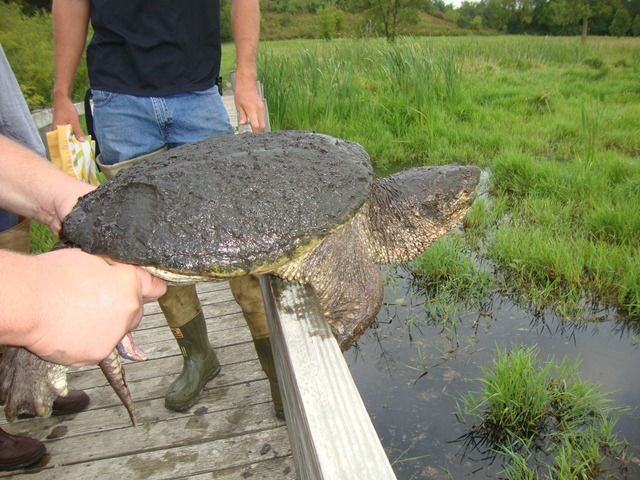
But, in addition to the Painted Turtles, I almost always also catch Northern Snapping Turtles (Chelydra serpentina).  In fact, I would not be shocked if just about every water body in the state (from tiny pond to giant river) has at least one snapper lurking in the depths.  The Northern Snapping Turtle (previously called the "Common" Snapping Turtle) rarely leaves the water.  It doesn't usually sit on logs and bask in the sun, like many other pond turtles.  It mostly remains unseen in the mud and muck on the murky bottom.  The females are seen more frequently on land during the nesting season, when they must traverse the dangers of an over-land movement to lay their eggs.  It's during these times that snappers must frequently head out into vehicular traffic.  Poor snappers.  Especially considering that people apparently swerve to hit turtles crossing roads.

Regardless, the Northern Snapping Turtle is one of my favorite turtles: ornery, cantakerous, dirty, smelly, mean-looking.....everything I like in a critter :)
Photo by N. Rudolph
This summer, we've been lucky enough to catch many snapping turtles, like the individuals above.  At one particular pond, I caught at least five individual snappers in a single night that had carapaces (upper shells) which ranged from 8 to 12.5 inches.  The one below is a prime example.....
 
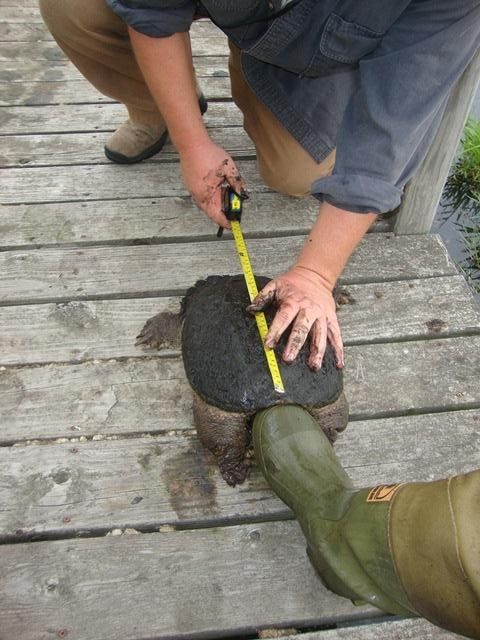
But that one pictured above wasn't even the biggest captured this summer.

That prize belongs to the individual below.  To put this into perspective, the boot on my chest-waders in this photo is a size 13.

It would be nice if more snapping turtles could make it to this size (or bigger). 

I guess we have to start by getting folks to restrain from hitting them on purpose (I can't believe I had to actually say that). 

Next we can try and come up with ways in which the average person can avoid hitting them on accident.

-sigh-

Thursday, September 27, 2012

Field Ecology Methods Week 2 (2012): Reptiles

After a week of invertebrates and Limnological techniques, the students spent some time learning how to conduct some standard surveys for reptiles.

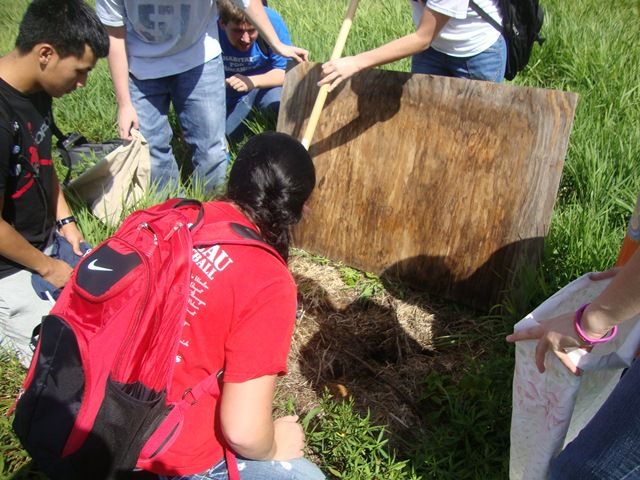
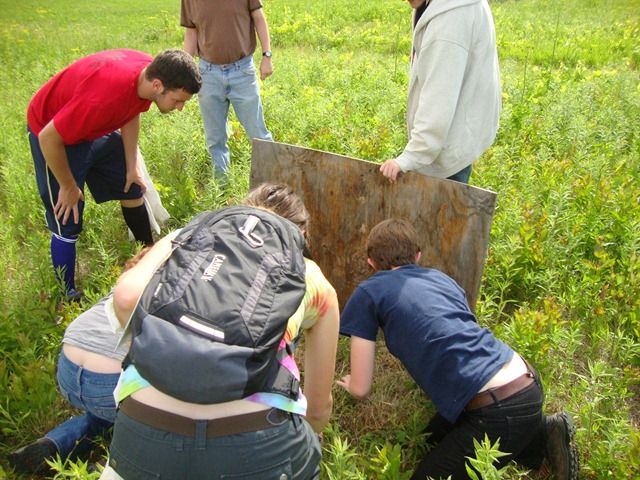
First, we checked the existing artificial cover objects on-site for snakes....

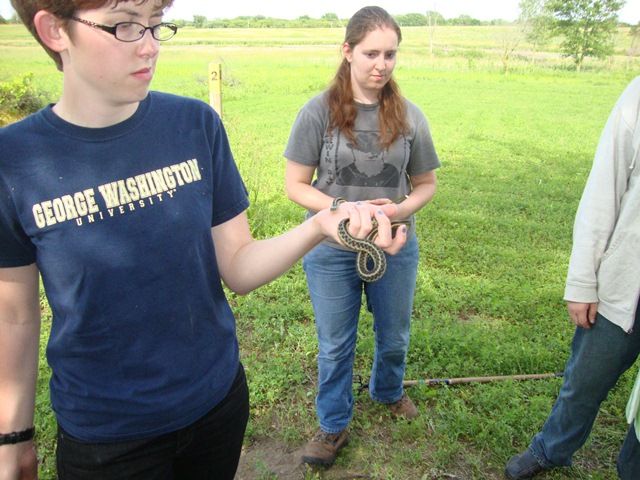
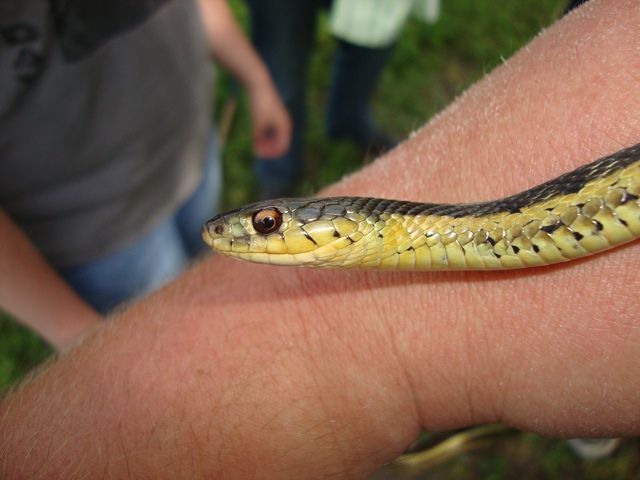
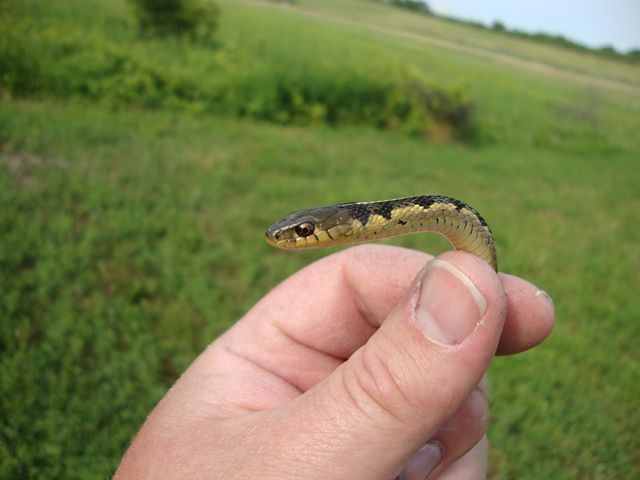
This resulted in only TWO juvenile Gartersnakes (likely born this year).  But it was unseasonably warm on the day we checked the boards (upper 80's)....probably too warm for snakes.

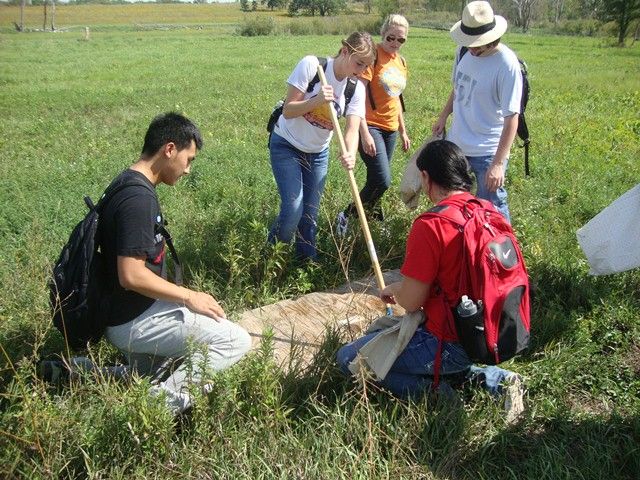
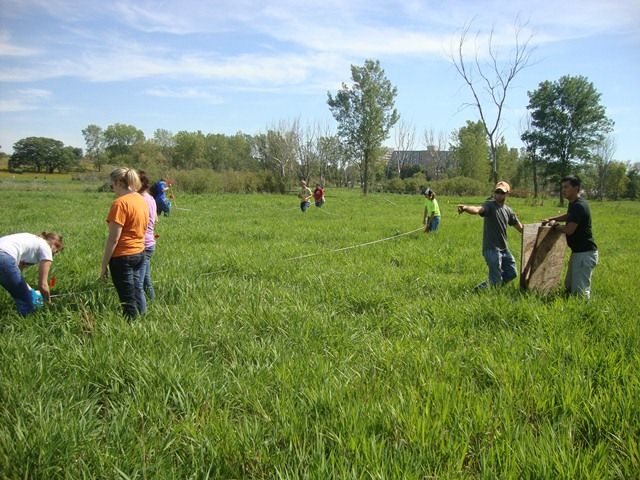
The students then worked to measure out additions to our existing coverboard grid. 

Few things make me happier than to see all 18 of these students working hard in the field and no one standing idle.


Let's face it....field work can be grueling (especially in the warm conditions we had while deploying the boards).  But, this gives the students a small taste of less than ideal field conditions that one might face as a field ecologist.  It's not all catching Cougars and Narwhals every second (or as a colleague here says...there's not a "gorilla behind every tree").

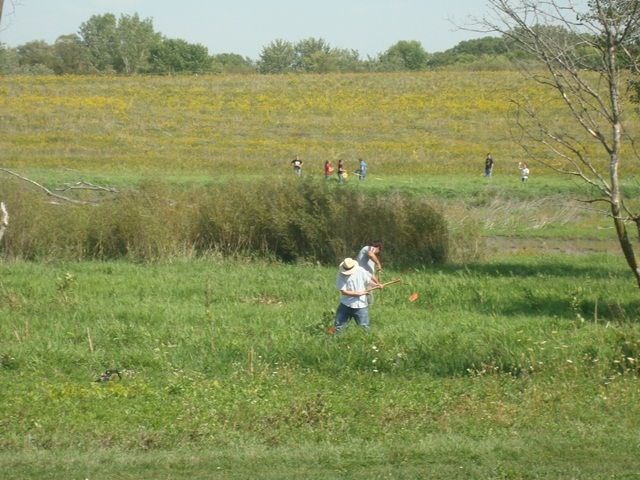
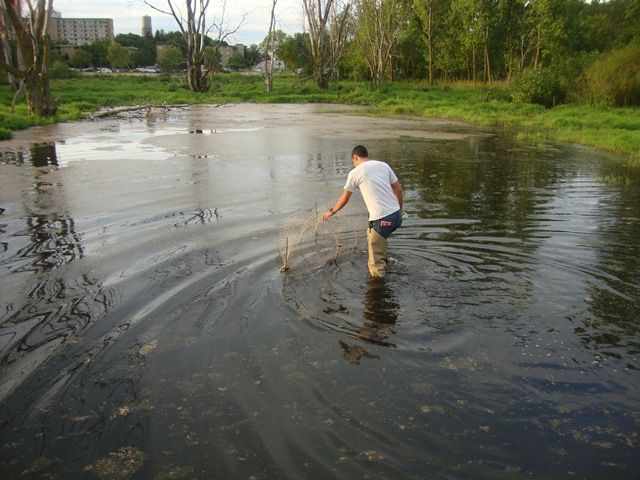
After the artificial cover objects were laid, we moved over to the creek and deployed some hoop traps for turtles.

........................................

The traps sat for a night, and a small group of volunteers came out with me the next morning to check and re-bait the traps.

Thankfully, we had more luck with turtles than with snakes.

Two large adult Snapping Turtles (Chelydra serpentina).....

Five cute little Painted Turtles (Chrysemys picta).......

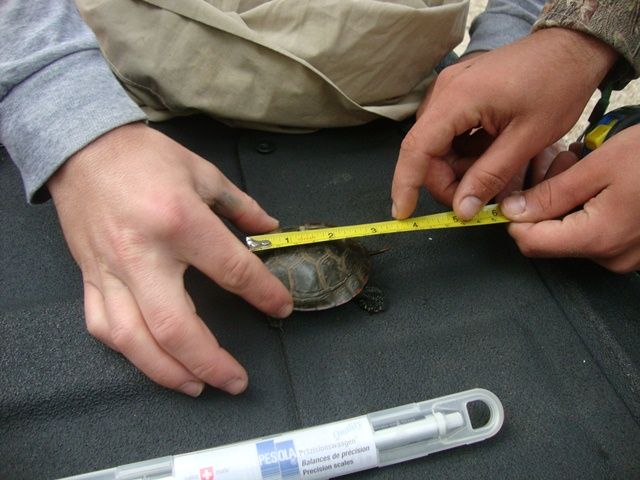
We took our morphological measurments, such as carapace (or upper shell) length....

Then we released the turtles back into the stream.
.........................................

The next day it was back to check the traps again, and this time the entire class was present.

...and once again, we had good fortune!

Day 2 yielded 14 painted turtles and one little snapper....a good haul!
Once again, appropriate morphological measurments were made....the turtles were given a permanent mark....and released back into the creek. 

Hopefully, we'll see some of them again in the spring!

For more information on standard survey techniques for reptiles, see this excellent new book:

McDiarmid, R.W., et al. 2012 Reptile Biodiversity: standard methods for inventory and monitoring. University of California Press. Berkeley.

The following book is also a good introduction to standard reptile survey methods.  Unfortunately, it's out-of-print, but you can still get it from libraries or through interlibrary loan.

Karns, D.R. 1986. Field Herpetology: methods for the study of amphibians and reptiles in Minnesota. Occassional Paper 18 of the James Ford Bell Museum of Natural History, University of Minnesota.

Tuesday, June 19, 2012

Field Ecology, Summer 2012: Herpetological Survey Methods

We offer a semester-long course in field methods for our Ecology majors.  They are exposed to a variety of techniques, ranging from plant identification/collection-making and tree community composition analyses, to aquatic sampling methods, to techniques for surveying vertebrates.  The summer session version of this course offers some unique opportunities for sampling amphibians and reptiles because....well....it's warm out!

There is a small wetland on campus.  It's shallow and warm.  It's also incredibly productive (teeming with aquatic invertebrates, vegetation, and ampibians)....a great place for turtles.  In fact, turtles in this wetland undergo a fairly treacherous journey every spring and fall.  They leave the shallow wetland and migrate across a road to a nearby stream, where they spend the winter (a journey I've commented on before).  Once they are in the wetland, it's easy street.....assuming some annoying university professor and his students don't screw up your whole morning by setting turtle traps!

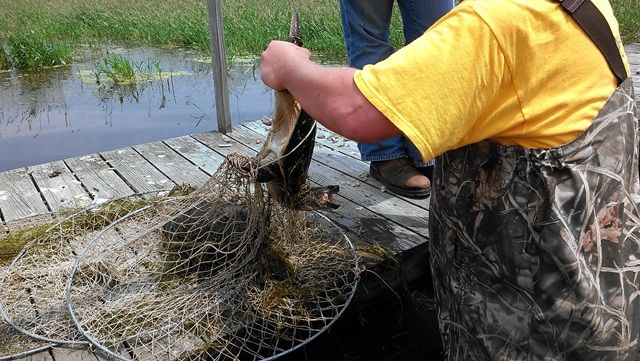
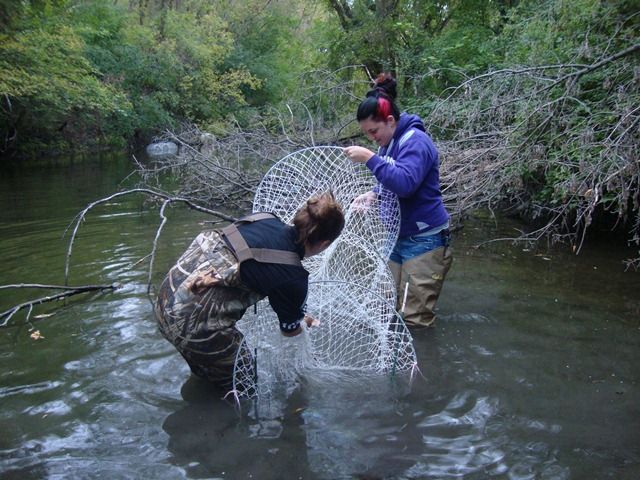
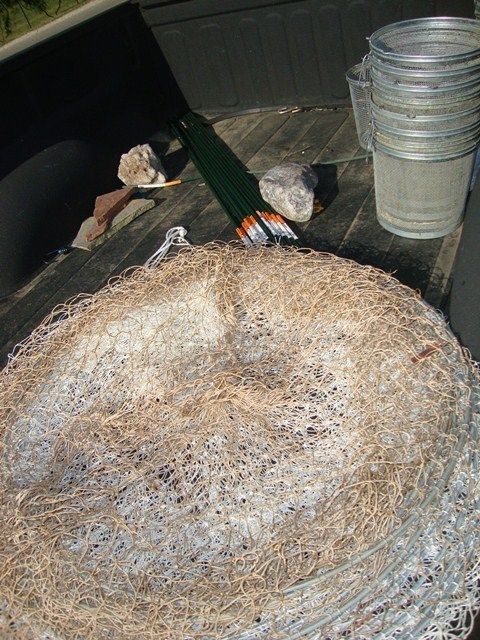
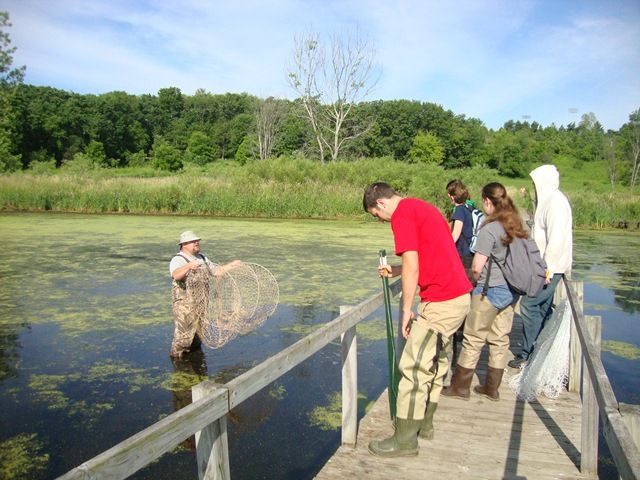
The traps we use are of a size and type that is accepted by our state regulatory agency.  These regulations vary by state (even down to a specific mesh size), so make sure you know these before throwing out turtle traps.  The traps themselves are not particularly difficult, once things have been explained a bit...

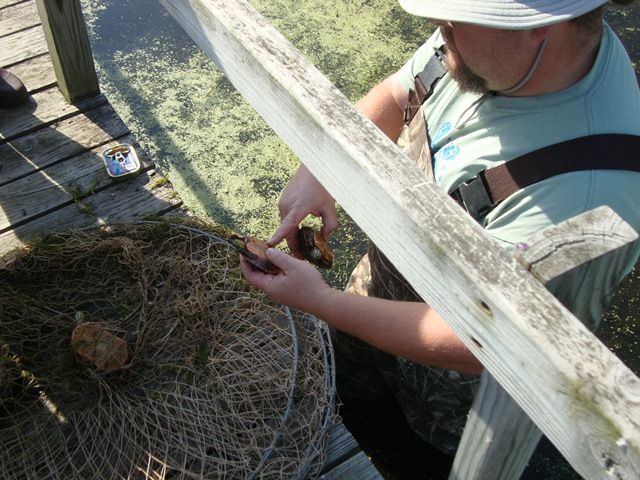
Basically, the mechanics of setting the traps is easy.  Finding the best location is one of the most challenging parts of turtle trapping.  Also, finding what type of bait works the best is very important.  I've tried alot of bait in my day (dog food, cat food, tuna, fish guts) and the best all-purpose turtle bait is a cracked tin of sardines! The brand doesn't even really matter.

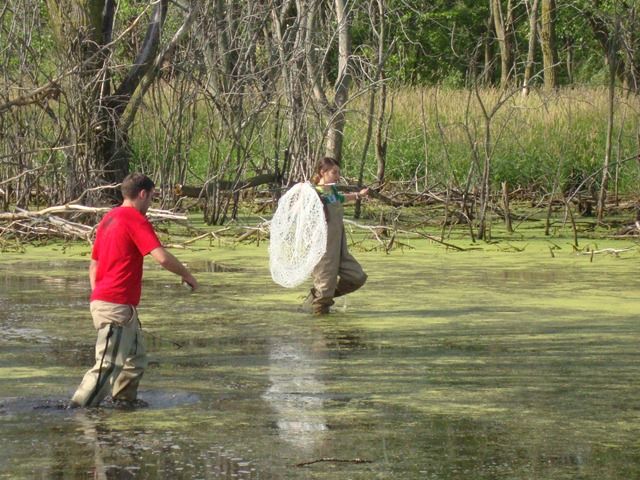
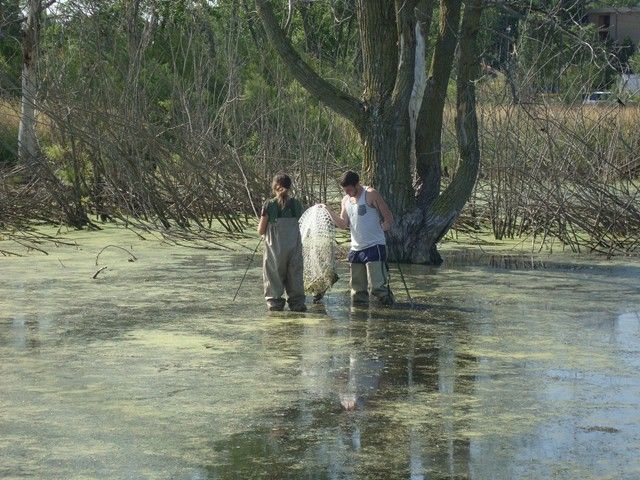
Armed with their knowledge, the students plunged in to set their own traps for an overnight soak....


______________________________________________________________________

A commonly incorporated technique for sampling snakes involves the use of Artificial Cover Objects (ACOs).  These are essentially a board laid flat on the ground (often CXD plywood in 3 ft x 4 ft sections is ideal.  Once put into place, these boards are warmed by the sun, and also hold moisture, so that the conditions underneath become nice and warm and humid.....perfect for a thermoregulating ectotherm! In early May, the students in the summer session course measured out and deployed a 5 x 5 grid of these boards in a little prairie preserve on campus.  We let the boards age for a few weeks, which gives the snakes some time to find the boards.  So....in the late afternoon on the same day as setting the turtle traps.....we got out there as a group to check what was underneath.

We were not disappointed!  In total we caught 17 snakes in about a half an hour of checking ACOs.

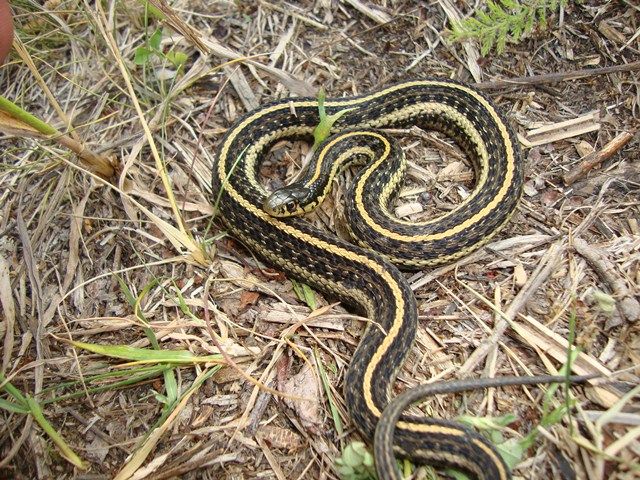
Many of the little live-bearing species that are native 'round these parts will use ACOs.  For example, Brown Snakes (Storeria dekayi), Red-Bellied Snakes (Storeria occipitomaculata) are easy to capture using ACOs.  Gartersnakes (genus Thamnophis) are also commonly captured with this method.  There are several species in this genus that are native to our region, including the Common Gartersnake (Thamnophis sirtalis). 
All captured snakes were then processed, which meant learning to sex snakes and learning to record some very basic morphological characters (such as snout-to-vent length, tail length, and weight).

We then let the snakes go along their merry way!
_______________________________________________________________________

The next morning, it was time to check our turtle traps....and again....we were not disappointed!

Painted turtles (Chrysemys picta) were the order of the day!  We caught 12 total in our traps...

We then discussed methods for measuring and marking turtles.

We measured and marked all of our turtles, including a rather small Common Snapping Turtle (Chelydra serpentina) with attitude to burn.

These marked turtles will now be part of an ongoing long-term population monitoring project carried out by students in this little wetland.