The cameras picked up some interesting stuff over the past week. Again, the White-tailed Deer was in greatest abundance.
But...this week we were also fortunate enough to get a nice shot of a Red-Tailed Hawk (Buteo jamaicensis). The first Red-tail I've caught pictures of on a camera trap (although not the first bird).
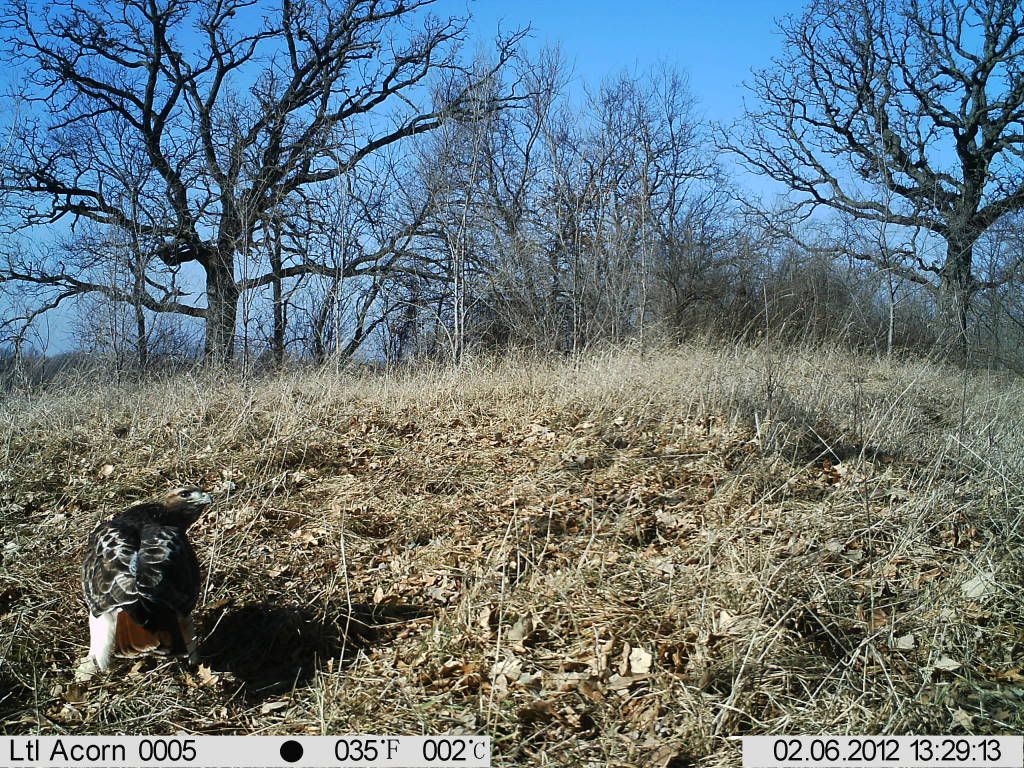
Interestingly, two weeks ago, we saw a pair of red-tails flying overhead on-site and screaming at eachother. One had a small mammal in its talons and the other didn't. I wonder if there was some kleptoparasitism about to happen?
______________________________________________________________________
Tree Sampling:
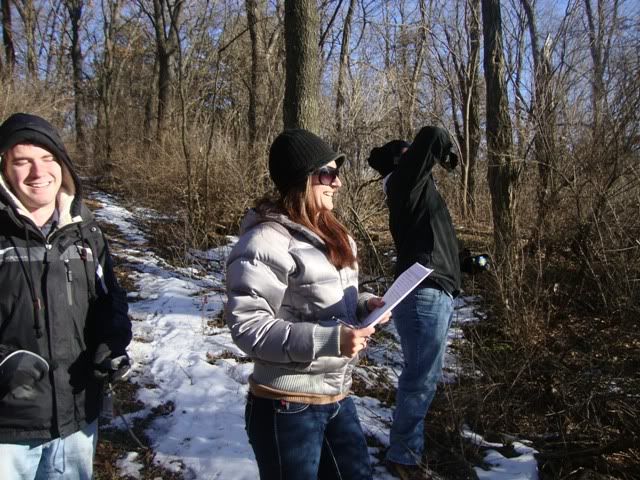
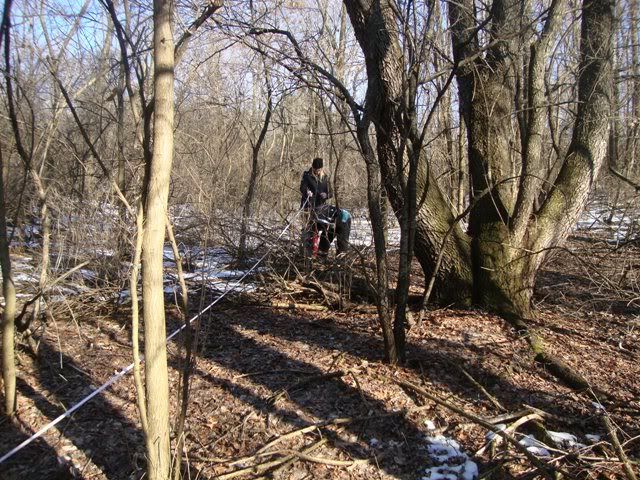
This week, as part of the battery of assessments being conducted of the property we are focused on, students conducted a tree survey. This involved each group measuring out five non-overlapping "quadrats". A quadrat (or sample plot) is a way to radomly select certain areas in a tree stand to sample, considering that measuring every tree in a forest is not practical. Each quadrat measured 33 ft X 33 ft (or 1/40 of an acre).
So, the first step is to measure out the quadrat.
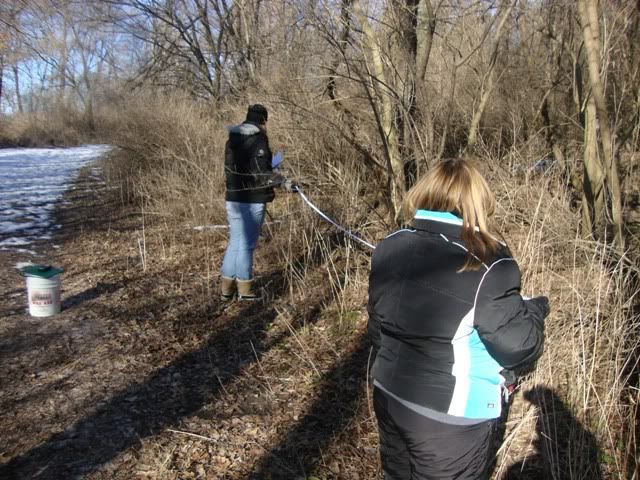
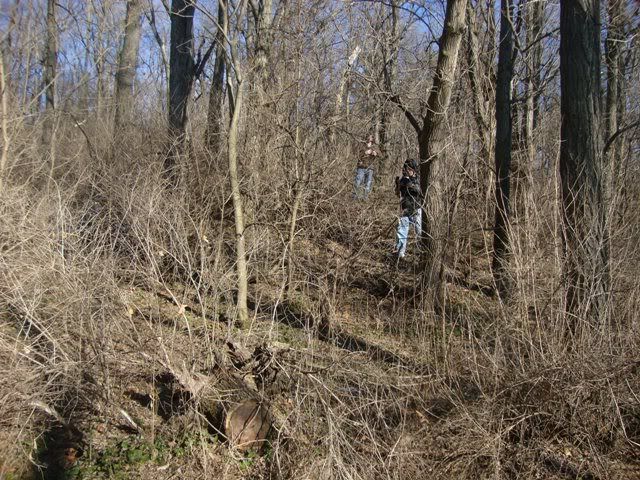
Then, comes tree identification. Obviously, identifying trees in winter can be challenging. There are no living leaves to work with. So, one is stuck using bark, twigs and leaves near the base of the tree that you hope came from the tree in-question.
Luckily for us, the diversity of trees on-site was not huge (probably the only time something like low diversity can be considered "lucky").
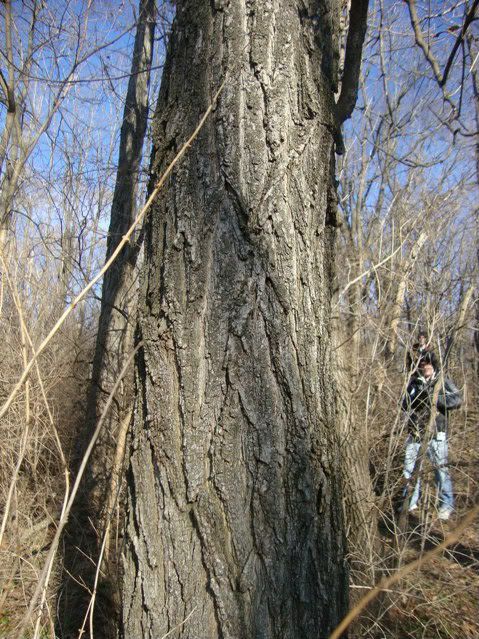
There is the Locust (Robinia sp.)....with its deeply furrowed bark.....
...the Box Elder (Acer negundo)....Box Elders tend to hold on to seed pods (the commonly referred to "helicopters") in the winter.

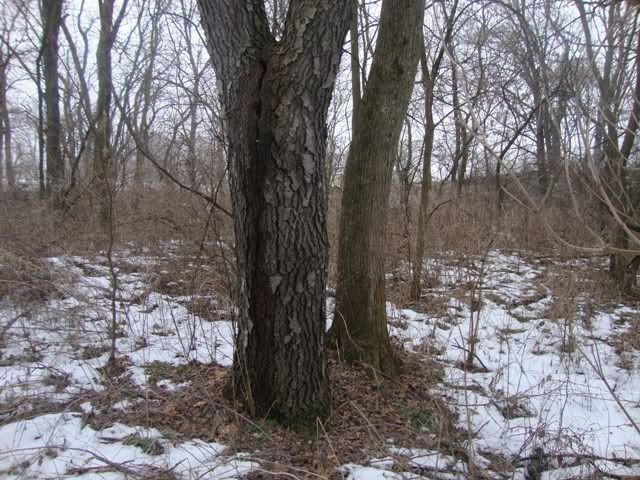
...the Black Cherry (Prunus serotina)...check out how much darker its trunk is compared to the Elm (I think) just behind it and to the right. The bark will also look scaly, like potato chips.
....the Mullberry (Morus alba)...although this picture doesn't show it well, they have a more "yellowish" tinge to their bark.
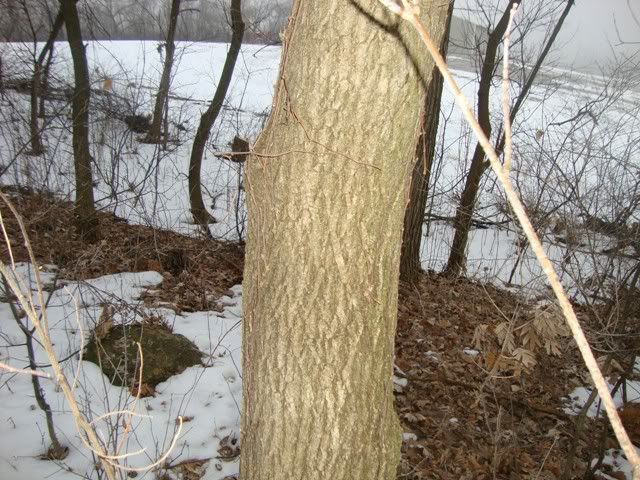
...the Hackberry (Celtis occidentalis)....no mistaking that warty bark, with the roundish nodules....

...the Red Oak (Quercus rubra).....oaks often hold their leaves in the winter....although there are a few sporadic White and Bur Oaks (Q. alba and Q. macrocarpa) on-site, the leave shape of these three species differ.

...the White Pine (Pinus strobus; the thin tree with the smooth bark in the background to the left) and the Red Pine (Pinus resinosa; rough bark more in the right foreground)...also White Pine needles occur in bundles of five, and Red Pine needles occur in bundles of two.
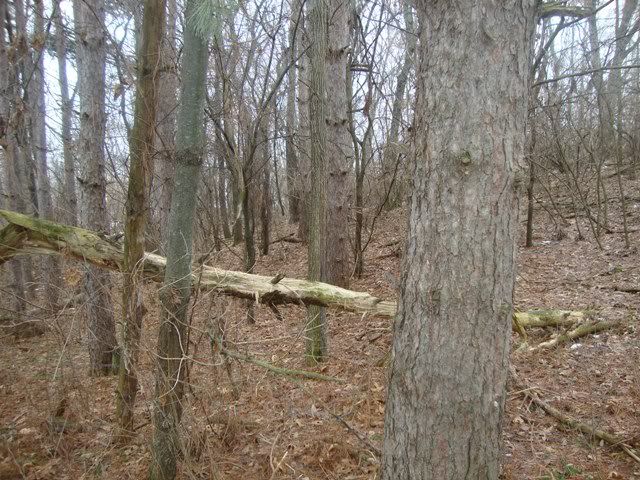
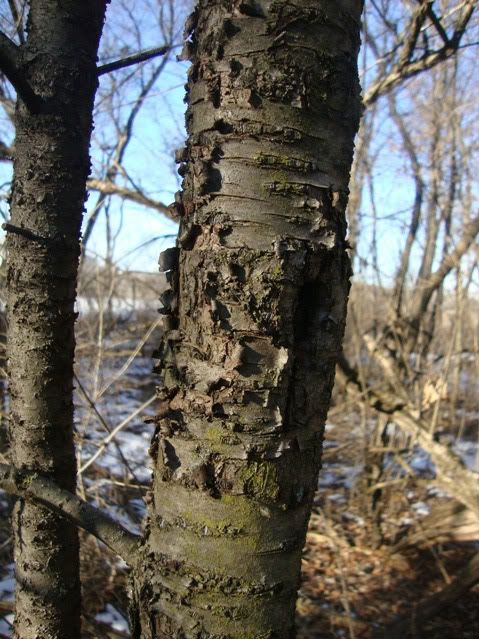
...and, of course, the terribly invasive Cathartic (or European) Buckthorn (Rhamnus cathartica).....its bark almost looks like it would belong to a black birch tree, or something....
For every tree within their quadrat that was of the appropriate size, students measured diameter at breast height (DBH).


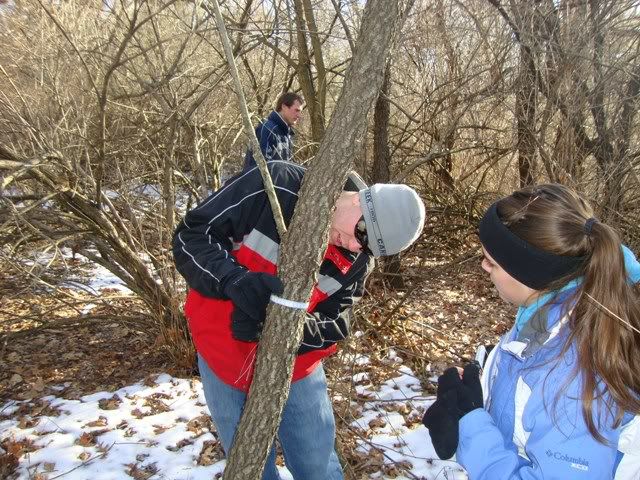
...and although it was alittle cool out and the underbrush ocassionally got alittle thick, you can see they had a miserable time.....