Showing posts with label Behavior. Show all posts

Monday, February 17, 2014

Winter Wildlife Tracking....and more

Recently, I accompanied my research students into the field.  We are in year two of a project focused on Wolves (Canis lupus), which I've previously posted tidbits from (see here, here, and here).  I haven't been able to get out with them to do fieldwork as much as I would have liked on this project.  However, they are amazingly competent, organized and detail-oriented.....so I haven't felt the need to hover over their shoulders.

Although I haven't needed to be there, I have desperately wanted to go out with them more often.  Circumstance has always intervened, unfortunately.  During their most-recent trip, however, everything fell into place. 

Before I share some of our observations from that trip, allow me to give you a bit of context for what their fieldwork involves.  This project requires that every two weeks, they take a 3 hr car trip north.  Because it's too expensive to stay in hotels, etc., all of their fieldwork must be crammed into one day.  This means a 14-15 hr day, including drive time, assuming everything goes smoothly (if you want to know about some of the 'hiccups', ask them how many times they've gotten a vehicle stuck during these trips :)  ).  The days are shorter up here in the winter.  So, to insure that they have enough daylight to finish their objectives, they leave early (5 am).  This way, they arrive at the first site at alittle after sun-up and valuable light isn't squandered while driving.

Winter fieldwork is the best, in my opinion.  Many folks I know talk about how much they love summer, and given my fondness for herptiles...I understand.  But summer can get just too dang hot.  There are only so many clothes that you can legally take off to deal with the heat of summer and eventually you just have to wallow in your own moisture.  Winter is the opposite: you can always add more clothes.  So long as you are dressed appropriately, winter fieldwork is great.

We needed that appropriate dress at the first site we visited...the sun had barely been up and the air was bitter cold.  Just having the fingers exposed to take pictures with my "fingerless" gloves (with the flip-up mitten tops) set my skin to burnin'!

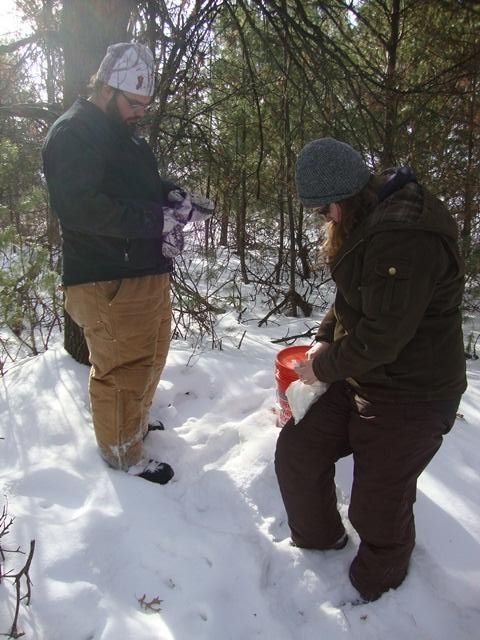
But, the research students (Phil and Sarah) got right down to work, while I got some photos of them in action.
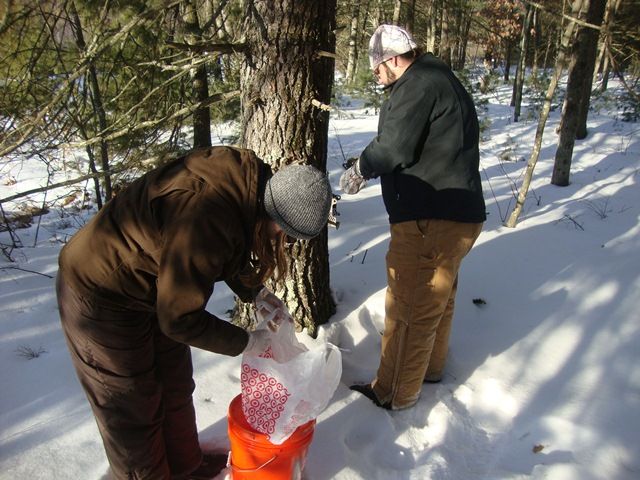
Pretty soon, we were headed back to the vehicle.  It wasn't long before the air started to warm a bit and it was downright pleasant to be working outside.  The amount of time spent at each location isn't too great....although sometimes the walking in and out can take time, depending on the amount of snow.  However, it's the time we spent on-foot that gave us opportunities to observe some very cool stuff!

Wolf packs are in the general vicinity of every study location we stop at.  We obviously don't know where they are.  They could be 50 yds away or 5 miles away, depending on where the pack is within it's territory.  Regardless, we know wolves have probably passed through our immediate area at some point in time.  Thus, there is wolf-sign galore!  We had some great opportunities for photographs....

There was lots of Wolf scat around.  Its fun to try and find some evidence of recent meals by looking at scat.

Take the example below:
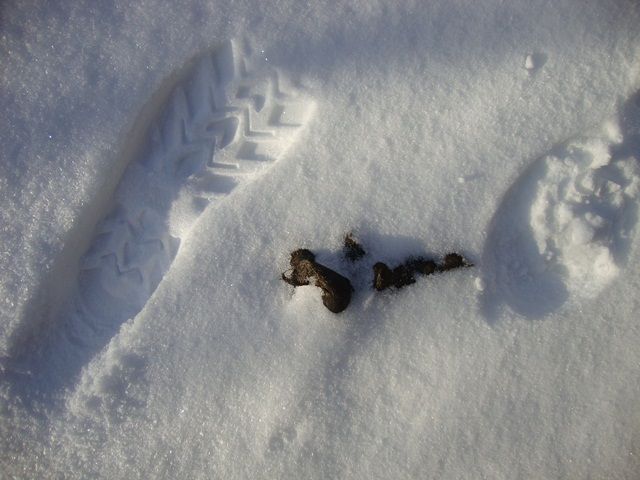
I was an idiot and forgot a ruler....but the print to the left is from my size 12.....

Here's a close-up:
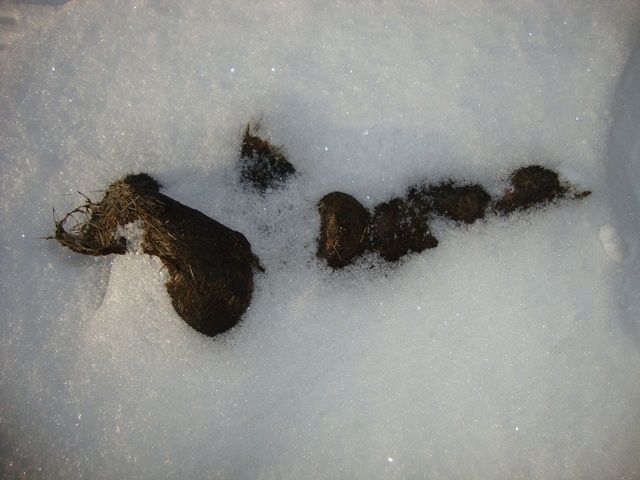
Lots of hair (which a quick inspection appeared to be from White-tailed Deer).  Also note the dark consistency...which would suggest alot of muscle or organ meat was consumed.  This is an important point to remember, especially when viewing other examples of scat we found.

Take a look at another scat below, which was along a different trail.....
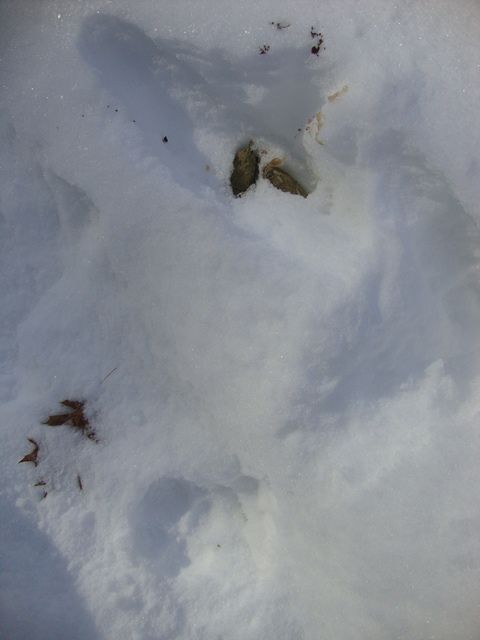
Notice the track at the bottom....scat more towards the top.

Here's a close-up of the scat, itself...
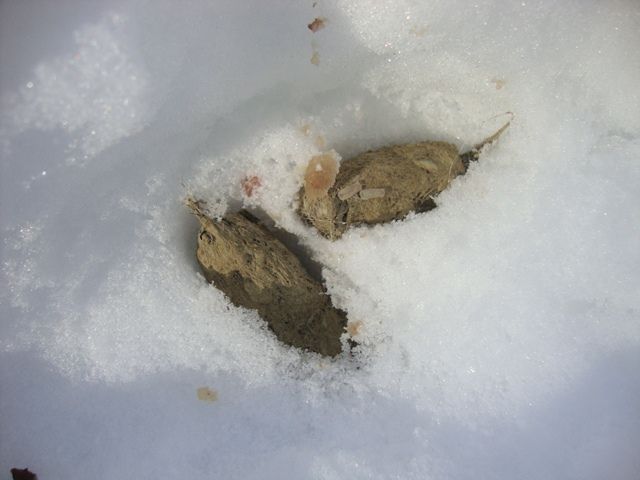
This scat is much lighter in color...a bit more chalky in appearance.  My guess would be that this wolf was consuming less meat and more bone.  Perhaps this individual was scavenging on an old-carcass...crunching up bones, etc.  In fact, there appears to be some bone fragments visible in there.

What's really interesting about this particular scat is that there appears to be a bit of blood (just above the excrement in the picture below).
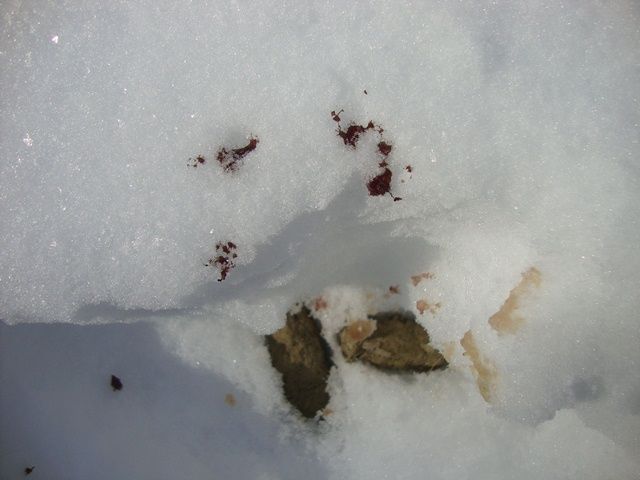
 It looks more black in the picture than it did in real life.  On the snow it was a dark red.  So, is this blood due to a bit of scraping from the wolf passing that scat with the bone chunks?  Possible.  Another explanation is that the blood came from a female in estrus.  In this area, we found lots of urine marks.  Perhaps this spot represents a location where a female in estrus dribbled a bit of urine and also defecated.

We are currently in the wolf breeding season (January through April), so females could be in estrus.  Interestingly, females are apparently in estrus for a short period of time (1 to 2 weeks).   Wolves are "monestrous", meaning they have one estrous cycle annually, which occurs at roughly the same time of year.

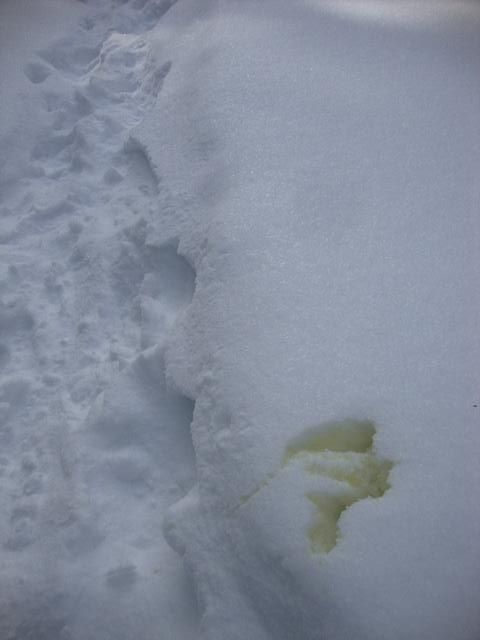
Speaking of urine...like many canids, wolves mark their territories with urine.  Such territorial markings can be referred to as a "raised leg urination", or RLU. 

Because wolves often travel along roads, a good way to quickly assess for the presence of wolf activity is to watch for RLUs from a slowly moving vehicle.  This is relatively easy to do, as the urine really sticks out against the white snow.
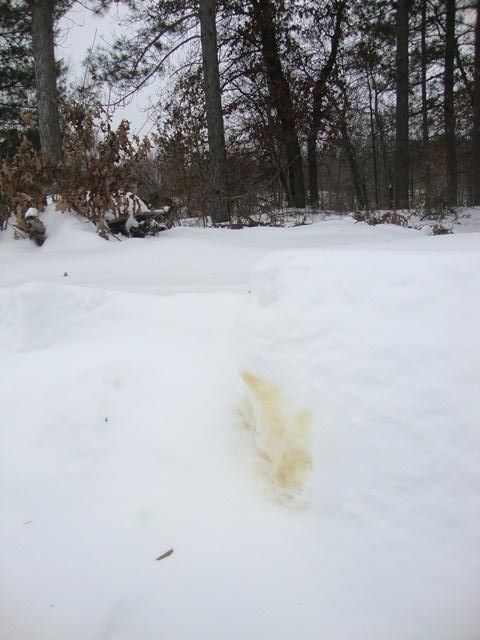
After you see an RLU, its important to get out and assess the area to find more evidence of wolves.  Obviously, folks walk their dogs along roads too, or bring dogs into remote areas for hunting, so you have to check things out a bit to confirm wolf activity.  Tracks, for example, or the height of the RLU can be good bits of evidence in support of wolves being present.

In another location we found beautifully pristine wolf trails along old tire tracks in the snow.  These were along a little-traveled snowmobile path and there were many associated RLUs.  Thus, the RLUs we found here were very likely to be from wolves and not dogs.

Here are two examples:
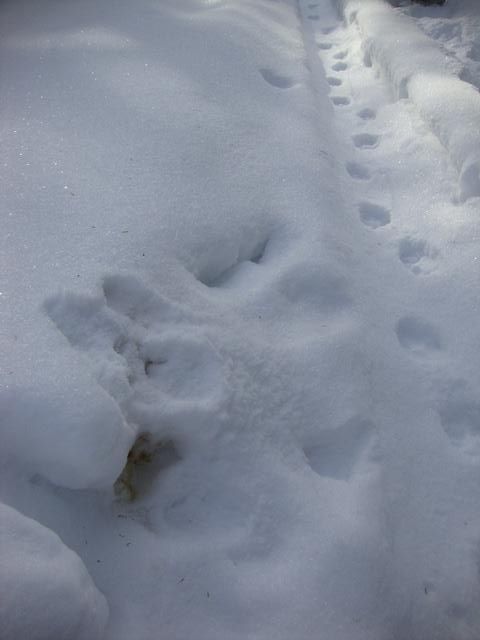
 
Finally, and as you probably already guessed, there are a plethora of tracks and trails!

There were so many wolf trails on the route in the picture below, it was sometimes hard to tell how many wolves were present.
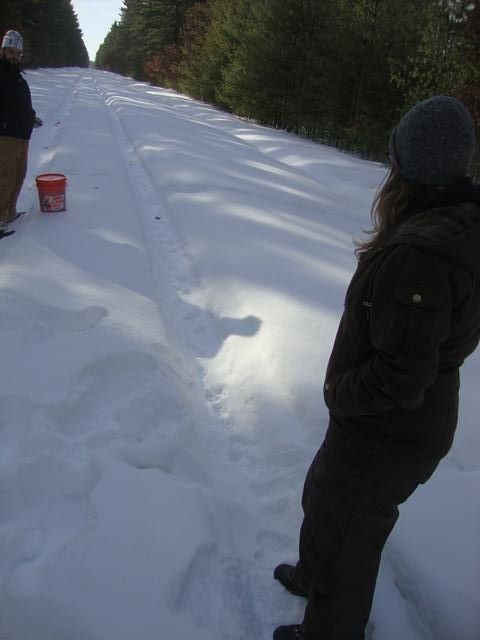
From the picture above, you can also see how deep the snow was by looking at it in relation to Sarah and Phil, whom are standing in a single set of tire tracks on this trail.  Also, note the wolf tracks leading away from us in the tire impression.

Some of these tracks were perfect imprints (and I wish we had brought some snow track-casting gear).
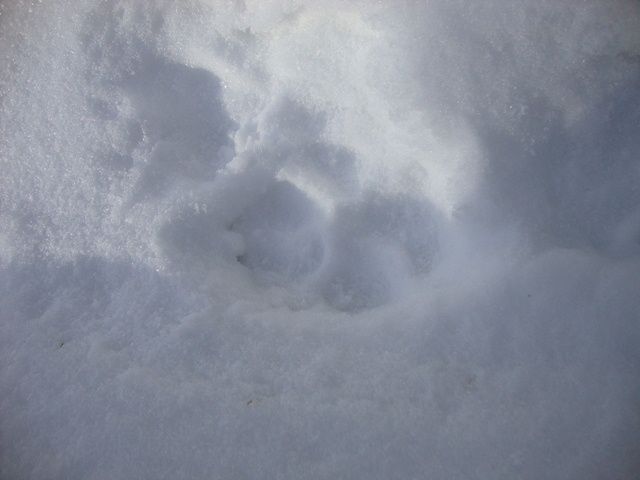


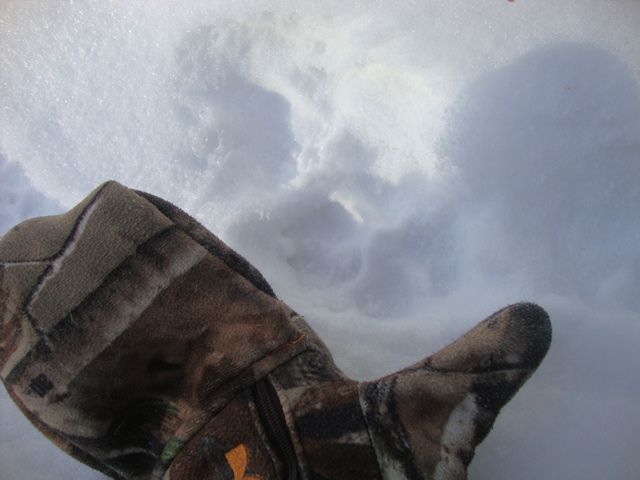
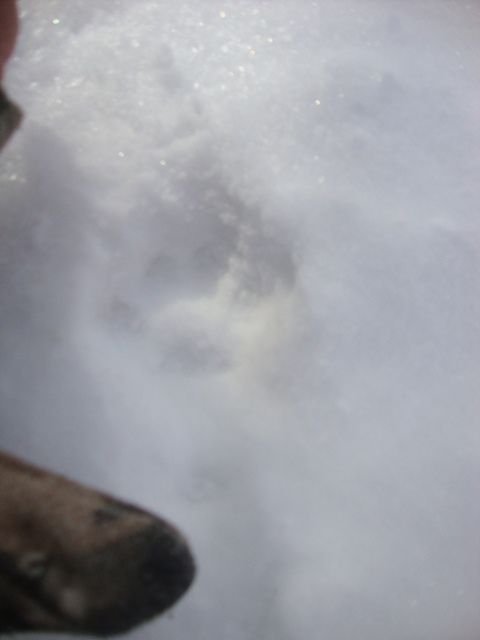
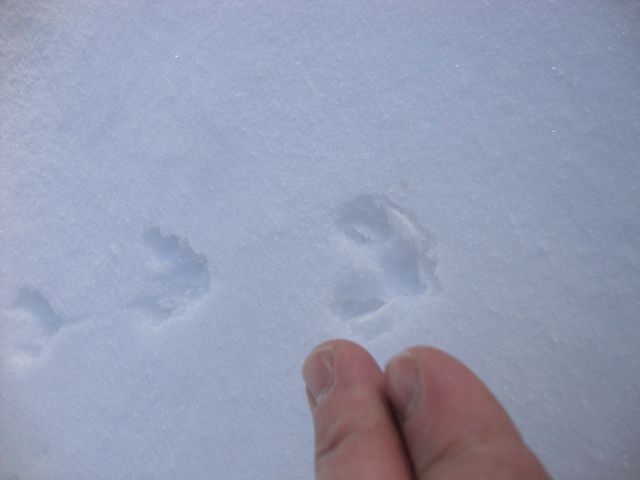
Below is a picture of a domestic dog print, for comparison.  Although my hand is meant to provide scale, this obviously isn't perfect.  The distance of my hand from the track, etc. can confound things, but it will give some you idea of the size relationship.
Wolves weren't the only critter we saw evidence of on our trip....

Rodent trails were abundant, and some areas looked as like a criss-crossing highway of rodent tracks.
...more (and bigger) rodents to come!

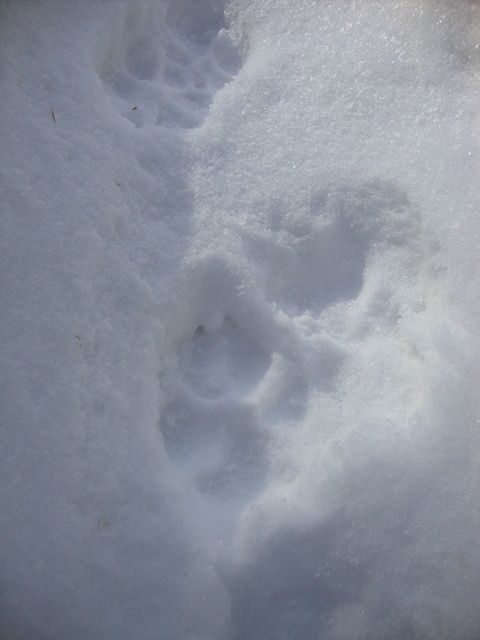
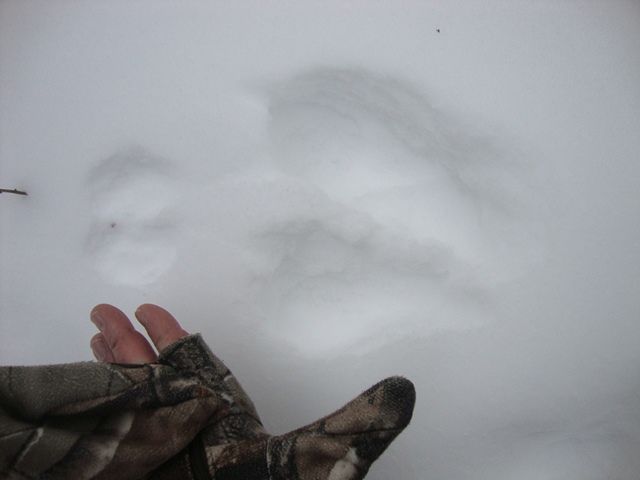
Lagomorphs were also easy to observe. One of my favorites from those we saw were the tracks of the Snowshoe Hare (Lepus americanus).
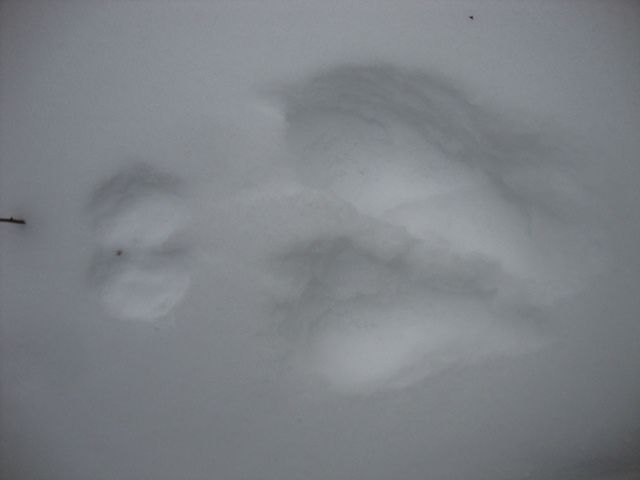
In these pictures, the front feet are obviously on the left, and back feet on the right.

Just check out the size of those kickers!!
There were other carnivore tracks at some of the sites.  Sarah found the tracks below in the road.  I stepped right over them, as I was watching a little Red Squirrel (Tamiasciurus hudsonicus) moving through the underbrush next to the vehicle.  Thank goodness she was paying attention!

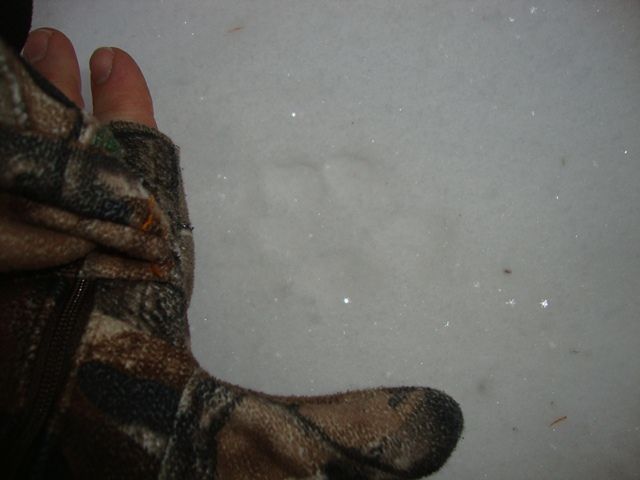
A Bobcat (Lynx rufus) had wandered around along the road very near where we parked.
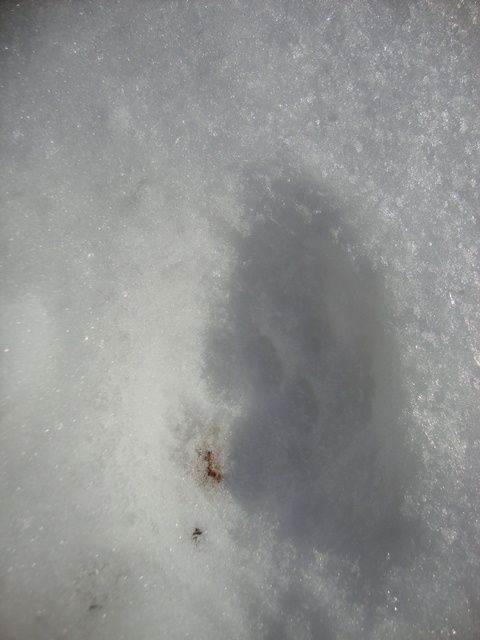
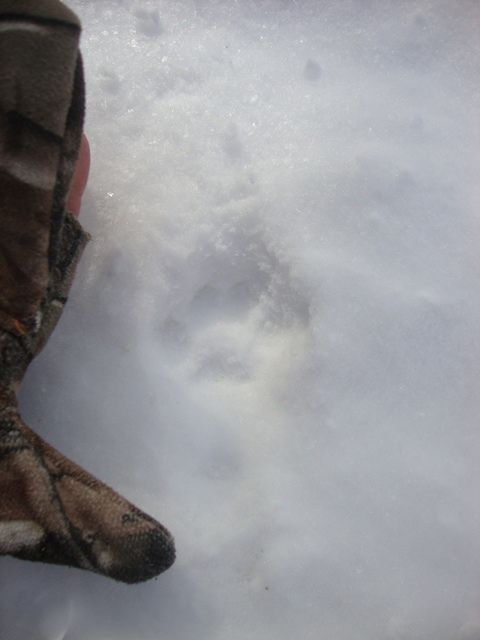
The diminutive size of their tracks always amazes me...
 

The day was coming to a close.  We made our way to the last of the sites we needed to visit.  On the way, we stopped by a dead-end road where Phil and Sarah had seen lots of Bobcat tracks in the past.  There was a very small culvert just off of the road.  They had found a high concentration of 'cat activity near the culvert on a recent trip.  This suggested that the culvert was perhaps a winter refuge spot for the 'cat.  We thought we'd see if we could get some more track photos, so we took a quick detour to check things out.

We pulled up and I hopped out to peek at the culvert.  The snow was very deep (up to my knees, right off of the road), and it took me a second to clumsily lumber over to the culvert.  From about three feet away, I could tell something had been moving around near the entrance.  There was some brown particulate matter on the snow, and I saw a few recently shed hairs.
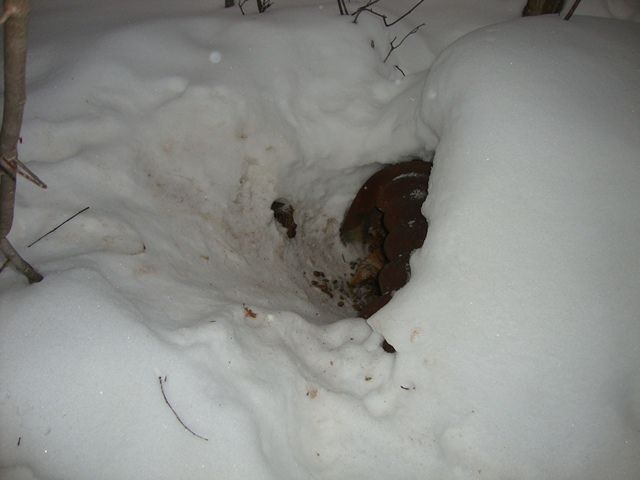
However, I didn't see any obvious 'cat tracks.  I moved to my left a bit, so that I could see the culvert entrance, without being too close.  From that vantage point, I noticed several large pellets in the snow and my first thought went to a Lagomorph (cottontails and hares) of some kind. 

 
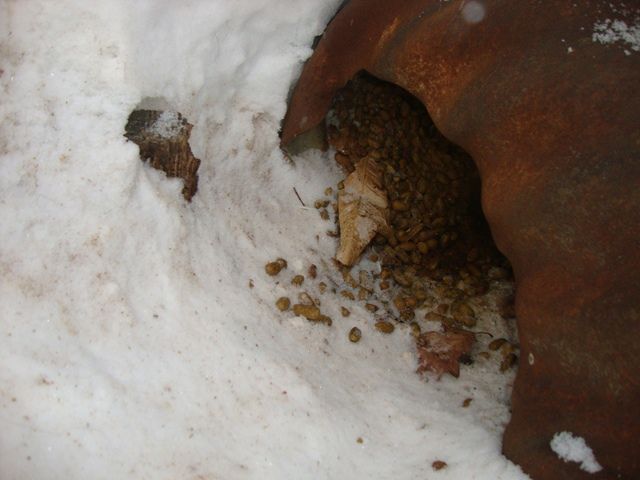
Yet, when I leaned over and saw that the it wasn't just a few pellets, but lots of pellets lining the culvert floor, it instantly triggered memories of a picture in the book "Tracking and the Art of Seeing", written by Paul Rezendes in 1992.  This picture depicts a Porcupine's (Erethizon dorsatum) winter den, and shows a pile of pellets exactly like what I was seeing.
 
I craned my neck slightly....and there was Porky.....
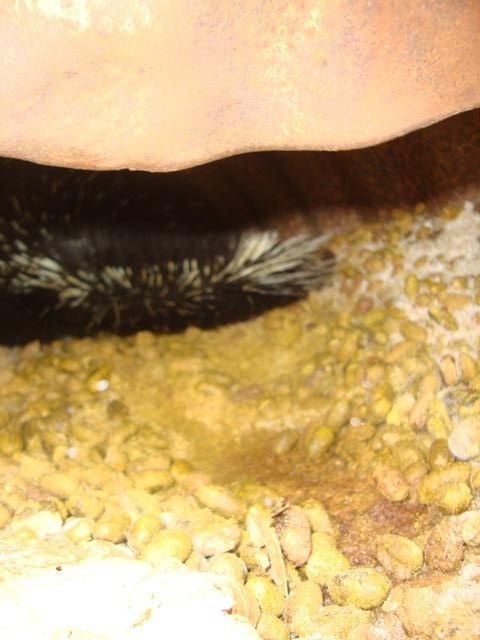
 
I was able to stick my camera in front of the culvert and snap a picture.  It's not an outstanding shot, but I also didn't want to disturb him too much by taking lots of photos.
 
It's amazing...who would have thought to look in this small, unobtrusive opening in the snow? 
 
Just to show you how unobtrusive it is, below is Sarah taking a picture of the outside.  The opening is just to her right.
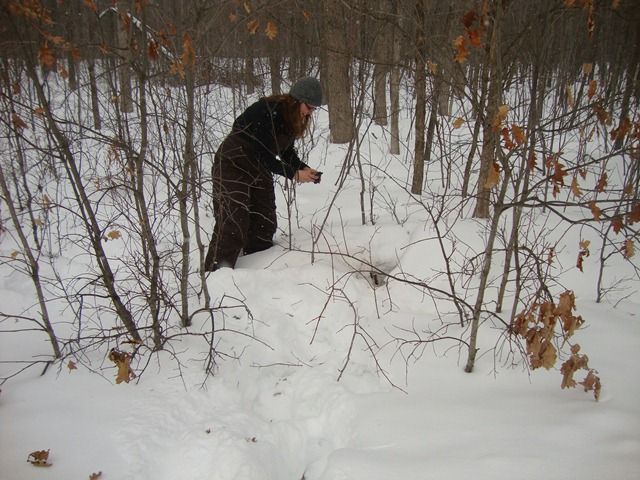
 
 
Ultimately, what more could we ask for from a single 14 hour field day?  It's days like this that remind me how much I love my chosen profession.


Monday, January 27, 2014

Wil E. Returns

The Coyotes at one of my study sites grew sparse after some heavy ATV use began in the summer.

However, the snow seems to have curtailed the ATV activity, which gave the canines a chance to sneak back onto the site.  In fact, the beginning of the calendar year seemed to really bring out the 'yotes....

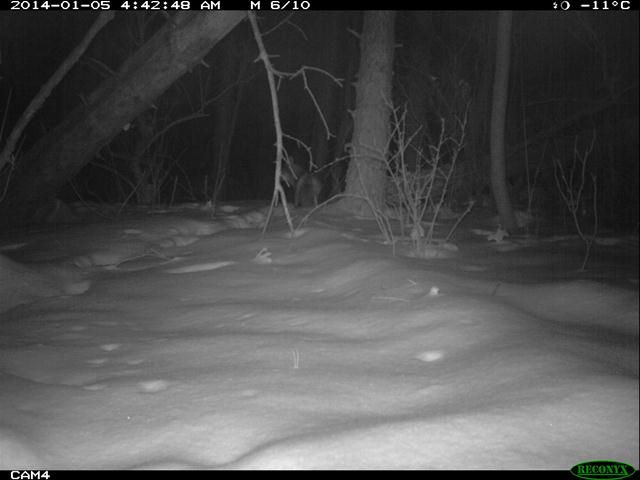
Although glimpses of them were as fleeting as you might expect at first....
The 'yote is in the far background in this picture, partially obscured by a dead branch


They also appeared to be appropriately skittish.  The IR flash of the camera caused this individual to turn-tail and run.  This is a response to IR cameras that I've observed from Coyotes several times in the past (see here , here and here).
 

Skittishness is probably one of their greatest survival mechanisms.  It might even be a reason why (despite the best efforts of humanity) the Coyote has avoided eradication throughout recent history.

Yet, sometimes, skittishness is over-powered by the desire to check out what the neihbors are up to.

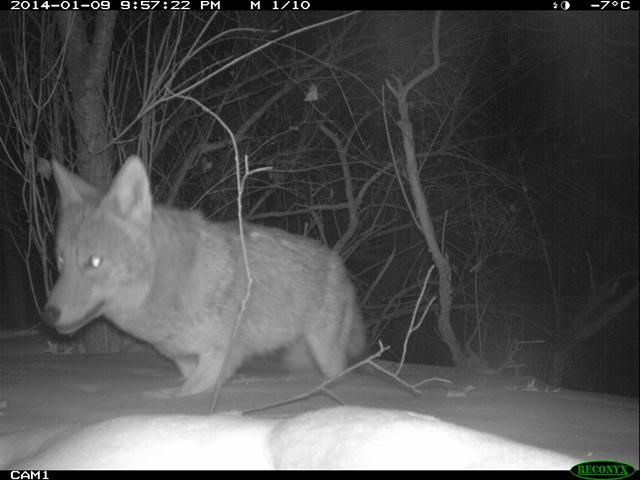
This individual (on January 10th, perhaps the same one from the 5th and the 9th?) is very interested in the canine urine we deposited in front of the camera. 

Considering we are in the general time period of the breeding season, it's not too surprising to see the canines doing some territorial investigations.

I imagine "curiosity" treats the canine, much like it does the cat .....if said canines don't learn quickly.  Canine urine is a common tool in the trapper's toolkit.

Another quick capture on January 15th....

I've also seen a large number of tracks and trails throughout the site since the first of the year.  One of my research students even found an interesting trail in the snow two weeks ago.  It appeared to tell a story of ol' Wil E. catching a Cottontail (complete with blood and tufts of rabbit fur).  I'm pretty happy to see them return after their long absence this summer and very sparse appearances in the fall.

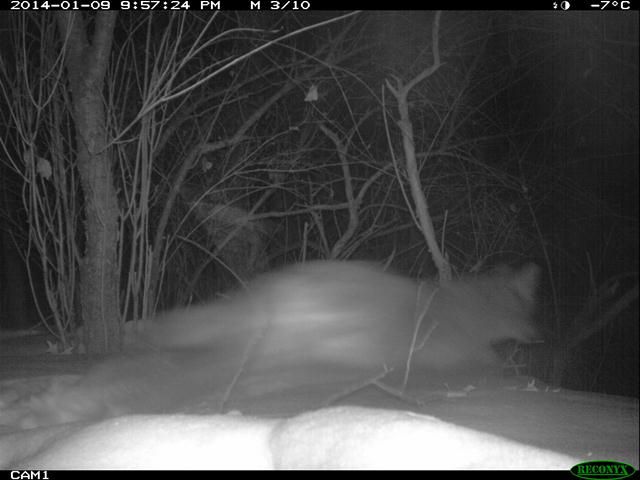
I can't imagine our resident forest ghost is particularly thrilled (seeing that Coyotes will exclude Red Fox)...but it hasn't scared him/her off completely. 

Although he does appear a bit more on-edge than before....
 

Friday, December 20, 2013

The Pursuant Wolf

You may, or may not, remember the following video clip from earlier this year.....

Anyways, after I had posted this, one of my research students was reviewing the video clips and actually found something interesting in the clip right before this one. 

You'll notice two critters in the clip below: one at the beginning on the right and another several seconds later.

We had looked at this when we first uploaded it onto my computer and dismissed it as two White-tailed Deer (Odocoileus virginianus) bounding through at top speed.  Closer inspection at a later date yielded the truth. 

Take a closer look. 

That second critter isn't a deer. That's a Gray Wolf (Canis lupus).  He and his pack mates were on the hunt, it appears.

Who would have thought that canine could leap as high as a deer?  I've always heard they have the ability, but you can't believe it until you see it!

Saturday, May 18, 2013

Wildlife Babies (2013): Red Fox Pups

Things have been pretty busy lately.  End of the semester, field work starting, and so on.  I've got alot to share with you from the last several weeks....but first: something so cute it will make your eyes pop out.

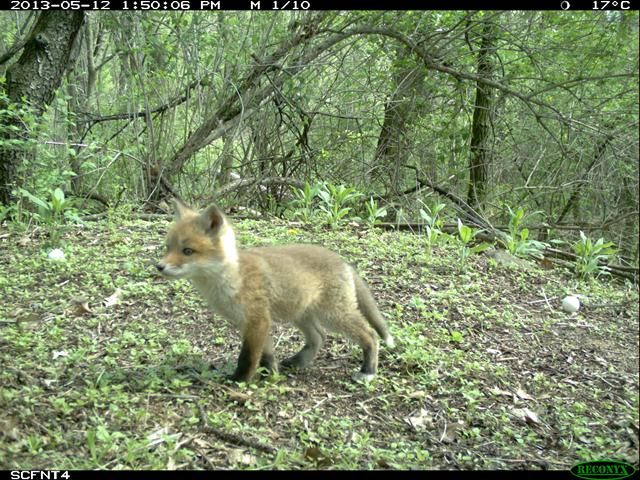
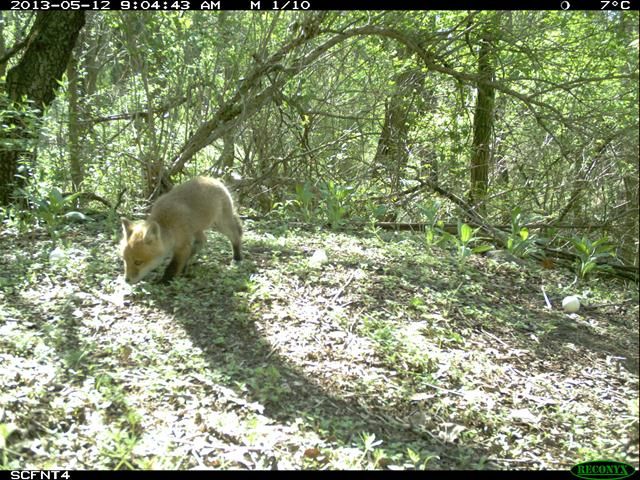
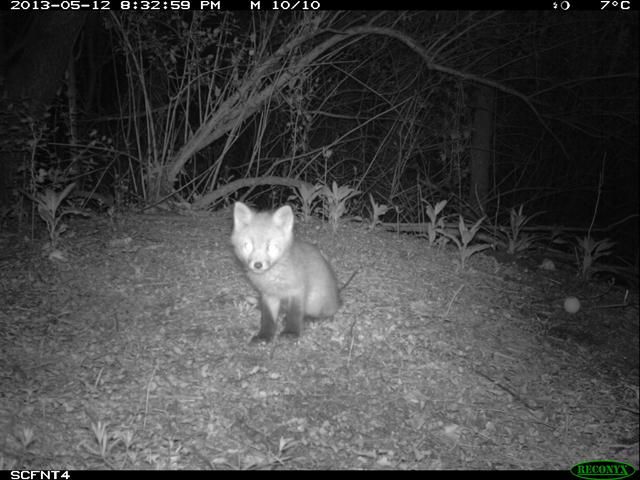
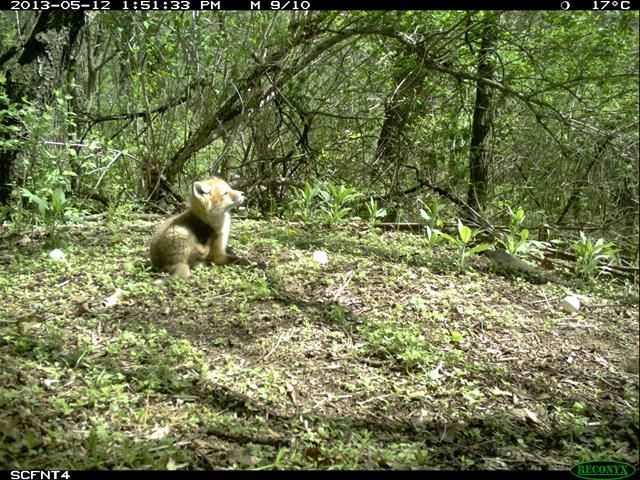
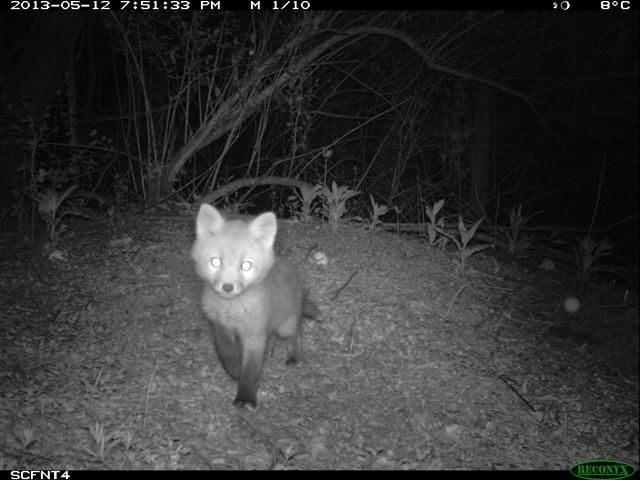
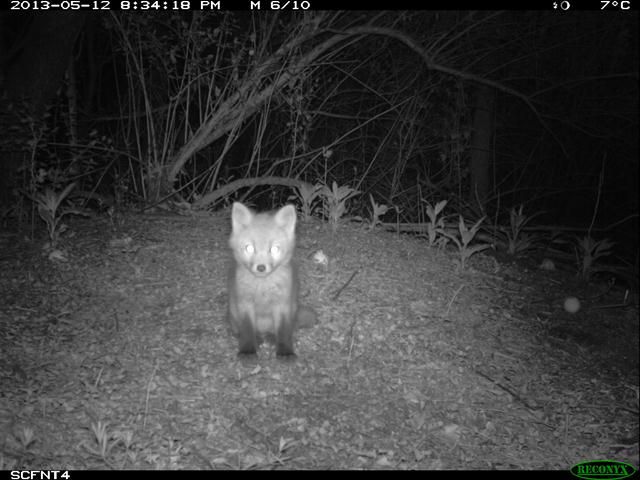
On Thursday, I checked some cameras that students put out at the end of the semester.  They had found a possible Red Fox (Vulpes vulpes) den nearby and decided it was a good place to hang the camera.

They were right on the ID for the den inhabitants.

Just about 6 days ago (after several weeks with the camera in-place), this little one showed up.....


This pup showed about at about the right time, based on the breeding phenology of this species in the state. 


The adults typically pair-up for breeding as early as December.  The main part of the breeding season is January/February.....with parturition occuring sometime in March/April.

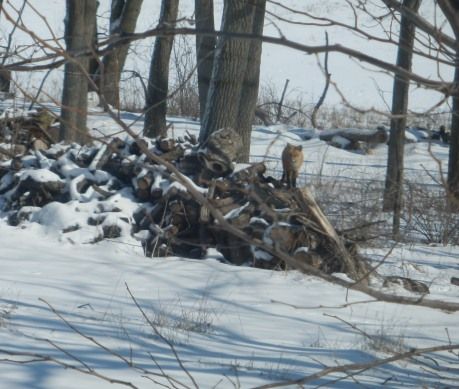
In fact, back in February, a colleague of mine snapped these pictures (not far from where the pup above is located).  These show a pair of Reds hanging around a wood pile.  He informed me that closer inspection around the woodpile revealed they were working on cleaning out a nearby den (likely in preparation for the coming babies)....

Photo: P. Jacobs

Photo: P. Jacobs

Tuesday, April 2, 2013

Phenology 2013: Preggers Coyote....

The Coyote (Canis latrans) activity has picked up substantially at several of our camera trapping locations.  This makes sense, as it has corresponded with the mating season and (soon) parturition for our region.  As Jackson (1961) reports, breeding primarily occurs in February, and most pups are born in April (gestation period of 60-63 days).

So, the timing is perfect.

Below are two clips of males at the same site for comparison.


....and now the pregnant female.....she just looks uncomfortable, doesn't she?

The den must be nearby, and I hope we can get clips of the pups......

As most know, the Coyote is often vilified and looked upon with scorn.  Jackson (op. cit.) mentioned several historic accounts of negative attitudes towards Coyotes in our region (note the "wolf" referenced in the passsages below is the "prairie wolf", which is an old common name for the Coyote).

"Among the other evidences of the rude and primitive condition of the town [of Mineral Point-TB] was the almost unceasing howling and barking of the wolves during the night, around and within its very borders, sounding at times as though the town was invested by scores of the brutes, much to the annoyance and alarm of timid strangers." (S.M. Palmer, 1872; 302).

Jackson also recounts some of the methods used in the past to eradicate these rude, brutish and annoying animals....

"A grand wolf hunt will come off Monday the 17th of December, 1863. There will be a line formed, commencing at ...... the town of Fulton, extending up .....in the town of Janesville.  Said line will be formed and ready to march at 10 o'clock A.M. There will also be a line formed on the west side of the river to act in conjunction with the first. ........ We invite all to take part, for the wolves are troublesome (Janesville Daily Gazette, Dec. 7, 1863)."  

The distance that this line of 'yote-hunters would have spanned was probably anywhere from 12-14 miles, as the crow flies.  Now, I don't want to sound hippy-dippy......but that's alot of effort to kill little ol' Wil E., which would suggest a very deep-seeded dislike or fear.

I wonder if the folks who orchestrated those hunts (or anyone today who dislikes Coyotes) would feel differently about them if they saw them acting just like their beloved domestic dog?

This doesn't appear to be skittishness. This behavior looks just like that of my dog when he's excited to go outside.

Friday, November 16, 2012

White-Tail Chemical Ecology

I accummulate hundreds and hundreds of White-Tail Deer pictures and video clips throughout the year.  I realize that countless pictures of deer get a bit boring and repetitive.  This is evidenced by the fact that my blog entries related to deer consistently have the lowest numbers of views compared to my other entries. 

Therefore, I try to limit the number of entries I write that are focused solely on deer.  I obviously can't help showing you all any large bucks I happen to get (at least once or twice a year)....they are just too impressive when in their prime not to be enamoured with them.  Yet, I try and focus deer-related posts to something specific regarding interesting behavior or phenomena....and I think the interactions below fall into that category.

The video clips below provide a bit of insight into how frequently bucks and does return to investigate a scent location....and also for how long they will return to this spot over time.  Granted, this is a sample size of 1....but it's still neat to see.

You'll also note that there is not a single clip that occurs during the daylight.  Even though the behavior below is occuring outside of the rifle hunting season in our area, most of my pics/videos of deer activity throughout the fall and winter (particularly for the large bucks) happens at night.  There's tons of deer out there....but they're just too dang "smart".  I often wonder if pressure from hunting hasn't acted as a force that drives natural selection to "favor" individuals that more often operate at night....and thus don't get shot! 

But, that's a different topic of discussion.
__________________________________________________________________________

The camera that took these clips is mounted on the trunk of a very young tree.  The trunk is pretty narrow and the branches are low to the ground (in fact, I had to trim some away just to access the tree trunk for camera mounting). 

The camera was deployed to this location on the morning of 9/26/2012.

9/26/2012

9:23 pm:  Doe browsing a bit, but also stopping by to investigate some fox urine that I put out.

11:28 pm: One of The Brutes comes by to investigate....

9/27 to 9/28/2012 (evening to early morning)

7:24 pm: A doe (perhaps the same one from the previous night) once again is sniffing around the same spot...

10:07 pm: The Brute comes by to get a nose-full.....
He then moves towards another low-hanging branch.  He appears to browse a bit, but also deposit scent from his forehead glands....

11:32 pm:  A small buck stops by.  I think he's part of  set of twins that belong to the doe that visits this spot.  He does some browsing, but also appears to investigate the scent from the larger male....

 1:42 am:  The young feller comes back to sniff around a bit.

1:46 am: There's a-doings a-transpirin' off to the right of our field of view!  Something is shaking the limbs of the tree the camera is mounted on, and kicking up the grass.  You can also barely see a pair of eyes watching cautiously in the background (far left).


You can probably guess who's responsible for the ruckus (the little buck also skee-daddles in the background).

......wait for it.....

"Holy .....!  What was that all about?!"
9/28/2012 (evening)

8:59 pm: A doe sniffs the branch that appears to be a despository for scent from the forehead glands of the big male...
For the next two days, the doe and the young bucks come back and sniff around some more.

9/30 to 10/1/2012 (evening to early morning)

11:39 pm: The Brute comes back to invesitage his scent branch...

1:03 am:  There's another ruckus off-screen....and then....

...wait for it....
The Crown!

___________________________________________________________________________

Although the buck meandered by this spot again once or twice, I never saw the back and forth investigation of scent after the first of October.  The camera was moved from this location on November 14, 2012.  So all of that activity was occuring over a period of about 5 days.  An important caveat: almost immediately after I mounted the camera...I was getting clips of this behavior.  Who knows how long it was going on prior to me mounting the camera.

It is worth noting that I started seeing the first actual buck scrapes on the ground in about mid-October at this site.  You may also recall that I first started seeing velvet rubbed off of antlers (at a different site) on September 8, 2012.

It is also fun to go all the way back to the beginning of the year and look at when the antlers first starting showing on these bucks. At the site where the video clips above were taken, antler nubs first became evident on April 17, 2012.

Thursday, November 8, 2012

Hedonist Coyote

These are probably some of my favorite Coyote (Canis latrans) video clips that I've been lucky enough to get with a camera trap.

The majority of the pictures and video clips that I have of Coyotes are fleeting....mostly I have quick shots, or blurry shots of an individual before it was spooked and ran off.

Not the case here.  In fact, this Coyote appears to be luxuriating in the fact that he can roll around in a bit of urine.  Red Fox (Vulpes vulpes) urine to be precise.

I'm obviously anthropomorphizing, but he almost appears to dive in with great relish.....and expresses little obvious concern for any potential threats.  This is not at all what I'm used to from Coyotes on my cameras....

He also gets alittle mouthy on one of the stakes that I use to hold scent....

Now.....in the past, I've gotten pictures that appear to indicate Coyotes show some hefty aversion to the red LEDs on the camera traps (see here and here).

This individual shows none of that (particularly in the second clip below, where he must be getting a face-full of red LED).  I've been camera trapping this site for over a year now.  Perhaps that's enough time for them to fully acclimate.  Also...the fact that we are not too ridiculously far out of the mating season (January/February) may have something to do with it.

Also of interest:  there is a similar scent stake on the left of our field of view that is holding Coyote urine.

Untouched.

Once satisfied, Wil E. decides to move along in search of other opportunities.

I've posted on this type of "scent rolling" behavior in the past (involving a Gray Fox, Urocyon cinereoargenteus) from North Carolina.  I also included a brief review of existing literature that I could find on the topic, which I'll re-post at the bottom.

Roughly half an hour later, a trio of rather concerned White-tails cautiously come along to check things out.
 
If they are the group I've seen most of the summer/fall, it's a doe and her twin boys.....


The reason why canines roll in scented-stuff is not fully understood or agreed upon.  Although a plethora of anecdotal and pseudo-scientific explanations for this behavior can be found on many websites (usually associated with training domestic dogs), I have not found one that backs their claims up with hard data, or references to scientific literature.

Mech and Boitani (Wolves: Behavior, Ecology & Conservation, 2003) summarize research that has been done on wolves to help better understand this phenomenon.  But even the work they cite, although giving good information about what type of scent-stimuli wolves will choose to roll in, does not clearly indicate why they do it! 

The general possibilities proposed to explain this behaior include: (1) "familiarization with novel odors or change in odors", (2) "strong attraction or aversion to particular odors", (3) "concealing one's own scent with something more pungent" (an obvious advantage for a hunting carnivor), and (4) "making oneself more attractive by applying novel odor".  An interesting study on African wild dogs found that females will roll in the urine of the lead male in a pack they are trying to join.  This may increase their chances of acceptance becuase they are coated in a scent familiar to the pack they are hoping to get in with (Frame et al. 1979).  It has also been proposed that individuals roll in specific scents to bring back information to others in their packs.  For example, bringing back information about the age of a carcass found to others in the pack.....

Literature Cited and Further Readings on Scent-Rubbing in Carnivores:

Frame, L.H., J.R. Malcolm, G.W. Frame, and H. van Lawick. 1979. Social organization of African Wild Dogs (Lycaon pictus) on the Serengeti Plains, Tanzania 1967-1978. Zoological Tierpsychology 50:225-249. (note: I could not find the above article, and was not able to read it....so my comments on this study are based on what Mech and Boitani report)

Reiger, I. 1979. Scent rubbing in carnivores. Carnivores 2:17-25.

Tuesday, October 9, 2012

Some New Brutes for 2012

I'm not one to go nuts over "big bucks"....however, there are some brutes hanging around the property.

Could be one of the same individuals from last year (see here and here).

Seeing that the "rut" is soon to be upon us....I can't resist posting some clips of these guys.


This one is at a completley different site....almost in the next county.  But he's still a brute.  His antlers are not quite as impressive as the top fella, but check out the neck on this one!  Thick as a mature oak branch!


The clips below were grabbed at a location very near where the video clips at the top of this post came from.  Either it's the same individual (hard to tell from the clips), or another large bruiser in the area.


I've also captured some interesting behavior associated with this last individual. 

But I'll save that for a subsequent post!

Sunday, September 23, 2012

RACCOON FIGHT!

Keeping with my sibling rivalries string of posts, here are the best close-ups of raccoons getting after eachother that I have gotten to-date....

Pretty humorous to watch, as well!

Everything appears to be going swimmingly between these two, when suddenly one bolts.....and that triggers it.


Then it's on!

The two chase eachother out of frame at some point.

Then about three minutes later an individual I call "Stumpy" randomly meanders through (apparently minding his own business).

Stumpy remains in the background and doesn't seem to know what he's in for....

......until one of the pugilists returns. 

Cautiously the contender scans the top of the reed canary grass looking for his antagonist.....but still gets blind-sided!

The two square-off and Stumpy quickly decides he's had enough and skee-daddles!

A VERY brief respite before getting back to the action....

Which then continues....


....and continues....

....AND CONTINUES!


But, something suddenly catches their attention....


...and then they're gone......

Saturday, September 8, 2012

What Spooked the White-tails?

Deer tend to mill about in front of my cameras with some complacency.  I typically get video clip after video clip of them wandering in circles and grazing (especially the fawns).

So when I saw this clip, it surprised me a tad.  This fawn is clearly on the alert....head up, looking around, ears swivelling, nose working.

I was even more surprised to see her and momma suddently bolt in a subsequent clip....

Why did they bolt?

About two minutes later, the reason(s) trotted into view. 

But when something just doesn't feel right....even these two are gone in a heartbeat.

Friday, August 31, 2012

More Sibling Rivalries?

The sibling rivalries continue!

There appears to be a rather sizeable misunderstanding between these two young Raccoons.....


What's more, this misunderstanding still was not cleared up several days later....

Even momma looks beside herself on this next one (pacing around the wrestling juveniles)....


Not all interactions appear to be such massive misunderstandings as the ones in the clips above.  Some actually just appear to be "play"-type behaviors.

The clips below starts off pretty benign, with a nice up-close shot of momma.  Yet, it ends with her two two scamps accidentally sucking her into their ruckus.  

Uh-oh.....I guess I spoke too soon....
 

ahem..... 

Tuesday, August 14, 2012

Sibling Rivalries

Tensions are high among some of the Raccoon siblings, it seems.

Occasionally, these tensions flare up into a full blown altercation! 

The funniest part is that every time one appears to be ready to walk away, the other pulls him or her back into the fray.

Thursday, August 9, 2012

The Mad Sciurus

I have no idea what's going on with the demented behavior of this Fox Squirrel (Sciurus niger).  Obviously, its trying to get at something....but what could be so absolutely essential to your survival that you'd act like this to get it?

Can someone please explain?


Catching bizarre or unique behaviors like this is one of my favorite things about camera trapping!