Showing posts with label Red Fox. Show all posts

Wednesday, February 5, 2014

A Year-Old Tale of Romance (and how my students uncovered the continuing story....)

Happened across these pictures recently and can't believe I didn't post them before...

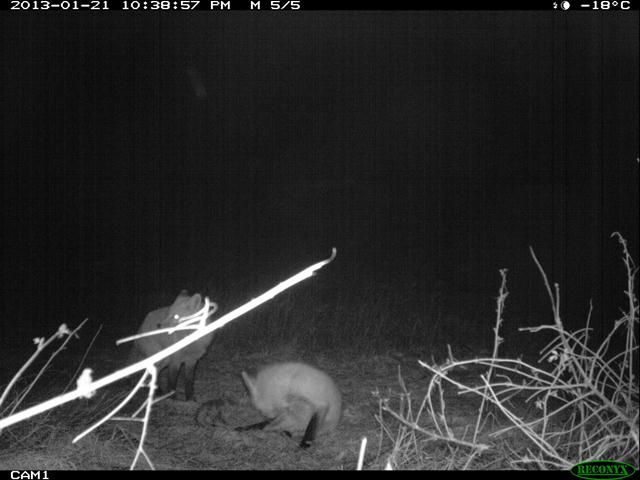
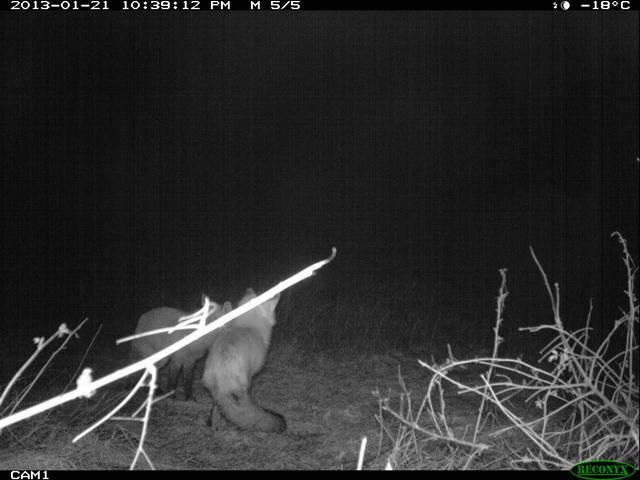
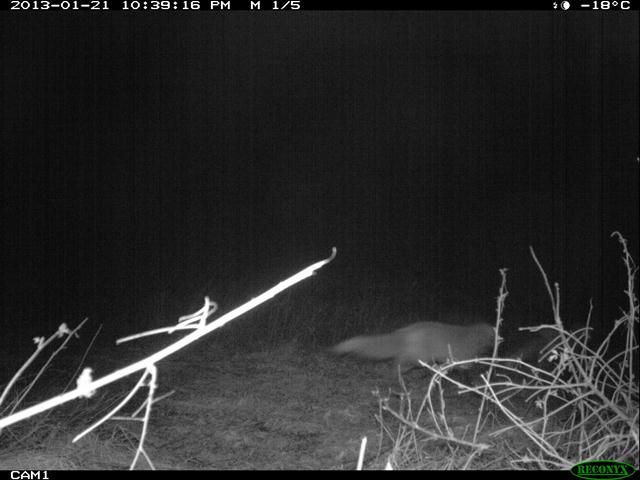
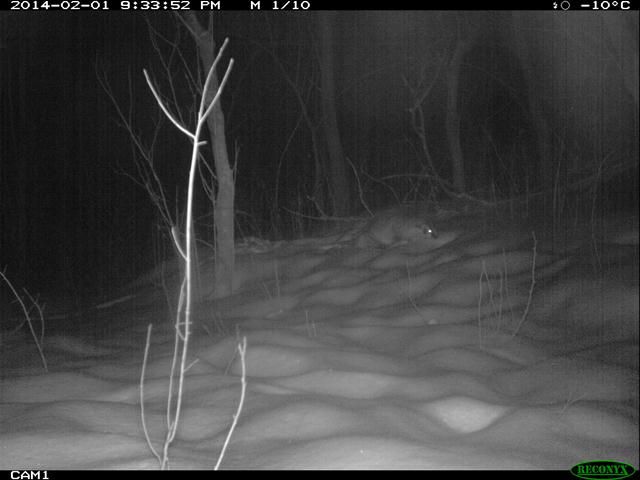
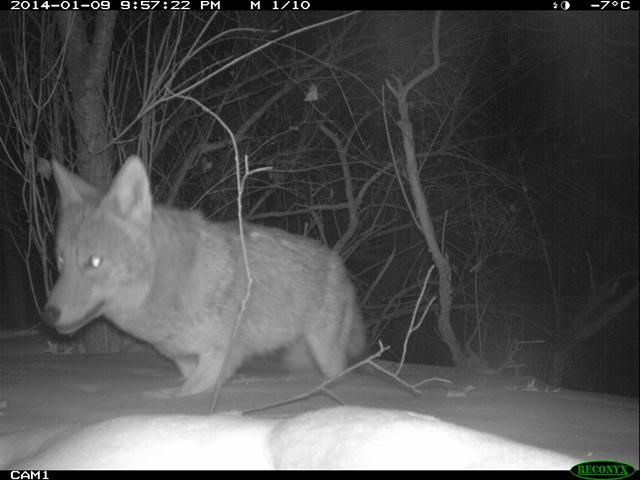
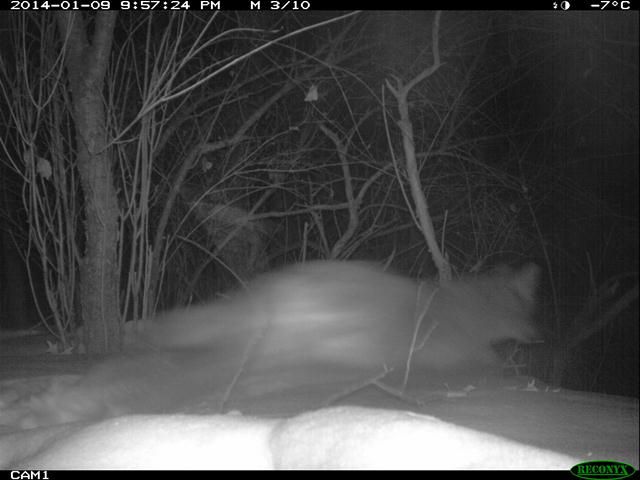
Last January, I happened to get pictures of two twitter-painted Red Fox (Vulpes vulpes)...they were together smack-dab in the middle of the fox breeding season 'round here (which is usually January/February).
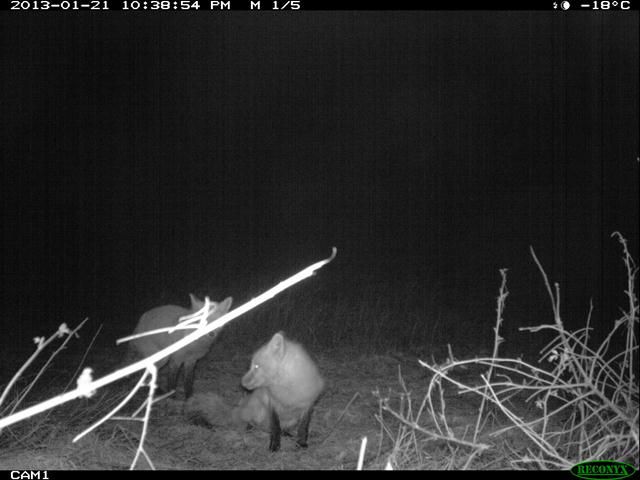


I'm willing to bet that this is the pair whom are responsible for the pup we caught pictures of on the same site several months later (see here)....

So...the ATV activity this summer really cut down on the number of fox pictures we got on the cameras for awhile.

But....much like with the Coyotes....that has changed this winter.  However, I wasn't sure if we would see any kind of breeding activity or evidence this year.  I thought that if the ATVs scared them off this summer, they might not consider it safe enough for breeding again.

Which leads us to my Advanced Ecology class this year (which is a class I've posted about during past years...see examples here and here).
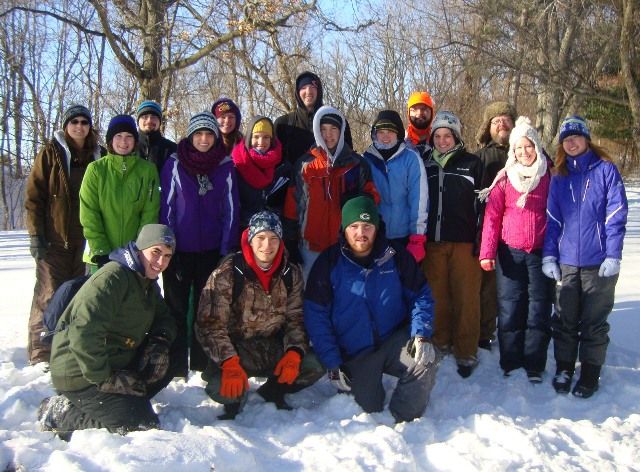
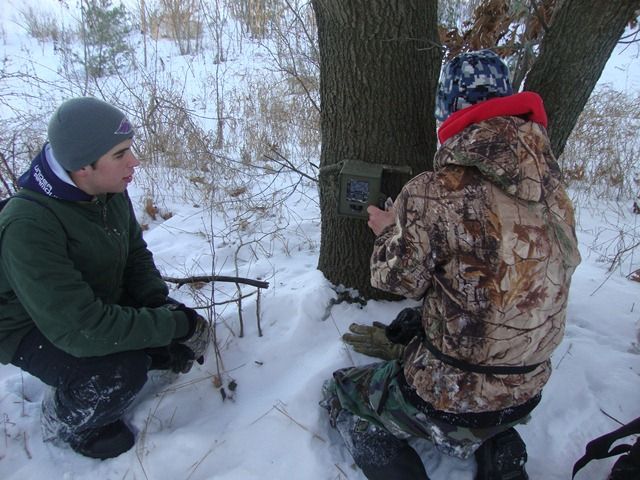
Two weeks ago, the students deployed their camera traps for a semester of monitoring. 
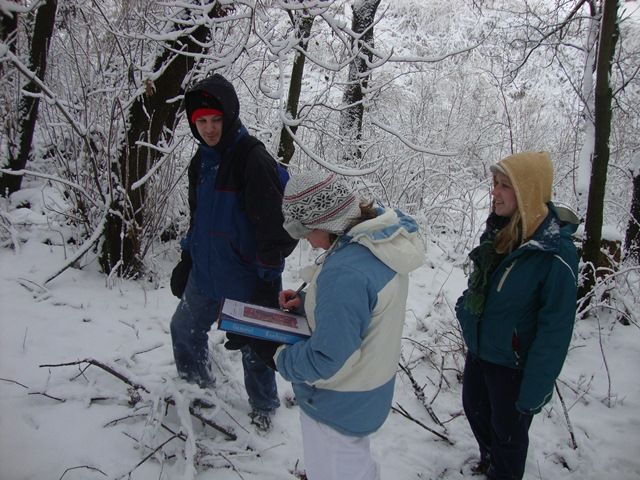
They also spent some time assessing the habitat communities on-site and using GPS units to delineate community boundaries.
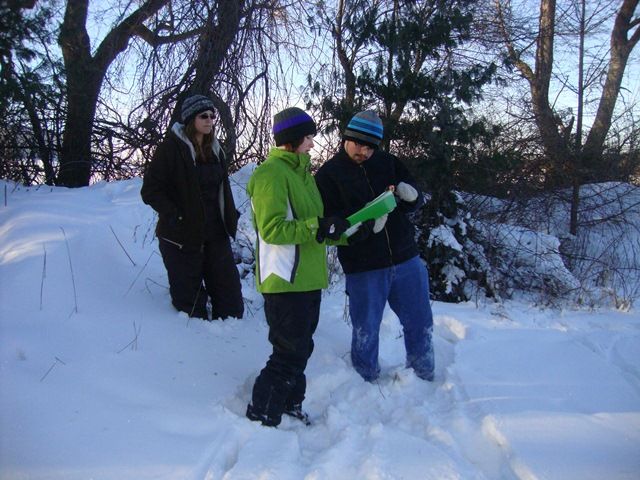
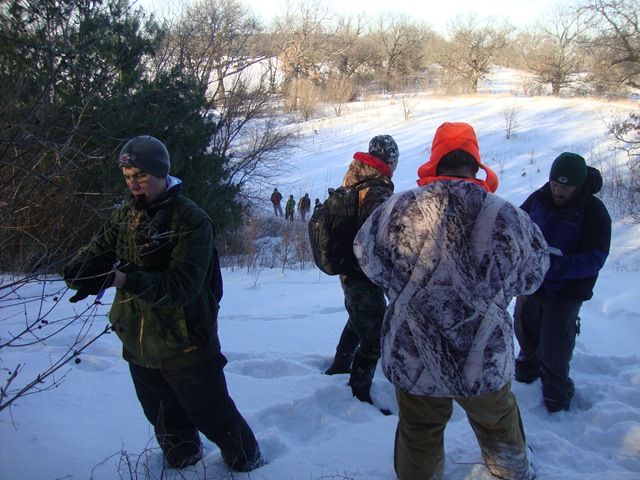
This gave them a chance to get a good feel for the property we are working on, and make some important observations.

Now, zoom forward to this week.  We gathered on-site to begin our weekly exercise, while also checking camera traps, etc.
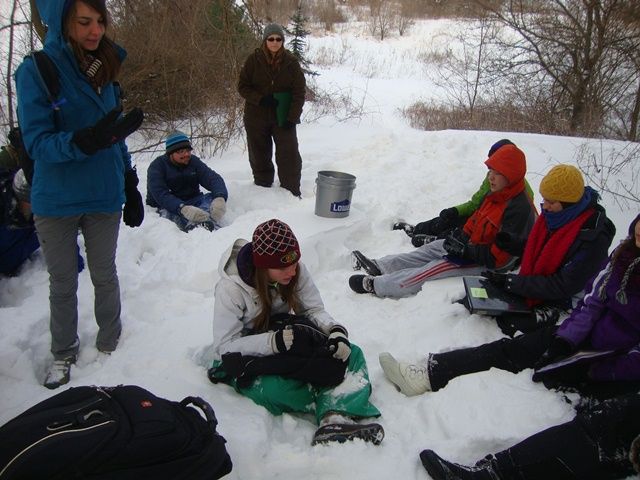
Not long after we got started, one of the students called me over to their camera trap location to show me a burrow he had found.  In the picture below, the student is standing about where the entrance to the burrow is located.
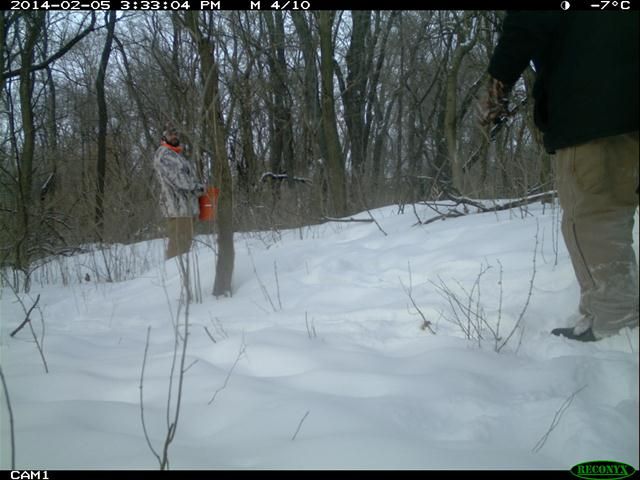
He's pretty critter-savvy (experienced hunter and trapper).  We agreed it was in the size range for Red Fox....
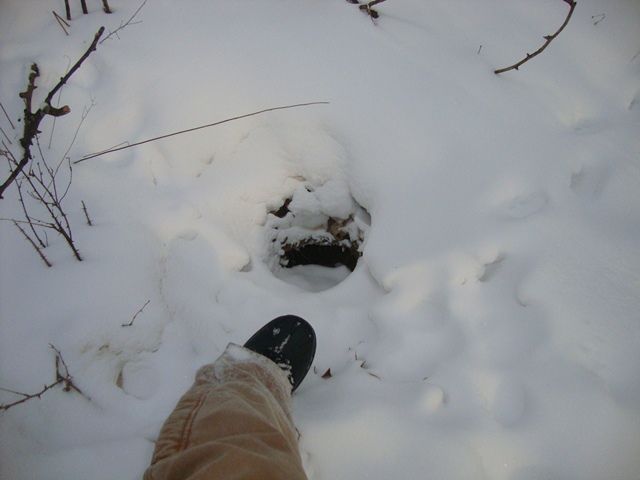
There were clearly tracks heading to the entrance and it appeared to be active.  But we had snow the night before, so it was hard to tell (a) what species left the tracks and (b) how recently the burrow was used.
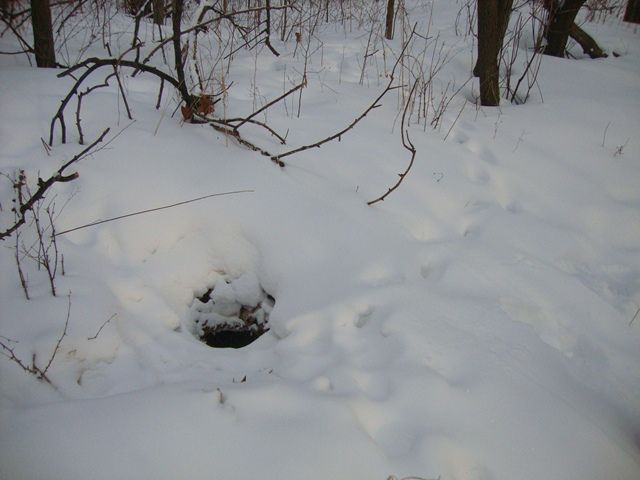
 

Could it be a pair of Reds is making a nice little love nest in which to rear their pups again this year?

The nearby camera trap the students put up gave us reason to be hopeful.

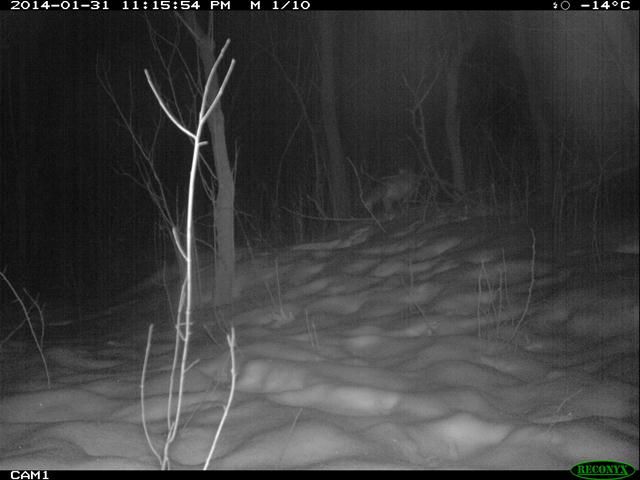
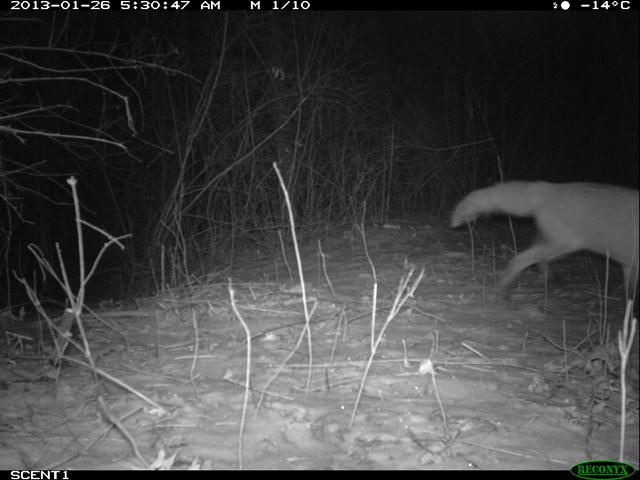
Here is our first glimpse of a fox leaving the den.  Not a great picture, unfortunately, but you can tell its coming out of just about parallel to where the student is in the picture above.
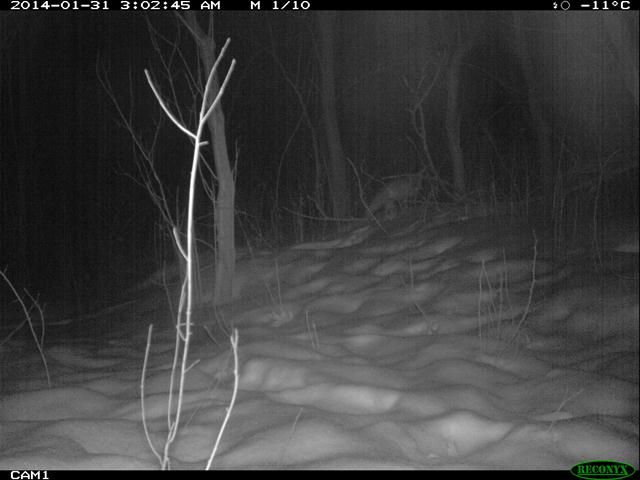
...and again later that evening...

 Then...just to give us something to brag about....our resident Badger (Taxidea taxus) lumbered by for a sniff.
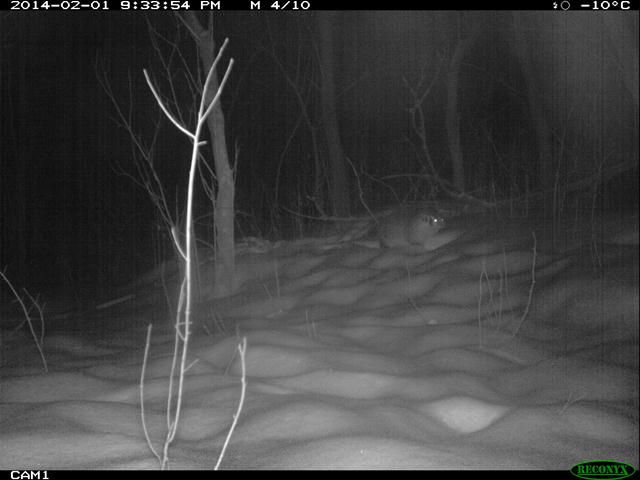
 

 So fingers crossed that we will get a repeat of the fox pups this year!  Always fun to get pictures of them....

Monday, January 27, 2014

Wil E. Returns

The Coyotes at one of my study sites grew sparse after some heavy ATV use began in the summer.

However, the snow seems to have curtailed the ATV activity, which gave the canines a chance to sneak back onto the site.  In fact, the beginning of the calendar year seemed to really bring out the 'yotes....
Although glimpses of them were as fleeting as you might expect at first....
The 'yote is in the far background in this picture, partially obscured by a dead branch


They also appeared to be appropriately skittish.  The IR flash of the camera caused this individual to turn-tail and run.  This is a response to IR cameras that I've observed from Coyotes several times in the past (see here , here and here).
 

Skittishness is probably one of their greatest survival mechanisms.  It might even be a reason why (despite the best efforts of humanity) the Coyote has avoided eradication throughout recent history.

Yet, sometimes, skittishness is over-powered by the desire to check out what the neihbors are up to.

This individual (on January 10th, perhaps the same one from the 5th and the 9th?) is very interested in the canine urine we deposited in front of the camera. 

Considering we are in the general time period of the breeding season, it's not too surprising to see the canines doing some territorial investigations.

I imagine "curiosity" treats the canine, much like it does the cat .....if said canines don't learn quickly.  Canine urine is a common tool in the trapper's toolkit.

Another quick capture on January 15th....
I've also seen a large number of tracks and trails throughout the site since the first of the year.  One of my research students even found an interesting trail in the snow two weeks ago.  It appeared to tell a story of ol' Wil E. catching a Cottontail (complete with blood and tufts of rabbit fur).  I'm pretty happy to see them return after their long absence this summer and very sparse appearances in the fall.
I can't imagine our resident forest ghost is particularly thrilled (seeing that Coyotes will exclude Red Fox)...but it hasn't scared him/her off completely. 

Although he does appear a bit more on-edge than before....
 

Tuesday, December 31, 2013

A Ghost in the Wood

We have a few resident Red Foxes (Vulpes vulpes) that occassionally come near the rural home where we live.  I hadn't seen much of them this summer or in early fall.  But come late fall and winter, their presence has been easier to detect, thanks to the snow. 

I know that they have also become more active at one of my research sites since December.

 
...even stopping to investigate some scent we put down to attract him.....


I've never actually seen them with my own eyes near the house, only their sign.  I bring a spotlight with me when I take the dog out for his nightly evacuation in the hopes that I will get a glimpse of our resident forest spirits in the orchard next door, or in the pine trees behind the house.....but so far, I've seen nary an eye-shine.

I would wager they are often out there, however....probably carefully watching the dog and I as we lumber along the driveway.  I often picture them hiding silently behind a wall of dormant raspberry, waiting for us to head back into our luxuriously warm abode before continuing with their constant struggle to survive during these frigid months.

Today, however, I found evidence that the Ol' Todd had recently come a bit closer than normal.

I found a set of fox tracks near the White and Red Pine Trees immediately behind our house.  We had an inch of new snow last night, so I knew the tracks were fresh.  They purposefully moved along the back side of our garden and past the compost bins.


The trail then passed along the pines behind our garage and just barely around the west wall, where the fox would have had a better view of our driveway and the road beyond....

....here the trail abruptly stopped. 

The fox then turned almost on a dime, planted on all fours once...perhaps to stop and scan his surroundings....before moving away from the driveway and back up into the safety of the pine trees.

If you look carefully at the picture above, the track in the foreground was the last in the trail moving this direction....the ones in roughly the middle of the frame are of Toddie's new direction (note the four to five tracks near eachother....probably where the fox stood to get a better look before moving on).

And so he went....until he hit one of my old foot trails back into the woods and I stopped following.
I like to imagine that perhaps it was the dog and I, coming out at just the right time, that caused the ghost to alter its silent course and head back into the woods.  Perhaps he saw the beam of my spotlight, or heard us clumsily walking over the snow from a mere 10 or 15 yards away on the driveway.

Whatever the case, I wish Todd the best of luck during these cold winter months...and wish all of you a happy New Year!

Wednesday, November 13, 2013

Bucky, the Red-Tail and Others....

Mostly random stuff to post today....

I can't help but post another clip of the resident Badger (Taxidea taxus).  I just don't get them that often, so I get excited about any clip we get.


Then, another rarity, a raptor on the cams.  I have gotten Red-tailed Hawks (Buteo jamaicensis) in the past (as well as a few other raptors, see here and here).  This is the first video clip, I think.

From what I can tell, this Red-tail appears to have nabbed something....


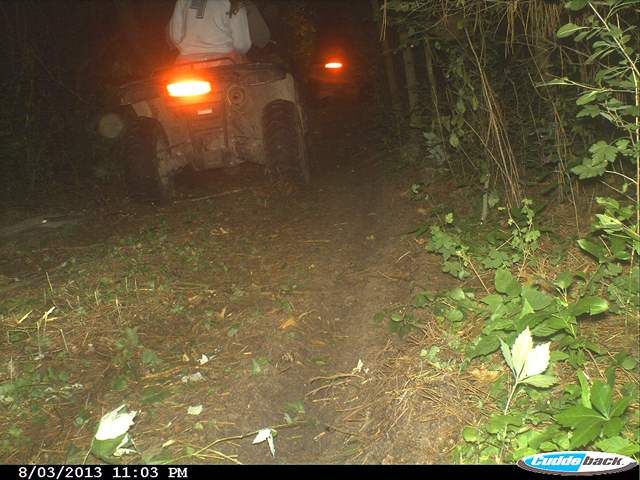
We still get some Canids, but they have become rare on this site lately....mostly becuase there has been an increase in human activity from the landowners.

I can't blame them at all for wanting to ride their ATVs on the property.  Plus, they are nice enough to let me use the land for my research, so I can't really complain.  Just a shame to see a real decline in the activity of some species on-site due to the ATVs....  Especially considering the the diversity I had seen on that tiny parcel prior to the ATVs (including Otters, Mink, Long-tailed Weasel, and Badgers).

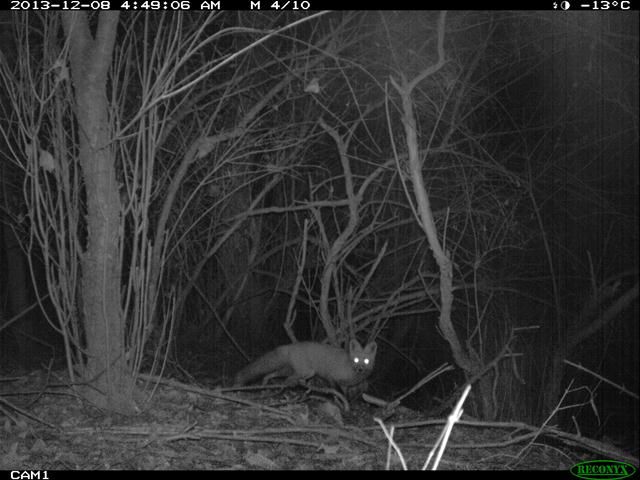
Recently, we got a few fleeting shots of Red Fox (Vulpes vulpes) and Coyotes (Canis latrans) on-site.  We hadn't seen either species since July, whereas the Red Fox in particular was a constant fixture in the previous two years.  We even had pups this spring, but shortly after the pups showed up, there was a real decrease in Canid activity on-site (which coincided with the greater ATV activity).

So, I was very happy to see some Canids on the cams this week, even if the Red Fox does look a little mangy....
 
Wil E. appears characteristically cautious....


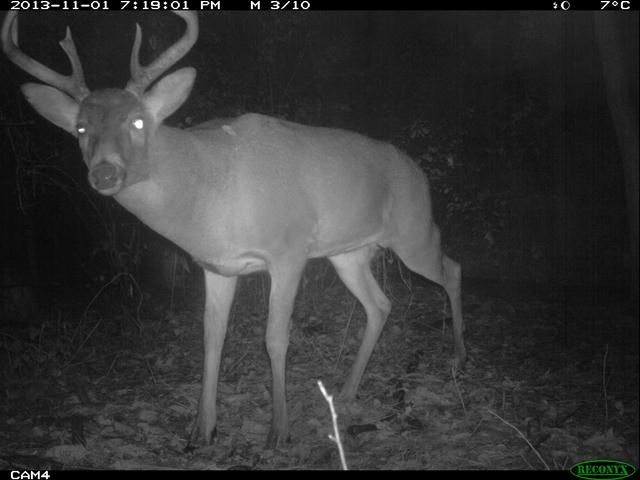
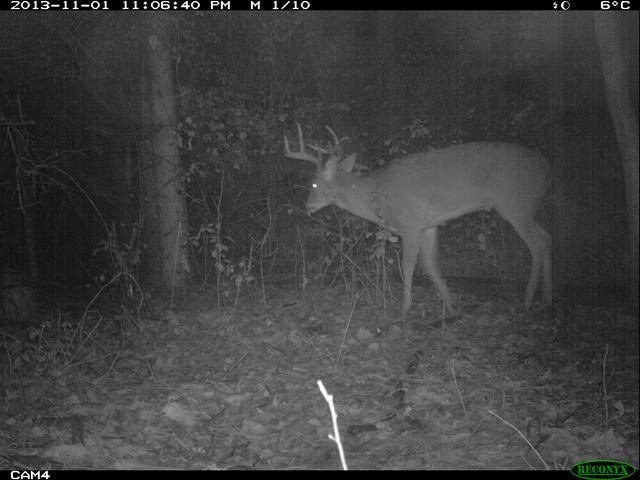
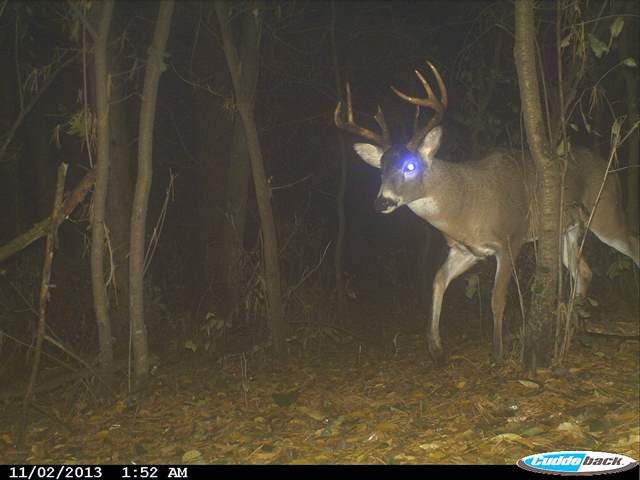
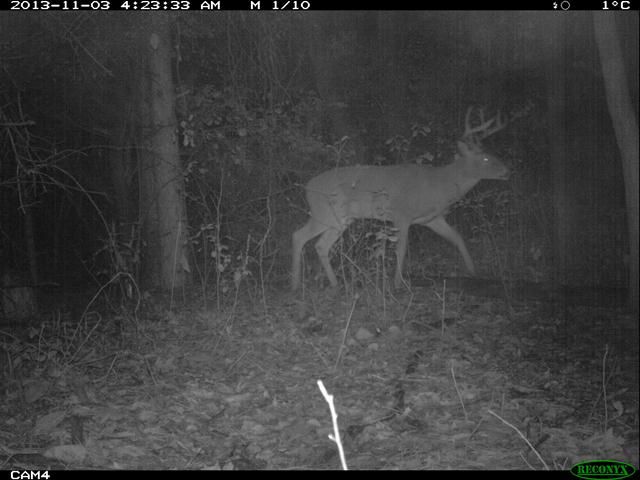
There's also an impressive (but lazy-eyed) buck still occassionally running through the site.  He's also been pretty rare since the ATVs started moving around.  We now only see Bucks like this after there has been no ATV activity for a few days in a row. 


He's avoided the arrows so far (probably because he only appears to be active when its dark out, from what I can tell).  We'll see if he lasts the gun season.  Interestingly, I don't think he's one of the two bucks seen earlier in the year (see here).

That 18-pointer hasn't been back since the summer.

Saturday, May 18, 2013

Wildlife Babies (2013): Red Fox Pups

Things have been pretty busy lately.  End of the semester, field work starting, and so on.  I've got alot to share with you from the last several weeks....but first: something so cute it will make your eyes pop out.

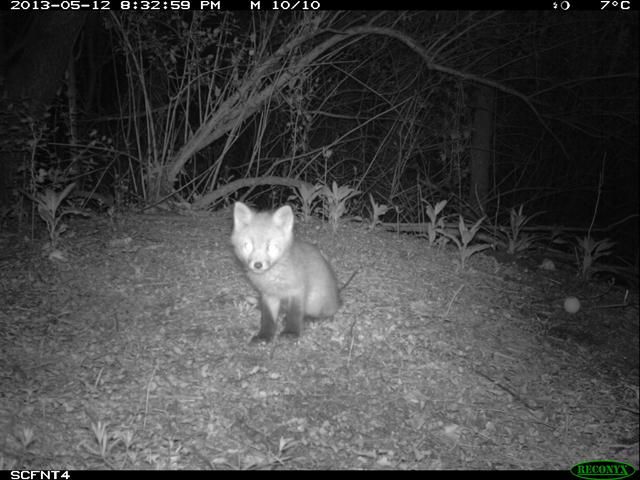
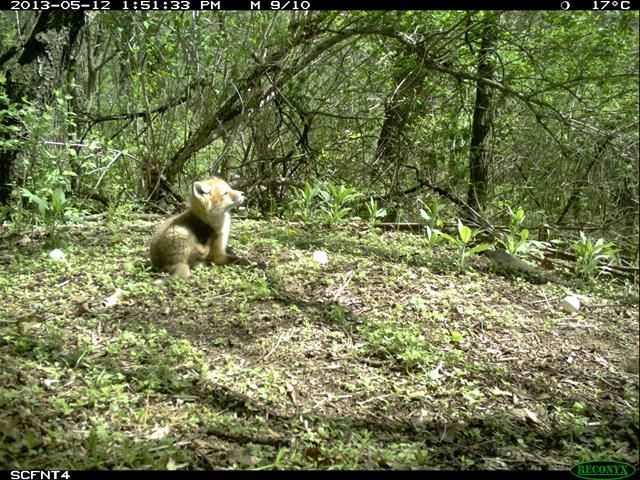
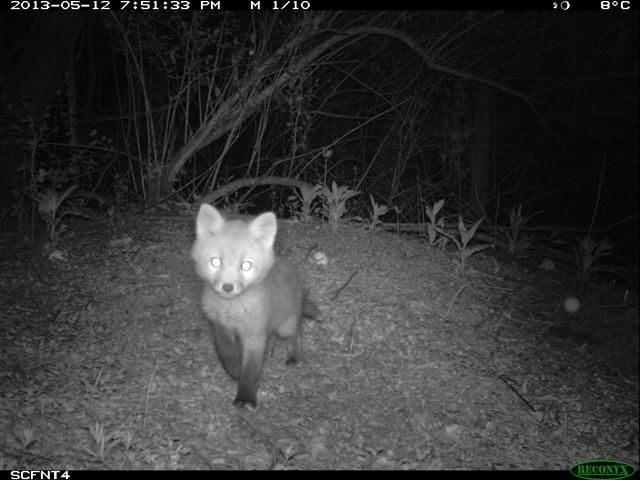
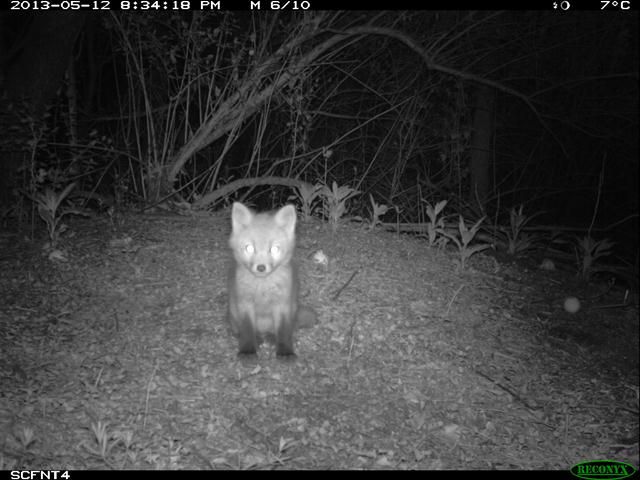
On Thursday, I checked some cameras that students put out at the end of the semester.  They had found a possible Red Fox (Vulpes vulpes) den nearby and decided it was a good place to hang the camera.

They were right on the ID for the den inhabitants.

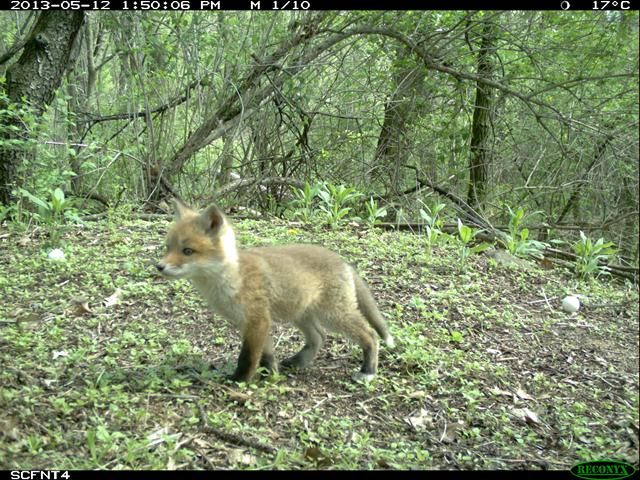
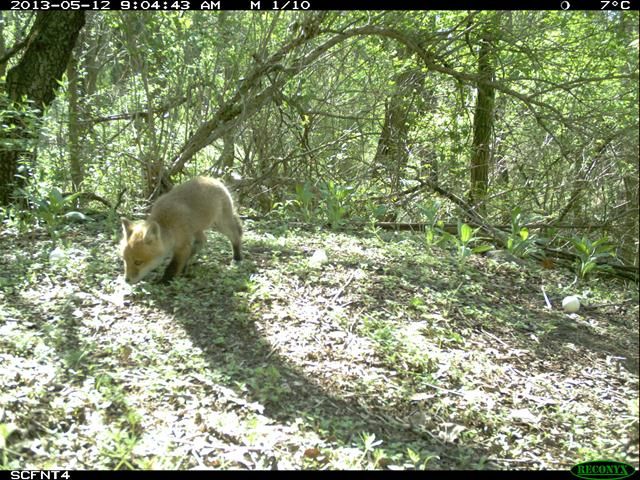
Just about 6 days ago (after several weeks with the camera in-place), this little one showed up.....


This pup showed about at about the right time, based on the breeding phenology of this species in the state. 


The adults typically pair-up for breeding as early as December.  The main part of the breeding season is January/February.....with parturition occuring sometime in March/April.

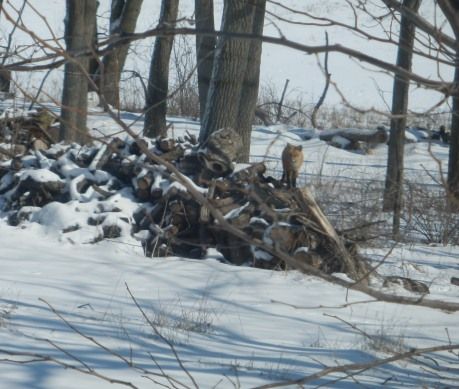
In fact, back in February, a colleague of mine snapped these pictures (not far from where the pup above is located).  These show a pair of Reds hanging around a wood pile.  He informed me that closer inspection around the woodpile revealed they were working on cleaning out a nearby den (likely in preparation for the coming babies)....

Photo: P. Jacobs

Photo: P. Jacobs

Friday, April 5, 2013

Phenology 2013: Faltering Frogs and Wary Leapers....

Today I heard the first calling Anurans (Frogs/Toads) of the season.  Chorus Frogs (Pseudacris triseriata) are generally the earliest frogs to call in the spring 'round these parts.  I've been listening intently at various wetlands nearby for the last week.....but these tiny amphibians have been extremely hesitant (and rightfully so, given our very cold spring this year).  Despite this, I've been anticipating their calls for several days now seeing that it has started to sneak above 50 deg F more frequently over the last week.

Today I finally heard them.....

In some parts of the region they are rivaled for first position by the Wood Frog (Lithobates sylvatica).  But we do not have Wood Frogs in the immediate area....so I always consider the arrival of spring to be heralded by the Chorus Frog.

Interestingly, this is much different than their date of first call last year (which was a much warmer spring)....but on par with past dates I've recorded.

2012: March 14th
2009: April 14th
2008: April 8th
2007: April 27th
2006: April 12th
2005: April 7th
2004: March 28th
2002: April 6th
2001: April 14th

Beyond that....sometimes all that's needed are a few cool camera trap pictures.

First, an Eastern Cottontail (Sylvilagus floridanus).....


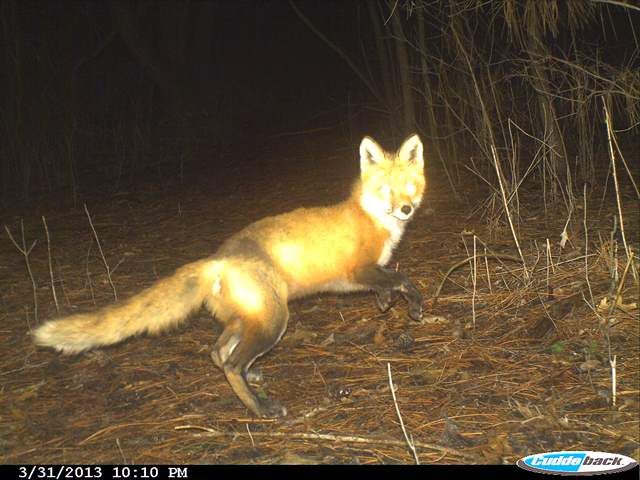
Then, what might be one of my favorite Red Fox (Vulpes vulpes) pictures to-date.......

Foxes are so amazingly cognizant of their surroundings.  The Cuddeback has a lightning-fast trigger speed (< 1 sec.), which is the primary strength of this make and model of camera trap.  Thus, it almost appears as if this fox started to leap, sensed the flash, and faced the camera.....all as it was springing into action.

That is what I'd call complete situational awareness!

Friday, February 1, 2013

Advanced Ecology Lab: 2013 (Weeks 1 & 2)


Another year is upon us!

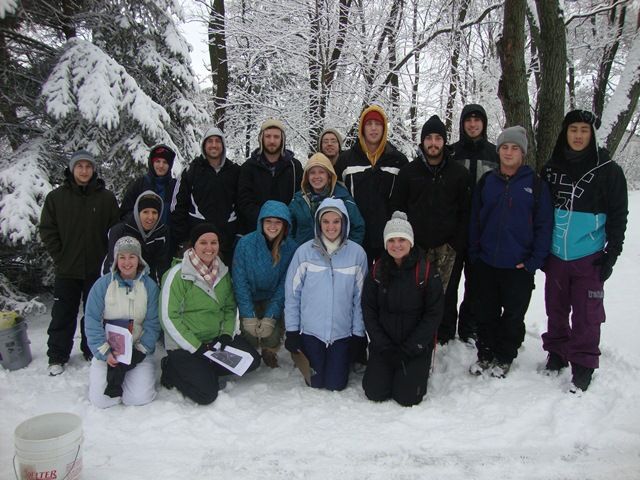
We have several specific purposes with our lab exercises in this class.  They were, firstly, designed to give students practical experience that mimics what professional ecologists, natural resource regulators or environmental consultants would do.  The students conduct a variety of environmental assessments throughout the semester....use their results to make recommendations and write a professional-style report of their findings.

They apply skills that they've learned in past classes (such as in our 200-level Field Methods in Ecology class), and new techniques they are taught in this class throughout the semester.

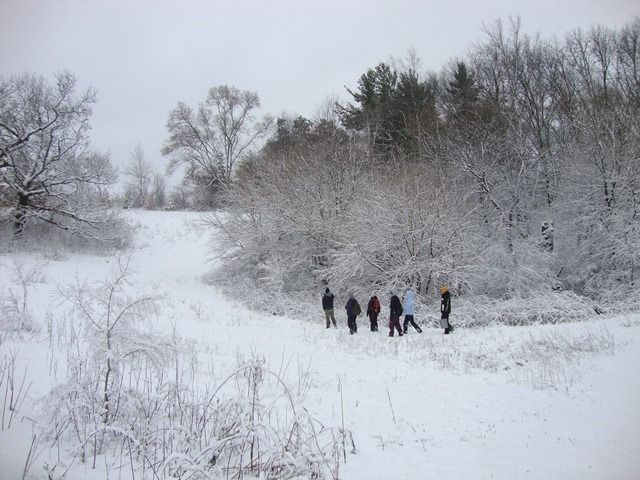
Week one is primarily devoted to a site visit and reconnaisance.  The entire property is walked....different community types are identified...and a guess is made as to how the site fits into a landscape context.

Based on this assessment, they break into groups and find locations for their first long-term monitoring initiative on-site: camera traps!

During week two....it was time to head back....service the cameras and delineate the boundaries of the habitats/communities on-site.

BUT, the weather found a way to make things more interesting.  Twenty-four hours before lab this week....the temperature was in the mid-50s.  Normally, I would say this is unheard of for January 'round here, but looking back at a blog post from last January reminded me that this is becoming the norm. 

And they say climate change is a myth!

Anyhoo, the warm temperature was not all that was in store for us.  When I left the house on the morning before we had lab, it was still warm and misting.  All of the snow that we had gotten previously was completely gone.

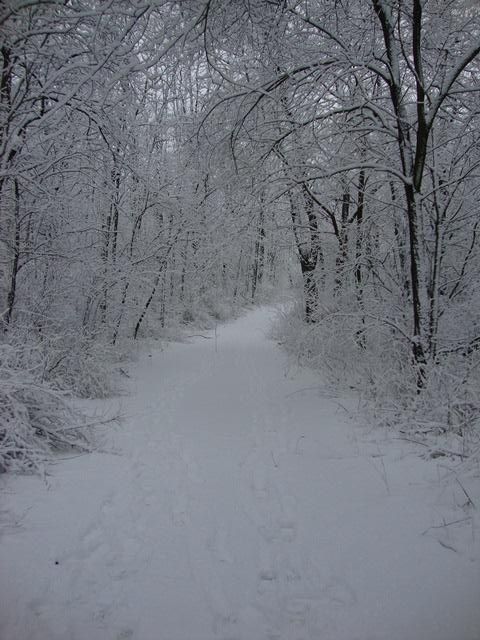
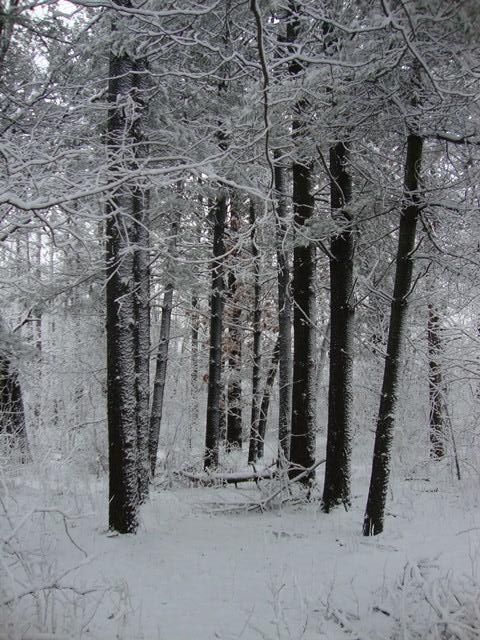
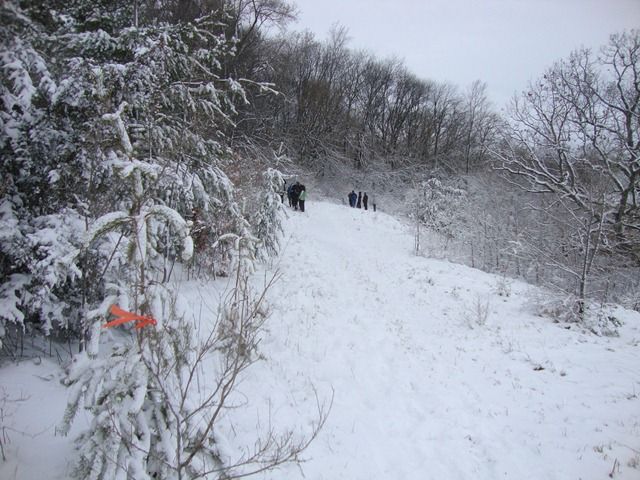
But things changed suddenly.  The temperature dropped drastically over the course of a few hours and the mist turned to snow.  By mid-afternoon, it looked incredible outside!!


Perfect weather for field work!

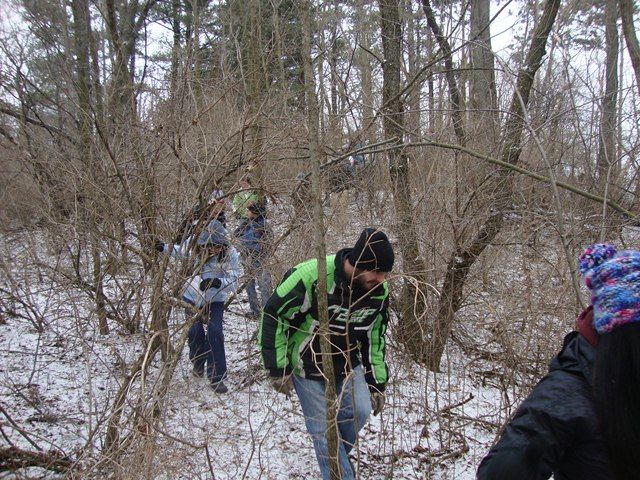
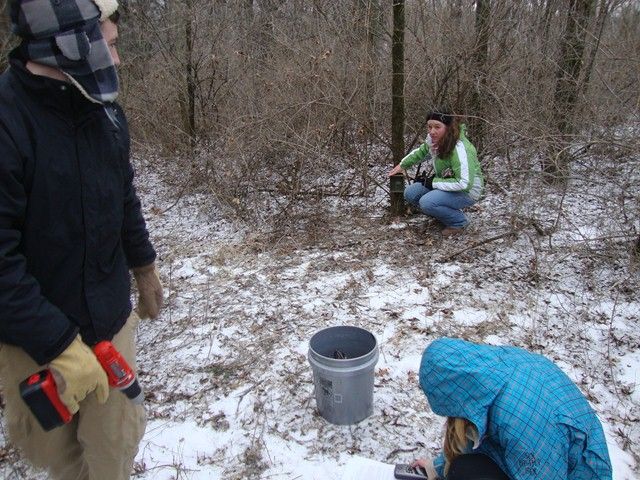
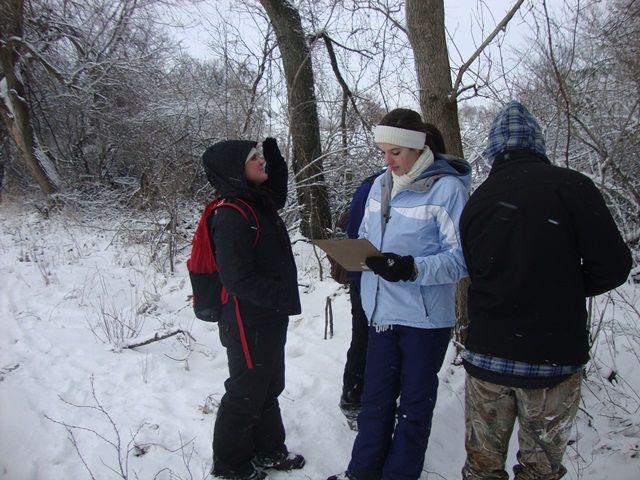
This required students dividing into groups and selecting one of their habitats/communities....following the periphery and recording GPS points.

They also had to flag the common boundaries between different habitats so that they could easily coordinate their data later....

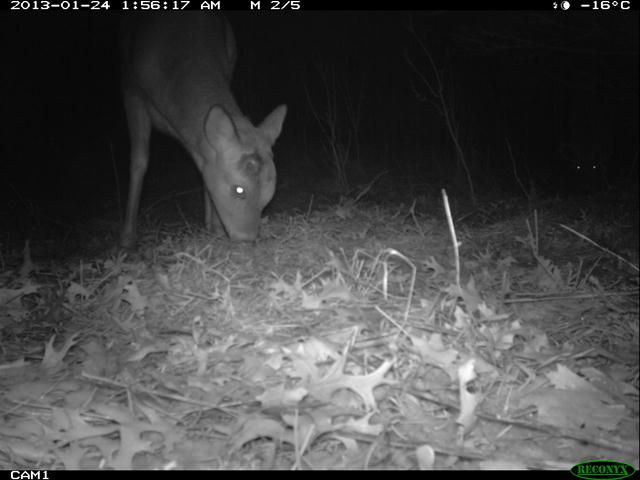
We also checked the cameras....and the usual suspects showed up....

The White-Tailed Deer (Odocoileus virginianus)...note the raw-looking pedicel where the antler recently came off....

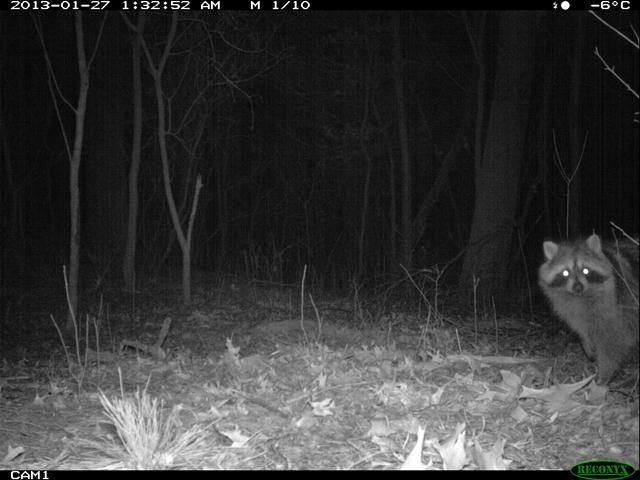
The Raccoon (Procyon lotor)

The Todd (Vulpes vulpes)

But that snow....I can't pretend I don't love it!